• Articles - Featured - Italy

    Notes from the end of the liberal order: Firenze

    Godi, Fiorenza, poi che se’ sì grande,
    che per mare e per terra batti l’ali,
    e per lo ’nferno tuo nome si spande!

    (Dante, Inferno, Canto XXVI)

    The Americans

    After Spain, I came to Florence, for a brief course. I’m staying in a monastery of benedictine nuns that rents rooms, located right at the edge of town. Wonderful place with a wonderful view. The only thing ruining it so far is a small group of young, loud, obnoxious American tourists staying here as well.

    If I had my way, I would impose a moratorium of ten years for American tourists anywhere in Europe. Maybe a hundred years just in case, although it’s pretty unlikely that America as such will still exist in a hundred years.

    I may sound prejudiced, but if it wasn’t for America, Europe would be not an Uncle Sam colony, the Middle East would not be constantly being bombed with its refugees ending up in Europe, and extreme liberal ideas would not kept being pushed everywhere.

    Twice in my life I saw American tourists breaking spaghetti in half to cook it, under the horrified look of an Italian. I also saw once an American cooking spaghetti in a frying pan together with the vegetables and the sauce.

    But it’s not that they commit such culinary heresies. It’s their attitude. Ignorance is forgivable, but Americans believe that they are right even when they are wrong. When an Italian points out their mistake, they don’t really accept that it is a mistake, or perhaps they don’t even understand it. They laugh and think that the Italians are oversensitive foodies.

    They just cannot understand that things in other countries are done for a reason.

    Americans will not drink tap water in Italy, or anywhere outside of the U.S. It’s unsafe, they say. But, outside of India and Pakistan, it’s probably in the U.S. where tap water is the most dangerous.

    It’s not that it’s unclean. It’s not what they take away — it’s all that they put in. From fluoride to lithium to who knows what else, American tap water has more chemicals than the periodic table.

    While in the U.S. water fluoridation has been ongoing since the 1960s, polluting our precious bodily fluids (under the excuse of fighting tooth decay), in Italy, tap water has never been fluoridated. Nevertheless, according to a recent report, Italian children have less cavities than their American counterparts.

    What was the true motive for water fluoridation, then?

    Who knows, but don’t ask an American. He still believes in the official stories of 9/11, JFK, Covid, the moon landing, and, of course, water fluoridation.

    The Africans

    There’s a park in Florence where African migrants hang around, loitering, listening to loud rap, selling drugs and counterfeit bags. There’s probably a similar park in most European cities nowadays.

    In Barcelona, Latin Americans and Moroccans comprised most of the non-native population, but in Florence, after the American tourists, Africans seem to be the most visible foreign presence in the city. But, alas, unlike the former, the latter won’t go back to their countries as summer ends. Italy is stuck with them.

    Of course, there are also other Africans who integrate into the formal economy and work as waiters, bus drivers, nurses, lifesavers, and so on, but still, each day a new boat arrives and there’s no room for all, so some overflow into the parks.

    I mean, they are not dangerous, at least not so far, but they don’t seem to contribute much to the local economy, unless selling cheap counterfeit bags made by the Chinese counts as a contribution.

    The Chinese

    Which brings me to the Chinese. They are also numerous, but, being less loud than the Africans, they are not so noticed. They also concentrate in particular regions. It seems that Prato is almost half Chinese now. I wouldn’t know, I haven’t been there yet, but I can believe it.

    The Chinese at least are industrious and don’t tend to idly hang around in parks. They are good at doing business, and they do it from morning to night. The Jews of Asia, they say, although that might be an unfair characterization for both sides.

    It seems that a lot of “Italian” trinkets sold in souvenir shops, even if they say “made in Italy”, are made by the Chinese. In this case, Chinese migrants in Prato.

    But I like the Chinese. Once, and I told the story here before, a Chinese migrant gave me a ride to my hotel when there were no longer taxis or other form of transportation in town, and wouldn’t even accept money for it. I don’t think an American tourist would have done that.

    Also, I was confident enough to take a ride with a random Chinese migrant, but I don’t think I would if he was from any other nationality. Chinese and other Asians are trustworthy in that sense. I mean, I suppose that there are Chinese robbers, rapists, murderers or serial killers, but it’s not the first thing that comes to your mind.

    The Italians

    Now, first of all, let’s admit it, there is no such things as an “Italian people”. They don’t really exist. There’s Tuscans — subdivided in Florentines, Senese, Pisans, etc. — and Lombards, and Neapolitans, and Sicilians, and Sardinians, and so on.

    Don’t tell me that all of those groups form a single, unified people, regardless of what Garibaldi said.

    The Tuscans, and, in particular, the Florentines, are considered snobbish or arrogant, a bit like, say, the Parisians in France. “Hanno la puzza sotto il naso“, they say here. —they have their nose always turned up.

    There might be something to it, even though I haven’t noticed it. Curzio Malaparte, himself a Tuscan from Prato, wrote in “Maledetti Toscani” that Tuscans are the smartest people in Italy and that they do not suffer fools gladly, and that makes them hated by all the other Italians.

    That has not been my experience at all. If anything, the Tuscans I’ve met have been pretty kind, generous and even humble, very far from such stereotype.

    (I do think that might be true of the people of Milan, though.).

    The Liberal (Dis)Order

    Like in Spain, the Italian birth rate is also collapsing. Feminist propaganda is also very present, almost as much as in Spain. Wherever there’s feminism and liberalism, there’s birth rate collapse. Of course, there are many other reasons for it, as the phenomenon is present today in most countries, not all liberal democracies, but feminism, late marriages (or no marriage), abortion and birth control certainly play a role. After all, it’s women the ones who have (or do not have) babies.

    But the real problem of modern liberalism is simply that it doesn’t have an end or a goal — it just evolves to and further further radicalism, at the same time that it describes its critics as “radicals”.

    For instance, “Pope” Francis recently excommunicated his critic Archbishop Carlo Maria Viganò, whom the media characterizes as “ultra-conservative”. But Viganò’s position is simply the same of any regular Catholic priest in 1962, prior to Vatican II. There’s nothing “radical” or “extreme” about it. It’s society, and the Church with it, which became more extreme, and continues to do so.

    And remember when Meloni was characterized as “far-right”? That didn’t age well.

    The other strange thing about the liberal order (some may call it the “new world order”) is how omnipresent it is. There is little room for variation. From increasing censorship in the name of “misinformation” to strange and possibly fake election results, it follows the same pattern of tricks everywhere.

    And yet, also here in Florence as in Barcelona, collapse does not seem to be coming any time soon. The city, despite the heat in these infernal summer months — certainly an inspiration for Dante — is bustling with activity and tourists. Not just loud, obnoxious Americans, but also obnoxious Germans, obnoxious Australians, obnoxious French.

    Dante wrote ironically that Florence’s fame grows even in Hell — in fact his Inferno is basically a list of famous florentines — and predicted that a great calamity sooner or later would strike the city as punishment for its many sins.

    Well, I suppose we’re more or less in the same situation in the West as a whole. Punishment will come, that much is certain. But who knows exactly when?

  • Art - Featured - Italy - Memories

    Why can’t we make beautiful art anymore?

    Some people say I am too harsh on the modern world. That we have wonderful technology and people live in comfort and we have so many ways of amusing ourselves and we can find any ethnic restaurant we want in any town on Earth.

    Fair enough, I guess.

    But why is so difficult to make beautiful art and architecture in this world?

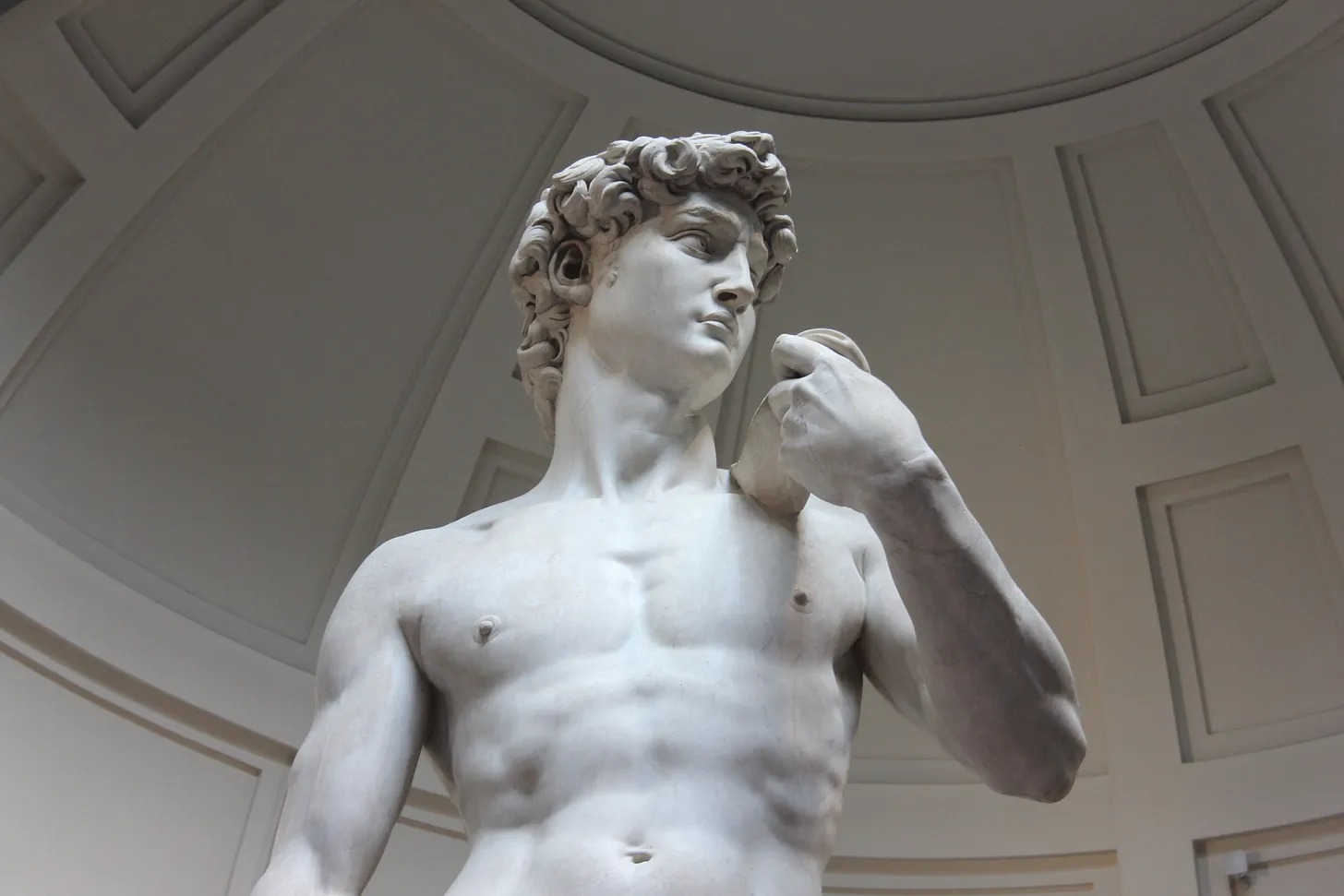
    In my third visit to Tuscany, I finally had time to see Michelangelo’s “David”. It is one of those works that is actually more impressive in real life than in pictures.

    I say this because the “Mona Lisa”, for instance, is a bit underwhelming. (Then again, I never understood why critics singled out Leonardo’s “Mona Lisa” as his “masterpiece” out of his hundreds of much more impressive works. Perhaps they chose a simple portrait as a way to distract from his much more beautiful religious paintings?)

    Of course, in Tuscany, beautiful art is everywhere.

    Visiting San Gimignano, which is basically a medieval town frozen in time, there are so many churches with wonderful paintings, and this is a very small town — if you go to Florence, you will find a thousand others.

    Of course beauty didn’t start in the Renaissance. This is a painting from 1317, in the Church and Monastery of Saint Augustine in San Gimignano.

    And this is a detail of another one, no date indicated but from about a hundred years later.

    This one below, in a museum, with a similar theme (Saint Magdalene by the cross) is also from the 1400s.

    In the same church, however, you can (regrettably) see this sculpture from 1995.

    And then there is this fountain built in 2014, sitting nearby, just outside the walls of the old town. Compare it to the Fontana di Trevi in Rome, or, really, anything built before the 20th century.

    Ugly stuff! Even the most mediocre medieval sculptor could certainly do better than that. And that’s not even the ugliest stuff. If you want really ugly modern stuff, just check this page with sculptures in some American university campus. It’s so horrifying, it cannot not be on purpose.

    If you are one of the two or three people who have read my article about how much money the Renaissance and Baroque painters made, you may have found that the Catholic Church at the time invested a lot of money in creating beautiful churches and paintings and sculptures. They had an almost limitless budget for that stuff. They spent what would be millions today.

    Today we have even more money — we can print all the money we want, it’s all digital anyway! — but it all goes to create mostly… the worst kind of trash they can find?

    I mean, we can’t even make beautiful churches anymore. This is a Catholic church in Los Angeles.


    But there are similar examples even in Italy. Any church built after, say, 1960, is usually ugly or bland.

    Why is that? What the Hell is going on?

    It’s not that people no longer care for beauty. I mean, if people didn’t care for beauty, there wouldn’t be millions of tourists visiting Florence and San Gimignano and Siena and Paris and Barcelona every year. They want to see the old, beautiful stuff. Not the ugly modern stuff.

    And in private, people also like beautiful things. Inside many apartments and in a few shops you can find that many places are still arranged with relative good taste (although usually tending more towards the clean/functional look than to the decorative.)

    It’s also not that there are no talented people anymore. There are still a few good book illustrators and designers, for instance. I suppose a few good filmmakers, although even those are rare these days.

    But in visual arts and public sculpture, the money seems to go to the worst things you can find. So there seems to be a deliberate attempt to promote ugly stuff. I mean, all those ugly sculptures cost money, and someone is paying for them.

    But that’s not all. Even when there are talented artists, they create mostly meaningless things. Most classic art was about religious or mythological themes. There is a reason for that. Art is about transcendence. About a connection with the world beyond our senses and our daily experience.

    Even the good portrait painters (when portrait painting was basically just catering to the vanity of rich people to have their “portrait taken”) understood that, and that’s why their paintings are still valuable and interesting even when the person portrayed has been dead and forgotten for hundreds of years.

    But now… “Art” is not just ugly (it doesn’t even try to be beautiful), it’s usually about some random political or social theme that will be forgotten in a few years. Or about some trivial, mundane event. Or even pornography. There is just no effort to connect the individual to the universal and the material to the spiritual.

    Why are Western people so apathetic?

    But it goes beyond art and beauty, which in the end are just a reflex of our world. If our art is ugly it’s probably because our society is, in many ways, ugly. It is a symptom of disease.

    Most Western people seem to be very apathetic in the face of extinction. Extinction? Well, not only birth rates are plummeting in all the Western world, there is an ongoing demographic replacement by foreigners, and while things seem relatively fine on the surface, everyone knows or at least fears that the possibility of war and economic doom is just around the corner.

    Or am I exaggerating? Sometimes I don’t know. It is true that level of prosperity in the West is still quite high. People on average are able to live in comfort and without too many worries.

    Then again, none of that matters if people are not having children and the economy crashes and there’s war.

    But most Western people are just… I don’t know. They don’t seem to care about the future, or anything, really. Or they care about fake, obviously manufactured problems such as “global warming” or “Covid” or “Trump” or whatever the media will bring next week, but not about the very real problem of the survival of their own culture and their own people into the future.

    I don’t know what to make of it, but I suppose my opinion is also irrelevant, bound to flutter for a few seconds in the air like a fallen leave and then disappear forever.

    In the meantime, I take a few pictures and write a few words to register a few beautiful moments in time, before I’m gone, too.

    Church of Saint Augustine, San Gimignano.


  • Articles - Featured - Italy

    Santa Fina and miracles for unbelievers

    We live in an age that, for the most part, doesn’t believe in miracles or in any form of transcendence from the material world.

    Some believe in the miracles of “science” — although I suppose that has also taken a hit in the recent “Covid” years — but, other than that, I think most people simply accept, as modern “philosophers” say, and recent polls show, the idea of life as a meaningless existence that starts and ends with our material bodies.

    And, sometimes, not even that. After all, for many, fetuses are not considered “living beings”, as they have not have yet started “life”, which is for us defined as the period from birth until death — and now “assisted dying” is becoming a thing.

    We consider ourselves wiser or more knowledgeable than people from earlier periods, in particular those from medieval times, a period often dismissed as a “dark age”.

    But perhaps that’s a limitation. “There are more things in Heaven and Earth”, says Shakespeare through Hamlet. And August Strindberg, in his “Blue Book“, said that modern materialists are “like deaf and blind people who are convinced that they are the only ones who can see.”

    We think we see more than them, but, in fact, perhaps we see less.

    In medieval times, for instance, there was not a clear separation between the material and the spiritual, the “real” and the magic, the “normal life” and miracles, Heaven and Earth.

    Let’s talk, for instance, about Fina dei Ciardi.

    Santa Fina

    Life and Death of Santa Fina

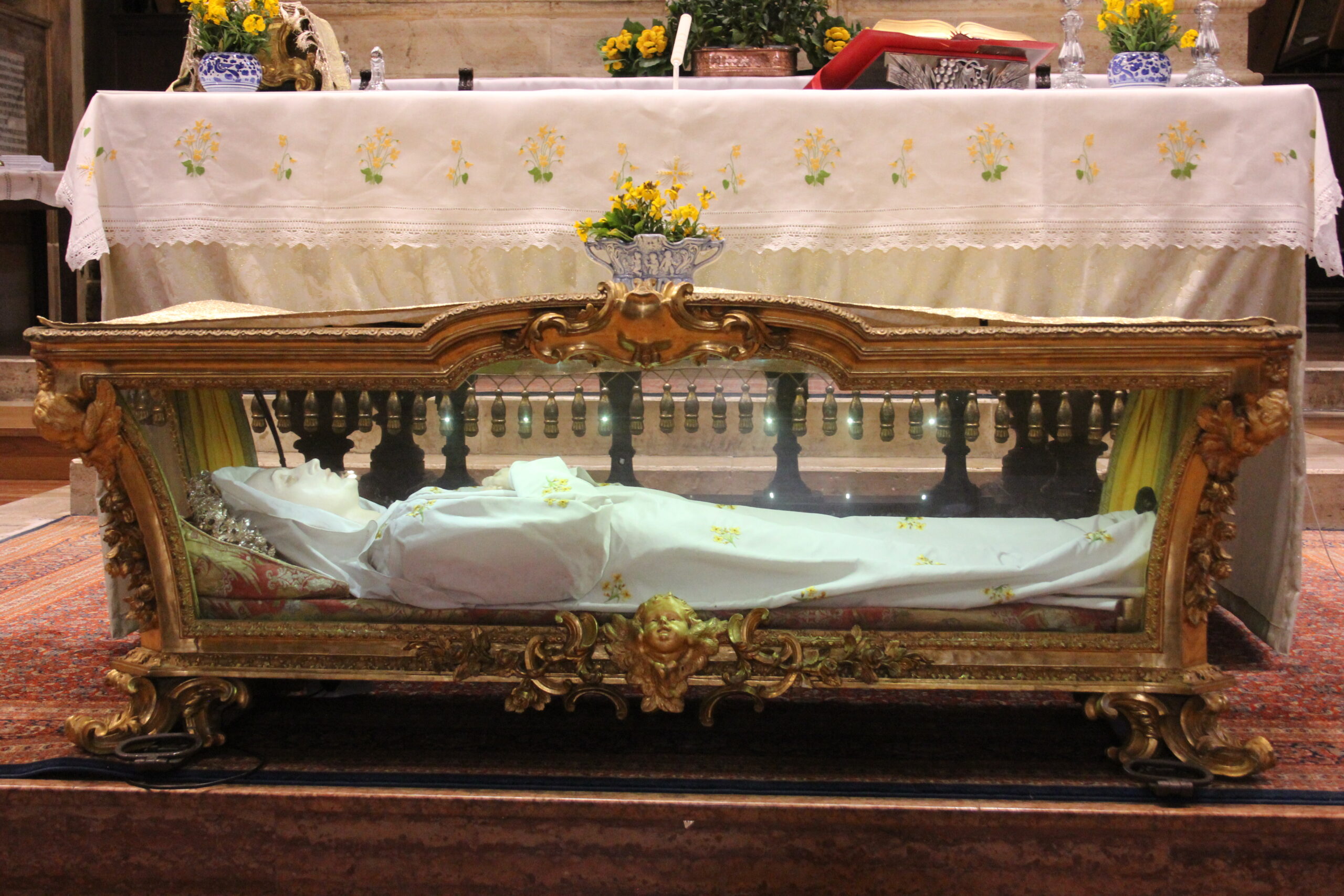
    On March 12th, 1253, a young girl named Fina (possibly a nickname for Iosefina or Serafina, although no one knows for sure) died after five long years of suffering.

    At only ten years of age, she had been struck with a disease that rendered her almost incapable of moving. Refusing a more comfortable bed, Fina dei Ciardi lied down on an oak board, and there she remained for the rest of her short life. While she was ill, she first lost her father, and then her mother also died in an accidental fall.

    With her body full of sores and even, according to some, bitten by worms or rats that nested in the rotten wood, she seemed always peaceful, and she even comforted the visitors who came to see her.

    One night, Saint Gregory appeared to her and predicted the date of her death, which came to take place in the aforementioned March 12th. She was only fifteen.

    To us, modern people, the life and death of Santa Fina seems just a sad and meaningless tragedy, an almost grotesque story that we cannot understand.

    Today, she could have avoided her five years of suffering and simply said her last goodbyes in a “suicide pod”, like those now common in Switzerland, the Netherlands and Canada — and maybe soon former Catholic France, too.

    “Bye bye” – in a legally available suicide pod

    But it was not so back then. Back then, they believed in miracles.

    Back then, just after Fina’s death, the people claimed that bells rang without no one touching them, and that violets started to bloom in places where they had never bloomed before, high up in the walls and the towers of San Gimignano, the small medieval town where she lived and she died.

    Death of Santa Fina, by Ghirlandaio (1475)

    San Gimignano today

    San Gimignano is now like a living museum, almost a medieval theme park for American and British tourists who flock every summer to eat pizza and gelato and drink Chianti wine and spend the money from their pensions in the overpriced local markets and shops.

    I came here to teach a brief workshop, having arrived just in time for the celebration of Santa Fina — who, by the way, was never officially canonized as a “Saint” by the Church but is a “beata vergine.

    I almost didn’t get to be here, in fact. I arrived late at night by train in the nearby town of Poggibonsi. I assumed I could find there a taxi or a bus from there to San Gimignano, where I had my booked apartment, about 15 km away.

    But I found out that buses only operate until 7 pm, and all taxi services I called were “closed for the day”. My only remaining option was to walk (it would take two and a half hours, according to Google Maps, and that in the middle of light rain) or perhaps to sleep in the train station until the next day (there was already some hobo sleeping there, so at least I would have company.)

    I started walking, but after a mile or so, I realized it wasn’t an easy task. It was very dark and the roads had barely room for cars, much less for pedestrians. I thought the risk of being run over was not negligible. It was all uphill, too. Finally, I entered into a local sushi restaurant, Miò Sushi. (If you’re ever in this region, visit it). I asked if they knew of any taxi service that was working at that time. They didn’t.

    After asking me what I was going to do, and hearing the answer “no idea”, a young Chinese employee simply said, “I will take you there.” So he kindly interrupted his work to give me a ride.

    I offered him the money that I would have paid for the taxi, but he refused it. He just asked that perhaps one day I visit their restaurant and leave a 5-star review, if I liked it. A kind soul, such as are rare these days, I suppose.

    And that’s how I arrived to San Gimignano, just in time to sleep soundly and then see the celebration of Santa Fina at the local church on the very next morning.

    (It was very beautiful, too).

    During the celebration at the Duomo.

    Was it a new small miracle of Santa Fina? Or just a series of lucky and unlucky coincidences in a random universe?

    Honestly, I don’t know. I was also born in this materialistic age that has amazing planes and computers and believes in “Artificial Intelligence”, but has a hard time believing in any kind of transcendence or supernatural event.

    I don’t know what is “real” and what isn’t, nor if there is anything beyond our mortal coil. But, as Agent Mulder said, “I want to believe”. No, not in UFOs (that’s just another silly government psy-op), but in the idea that there is something else beyond what we can touch and see.

    Who knows? Perhaps Santa Fina knew all the answers that we, modern people, are still struggling to figure out.

    A young woman in San Gimignano today dressed as a medieval peasant holding “Santa Fina violets.”
  • Art - Featured - Italy - Travel

    Let them eat bugs

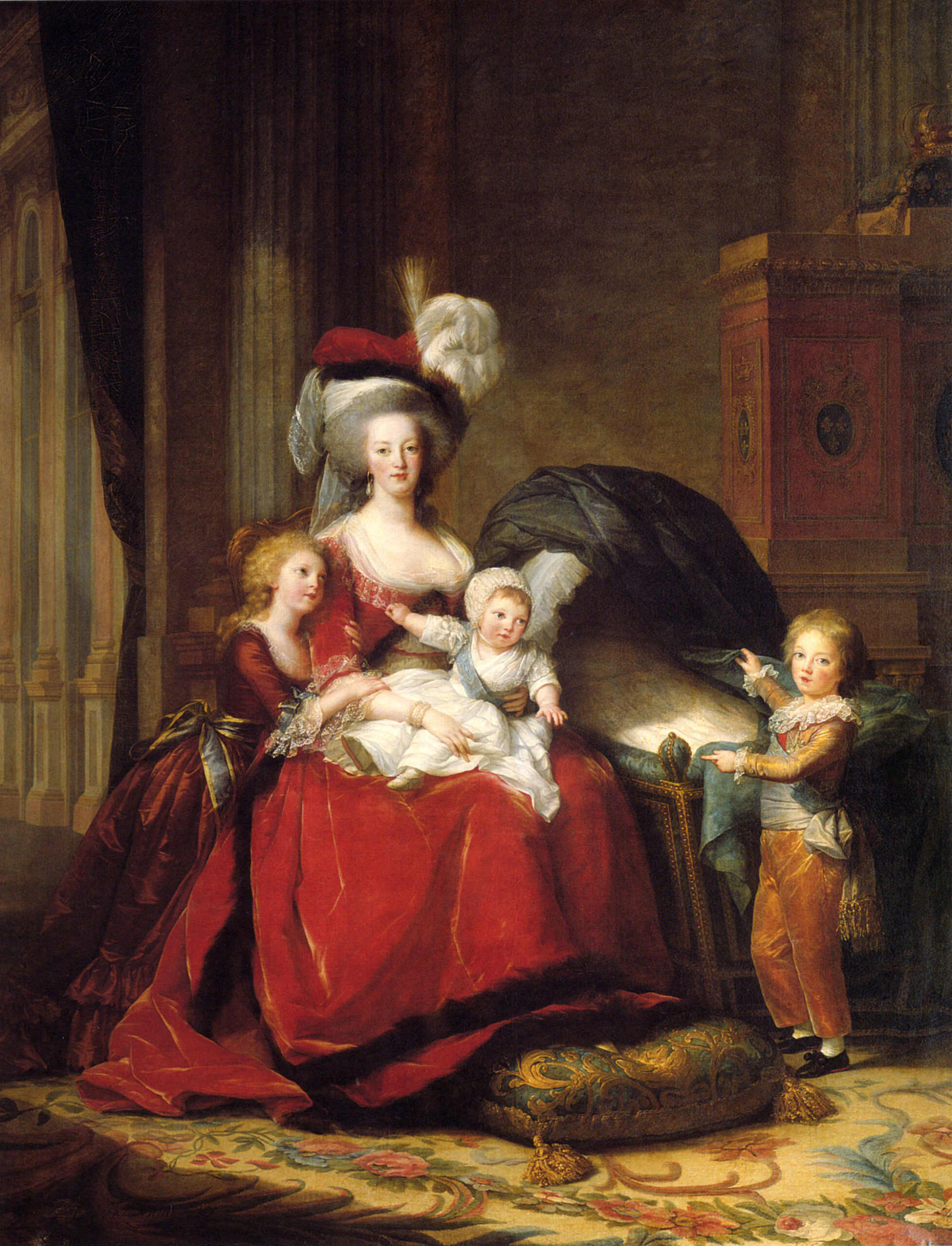
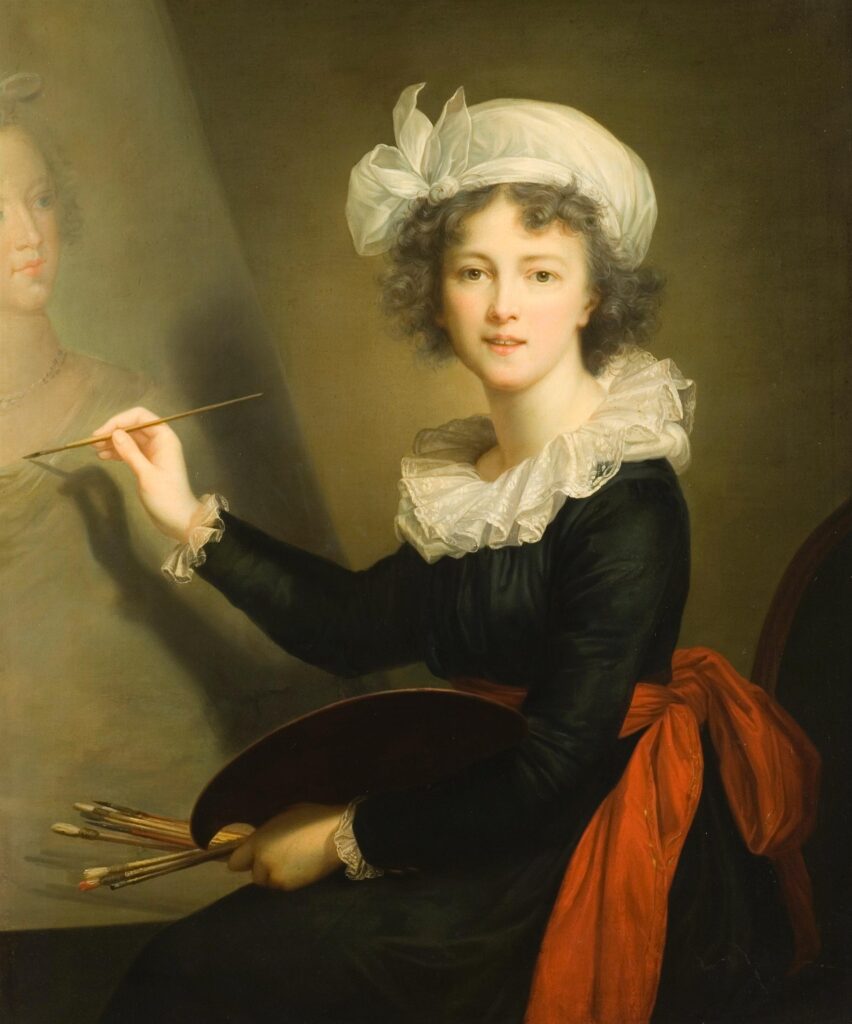
    I am currently reading the souvenirs of Élisabeth Vigée Le Brun, or, rather, a part of it focusing on her travels in Italy after having escaped the French Revolution. Madame Le Brun was no Raphael or Rembrandt, but she was a talented painter, mostly famous for her portraits, in particular for the several portraits she made of Queen Marie Antoinette.

    Marie Antoinette, as everyone knows, was the Queen dethroned and guillotined by the revolutionaries and famous for supposedly saying “let them eat brioche” (in fact, it is very unlikely that she really said that, and she had no small number of detractors who invented all kinds of rumours about her).

    Madame Le Brun herself, at least according to Wikipedia, was not an aristocrat by birth and had humble origins, showing that even in pre-Revolutionary France there was a certain social mobility. Her mother was a hairdresser and his father an unknown painter. He taught her painting, but died when she was only 12. Her mother remarried and the new husband, who became Élisabeth’s stepfather, was a rich jeweller, but also not an aristocrat by birth. Yet Élisabeth became a requested painter quite early in her career, painting the portraits of several nobles, and eventually married an important art dealer, Jean-Baptiste-Pierre Le Brun.

    Le Brun’s souvenirs, or at least the part I am reading, begin just as the royal family is removed from the palace and Le Brun flees France in disguise with her daughter (her husband remains in France and eventually joins the Revolutionary cause, but she remains a monarchist to the end of her life).

    Le Brun’s book depicts both her horror at the events taking place in France as well as her fascination with Italy, in particular Italian art (she’s a big fan of Raphael, Domenichino, Michelangelo and Corregio). It is a very interesting read, and I look forward to the volume about Russia, where she lived afterwards.

    But anyway — what I wanted to talk about was the French Revolution. To my mind, it was a senseless bloodbath and really the foundation of our modern world, based on idealistic but equivocated ideas of “equality”, “democracy” and “secularism” — in other words, the beginning of what we now call “globalism”.

    It is symptomatic that France, together with America, which was inspired by similar (Freemason’s) ideas, are the first countries poised to fall in the New World Order. France’s population is today composed of at least 40% non-European foreigners (they don’t keep statistics about ethnicity or religion, but a map of “sickle-cell anemia” gives the game away) and has so many social and economic problems that it is hard to see how it can survive as a “French” nation a hundred years from now — or even twenty.

    The funny thing about modern democracy — which started with the French and American Revolutions — is that it is supposed to be a system based on the will of the people instead of that of unaccountable elites, but, as we see more and more, the will of the people counts for very little. Just look at the farmers’ protests going on in France and other countries, which, despite their massive support by the public, have not moved the government’s position one inch. And why is the government set up against its own farmers, anyway?

    But, in fact, you can argue that everything that happens in modern democracy is done against the will of the population, or, at least, done without consulting them at all. Just look at massive immigration, gay marriage, the transgender stuff — all those are unpopular measures that no one voted or asked for, and yet keep being implemented.

    The problem of modern democracy is that the supposed leaders are no leaders at all, but puppets of a hidden cabal. So you have no one to protest against. Even if Macron or Biden became so unpopular that they were forced to resign, nothing much would happen — some other puppet would take their place and things would just go on as usual.

    Now the unaccountable elites are saying, not “let them eat brioche”, but, “let them eat bugs”. For some reason they really are pushing for insects on the menu, as well as all kinds of genetically modified veggies and artificial meat made in a lab. But the rich at Davos will still eat Kobe steak and caviar, thank you very much.

    I really don’t know what is the answer to our present quandaries, and as you can see I am not a great fan of violent revolutions — which are usually not the popular movements they are portrayed to be, but just the removal of one “elite” by another — but what can be done at this point? Except perhaps waiting and preparing for whatever may come?

    But let us finish with a short quotation from Le Brun’s book, while she visits a church in Bologna, and muses on the fate of her country. We are all Le Brun now.

    I went immediately to the church of Sant’Agnese, where this saint’s martyrdom is represented in a painting by Domenichino. The youth and innocence of Saint Agnes is so well captured on her beautiful face and the features of the torturer striking her with his sword form such a cruel contrast to her divine nature, that I was overwhelmed with pious admiration. As I knelt before the masterpiece, someone played the overture to Iphigenia on the organ. The involuntary link that I made between the young pagan victim of that story and the young Christian victim, the memory of the peaceful, happy time when I had last listened to that piece of music, and the sad thought of all the evils pressing upon my unhappy country, weighed down my heart to the point where I began to cry bitterly and to pray to God on behalf of France. Fortunately I was alone in the church and I was able to remain there for some time, giving vent to those painful emotions which took control of my soul.

    Whatever you think of the unfortunate Marie Antoinette, at least brioche — in the English translation of the phrase they usually say “cake”, but it is just a sweet bread — is delicious, nutritive and not difficult to make. While bugs are disgusting, dangerous and, when you make all the calculations, the economics for their production is not really that green. I know, Asians eat bugs, but I’d rather keep them out of my diet. I prefer the Italian/Mediterranean food.

    “Self-portrait”, Élisabeth Vigée Le Brun (1790)
  • Art - Featured - Italy

    How much did Renaissance painters make?

    An investigation into Caravaggio’s earnings

    And now for something completely different. According to historical records, the painter Michelangelo Merisi da Caravaggio signed a contract in 1600 to create two paintings (which ended up being “The conversion of Saint Paul” and “The martyrdom of Saint Peter”) during a period of eight months, for 400 scudi — even though in the end it took him more than a year to finish them, the first versions were rejected, and his final compensation was reduced to 300 scudi.

    It is also reported that he sold one of his earlier paintings, “The Fortune Teller” (1594), for just 8 scudi, as he was apparently broke at the time.

    So far, so good. But how much was a scudo?

    The answer is not as easy as it seems to find out. A Roman scudo was the highest value coin in the Papal States of Rome at the time. It was subdivided into 100 baiocchi, which was further divided into 5 quattrini (incidentally, in some regions of Italy they still say “quattrini” when they mean money or coins in general).

    A scudo came in the form of a gold or silver coin. The gold coins had a weight of 3.35 grams of gold 22K. Let’s say that Caravaggio had been paid in gold coins. Calculating with current gold prices (55 euros per gram at 22K), we would have 184 euros per scudo, so 300 scudi would mean a total of 55,275 euros today.

    But would that be an adequate way of measuring its real value at the time?

    No, not really. The price of gold and what it can buy can fluctuate quite a lot, so it is better to analyse it in terms of cost of living and what you could buy with a scudo in Rome in 1600.

    Now, in the 1600s, Italy wasn’t a unified republic as it is now, and each region had its own monetary system. While Rome used the scudo/baiocco/quattrini, other regions of Italy used the lira, which was subdivided into 20 soldi and then each soldi into 12 denari — `again, “soldi” and “denaro” are also general terms for “money” in Italy). But converting from one system to another is quite complicated, as their value could change from region to region or from year to year.

    In Florence, in the early 1500s, Leonardo da Vinci is known to have been paid 200 florins for a painting. The florin in Florence was more less the equivalent of a scudo in Rome, that is, a gold coin of about 3 to 4 grams. (Technically, Caravaggio would be placed more in the “Baroque” period than in the Renaissance, as that had peaked a 100 years earlier and mostly around Florence, but here for simplicity I’m calling both of them “Renaissance painters”.)

    Anyway — because of the conversion difficulties, let us focus just in Rome.

    Cost of living in the 1600s

    What was the cost of living in Rome in 1600? According to a paper by Richard E. Spear, living in the Eternal City was not cheap back then (it still isn’t today). Just rent would set you down between 12 scudi a year in the poorest neighbourhoods to up to a 100 scudi in the really posh ones. The painter Artemisia Gentileschi and her family is known to have rented two of the rooms in their house to lodgers for 18 scudi a year. In 1619, painter Guido Reni received an allowance of 50 scudi a year to pay for his rent (on top of a monthly salary of 9 scudi).

    What about food? Also according to Spear, a merchant would spend about 70 scudi a year on food. A dozen eggs would cost 1 baiocco (0.01 scudi), a litre of wine 3 baiocchi (0.03 scudi) and a kilogram of bread, between 4 to 5 baiocchi. Pasta was considered a luxury good and could cost you thrice as much, 12 to 15 baiocchi. Fish was also very expensive in Rome, at 24 baiocchi a kg, while you could get beef and lamb for 9 baiocchi a kg. A pair of shoes cost 50 baiocchi, or half a scudo.

    And what were average salaries like? Again according to Spear, “during 1605-7, a field worker made between 15 and 22 baiocchi a day, or about 50 scudi a year; a muratore, or skilled mason, earned 35 baiocchi a day in 1624, that is, about 85 scudi annually.” On average, an ordinary worker would spend about three quarters of his income in food, and a third of that just on bread.

    On the other hand, a wealthy merchant could make as much as 40,000 to 50,000 scudi in a year, and a cardinal could get an ecclesiastical income between 10,000 and 20,000 scudi. A few made even more. Cardinal Scipiano Borghese, of the famous Borghese family, made 405 scudi a month as “superintendent of the ecclesiastical state”, and in 1612 he earned an astonishing 140,000 scudi in just a year.

    Let’s say that Caravaggio’s average contract was for a duration of 8-10 months, so rounding up, with 300 scudi for that period he was making about 1 scudo a day. However, he might have have multiple commissions at the time. Considering that Caravaggio is known to have been paid a total 4,400 scudi in the last ten years of his life for 17 paintings, but he is known to have painted at lest 40 works during that time, if we average 250 scudi per commission (4,400 / 17), Spear calculates Caravaggio’s yearly income at 1,000 scudi.

    However, we have to deduce from that all his other expenses — paying his assistants and models, buying painting materials, which could be quite expensive, and were not included in the payment.

    Nevertheless, with just one scudo you could buy 20 kg of bread, or two pairs of shoes, or a barrel of 40 litres of wine, or 4 kg of fish.

    Considering today’s cost of bread in Italy is about 3 euro/kg, 20 kg of bread costs 60 euro. Therefore we could say — very approximately — that Caravaggio was receiving the equivalent of today’s 60 euro a day, 1,800 euros a month, or a total of 18,000 euros for the 300 scudi during 10 months. However, if we calculate his yearly income as 1,000 scudi a year, as Spear does, then we have an income of 60,000 euros a year, or 165 euros a day, which is more, but not much more than what an average worker makes in today’s Rome (43,000 euro/year).

    But considering that at the time there were lots of people living in extreme poverty in Rome, and than an average worker would not make more than 60 or 70 scudi a year, 1,000 a year was a very respectable sum.

    It doesn’t seem like a lot now — considering that today a single painting by Caravaggio is worth 40 millions of euros — but back then, with 1,000 scudi you could live quite comfortably for a year and even afford servants (as some painters did, and relatively few people could afford servants in Rome back then).

    Caravaggio was not average

    Caravaggio was paid more than other artists, since he was even back then famous and requested. On the other hand, he was also infamous for his bohemian lifestyle, and probably spent a lot of his money in gambling, booze and prostitutes (*). He was also constantly involved in brawls and duels and was arrested and sued a few times, so a lot of money probably went into that too.

    And life can change a lot in a few years. In 1594, Caravaggio was poor and selling a major painting for just 8 scudi. In 1601, he was the most sought after painter in Rome, earning lots of commissions. But just five years later, in 1606, he was accused of the murder of a wealthy young man, Rannuccio Tomassoni, and had to flee Rome in disgrace with a bounty on his head.

    After that he lived in exile in Naples, Sicily and Malta, but got involved in fights there and made new enemies, so he had to flee Malta too. He died in relative poverty at only 38 years of age in the beautiful peninsula of Porto Ercole, Tuscany, and the causes of his death are still unclear. Some say syphilis, some say malaria, some say sepsis from a wound in yet another fight, and some say he was murdered by assassins sent by the Tomassoni family.

    (1) Much is made in the current discourse of Caravaggio being homosexual, but that seems to be based exclusively on the fact that he liked to paint beautiful young boys, which is not much evidence of anything. His known affairs were all with women. He is known to have had a relationship with the prostitute Fillide Melandroni, who posed for several of his paintings, and also a certain “Lena” is listed as his companion — this is likely Maddalena Antognetti, who posed for him as Saint Catherine of Alexandria.


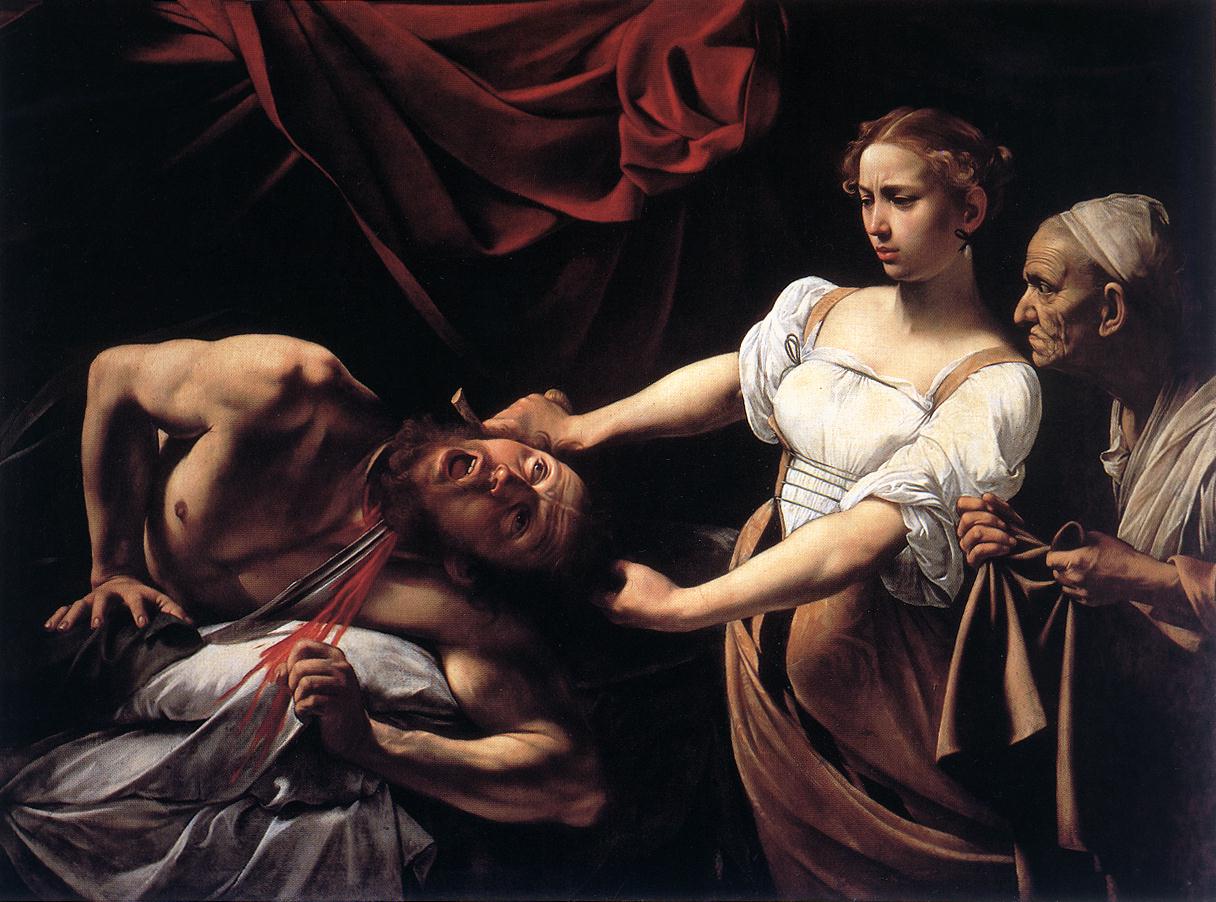
    Fillide as Judith in “Judith beheading Holofernes” (1599)
    Maddalena Antognetti as “Saint Catherine of Alexandria” (1599)
    “The conversion of Saint Paul” (1600-01)
    “The taking of the Christ” (1602)
  • Articles - Italy

    Hedgehogs in the Fog

    Getting a flu with heavy cough just as I was preparing to travel from Italy to Spain, I bought a pot of delicious “linden honey from the tuscan hills” to sooth my throat, but it was confiscated at the Amerigo Vespucci airport on Uncle Sam’s orders.

    Apparently, even solid-type honey counts as a “liquid” and cannot be transported. I offered to taste it in front of the agents to prove that it was not any kind of explosive device, but it was useless. Rules are rules, even when they are completely nonsensical.

    The “no liquids” rule on flights was created in 2006, following the discovery by British authorities of a supposed “Al Qaeda” plot to blow up planes using hydrogen peroxide (which reminds me, I also had pharmaceutical hydrogen peroxide in my bag, which was also confiscated, perhaps with more reason) and other flammable liquids hidden in soft drink bottles.

    Of course, now we know that “Al Qaeda” was mostly an invented boogeyman, Bin Laden was a CIA agent who was not responsible for 9/11 and who was not killed and “buried at the sea” by U.S. Navy Seals, and that a lot of of those “terrorist plots” were actually created or at least promoted by the same authorities that were supposed to combat them. Besides, in any case today there’s already a technology that allows for scanning and identifying all kinds of liquids, but no matter. The nonsensical rule continues to be enforced in most airports. (I wonder if it’s just something pushed to make passengers only buy stuff at the more expensive Duty Free shops).

    At least they mercifully stopped with the masks and vaccine passes. The “war on terror”, just as the “war on viruses”, which are really both ways of “war on normal life”, must go on.

    In the meantime, Uncle Sam spent last year one million dollars in a study trying to turn monkeys transgender. Apparently, it’s not enough for the U.S. to turn every child in the world into a transsexual, they have to do it to the long-suffering Rhesus monkeys too. Of course, that’s just pocket change compared to the billions sent to the Ukraine or to Israel to help them bomb Palestinian children and shoot Christians.

    If America contained its madness into itself it would be already bad enough, but they want to export it worldwide, and spare no effort or newly printed money in the process. Critical Race Theory, George Floyd Riots, school shootings, transgender-mania, mass migration, radical feminism, “woke casting”, every bad idea seems to start in America and then is pushed to everyone everywhere, from Egypt to Uganda. No one is safe.

    Sure, we cannot just blame America. The whole West, lulled by its relative prosperity, is willing participant in the madness. People in the West are so apathetic they even forget to reproduce themselves, and many countries are having negative population growth (no matter, they can be replaced by hordes of Asians and Africans, we’re just numbers). In Canada, however, population replacement by migration is now considered too slow a genocide, so they are pushing euthanasia too, for anyone over the age of 18 suffering from depression, anorexia or drug addiction.

    What cannot go on forever, probably won’t. At some point the madness will end, but who knows how many people will have been killed, hurt or psychologically damaged before it happens.

    But hey, it’s Christmas. It’s a time for hope and joy, so let’s celebrate what we can. (I’m a bit grumpy because of my flu, but I love Christmas).

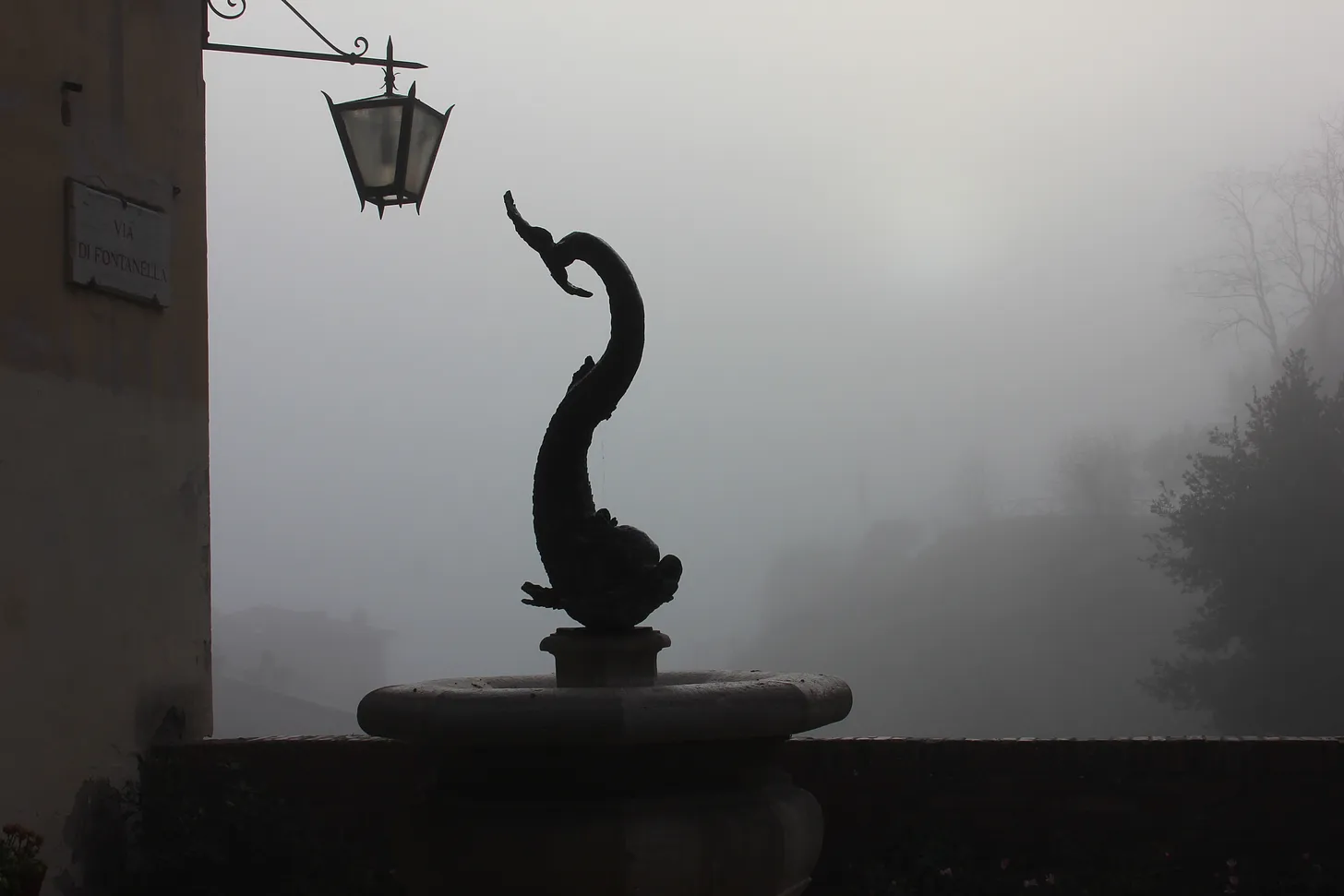
    As I left Siena early in the morning, it was so foggy you could barely see ten steps ahead, which reminded me of the beautiful animated short movie by Yuri Norstein, “Hedgehog in the Fog“. It is a deceptively simple story about a hedgehog who, on the way to visit his bear friend, gets lost in the thick fog of the forest. As he tries to find his way through the unknown, like all of us, he wavers between fear, surprise and occasional wonder. (Spoiler: in the end, he finds his way. We will find it too.)

    Merry Christmas to all.

    Foggy Siena
    Il Campo in Siena.
    Young Italian student reading “1984” on the train.
    The Virgin, Jesus and… a duck?
    Ironic nti-vaxer poster in Lucca.
    Ironic anti-immigration poster in Lucca.
    Mural painting about the Gaza massacre in Lucca.


  • Articles - Featured - Italy

    From the lives of Tuscan Saints

    Gemma

    Saint Gemma Galgani was born in 1878 into a poor family in a small village near Lucca, but they soon moved to Lucca as her father, a pharmacist, found work there. She was the fifth of eight siblings, only two females, the rest males. As it happened to other poor people at the time, death was an early companion. Two of her siblings died still in their early childhood. Then her mother died when Gemma was only 7 years old. Her father died when she was 19, and she herself was frail and plagued by many different health problems all her life, and died at just 25 of tuberculosis.

    And yet, looking at her photographs, you see a face that seems calm and serene.

    Most famous saints were born and died before the invention of photography, but we have wonderful paintings of them by famous artists. With Gemma, it’s the opposite. When Saint Gemma was canonized, in 1940, modern art was already in full swing, so there are no great paintings of her, but there are two or three beautiful photographs — and only because she was ordered to by her confessor, as she didn’t like to be photographed.

    I visited the Sanctuary of Saint Gemma in Lucca — which is also, by the way, the hometown of opera composer Giacomo Puccini, but I only found that out because there was a giant statue of him right in front of the place I was staying — and also Casa Giannini, which is the house of the Giannini family that basically adopted her after she became an orphan. A nun gave me a guided tour as she enthusiastically talked about Gemma’s life.

    There is another house where Gemma lived, which belonged to her father, the so-called “casa delle stigmata”, which is where she supposedly received the stigmata signs of Christ. I wanted to visit it too, but that required an appointment and unfortunately I didn’t have much time. Not having a car, my mobility was reduced, and I had to get to San Gimignano that same afternoon. It took me almost five hours to reach it by a combination of delayed buses and trains.

    Two other things impressed me in Lucca: that a lot of people moved around in bicycles, including some very elegantly dressed women checking their iPhone at the same time (this is not as common in Italy as it is in, say, the Netherlands), and the young students in the street selling, or trying to sell, the “Lotta Communista” newspaper. (I thought Italy’s love affair with the Communist Party was a thing of the past, but apparently not.)

    Fina

    San Gimignano is a wonderful little medieval town with nothing much going on except well, amazing churches and afrescos and towers, but during summer it is usually full of annoying British, American and German tourists. Thousands of them. (The American ones are particularly obnoxious. I remember once an American middle-aged woman saying about a similar medieval town: “it is beautiful, but everything looks the same”. “Let’s get a gelato”, his husband replied).

    Italy would be a wonderful place to visit if it wasn’t for the tourists.

    Now, I know, it’s not nice to complain about tourists when I am a stupid tourist myself. But the nice thing about visiting Tuscany in winter is that almost everything is empty and quiet. No lines, no crowds. The town, usually filled to maximum capacity in summer, right now has mostly deserted streets. I bumped with a few locals and a couple of Japanese tourists — there are always Japanese tourists, but they are quiet and polite and don’t bother me — but that was it.

    In San Gimignano, the most famous local saint is Santa Fina. Her life, if anything, was even more tragic than that of poor Gemma. Born in 1238 into a noble family that had, however, fallen into rough times, at just ten years of age she developed an illness that left her basically paralyzed. Refusing a bed with a mattress, which she thought too comfortable for a poor sinner like herself, she slept in a wooden pallet. During her five years of illness, her father died from some disease or other, then her mother fell down the stairs and died too. Fina got worse and worse and died at just 15 years of age, but with the same serenity as Gemma. There are no photographs of her, of course, and not even paintings made when she was still alive, but several paintings and afrescos in the local church and museum tell her story. Fina’s house also still exists, but unfortunately it is now a private residency and it not possible to visit it.

    For some reason, Saint Fina was never officially canonized, but don’t tell that to the people in San Gimignano. They hold not just one, but two processions in homage to her every year, one in March, and one in August. Unfortunately, none in December.

    Catarina

    Siena is another wonderful medieval town, certainly bigger than San Gimignano and even Lucca, although not as big as Florence. Dante visited it a few times  and mentions it in his Comedy. Catarina di Siena — Saint Catherine — was born there just a few years after Dante’s death.

    She didn’t live to old age either, but at least managed to reached a slightly more respectable age of 33 years old — the same as Christ — when she died. While like Gemma and Fina she also lived a personally humble and austere life, contrary to them she was not from a poor family and eventually she also became heavily involved in theology and politics. In fact, she’s famous for having managed to help solve a schism and convince the then Pope to return to Rome from Avignon — were it not for her, perhaps the Papal seat would today be located in France.

    There are many paintings of her, at least one of them contemporary, and her real head can be seen in the Basilica of San Domenico in Siena. It is an impressive sight. Her head is supposedly “uncorrupted”, that is, the skull was never mummified by artificial means, but somehow remained with skin around it — for over 600 years.

    When I visited it, Siena was also relatively quiet in the morning and early afternoon, but then, at around 4 PM in that lazy Sunday, the streets suddenly became filled with people. Where did all those pedestrians just come from? It seemed as if everyone and their mother had decided to come out of their home at exactly the same time. Perhaps it’s just because “lunch time” in Italy is from 1PM – 4PM and most shops are closed during that period, but it was odd.

    I don’t know about my two or three remaining readers, but I am fascinated by the lives of martyrs and saints. They usually have lead such rough, difficult, even tragic lives, full of suffering and pain, and yet they withstand everything with the utmost serenity. “Well, that’s why they are saints”, you’ll say, while we’re just stupid sinners, but having just a diminutive crumb of that serenity and internal peace would certainly help in this day and age.

    And by coincidence — but, some say, there are no coincidences — as I had finished writing this text at around 9 PM, I went out to see “what was going on” at night in San Gimignano in winter. As you can imagine, not much. The streets were deserted and all shops were closed. But there seemed to be light inside the main Church. The door was opened and I entered. Inside, there were a few people, mostly older men and women between the ages of 60 and 80, which I suppose is the average age of the local inhabitants. (This is not a joke, as the recent local obituaries posted in the street showed ages between 97 and 102.) Most young people who work in the local bars or shops don’t really live in San Gimignano, but in other nearby towns.

    Turns out they were all waiting for the “Novena di Natale”, or Christmas Novena. And, in his homily, the priest spoke about “sanctity”. But he emphasized that he was talking, not about the sanctity that we associate with the most famous Saints, but the everyday “sanctity” that even we can achieve, in little ways, or, at least, in some ways. The Novena ended with the beautiful Christmas song “Tu Scendi delle Stelle” (you can hear it here in a version in a more polished version by Andrea Bocelli).

    Merry Christmas to all.

    Saint Gemma’s house (“Casa delle stigmata”) in Lucca.
    Santa Fina in her wooden bed fighting demons.
    The amazing Chiesa della Santissima Anunziata in Siena.
    My only dinner companion in San Gimignano.
    San Gimignano at night in December. Merry Christmas.
  • Articles - Featured - Italy - Russia

    You can’t go home again

    Language as a home

    “The Russian language is my homeland”, wrote the great poet Anna Akhmatova. She was born in Odessa but lived mostly in Saint Petersburg. She descended from Ukrainian cossacks on her father’s side and from Russian nobility on her mother’s side.

    She could have escaped during the 1917 Revolution, as friends of hers did, but chose to stay instead. She knew she was giving up freedom, but she said she could not bear to live in exile, like a stranger in a strange land.

    Her first husband was shot by Lenin and her son was sent to the gulag by Stalin. But she never left the Soviet Union, except for brief trips at the end of her life, authorized by the regime.

    She wrote patriotic poems and read them to soldiers during the siege of Leningrad, but she also wrote “Requiem”, a long poem about the Stalinist terror, published only posthumously in Russia in 1987.

    The English language is not my homeland. I write in English because I lived for many years in English-speaking countries but it’s not my mother tongue — I think I write decently in it, but it still doesn’t feel completely natural, and my pronunciation is not great. But I lived in so many countries, I don’t know in which language I should write anymore. And, unlike Akhmatova, I live in exile. A stranger in a strange land.

    Tradition as a home

    There is a YouTube channel I like called Pasta Grannies. It interviews year old Italian grandmas who make pasta the traditional way. The last one was about a 96-year old grandma making homemade pesto.

    It is beautiful, but it’s also kind of sad. Will this tradition be kept alive in the future?

    Italy has a fertility rate of less than 1.3 children per woman, and, on top of that, it is receiving thousands of foreign migrants every year. As in France, increasingly even small towns are full of immigrants, and locals are not having children, but just getting old.

    Will these African, Arab and Asian migrants keep the handmade pasta tradition alive? Highly unlikely. They are bringing their own traditions with them.

    Most of the illegal migrants board boats on the Libyan coast. They could be easily transported to Tunisia, which is much closer, but Tunis doesn’t want them. So German NGOs picks them up just a few miles off the Libyan coast, and bring them to Lampedusa. There, the EU makes it impossible for them to be deported. So they remain, but many don’t have jobs, and not even a lot of benefits.

    Italy is not really a rich country, and many Italians are struggling right now, so you can imagine that most of those migrants are not really having the dream life they were told they would have.

    Since it’s German NGOs that bring them, perhaps the Italians should put them all on buses and send them to Berlin. Germany also offers better benefits to migrants, so it would be win-win.

    But Meloni is not doing anything about it, and she recently even implied that she wants to increase legal immigration to the country, bringing in people from India too.

    Say what you want about Salvini, at least he wasn’t as big a disappointment as Meloni proved to be.

    Now the EU has a new agreement that all member countries must share the enrichment. So Poland, Hungary and other countries not so near the Mediterranean will receive their share too. It’s only fair.

    No home even at home

    In 1973, French writer Jean Raspail wrote the novel The Camp of the Saints, which was an early warning about mass immigration. Despite its relevant theme, the book is out of print. You can buy it at Amazon for 1,000 dollars, which is more than most immigrants pay to the smugglers for their boat ride to Europe.

    I don’t even blame the migrants. Some demonize them, but, well, most of them are just poor people who are just being used by others in power — to lower salaries, to create conflict, maybe one day to start a new war, who knows. They probably wouldn’t even come if there wasn’t an incentive from the European governments for them to do so. As Akhmatova knew, it’s hard to live away from one’s homeland.

    And in the end, that’s what it is all about. Those migrants only come because the European and American governments are pushing it, and even paying for it.

    Just the other day some mayor of a small town in Germany said he was going to install converted containers to house refugees in a primary school, against the parents’ wishes, and he even bragged that there was nothing anyone could do about it.

    What is that if not a big “F.U.” to the local population?

    Mass migration is portrayed as some kind of natural, unstoppable force, like a tsunami, but it’s exactly the opposite. Billions of dollars or euros are spent to bring those migrants, and then other billions are spent to host them in apartments or containers or camps, and sometimes they even receive a monthly wage.

    Occasionally the governments even complain that it costs too much. Well, what about, just stopping spending all those billions?

    Of course, it won’t happen. It’s an engineered program that could easily be stopped if there was just the will. But there isn’t.

    If the migrants feel bad, if they can’t find a job, if they suffer with racism and xenophobia, if their life sucks and Europe or America is not the shining city on the hill they were promised, they can always go home.

    But you, my friend, who grew up under the shadow of those native trees, whose ancestors built these old medieval towns and churches that still stand, you have nowhere to go.
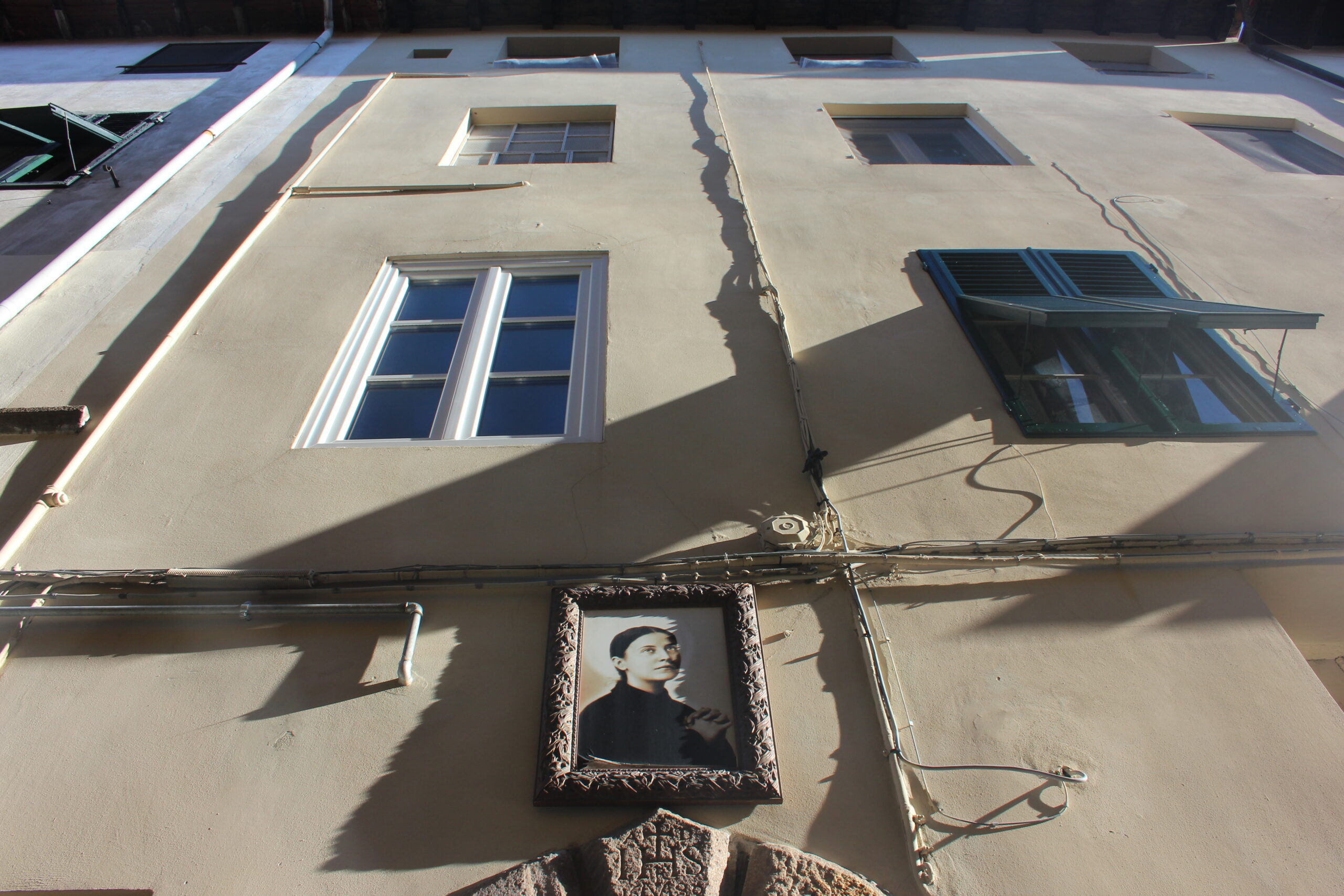
    Your country has changed. Your life has changed.

    You can’t go home again.

    No one wants to help us
    Because we stayed home,
    Because, loving our city
    And not winged freedom,
    We preserved for ourselves
    Its palaces, its fire and water.

    (Anna Akhmatova, Petrograd, 1919)

  • Italy - News

    Italy: Crime increasing in Milan

    Source: Ansa, Corriere

    The province of Milan was confirmed at the top in a recent 2022 Crime Index among 107 Italian provinces.

    It is the territory with the most thefts for every 100 thousand inhabitants, especially in shops and parked cars; the metropolitan city is also the seventh in reports of sexual violence, second for robberies in the street, and third for gangs and criminal association.

    While the number of murders is down, robberies and sexual crimes are increasing, mostly in the peripheries where there are more immigrants, many of whom haven’t successfully integrated.

    Near the main train station and in the touristic zones, gypsy pickpockets are common. According to the Corriere della Sera, most of them come originally from Bosnia, Croatia and Serbia and live in the periphery of town.

    While the women steal the purses, the men divide the money and plan which areas to attack next. They usually prefer to rob distracted tourists, and, according to one criminal, “Japanese tourists are the best”.