I must apologize to my few remaining readers and viewers, but the older I get the less interested I become in politics. Someone once said that politics is “Hollywood for ugly people”, and it is true in more than one way — it is, in fact, little more than theatre, play acting. None of it is real. The real deals happen behind closed doors, away from the media, between people you’ve never heard about.
But the masses like to pay attention to politics, because of all the drama. So it is what it is.
In the last video, I said that the 1990s were cool, or, at least, better that what came after in the 2000s, but then someone from Russia said, “No, the 90s sucked!”
One funny thing I found, is that, no matter what you say, there is always going to be someone who disagrees.
In any case, of course I was mostly talking about the American Empire — you know, the US, Western Europe and South America. The part of the world that was under the Iron Curtain went of course through a different timeline. And Eastern Europe was always a different universe.
Today I tend to think that the Cold War was mostly fake, and that the same families basically ruled both systems, but still, they were very different systems, and so in that context it made sense for Western Europe to be allied with the United States. The politicians and the companies got their money and people got their individual freedom and their consumerist paradise.
But now, what is Europe getting from the US, except being forced to buy American weapons, American gas, to have American military bases, to be involved in their wars and to import their multiculturalism and their increasingly weird culture?
I’ve lived in the US, in South America and now in Europe, and the decay in all three regions is very visible, but most especially in Western Europe.
So, Europe could only gain from leaving the influence of the US and the Anglosphere, and have more friendly relations with China and Russia. It just makes sense, even because of resources and geographical proximity. Also, China and Russia are not perfect, but they do not seem so interested in promoting, you know, multiculturalism and gay marriage as moral imperatives.
Now, notice that I am talking about China and Russia, I’m not talking about BRICS. I don’t think Brazil and India are ever going to be very relevant, except maybe as regional powers, and South Africa not even that. But China and Russia are going to be very relevant to Europe, and I don’t think Europe gains much by making them their enemies, just because Uncle Sam said so.
Of course, the main problem of Europe is spiritual. They just don’t believe in themselves anymore. They don’t believe in their traditions or their culture. They believe only in angry climate gods. Hedonism and instant gratification and consumerism is all they care about, and they can’t even be bothered to reproduce. Abortion for the young, euthanasia for the old.
So unless the culture can change in more profound ways, I don’t see any future, regardless what happens. China and Russia are just more confident cultures right now. Europe is old and decadent, in more ways than one.
But, then again, what do we know? Maybe something else will happen, something that we still don’t quite know or understand. Maybe things will change. Maybe Europe can be saved. Let us hope. Let us pray.
Recently there was a discussion online about which decade was the best: whether it was the 1960s, or the 1970s, or the 1980s, or the 1990s. And I noticed something interesting: that no one mentioned the 2000s.
Sure, it’s still early, and the discussion was mostly among older people who grew up or were young in those earlier decades, but I have the feeling that not many people in the future will have very fond memories of the 2000s, 2010s, 2020s. Because those decades were and are mostly awful. Even for young people, or especially for young people.
Will anyone be nostalgic about the 2020s? What’s there to remember? The Covid stuff? The permanent wars? Increasing censorship? Growing social disintegration?
Currently it’s a pretty bad period for young people. The economy, at least in Europe, is going from bad to worse. Germany, which used to be an economic powerhouse, now has negative growth and record unemployment. France is even worse. People are not having children anywhere and the whole of Europe is being taken over by foreign migrants.
Europe was for decades considered as a safe place, but in recent years I’ve known of several people in England, Spain, Italy and Germany who have been mugged in the streets, or worse. The governments have brought so many migrants from Africa, India, South America to replace their own population. And, guess what, now Europe is having more and more crime and dysfunction like in Africa, India and South America. Who could have guessed, right?
The job market everywhere is awful and growing automation threatens to put everyone on the streets, at the same time that they cut all benefits, and buying a house is impossible for the young. So, yeah, things are looking pretty bad.
And it’s clear that the 1990s were the last “happy” or at least the last memorable decade. Also because it was before social media, which in fact has been a catastrophe for social relations, and people still met and talked in person. White people were still a majority in most Western countries, and social degeneracy hadn’t progressed all that far.
What happened after that?
The 2000s were completely taken over by 9/11 and terrorism paranoia and war, and even the more well-known movies from that period were all about that, such as for instance the Batman Dark Knight movies. Then the 2010s, I can’t even think of anything very distinctive about those years. Well, I guess there was Breaking Bad, and a few other things, but nothing that makes as think of it in terms of a culturally unique decade. And the 2020s, well, it was marked by Covid, war everywhere, and now AI.
Not a lot of memorable things in terms of film of music, but I don’t really watch a lot of modern movies or listen to modern music, so I wouldn’t know. Perhaps Squid Game, signalling the end of Hollywood dominance and the raise of Asian productions, but, to be honest, the series wasn’t even that great or original, and the ending was awful.
But let’s go back and talk a little bit about the previous decades, before the deluge.
The 1960s
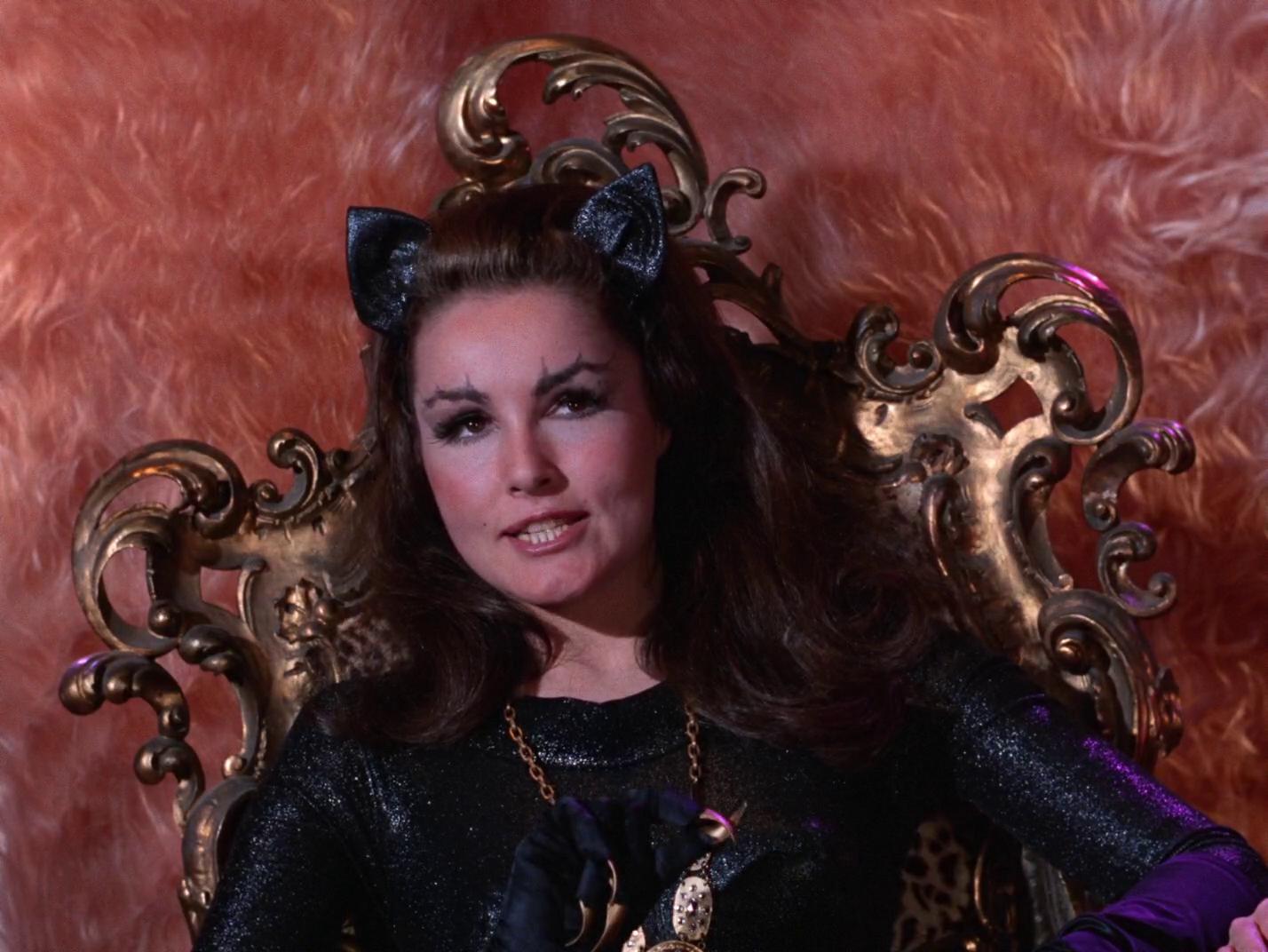
Recently I was re-watching some episodes of the 1966s series “Batman” which I remember watching in my childhood.
I didn’t grow up in the 1960s. I’m old, but not that old. But in the 1980s, when I was a child, we didn’t have streaming, we didn’t even have cable, and a lot of things in network television where I lived were actually reruns of older series. So I grew up watching Batman, Bewitched, Jeannie, and so on. The pretty women in those series were my first crushes.
Julie Newmar as Catwoman was amazing, and seeing her again now in my middle age, I can see better why. You can mark the decadence of the intervening years just by looking at all the later actresses that played Catwoman. Not one of them had the same sexiness or humour or poise or charm. I mean, I love Michelle Pfeiffer, but I preferred her in other roles. Newmar is Catwoman. And I don’t think that she was even a great actress, it’s just that she was perfect for that role.
The impression I get of the 1960s is that they were a fun time to be alive. Sure, it was the beginning of the long march through the institutions, and of course there was already some brainwashing even in those early TV series, but it was just the very beginning, and most things were still pretty innocent. Batman and Catwoman don’t even kiss.
The dialog is surprisingly literate for a children’s show. Batman uses a lot of fancy words and alliterations. Even Catwoman at some point says, “it is time to separate Damon from Pythias”. Even I had to search that one, and it refers to an old Greek myth about two inseparable friends. The point being that at the time, people tended to have more culture and would still grasp such references. If you watch game shows or talk shows from the 1950s and 1960s, you will probably be surprised to hear how articulate and elegant most people were. Compare it to how people talk and dress today. It’s like another planet.
So I think the 1960s was a good decade, even though it was the start of the process that lead us to today.
The 1970s
The 1970s had good things in terms of music, and some of the best films were made in this period, both in the US and in Europe — remember when there was such a thing as European movies? — but it was also a period in which the cultural brainwashing started to be more direct.
In retrospect, the 1960s seem very naive. Peace and love, free love, yes, but in many ways it was all still very innocent. But in the 1970s, things started to get dark.
For instance, the whole androgyny thing started to be pushed hard in this period, as well as hard drugs and satanism. In many ways, the 1970s were like a dark version of the hippie 1960s, even if it still had some good things going on.
The 1980s
Probably the 1980s were the peak decade of the modern Western world. I was still a small child during this period, but I have fond memories of the 80s. As a child, I remember playing a lot outside in the streets and having lots of fun.
And of course you still had access to the best that had been produced in the 1960s and 1970s. But the 1980s were still a very distinctive decade. You had great films, great music, there were some great alternative indie bands, there was a sense that something new and beautiful was starting.
Even TV was good. All my 1960s TV crushes were suddenly replaced by Cybill Shepherd in Moonlighting, who seemed like the most beautiful woman I had ever seen. And it was probably the golden age of sitcoms, even if, of course, brainwashing was already on overdrive, but it still wasn’t as bad as today.
There was some exciting new technology, such as the walkman and computers, but of course people were not all the time glued to their screens as they are now. Mostly, I think there was a good balance, and it was a time of unbridled optimism.
And, if in recent years there have been a lot of shows about 80s nostalgia, it is because the decade really was memorable in many ways. So, for me, the 1980s gets the vote as the best decade, even though I am more of a 1990s child.
The 1990s
The 1990s, as I said, was the last “happy” decade. But was it really that happy? Its most distinctive musical movement was so-called grunge, which had depressive songs with dark lyrics, and its main star, 27-year old Kurt Cobain, used heroin and ended up shooting himself in the face. So, not such a happy period in many ways. Movies also started to have a darker tone. On TV, one of the most memorable shows, at least from the early 90s, was Twin Peaks, and it was good but it wasn’t exactly light-hearted.
But it was still before social media took over, and people still seemed to be having fun, and going to parties, and the women still tried to look pretty instead of being, you know, angry and fat blue-haired feminists full of piercings and tattoos.
Do young people still go to parties today? My impression is that most people just stay glued to their phones. Even when they go to parties, they still stay glued to their phones and can’t wait to go home. And children rarely play outside anymore.
So, I don’t think many people will be nostalgic about the 2020s, but there is hope that, you know, in the 2030s and 2040s and beyond, there is going to be a new Renaissance, and things will start to recover and get better again. I am probably not going to be here to see it, or if I am I will be too old to enjoy it, but I hope that things get better again, for the sake of today’s children.
On coincidences, Swedish movies, and polar expeditions
1. Strindberg, August
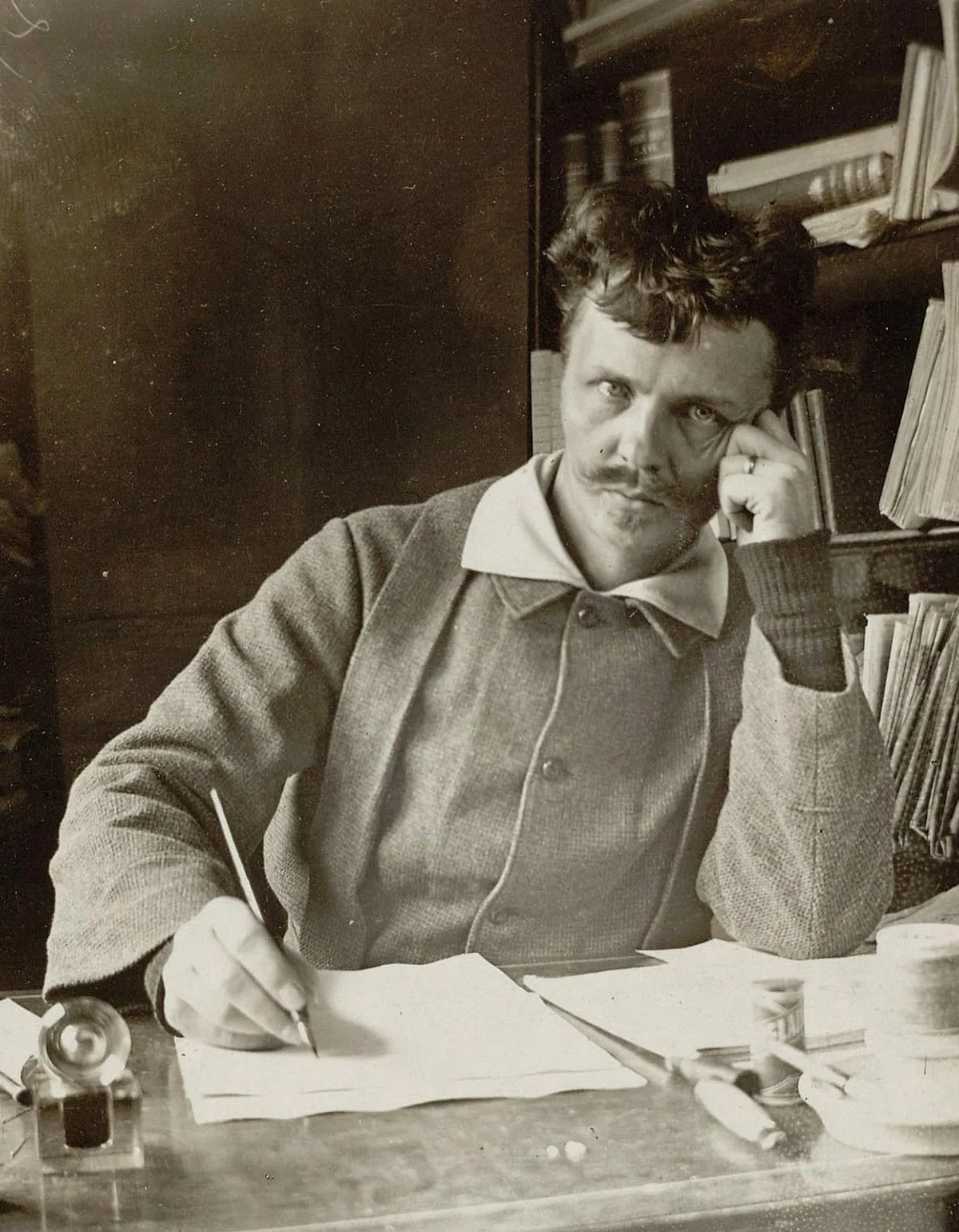
At a small local bookstore here in Spain (Catalonia), I saw a brand new edition of August Strindberg’s Inferno with previously untranslated texts and a beautiful cover in black and red, so of course I had to have it. The few remaining readers of this blog may know that I’ve been fascinated by the crazy but brilliant Swede even before my first visit to Sweden in 2022, and that I even published a selection of texts from his Blue Book (it can be purchased on Amazon or Barnes and Noble).
A few days later, I watched “Raven’s End” (1963), by Bo Widerberg, a very interesting Swedish film from 1963 about a dysfunctional family living in housing projects in Mälmö, and here Strindberg’s ghost appeared again in the form of a statue, during a visit of the young protagonist to Stockholm.
Then, thanks to the algorithm, I watched yet another Swedish film, “Engineer Andrée, Balloon traveler” (aka The Flight of the Eagle, 1982), with Max von Sydow, about an ill-fated Swedish balloon expedition to the North Pole. The film itself is not that great, just average, but the story is interesting. It was based on the real story of three Swedes who tried to reach the North Pole for the first time in 1897, using a balloon.
One of the three adventurers is called Nils Strindberg.
Now, in Strindberg’s Inferno — at the time he is in Paris doing strange chemical experiments while his wife and daughter are in Germany — August writes that he has just received a letter from his wife, who has read in the newspapers that a certain Mr. Strindberg plans to fly to the North Pole in a balloon. She admonishes him to give up on such a reckless adventure, equivalent to suicide.
He replies explaining that it is not him, but the son of a cousin who is doing it for the glory of science.
(Speaking of glory of science, not many people know that August Strindberg basically invented the “selfie” in 1886. Well, not really — the first self-portrait had already been made by Robert Cornelius back in 1839. But he invented one of the first working self-timing devices, with a tube connected to a camera, which allowed him to take hundreds of self-portraits of himself and his family before it became all the rage in 1899.)
2. Strindberg, Nils
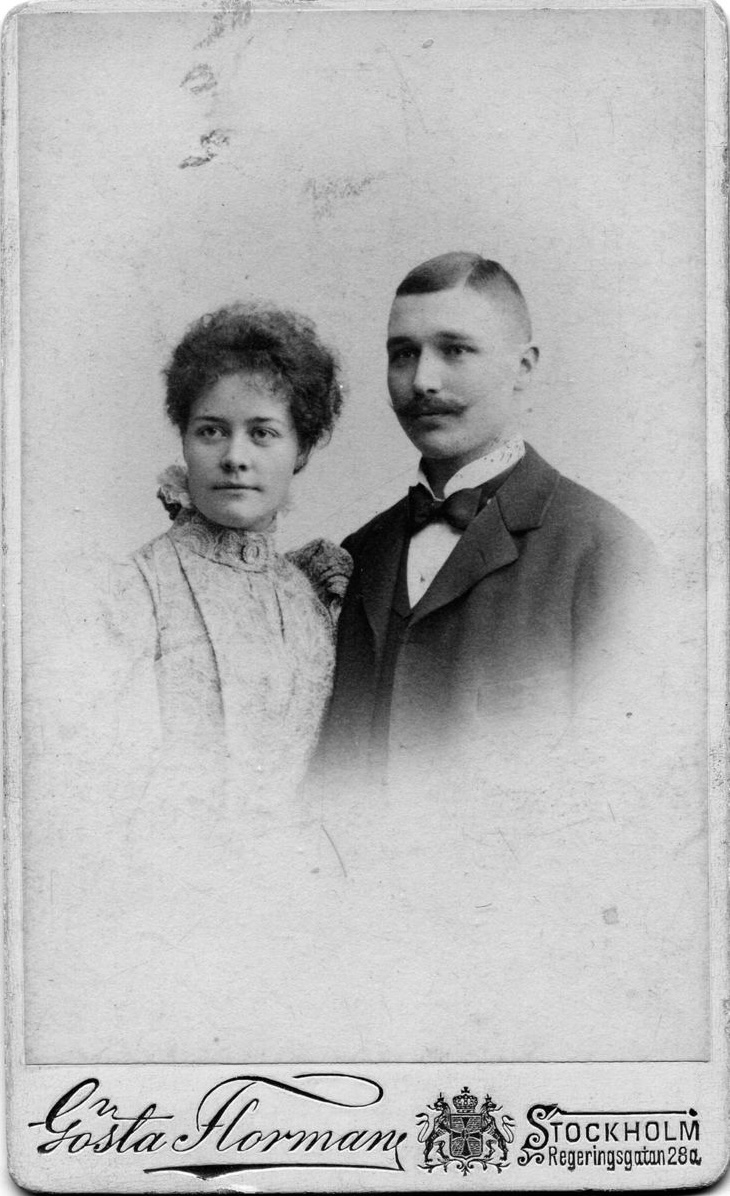
The story of August Strindberg’s cousin is interesting. He joined the expedition as a photographer and second in command, despite the protests of his fiancée, Anna Charlier (at those times, women were not very keen on their fiancées or husbands joining dangerous polar expeditions). During the travel, he writes to her several letters.
The first one through a homing pigeon, although it is not clear if she received it — apparently, the pigeons were not trained to find their way back, so many messages were lost.
The second one, in a tin can thrown from the balloon over the island of Vogelsand, in the Svalbard archipelago (Norway). This one, so far, has never been found.
Nils kept writing several other letters to his beloved fiancée, but since there was no way to post them in the Arctic, they remained with him.
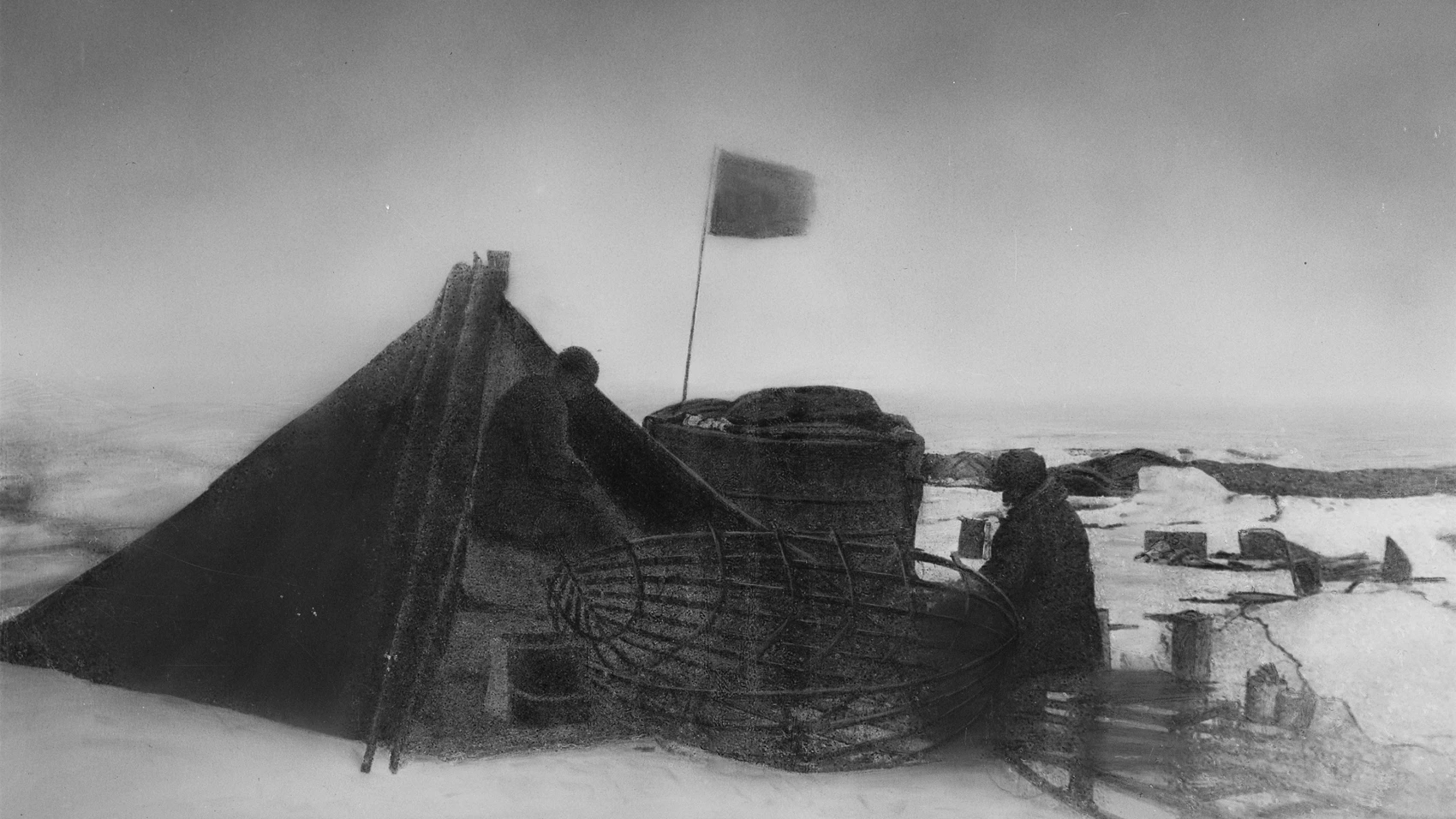
The balloon came down in the ice pack, still far from the North Pole. The three men were stranded on the ice for almost three months, hunting polar bears to survive, and trying to walk back home, all the while pulling their heavy sleds with provisions. They walked miles and miles, hoping to get back to civilization, but they never made it. And for years, no one knew what happened to them.
3. Anna’s heart
In the meantime, Anna, after waiting 13 years, married an Englishman and moved to the United States. They had no children together, and, it is said, she never forgot her first love.
In 1930 the remains of the three adventurers were finally found when a sealing vessel passed by chance near the island of Kvitøya. They found the remains of a tent, three skeletons, the journals of the three adventurers, the letters that Nils wrote to Anna, as well as several cans of undeveloped film, which later reveals all photographs taken by Nils documenting their incredible journey.
By coincidence — although one could say that there are no coincidences in such things — Anna is in Sweden at the time that the remains are found. A few weeks later, there is a huge funeral procession in Stockholm, with at least 100,000 people, to which Anna, now back in the US, sends a wreath: “to Nils, from Anna.” She also receives from a common friend a copy of the letters that Nils wrote but could never send. A picture of Anna and a locket of her hair are also found next to his cold dead body.
Anna dies in 1949 but she has one last wish, which is granted. While her body is buried in England, next to her husband’s, her heart is removed and cremated. The ashes are placed in a silver box, which is placed next to Nils Strindberg’s ashes, and both now rest together in a cemetery in Stockholm.
How’s that for a romantic ending?
4. Mountains of Madness
The finding of the explorers’ remains gave raise to several speculations, generating studies and novels about exactly what happened during that time, and it also served as inspiration for several other stories — including, for instance, H. P. Lovecraft’s “At the Mountains of Madness”, written in 1931, which starts with an ill-fated polar expedition, only that in this case it is to the South Pole.
Apparently, one of the reasons for the failure of the 1897 balloon expedition was that it may have been rushed and overlooked safety issues. However, the main organizer, the engineer Salomon August Andrée, obtained too much money and support and may have felt that he could not simply abandon or delay the quest without deluding his financiers and supporters, who included Alfred Nobel — a sort of Elon Musk of that time — and the King of Sweden.
In 1897, there were still new technologies and unexplored corners of the Earth, and brave adventurers eager to discover them for fame or fortune.
Today, by contrast, in the age of hype and AI, everything seems fake and there is little personal risk involved for the adventurers, except perhaps of being found in some kind of scam or deception, or the whole thing made with AI and CGI. But that’s a whole different story.
“Try again. Fail again. Fail better”. This is a quote by absurdist writer Samuel Becket that is usually interpreted in a negative way, but I see it as actually positive.
First, let me preface that by saying that I am no great fan of Becket. His existentialist plays are among the most boring things ever produced by mankind. I don’t go so much to the theatre — it is expensive and usually disappointing these days — but I like reading plays. And I even enjoyed reading plays of some absurdist authors, such as Ionesco. But Becket’s plays are boring even as reading material. Almost as boring as waiting for Godot himself. But — well, I like that sentence. It’s a good one.
Applied to art, or really to any process that requires extended effort, it means that you are going to fail many times, but eventually are going to improve as well. You learn by failing. You are always going to fail, there is no such thing as a complete success, but it is slowly going to get better. In the end, all you can do is get closer to an ideal, which functions as a lighthouse guiding you, more than a final objective. Which reminds me of another quote, I think by painter Salvador Dali: “Do not be afraid of perfection. You will never reach it”. He was a megalomaniac bastard, but he was right.
I am very far from perfection, or even from attaining a decent quality, but I see that there has been at least some improvement in my painting, and that is, at least for now, sufficient. Each new painting builds on the lesson of the previous failure and becomes better. This happens even on the same painting: I usually tend to work in layers and each version becomes better or at least more refined than the previous one.
This lesson, in theory, could also apply to our personal lives, but in practice I haven’t seen this happening. There, it is just failure over failure and we don’t seem to learn anything from our previous mistakes. Like the dog returns to the vomit and the fool’s bandaged finger returns to the fire, we always tend to repeat the same errors one way or another. I believe this is because our our broken, sinful, human nature. “From the crooked timber of humanity, nothing straight can be made”. I think this one was by Immanuel Kant. Can you change human nature? No, you Kant. (Sorry for the bad pun).
And of course, in social and political issues, since we are dealing with a collective of crooked humans, the exact thing happens — mistakes are made and repeated over and over and no one learns anything from them. Things change, but we don’t see much general improvement, except perhaps for brief times and in very specific periods. That’s why I think the “progressive” view that sees society as perpetually evolving towards some utopian social ideal is incorrect and stupid. There will never be an “utopia” on Earth. However, the “conservative” view is also wrong, as there is no “utopia” back in the past either. The best we can hope for is some sort of resignation to our imperfect natures and making the best out of it.
But I digressed and forgot what was the point I was trying to make. I think, mostly, that you can improve your artistic skills with constant practice, but the same is not completely true in “real life”. Although, even there, some small improvement may be possible.
Ah, no, there was something else: what I mentioned about painting is valid mostly for realistic painting, where you are trying to copy a model or a reference, although I suppose it could apply to modern abstract painting as well. By the way, I don’t think “realism”, whatever that is, is the main quality of a work of art or even a good objective to have.
Sometimes I hear people say, “wow, what an amazing painting, it looks like a photograph”. That is the mark of a philistine or an idiot. As if an accurate representation of another two-dimensional illusion was what art was all about. Most of the modern hyperrealistic paintings, by the way, are really boring, reproducing random prosaic objects or human models in extremely uninteresting poses.
The great Renaissance masters such as Leonardo, Raphael and Botticelli were not “realists”. Their paintings certainly do not look like photographs. But even the later masters of the Baroque, such as Velázquez and Caravaggio, who were the closest you may get to a “realistic” representation of human figures, are not realistic — if you look closely into their paintings, you will see that some details are done just with a couple of brushstrokes. Painting is all about illusion, not reality.
Okay, let us finish this absurdist soliloquy with another quote, this one by Kierkegaard, illustrating the difference between how people see us and how we see ourselves. Thanks for reading, and see you around.
You know what’s funny? That while we are not allowed to know anything about the lives of the rich and the famous and the politicians and who they spend their time with, they are collecting all our personal data — social, financial, biometric, genetic — to feed a new AI super-system that will control basically all our lives.
And, while the elite parties in their secret chambers, and no one releases a list that in fact doesn’t exist, society is slowly disintegrating and turning into a living nightmare for the rest of us.
There are riots going on in Murcia in Spain after an old man was attacked by a Moroccan national. But if you read the Spanish media, it’s all about Spanish people going racist against innocent migrants for no reason. But “racism” is a fake accusation. It is gaslighting. After all, it is the same government that is aiding and abetting this migratory policy that no one voted or asked for, but then call you a racist if you complain, as if the fault was yours. And there’s not even any real “racism” involved, as the main complaint is that a lot of those people are just criminals.
Conservative or progressive, it’s all the same.
In Italy, the supposedly right wing government of Meloni just announced an agreement to bring in half a million Indians to Italy to “fight a labour shortage”. Meanwhile, thousands of young Italians have to move to Germany and England to find jobs. Italy doesn’t want them. They prefer to import foreigners and pay them less.
In Germany, there is now a supposed conservative leader, but did he change the policy of the previous government? No, they are still sending money and weapons to corrupt politicians in the Ukraine, a project that by now no one except politicians and their handlers care about.
The economy is going down in most European countries. Even Germany, the former European powerhouse, is struggling. But does any politician care? No, why should they? They have their champagne and their caviar. They have their bunkers in case things go wrong.
Of course, the politicians are just actors, puppets. Their job is just to spew platitudes and pretend that they are doing something. But did you notice that, no matter whose politician is supposedly in charge, things seem to go always only one way? Other people in the shadows control things. Politicians can be easily replaced when they become useless. The same hidden hand controls both left and right.
In “The Shadow over Innsmouth”, horror writer H. P. Lovecraft imagined a degenerate race of inbred fish-people who slowly take over the world. This seems to be the reality of our present elite.
I don’t know if they are lizard people or fish people or just inbred ancient bloodlines, but they clearly see themselves as a separate species from the rest of us. Untouchable and destined to rule over us slaves. Forever and ever and ever.
This one starts with a sad story. Not about someone I know personally, but a friend of a friend of a friend. But it could happen to anyone these days.
So, basically, there was this middle-aged guy, divorced, no kids, no girlfriend, lonely. His life was just work-home-work-home.
Then he met this cute Asian girl on social media. Mostly they exchanged messages and pictures, but they even had a voice call once or twice. She lived in another country far away but wanted to move to the West. Everything was going well, they had great chemistry. They talked for months. Finally he said he had saved some money and could travel, they were supposed to meet in person, when suddenly tragedy struck. She had an accident. Her mother became very ill. Or maybe it was her father. Anyway, the travel had to be postponed. Then she needed money for the hospital or some other emergency. First one thousand. Then two thousand. Then some more.
Yeah, I know, you can already see where this is going. But he didn’t. Or it took him a longer time that it would take you and me. At the end of it all, he gave her over 20,000 euros, before she suddenly disappeared, never to be seen again. Driven to depression and alcoholism, the man then also lost his job and his health insurance and now his life is basically in shambles because of this woman.
I say “woman” because that’s what he believed, or wanted to believe, but, well, let’s be honest. It was probably a bunch of guys in Lagos or Hyderabad. The pictures were all fake, the voice, probably fake too (it can be done these days, you know).
There are entire businesses specialized in such sort of scam. Most of them operating from India and other places in the third world. Even I almost fell into one, not about relationships, but something about taxes, which sounded serious until I realized there was something fishy about the IRS wanting to be paid by PayPal.
But back to relationships, I find it interesting that most of those relationship scams for men involve Asian women. I suppose it’s because trust in the West is so low these days that no middle-aged guy would believe a twenty-something Western woman would be interested in him. But an Asian woman is still in the realm of possibilities, at least in theory.
Such scams exist for women too, of course, but in those cases they involve supposedly famous or rich men, because if men mostly desire youth, sex appeal and beauty, women desire status, money and fame. Brad Pitt, George Clooney, Bradley Cooper. Or just some random billionaire. I remember a recent case in which the guy pretended to be a billionaire, but then came up with some story about having been persecuted by gangsters and losing his suitcase with all his bank cards and documents and needing money that he would pay back very soon. So even though he was supposedly a billionaire, this woman ended up giving him I don’t know how many thousands of dollars.
Humans are very stupid creatures.
But such scams happen because people want to believe. They are lonely and they want to be loved. Perhaps deep down they know it can’t be true. But they pay for the dream to continue just a little bit longer.
And of course, with AI and all the current tools of deception this type of scam will only grow. Voices can be cloned and even video can be realistically faked today.
But the main problem is that loneliness is also growing, because social trust is being eroded. Paradoxically, the less trust there is between people, the more people fall for such scams, because there is no longer any measure of what is trustworthy. No one knows who to believe anymore.
Politicians? Forget it. They have less credibility than street whores. They have proven again and again to be just actors, and not even very good ones.
Journalists? Come on, man. They have a lower reputation than drug addicts and criminals. No one believes a word they say.
But even doctors and scientists, who had the trust of most of the public until recently, suffered a huge setback with the Covid stuff. “Trust the Science” has become an enormous own-goal for scientists and the medical industry.
Universities have also been heavily hit by their support of censorship and of extreme leftist stuff.
The arts, publishing and the entertainment industry have been for years little more than a propaganda operation, in many cases run directly by the CIA.
And the police? Back the blue? You must be kidding. Paid goons for the regime, that’s all.
The church, too, with all the scandals and the changes that took place since Vatican II, has lost a lot of credibility and public trust, even among religious people. Many people are still wondering if the new Pope is catholic or not.
Not even “Artificial Intelligence” and technology are being trusted by most people, despite the huge amount of propaganda being used to sell this stuff to us.
A recent poll called “2025 Trust Barometer” investigated the status of trust in institutions in 26 countries, both Western and non-Western, both first-world and third-world (whatever happened to the “second world”, by the way?).
They found that there has been a huge erosion of trust, which has been going on for more than twenty years, but really accelerated in the last five. Among other findings, they discovered that:
69% of people in 26 countries believe that their leaders are constantly lying to them.
68% of people in 26 countries believe that rich businessmen are constantly lying to them.
70% of people in 26 countries believe that the media are constantly lying to them.
After that, there is only one question remaining that is indeed quite puzzling: what the hell is wrong with the remaining 30%?
But even trust in families, in partners, is going down. In my grandparents’ generation, divorce was unheard of and everyone stayed together. Even in my parents generation, most couples stayed together. My parents did. But from my generation and younger generations, I don’t think I know a single person who has not been divorced or separated at least once. Most separated more than once, or are single mothers or single fathers, and many never even married at all. There is today a huge distrust between males and females.
I don’t know if there was a time when things were much better. Perhaps things always sucked. But it seems that years ago at least there was still a certain sense of community. I remember that the parents of our generation let us play in the street alone with other kids for hours, something that you rarely see these days. Of course, children don’t even play outdoors these days, they are just glued to screens, but you know what I mean.
I suppose a certain dose of skepticism is healthy, you don’t want to fall into scams, which have always existed one way or another, but you also need at least a minimum amount of trust to be able to live in a society. And this basically doesn’t exist today anymore. It’s one against all, and all against one.
I saw baby seagulls walking on the roofs of ancient cathedrals. I saw stray cats sleeping on Roman ruins. I saw nuns running towards the Vatican to watch the announcement of the new pontiff.
I saw crowded metros and empty churches.
I saw a Russian woman walking under the watchful eyes of a hundred popes, all painted by old masters. I saw an old homeless man painting with oil on a canvas in Piazza del Popolo (how did he afford those materials?) — so concentrated on his painting that he didn’t even ask for money. I saw a Muslim woman with her baby begging for money with screams and cursing those who ignored her.
I saw American tourists making huge lines in front of an Italian restaurant managed by Chinese owners with Indian waiters. I saw a white prostitute exchanging obscene insults with a dark drunk man in the night tram while crows and seagulls flew overhead.
I saw poor Italian cashiers saying they missed Mussolini and rich Italian students saying they missed Lenin. I saw a young woman crying in front of an image of the Holy Virgin in Latin Mass. I saw the sunlight coming through the cupola to illuminate a painting of the Cross.
I saw bureaucrats of a government agency telling me that they couldn’t do anything for me and it was time to close for lunch anyway. I saw the golden ceilings of the villa of one of the richest and oldest families in Rome who still privately owns paintings by Raphael, Velázquez and Caravaggio and I saw a street full of beggars, prostitutes and migrants in one of the poorest neighbourhoods.
I saw pomegranate flowers and musk roses. I saw the Colosseum shining under the moonlight and San Peter’s basilica hidden by the blinding sun.
All this and much more I saw during my brief sojourn in this dirty, chaotic and wonderful town that is Rome.
But now it is time to leave.
Arrivederci.
Oh, I really loved Rome — it’s not the first time I visited it, but the first time I spent a considerable amount of time here, and to live in a place even if just for a couple of months is different than to be a tourist. I wish I could have written more about it, but then again, travel writing seems to have turned into one of those things that no one cares much more about, with TikTok and YouTube and Instagram and all that.
And yet, sometimes written observations can be more interesting that videos simply showing things1, at least to me. Personally, I really enjoyed Elizabeth Vigée Le Brun’s travel diaries in Italy (I wrote about it a while ago), as well as some of Stendhal’s notes and short stories about Rome.
But of course, most people, even my two or three readers, are more concerned about current affairs.
In one of Hemingway’s most famous novels — I’m no big fan of Hemingway, but I think this was the only novel of his I read — one character asks another how he went from rich to poor. He answers: “first, gradually, then all at once”.
The same tends to happen with world events. There are first almost imperceptible movements, and then, suddenly, all hell breaks loose.
Things are changing in the world, even if it seems that they aren’t. I am sure we are in the final stages of the present system — some call it liberalism, some call it liberal democracy, some call it late-stage capitalism, some call it globalism, some call it — whatever, it is clearly ending.
But what rough beast is coming in its place, it’s hard to know.
War, chaos totalitarianism?
The Apocalypse?
Or just a slightly different political system?
Perhaps a new type of Pax Romana, only without the Romans?
Who knows.
What’s interesting is that most people, at any rate most Western people, are completely apathetic. Terrible, wondrous things are happening all around them, but they are completely careless and unaware, just playing some stupid game on their phones.
I suppose they are right in a way — I mean, what is the point of worrying about things we can’t control? The difference is that they are simply unaware that anything is happening, while a few others are.
But in the end, is there really a difference?
Perhaps they are right. It is time to change. I’ll think things over about what to do with this strange blog that lacks a bit more focus, not to mention readers, and I’ll be back soon.
(In the last paragraph, I meant back to writing here, but — hopefully — back to Rome as well. Did I say I really loved spending a longer time in this town, even with all of its troubles?)
Today many people talk about autism and Asperger’s syndrome, some even complain that it is caused by vaccines.
I don’t know if it is caused by vaccines, or by chemtrails, or by modern diets, or by smartphones, or by something else, but it is true that it seems much more prevalent today than it used to be. I see a lot of people with that condition today, and this wasn’t a reality years ago.
I am afraid I am also in the spectrum. Not something very serious, I wouldn’t consider myself really autistic or even Asperger, but sometimes I have trouble socializing or even understanding social codes.
Now, first of all, let us make clear that socializing is basically learning to lie. In order to successfully be part of society you have to talk to people you hate and pretend to like them, you need to be able to laugh at unfunny jokes, you need to be able to say one thing while meaning the total opposite, you need to master the subtle art of stabbing people in the back with a smile, and you need to quickly learn non-verbal cues which are many times more important than the actual words spoken.
One of my favourite novels by Dostoevsky is “The Idiot”. The main character is this young man, Prince Mishkin, who is very honest and pure of heart, and of course everyone takes him for an idiot. Or if not, then they assume he must have some other hidden and more sly intentions behind his innocence. They think: “Oh, I get it, he’s saying this because he wants to impress the Baroness so-and-so.” That’s the great irony of the novel, that people just can’t believe that someone could actually be honest and pure of heart in social situations. If you are, then you are either an idiot or pretending to be one.
I’m not saying that autists or people in the Asperger’s spectrum are more pure of heart than other people, far from that, but they do have trouble understanding others when social codes are not direct and straightforward and and when interactions are based on lies and everyone knows they are lies, except the autists.
I myself am what I would call a delayed autist. It’s not that I don’t understand social codes, but sometimes I am a bit… slow. I may not pick things up immediately. A recent example: I was speaking with this girl in an art gallery, and then she then said something like, “okay, now I’m going to the next room”. And that was code for, “okay, now I don’t want to talk to you anymore, I want to be alone or talk to other people”. But I didn’t understand it immediately and followed her to the next room in the gallery, and only afterwards when she gave me an impatient look I understood. “Ooh I see”.
Being socially defective it’s like being deaf or blind. Actually, it’s worse, because people understand deafness and blindness and they are compassionate and treat you with kindness. But with social disabilities, they just think you’re being an asshole. “I just told this guy very clearly that I didn’t want to talk to him anymore, why the hell is he still here?”
And of course women in particular are specialists in being extremely indirect and giving non-verbal or visual cues, that men, or at least some men, have trouble understanding.
Another thing I’m bad at is pretending to like people I don’t like or that I know that don’t like me. But this is something that is unavoidable in social situations.
For me, it’s not that I am rude, but I just prefer not to talk to someone that I don’t like or that I know that doesn’t like me. It feels like a waste of time. But the rules of society are that you have to pretend to be equally nice to everyone. This is especially important at work, where you depend or have to collaborate with other people, and so you have to constantly interact with people that are not really that into you.
Now, the other thing with social interactions is that they have a cumulative effect. The more popular you are, the more people will want to be with you, and conversely, the more unpopular and lonelier you are, the more people will see you as strange and try to avoid you. The worse you are at interacting with others, the worse it’s going to get, and the worse people are going to treat you.
You learn that pretty quickly in high school, where all the popular kids hang together and the unpopular ones have to form their own little groups of outcasts and freaks. If they manage even that.
But there is one saving grace for the socially disabled, and this is the point I wanted to make, that they tend to see things more clearly, or, at least, they are less blinded by socialization. They believe what they see, not what they are told to believe. That’s why conspiracy theories are popular with this group, and unpopular with the rest of the more socialized population.
A lot of things people believe are simply because the majority of other people believe it. Just that. Socialization.
We are told that when Jesus entered into Jerusalem for the first time he was received with cheers, and a week later the same people were crying, “Crucify him!”
The same people.
It seems hard to understand, until you realize that this is simply how human nature works. Just look at any celebrity that falls in disgrace and suddenly becomes unpopular, the same people who first cheered them will heavily criticize them.
And the same is true of political and social issues. People believe what they are told to believe or whatever the majority of people believe. Today, most people claim to value diversity and multiculturalism and sing its praises. But if a fascist government came to power and the message changed overnight, the same people would be chanting fascist hymns and screaming for concentration camps for foreigners. The same people.
We saw this with Covid or with the war, people changing their opinions basically overnight.
And so, all hope of understanding complex political and social issues depends on the socially defective, but, since we are unpopular and weird, no one listens to us. We are like modern-day Cassandras, eternally warning of conspiracy theories to people who won’t listen.
May God bless the autists and the socially inept, for they shall be consoled, if not in this life, then maybe in the next.
So, because I started making videos about the Ukraine war — remember that? It seems it is still going on, but I’m not sure — I used to have a few Russian viewers, although I am not sure they are still there. Hello? Dobry den?
Anyway, what happened was that I was going to take a break, but I decided to talk about this subject because I met a Russian girl the other day. Really nice girl, we were casually waiting for a train and it wasn’t coming and we just had a nice conversation about art, history, Russia and so on. And nothing else happened — nothing ever happens — just a brief but nice conversation with a stranger, but it reminded me that these kind of things are becoming rare in the West.
I mean, Western women are bombarded with so much radical feminist propaganda, and men are bombarded with so much anti-white male hatred, that men and women are increasingly suspicious of each other. If you start a similar conversation with a Western woman, even if it’s just to ask for information, she may give you that look of “Oh gee, another creep that wants to have sex with me, leave me alone”. That is, if she even lifts her face from her phone.
And sometimes it’s not about flirting or that you are interested in the person, sometimes it’s really just about talking or actually asking for information.
And I remember that not so long ago, a similar thing happened with a Polish girl that I met in a museum, she was also so very nice and polite. So it seems to me that Eastern European women are still more, you know, normal. Probably the men are more normal too.
Things like this make me think about visiting and learning more about Eastern Europe.
But anyway, what I was going to say was something completely different, what happened is that we talked a bit about Russian literature, and I showed the Dostoevsky book I had with me, and she said that many young people in Russia don’t like Dostoevsky because they are forced to read it in school.
And the same is true in other countries. In Italy students have to read Dante, and in Germany they have to read Goethe, and in England they have to read Shakespeare, and many find it boring, even if those are all great writers, the best each country produced. But, it’s true, they are not for everyone. Or maybe when you’re sixteen is not the best time to read those old books.
I remember that I also didn’t like the books I was forced to read in school, but I read a lot of other stuff. And later on I also read, or re-read, some of those books that I had to read in school, and ended up enjoying them.
So maybe I was just not ready for them yet.
Reading should be a pleasure.
Why force people to read? It seems kinda stupid and counterproductive.
Of course the same is true of Math, and Geography, and History, and so on. Why do people have to learn all this stuff that most of them will never need?
We tend to have an extremely negative view of the Middle Ages. In movies, it is always portrayed as a terrible time, dirty, smelly, full of diseases and fanaticism. But it was not like that. In many ways, life was normal for most people. You farmed, you went to the market, you married, you had children. Just normal stuff.
A while ago I saw this awful Italian movie about Dante, who lived in the 1300s. At one point they show him taking a dump outdoors. At another time they show him having sex with a fat and toothless prostitute. Why?!? The only reason was to show the Middle Ages and Dante in the ugliest way possible.
In those times, there was no public school. The rich would have private tutors. Monks and some nuns would learn to read. But the rest of the population would not study things they didn’t need. The young would become apprentices for a job, and learn the skills they needed for that, and that was it.
Even my grand-grandparents, who lived in a small town Italy in the 19th century, they never learned to read and write. They became apprentices and then started working.
Today everybody is supposedly educated, even overeducated, but what good is it for?
You can be in the university until your thirties and have a PhD diploma in Ethnic Studies, and then you’re jobless and in debt, basically forever.
And are people really smarter and more knowledgeable than they were in other previous centuries? It doesn’t seem so to me. People worship the trashiest celebrities imaginable and their idea of success in life is being trashy and stupid.
We actually live in a very anti-intellectual age. In other centuries, people of culture really had a culture, but, today, even upper-class people tend to be very ignorant.
Public education as we know it today was invented in the 19th century because people were moving from the countryside to the cities, to work in factories instead of in farming. Well, you had religious schools before, which I guess was the origin of the concept, but mandatory public education started really in the 19th century.
Public education today serves two basic purposes that have nothing to do with education. One is as a daycare for children and teens. I mean, for parents, staying with kids the whole day can be tiresome, and usually both parents have to work anyway. But even if one manages to stay home, I know people who do homeschooling, and it can be exhausting. It’s not as easy as it seems. And hiring private tutors is expensive. So school is a place where you drop your kid and don’t have to worry about him for the whole day.
The second purpose is brainwashing. I mentioned for example the feminist propaganda. This really worked. I mean, I teach university students, and they’re all repeating stuff about feminism and how women are being horribly oppressed in the West, and how every man is a potential rapist, and how other races are being oppressed by the white man, who is to blame for everything and so on.
A lot of it comes from the TV, the culture at large, but a lot of it also comes from public education, from pre-school all the way to the university
I remember during the covid era that they were teaching kindergarten children about face masks and social distancing and so on. Today they teach gender stuff. Anything but, you know, something you may actually need.
Also, public schools feel like a prison for a lot of students. You have to be there when you’d prefer to be somewhere else, you may suffer bullying, there’s a lot of social competition, there are fights.
Sometimes even the quality of teaching is very bad. I know people who graduated from high school and they hardly could spell.
And many people remain with traumas from their school years that they carry for their whole life.
I don’t know, it doesn’t seem a very healthy place for a child. And yet, most governments will force you to do it.
Should public education be abolished? Shouldn’t we just accept that education is not for everyone? I think most people would be content in just learning reading, basic math, and then just acquiring a basic skill in a trade and starting to work.
For others, that are more intellectual or artistically minded, or that require more advanced skills for their chosen profession, they could go on to a university — which should be a place nor for everyone, but just for those who are really interested in learning.
We would save a lot of money, and most people would be happier.
But the governments wouldn’t be able to brainwash people so easily, and parents wouldn’t know what to do with their children all day long, so there’s the rub.
On the other hand, I am not completely sure that abolishing it completely is the best idea, because it seems to benefit at least some people. Personally, I never had too many problems at school, I studied for many years from pre-school to PhD, and now in my old age I am even thinking of going to art school again.
I was visiting the Roseto Comunale in Rome, a very beautiful rose garden which opens only in the Spring, quietly reading a book, when a nun passed running by, seemingly in great agitation. I thought it was strange, then I heard police cars, screams and general commotion in the city, and then I realized: white smoke had just come out from the Vatican’s chimney. The conclave had elected a new Pope.
I went straight to the Vatican — a walk of about forty minutes, but it was faster than trying to take a bus in that chaos — and I was able to hear live the announcement and the first pronouncement of the new elected Pope. I say hear, and not see, because there was a huge crowd, and from where I was I could not see the balcony.
At first, from his accent, I thought the new Pope was Peruvian, but apparently he is an American of French, Italian and Spanish origin who lived in Peru for many years.
I’m not sure what to think of him yet. Word is he is politically liberal and very close to Bergoglio, in fact chosen by him for his previous position.
The fact that he is American could be significant. It could be an attempt to further consolidate the progressive movement in one of the few more conservative areas remaining.
Two of the most outspoken critics of the former Pope Francis, and who have been excommunicated or censored by him, are Americans or live in America: Archbishop Carlo Maria Viganò (Italian, but was for many years the Papal Ambassador to the U.S.), excommunicated this year, and Bishop Joseph Strickland, who was not excommunicated yet, but was removed from his position by Bergoglio. In fact, it seems that the new Pope, Robert Prevost, now going by Leo XIV, helped to remove Bishop Strickland from his position.
So the fight between reformers and traditionalists is going on, and the reformers are winning.
It was not just Francis that was heavily criticized by the more traditionally minded. Some even go so far as saying that all Popes elected since Vatican II are invalid, since, according to them, Vatican II completely changed the direction of the Catholic Church, modifying the traditional faith with an attempt to create a new, modern, “humanistic” global religion. The fact is that, Vatican II was a watershed, and, since 1962, “conservatives” and “progressives” have been fighting it out.
Of course, talking about “conservative” and “progressive” movements inside the Church is a bit of a contradiction. It would be more correct to talk about “traditionalists” and “reformers”, or perhaps even more correctly, “catholics” and “non-catholics”. Either a religion has pretty much inflexible principles and dogmas, or it is not a religion.
Many people today, and even many church members, don’t understand the main purpose and function of religion in society, confusing it with a political party. It is supposed to be a bedrock of principles that remain fixed and do not change according to the whims of the time or the fads followed by the people.
Otherwise, what is its point?
Of course, a church cannot completely lose touch with its flock, so I suppose it also has to engage with at least some contemporary topics, but it shouldn’t be its main purpose.
In any case, I am not a particularly hardline Catholic, and in fact I am almost wholly ignorant of most Catholic dogma — I like the old-style Latin Mass mainly for aesthetic reasons — but even I can see that a “progressive church” is a sort of contradiction in terms.
Just look at protestantism, which changed so much along the years that is now completely indistinguishable from any leftist political movement. Women priests, rainbow flags, you name it, they have it all. And Catholicism seems to be going the same way. In any case, to me, Protestantism was always a (heretical?) form of Christianity, deprived of almost all of the elements that make it interesting or beautiful (except for the music — they did make beautiful music, in particular the Germans). Funnily enough, protestantism was supposedly created to counter the corruption of the Catholic Church, but it became even more corrupt — just look at the evangelical megachurches in the U.S. (and not just there) which have become basically like enterprises, almost wholly about making money.
So, the election of Robert Prevost seem to indicate that the reforms will continue, but we’ll see what happens. There are prophecies, I think I mentioned them previously, that this Pope could be the last one, after which Rome, “the city of the seven hills”, will be destroyed, and Judgment Day will come.
Oh well. I guess at least I could visit Rome for a little while before its apocalyptical destruction… It’s a nice town indeed.