• Art - Featured - Memories

    “AI” killed the Internet star

    You know what, I miss the 1990s. All the way up to the early 2000s. And not just because I was young in that period. It’s not just nostalgia. Those years were objectively better. There were great movies (too many to list), great music (many great bands from the 1980s still active and many good new ones), even great sitcoms — I’ve recently re-watched “Spaced”, a classic British sitcom from 1999-2000, and I still found it funny and endearing, although in that case it could be just nostalgia: I did live in London in those years, after all).

    But, more importantly, in those times the so-called Internet was just beginning to show its vast potential.

    We called it the “world wide web” back then. I think no one uses this expression anymore. (I know the “web” and “Internet” technically refer to different things, but anyway, the point is that no one says “world wide web” or even “www” anymore.)

    Up until 2010 or so, the main form of publishing was blogging. You set up a blog with Blogger or WordPress, and voilà. You could get thousands of readers. Sometimes friendships were formed. And you could find a lot of free, interesting and uncensored information.

    No one uses Blogger or WordPress anymore. Now there’s mostly social media: Facebook, Instagram. Even Twitter became “X”, one of the worst rebrands ever.

    It’s not the same thing at all. Now everything is controlled, spied, branded, censored.

    For former bloggers, there is Substack, but it’s also not really the same thing. For one, it is really an email newsletter, not a blog. And two, perhaps because of the competition with the other companies that monopolize searching, most Substack sites are really hard to find.

    Speaking of Google: it became much worse. It is really hard to find anything useful sometimes. I’m not sure if it’s because their search engine got worse or simply because there is a lot more material online these days.

    Youtube got much worse too, especially since they started to censor people heavily during the Covid era. The most interesting creators migrated to other platforms. A lot of the videos now are very commercial. Gone are the days when any Youtuber could become a star just doing random videos without any major corporate support.

    AI killed the Internet star

    But all that was before “AI”, of course. The new type of software that some misname “intelligence” was the killing shot.

    If “video killed the radio star“, then AI killed the Internet.

    I am not sure of the exact percentages, but a lot of texts you find online today, probably the majority, are written by bots. Just google any article about anything. Everything seems written by ChatGPT or a similar software. And as such, everything reads exactly the same. More than once I located two articles in different sites but with an identical text. I guess both authors used the same bot. Lots of commenters are bots, too.

    Image search was also contaminated by the so-called “AI art”. Google “baby peacock“, for instance, and at least half of the resulting images will be ugly, unrealistic digital images created by one of those bots.

    (The other day I watched “Beetlejuice Beetlejuice”, the sequel to Tim Burton’s 1988’s classic, and one of the good things about it was that most of the effects were, like in the 1980s/90s, practical effects, make-up or stop-motion. Little CGI, and certainly no random “AI art”.)

    Alas, “AI” is going to be ever more present in our lives. It is going to “curate” all of our online experience (and not only), so that you don’t risk running into some dangerous “conspiracy theory” blogger, or, God forbid, a text or an image created by a real person from scratch, and not merely recycled from data fed to a “software language model”. You’ll have to get used to use facial recognition to get into a self-driving car that you will pay with a scan of your retina, the whole shebang. It is sold as a utopia, but those of us who grew up in the 1980s and 1990s know better. We watched all those old sci-fi movies. We know how they end.


    While I decide what to do with my own personal creations in a new Internet that has little space for them, I leave you with two little gifts.

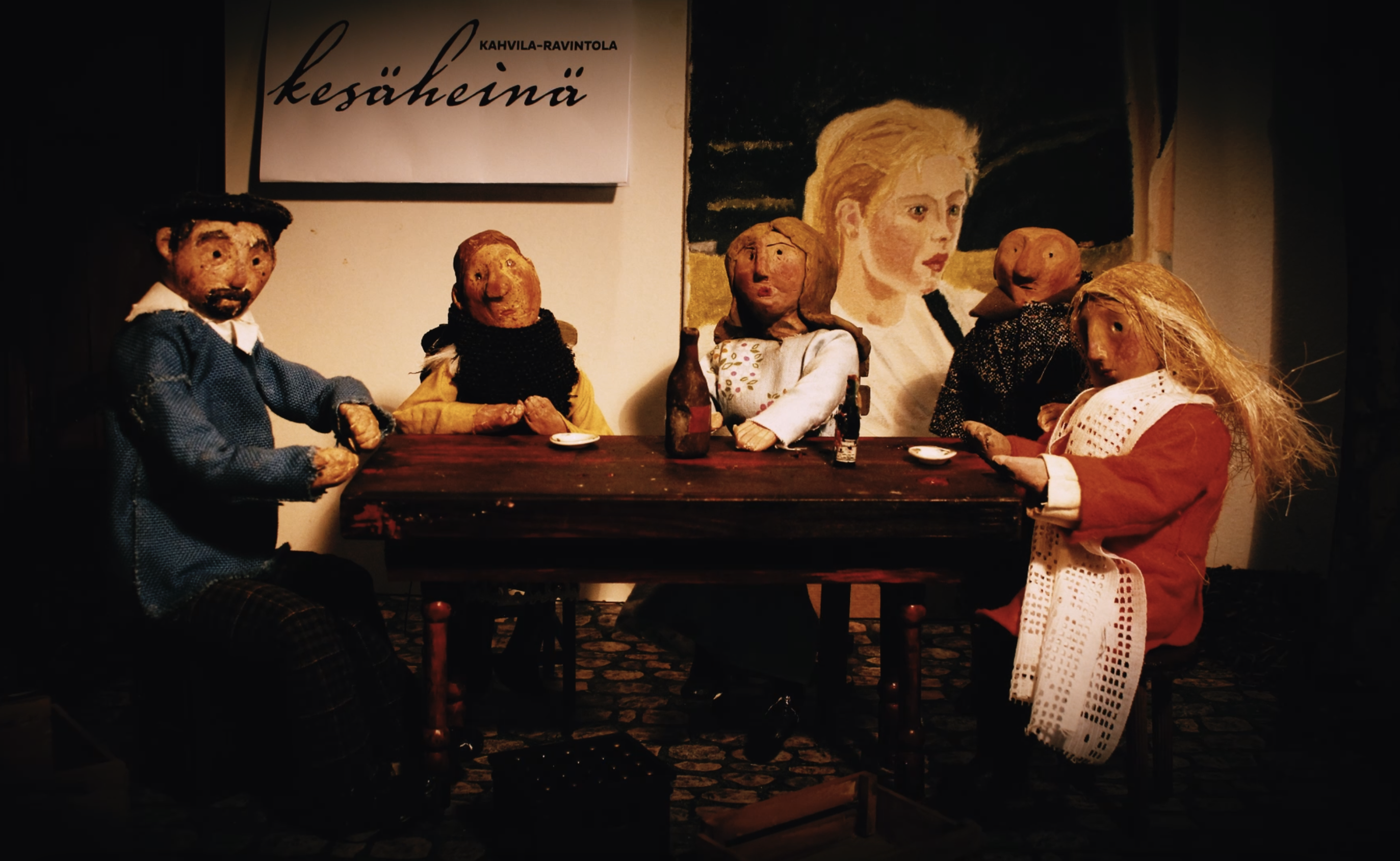
    One is my recent documentary about Finland, “Dreaming of Finland”, linked below. The few people who have followed this blog — or well, newsletter — know that I visited Finland last year and wrote about it. Well, now there’s a film about it too. It even has some 90s style stop-motion.

    The other is Geist magazine, an independent (very independent!) magazine of literature and art that I occasionally publish. There is a new issue, number 6, Fall 2024, that just came out this past Halloween. You can read a preview here or just order an old-fashioned print copy in full colour and quality paper at our online shop here.

    Thank you.

  • Art - Articles - Featured - Travel

    Traveling with Vigée Le Brun

    As the world moves closer to WWIII for reasons no sane man can understand, I prefer for the moment to write about travel.

    I am still reading Vigée Le Brun’s memories about her travels in Italy, and finding them pretty interesting. But then again, I usually like to read diaries or travel journals, even by relatively unknown or obscure people, and especially if they are from a different period. They provide a window into a different time.

    You can find here a version in English translated by Lionel Strachey, who was the brother of the more famous Lytton Strachey from the Bloomsbury circle. (I tried to find more info about Lionel, but all I could find was that he was tragically killed by a train). Be aware however that this translation seems to be a reduced version as it does not contain all the chapters that the one in French does.

    This being the 18th century, all the traveling was done in coaches pulled by horses, when not by mules or simply walking, but we don’t hear any lamentations from Mme Le Brun. At least she didn’t have to worry about TSA patting or faulty Boeing planes.

    In fact, what is particularly nice about Le Brun’s souvenirs is that she is usually very cheerful. She can’t stop raving about Italian landscapes and Italian music and Italian artists, and she meets and talks to lots of interesting people on the way. She can be a bit snobbish but not as much as you’d expect. Her major complaint is about how hard it is to find an apartment in Rome that is not noisy.

    I guess some people like traveling, and some don’t. I remember reading years ago a book by V. S. Naipaul about Argentina. The guy was always complaining, and couldn’t find a single nice thing to say about the country. Not even dulce de leche! Next time, buddy, maybe stay home?

    It’s like that classic cartoon of two people riding the same bus, but the one on one side sees a gloomy rock wall, and the one on the other side sees a beautiful sunny landscape.

    In fact, Vigée Le Brun has exactly this experience as she rides in a coach from Rome to Napoli. She sees a beautiful pastoral landscape filled with sheep and exclaims that it would make a wonderful painting. His traveling companion (a Frenchman married to Voltaire’s niece) replies: “They’re all dirty with dung. The English sheep, those are the ones you should see”.

    Then she points to a group low clouds in the horizon coloured by the setting sun and leaning against the Appenines, exclaiming how beautiful it all is. Her companion replies: “The only thing those clouds tell us is that it’s going to rain tomorrow”. From then on, she just ignores her companion, whom she nicknames “éteignoir” (killjoy).

    Of course, one advantage that Le Brun has is that she is very sociable and extremely well-connected. Wherever she goes, she meets all the local ambassadors, counts and duchesses, as well as several French emigré (understandably, there were many abroad at that time, as heads were rolling in France).

    Sometimes I wish people more would read my travel articles, but being an introvert and not particularly well-connected with the upper classes, I rarely meet other people except tourists, proles or local bums at cafes. But, instead of someone like, say, Linh Dinh, who manages to extract from them wonderful or bizarre stories, I usually prefer to leave them on their own.

    And yet, descriptions of places or events only take us so far. It is meeting and talking to people who provides most of the interest in travel writing.

    Lady Hamilton

    One of the interesting people Le Brun meets in Napoli is Lady Hamilton. There are different versions of her life, some of them contradicting others, but let us follow Vigée Le Brun’s account.

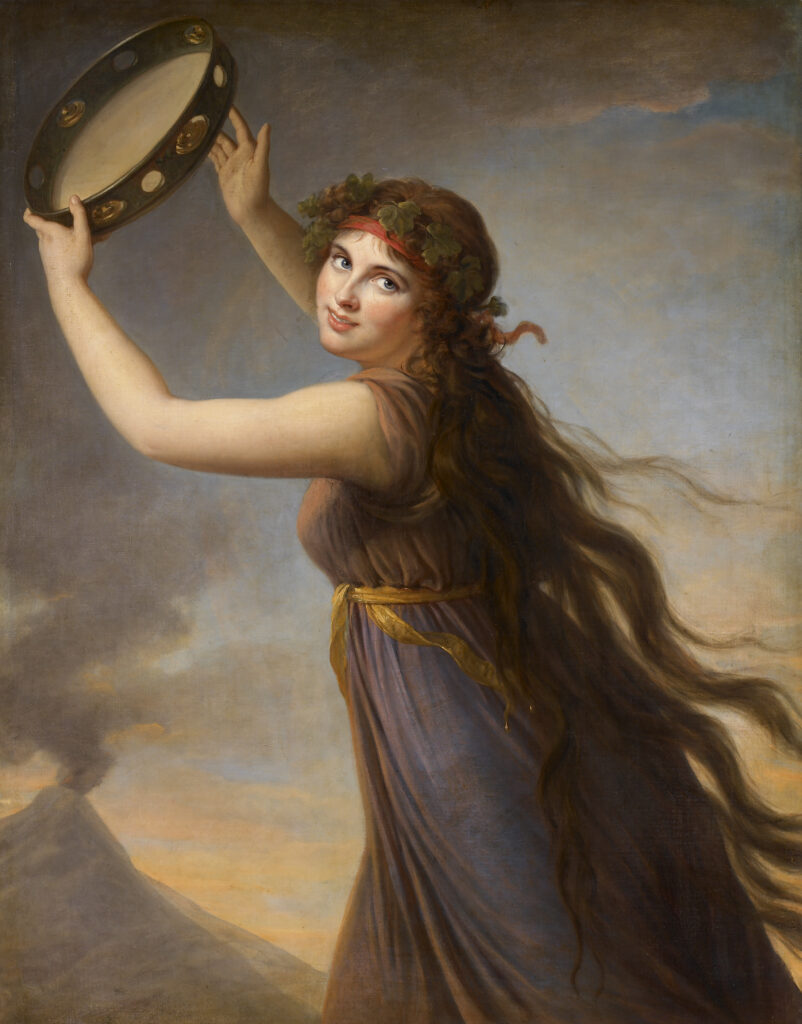
    Born to a hairdresser and a sailor, she started to work as a maid but soon lost her job and would soon have become some sort of lower class prostitute if she had not discovered a very particular talent: she was neither actress nor painter, but she could be a very expressive model. After being discovered by the celebrated painter George Romney, she became a sort of celebrity herself.

    Apt as well at social climbing, soon she became the lover of a succession of rich men who, however, didn’t keep her for long. She was supposed to marry Charles Greville, a rich antiquarian, but ended up marrying her older uncle instead, Lord William Hamilton, who was even richer and lived in Napoli as an ambassador. This is where Le Brun meets her and paints several portraits of her.

    Lady Hamilton remained nominally married to Lord Hamilton until he died, but the real love of her life was Lord Nelson, the famous English admiral who defeated Napoleon in the Battle of Trafalgar. Everyone, even Lord Hamilton, knew that Nelson was her lover. (Vigée Le Brun’s meets her again later in London and doesn’t buy her sadness at having recently becoming a widow).

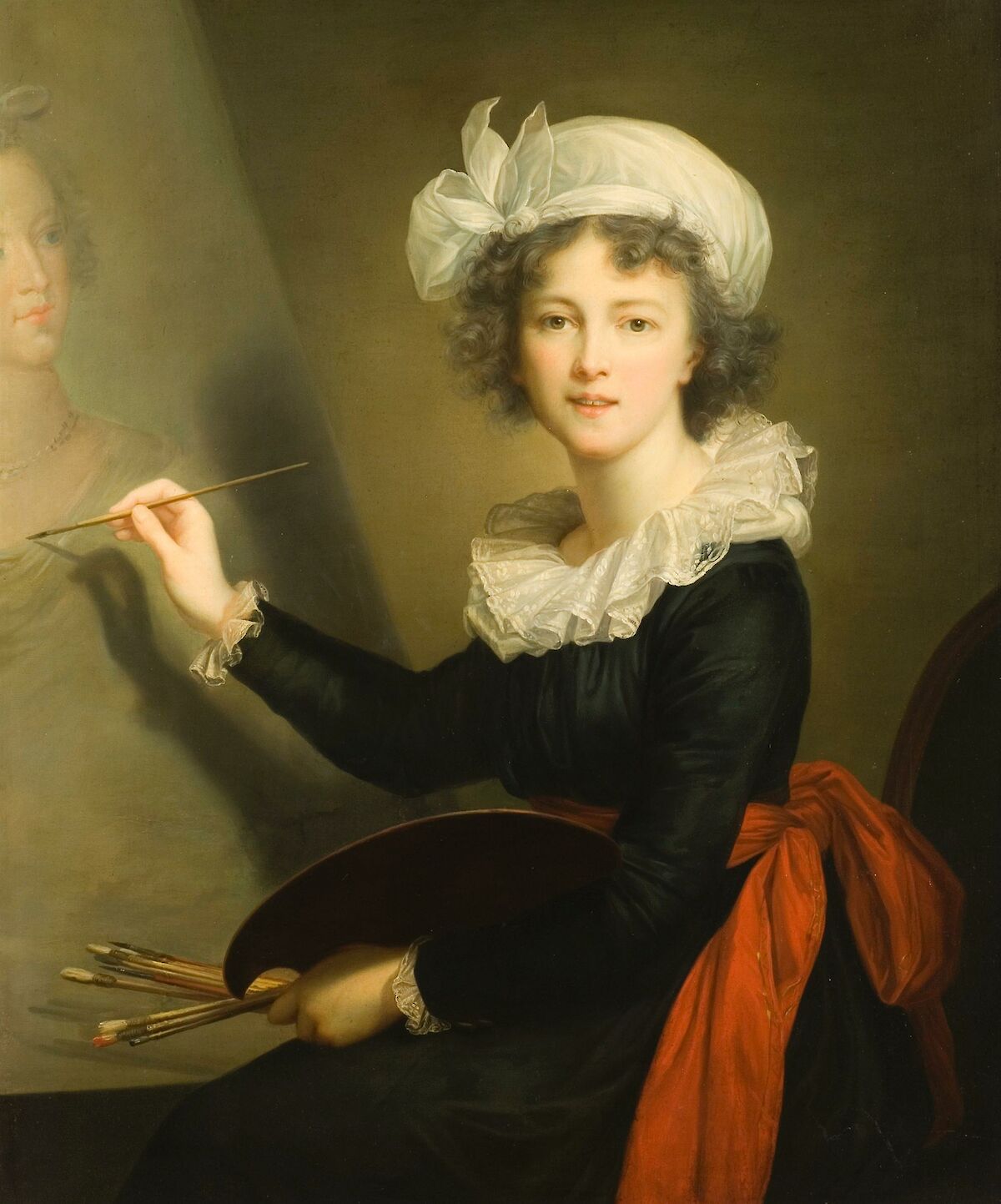
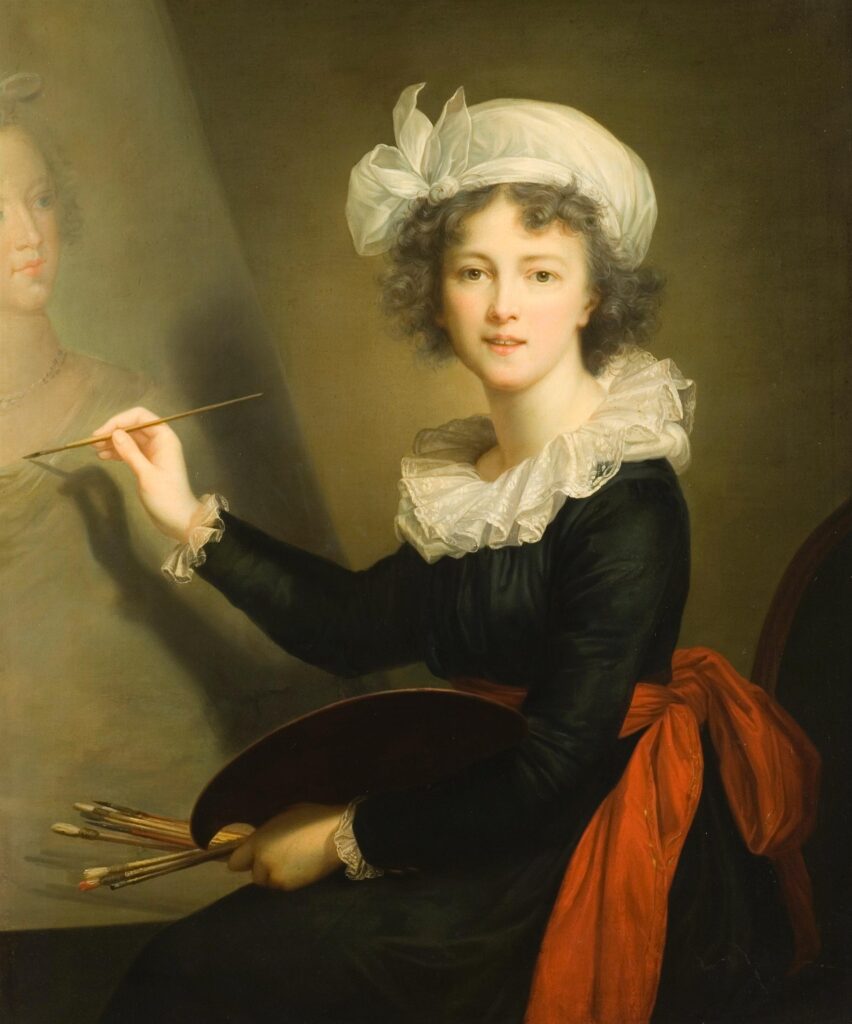
    I haven’t seen Le Brun’s several portraits of Lady Hamilton, but I managed to see Vigée Le Brun self-portrait which is still hanging on the Ufizzi Gallery in Florence. It is very nice. While not reaching the heights of her beloved Raphael and Correggio (bur who has?) she was a talented painter alright.

    Russia

    Interestingly, after leaving Italy Vigée Le Brun ended up in Russia, where she lived for several years, mostly in Saint Petersburg. She has a surprisingly positive view of Russia and the Russian people. (I say surprisingly because it doesn’t seem the usual Western European view, either back then or now.)

    She even says at one point that Russians rarely drink and that she never saw a drunk Russian, which makes me doubt of her powers of observation. Then again, I suppose she lived mostly among the upper classes and exiles in Czarist Russia, so who knows.

    She leaves Russia shortly after her daughter marries Gaëtan Bertrand Nigris, a Frenchman who works in Saint Petersburg, a marriage she doesn’t approve. She might have been right: the couple divorce just a few years later after and the daughter returns to France, but she never fully reconciles with her mother. She dies in poverty at only 39 years of age.

    After further periods of exile in England, Switzerland and the Netherlands, Vigée Le Brun returned to France definitely in 1809. She died in 1842 at 86 years of age. Her Souvenirs were written and published in 1835. Besides her self-portrait hanging in the Uffizzi Gallery in Florence, she has many works in the Metropolitan Museum of Art in New York and in the Louvre. During her life, she painted more than 600 paintings, mostly portraits.

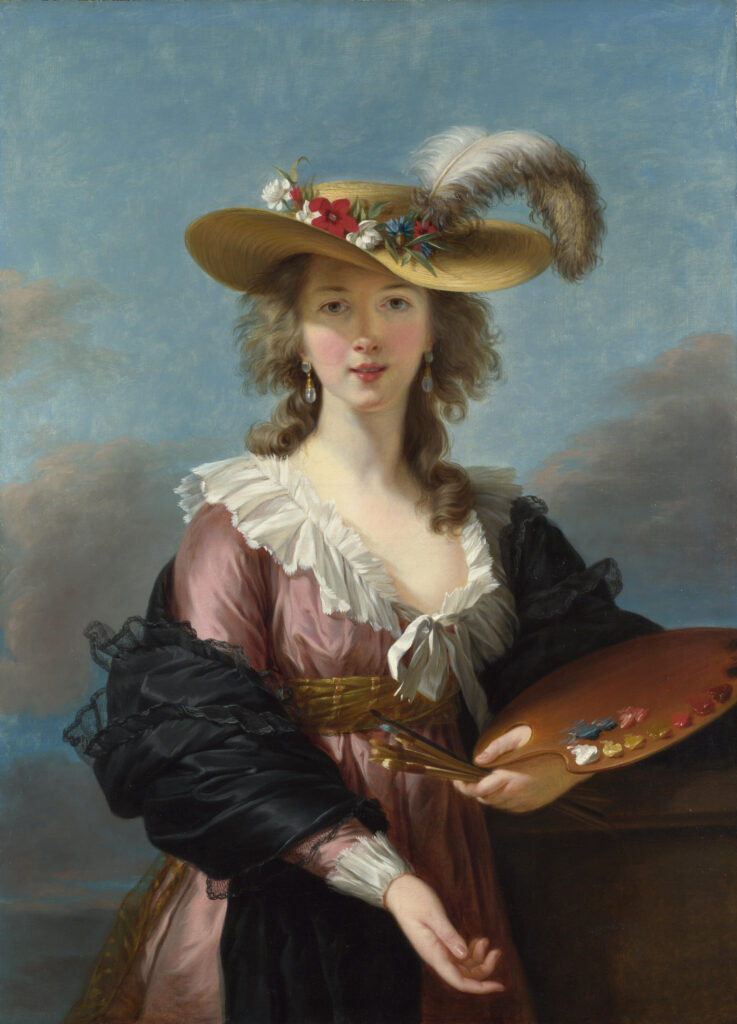
    “Self-portrait with a straw hat” (1782)
    “Lady Hamilton as a Bacchante” (Elisabeth Vigée Le Brun, 1792)
  • Art - Featured - Italy - Memories

    Why can’t we make beautiful art anymore?

    Some people say I am too harsh on the modern world. That we have wonderful technology and people live in comfort and we have so many ways of amusing ourselves and we can find any ethnic restaurant we want in any town on Earth.

    Fair enough, I guess.

    But why is so difficult to make beautiful art and architecture in this world?

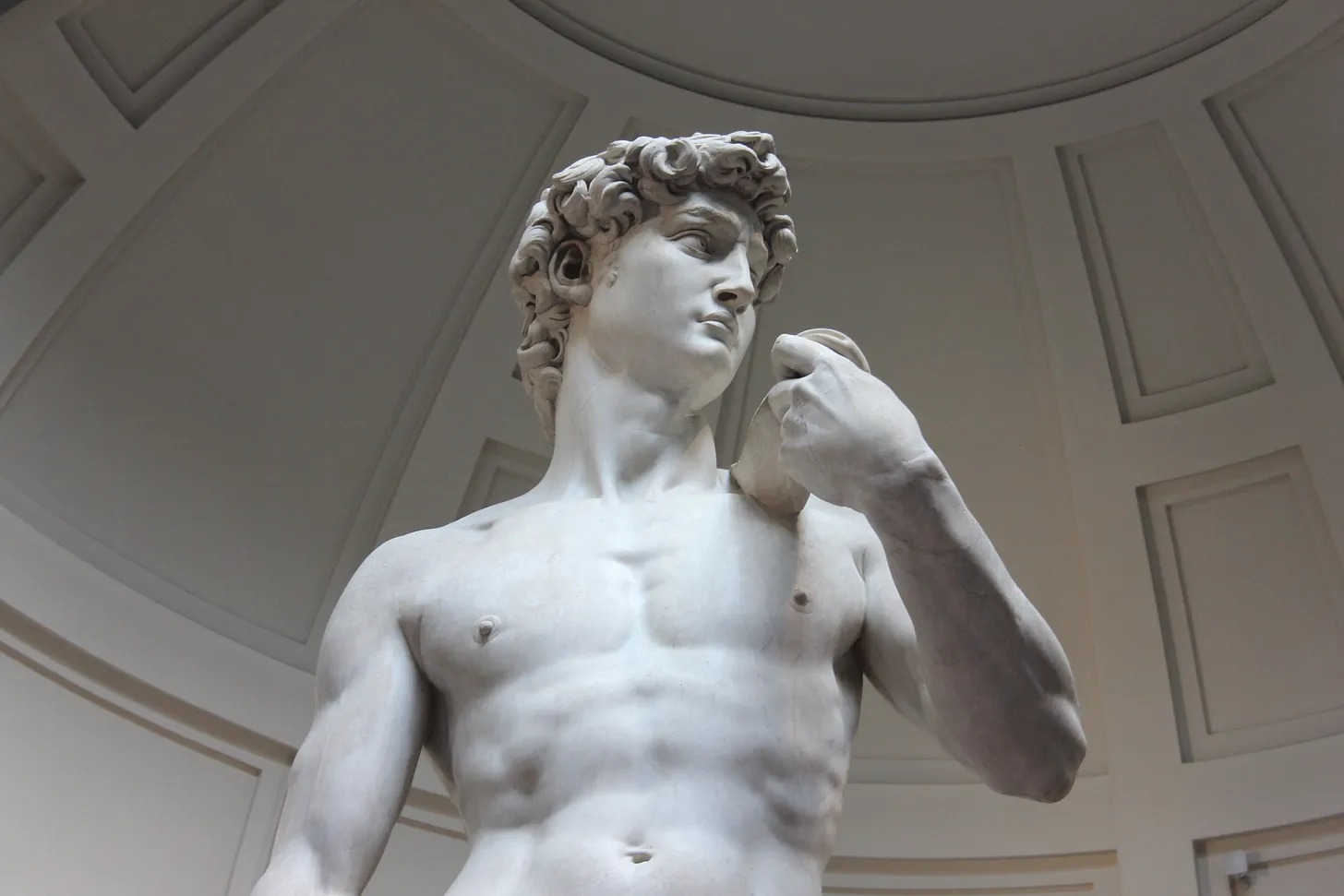
    In my third visit to Tuscany, I finally had time to see Michelangelo’s “David”. It is one of those works that is actually more impressive in real life than in pictures.

    I say this because the “Mona Lisa”, for instance, is a bit underwhelming. (Then again, I never understood why critics singled out Leonardo’s “Mona Lisa” as his “masterpiece” out of his hundreds of much more impressive works. Perhaps they chose a simple portrait as a way to distract from his much more beautiful religious paintings?)

    Of course, in Tuscany, beautiful art is everywhere.

    Visiting San Gimignano, which is basically a medieval town frozen in time, there are so many churches with wonderful paintings, and this is a very small town — if you go to Florence, you will find a thousand others.

    Of course beauty didn’t start in the Renaissance. This is a painting from 1317, in the Church and Monastery of Saint Augustine in San Gimignano.

    And this is a detail of another one, no date indicated but from about a hundred years later.

    This one below, in a museum, with a similar theme (Saint Magdalene by the cross) is also from the 1400s.

    In the same church, however, you can (regrettably) see this sculpture from 1995.

    And then there is this fountain built in 2014, sitting nearby, just outside the walls of the old town. Compare it to the Fontana di Trevi in Rome, or, really, anything built before the 20th century.

    Ugly stuff! Even the most mediocre medieval sculptor could certainly do better than that. And that’s not even the ugliest stuff. If you want really ugly modern stuff, just check this page with sculptures in some American university campus. It’s so horrifying, it cannot not be on purpose.

    If you are one of the two or three people who have read my article about how much money the Renaissance and Baroque painters made, you may have found that the Catholic Church at the time invested a lot of money in creating beautiful churches and paintings and sculptures. They had an almost limitless budget for that stuff. They spent what would be millions today.

    Today we have even more money — we can print all the money we want, it’s all digital anyway! — but it all goes to create mostly… the worst kind of trash they can find?

    I mean, we can’t even make beautiful churches anymore. This is a Catholic church in Los Angeles.


    But there are similar examples even in Italy. Any church built after, say, 1960, is usually ugly or bland.

    Why is that? What the Hell is going on?

    It’s not that people no longer care for beauty. I mean, if people didn’t care for beauty, there wouldn’t be millions of tourists visiting Florence and San Gimignano and Siena and Paris and Barcelona every year. They want to see the old, beautiful stuff. Not the ugly modern stuff.

    And in private, people also like beautiful things. Inside many apartments and in a few shops you can find that many places are still arranged with relative good taste (although usually tending more towards the clean/functional look than to the decorative.)

    It’s also not that there are no talented people anymore. There are still a few good book illustrators and designers, for instance. I suppose a few good filmmakers, although even those are rare these days.

    But in visual arts and public sculpture, the money seems to go to the worst things you can find. So there seems to be a deliberate attempt to promote ugly stuff. I mean, all those ugly sculptures cost money, and someone is paying for them.

    But that’s not all. Even when there are talented artists, they create mostly meaningless things. Most classic art was about religious or mythological themes. There is a reason for that. Art is about transcendence. About a connection with the world beyond our senses and our daily experience.

    Even the good portrait painters (when portrait painting was basically just catering to the vanity of rich people to have their “portrait taken”) understood that, and that’s why their paintings are still valuable and interesting even when the person portrayed has been dead and forgotten for hundreds of years.

    But now… “Art” is not just ugly (it doesn’t even try to be beautiful), it’s usually about some random political or social theme that will be forgotten in a few years. Or about some trivial, mundane event. Or even pornography. There is just no effort to connect the individual to the universal and the material to the spiritual.

    Why are Western people so apathetic?

    But it goes beyond art and beauty, which in the end are just a reflex of our world. If our art is ugly it’s probably because our society is, in many ways, ugly. It is a symptom of disease.

    Most Western people seem to be very apathetic in the face of extinction. Extinction? Well, not only birth rates are plummeting in all the Western world, there is an ongoing demographic replacement by foreigners, and while things seem relatively fine on the surface, everyone knows or at least fears that the possibility of war and economic doom is just around the corner.

    Or am I exaggerating? Sometimes I don’t know. It is true that level of prosperity in the West is still quite high. People on average are able to live in comfort and without too many worries.

    Then again, none of that matters if people are not having children and the economy crashes and there’s war.

    But most Western people are just… I don’t know. They don’t seem to care about the future, or anything, really. Or they care about fake, obviously manufactured problems such as “global warming” or “Covid” or “Trump” or whatever the media will bring next week, but not about the very real problem of the survival of their own culture and their own people into the future.

    I don’t know what to make of it, but I suppose my opinion is also irrelevant, bound to flutter for a few seconds in the air like a fallen leave and then disappear forever.

    In the meantime, I take a few pictures and write a few words to register a few beautiful moments in time, before I’m gone, too.

    Church of Saint Augustine, San Gimignano.


  • Art - Featured - Italy - Travel

    Let them eat bugs

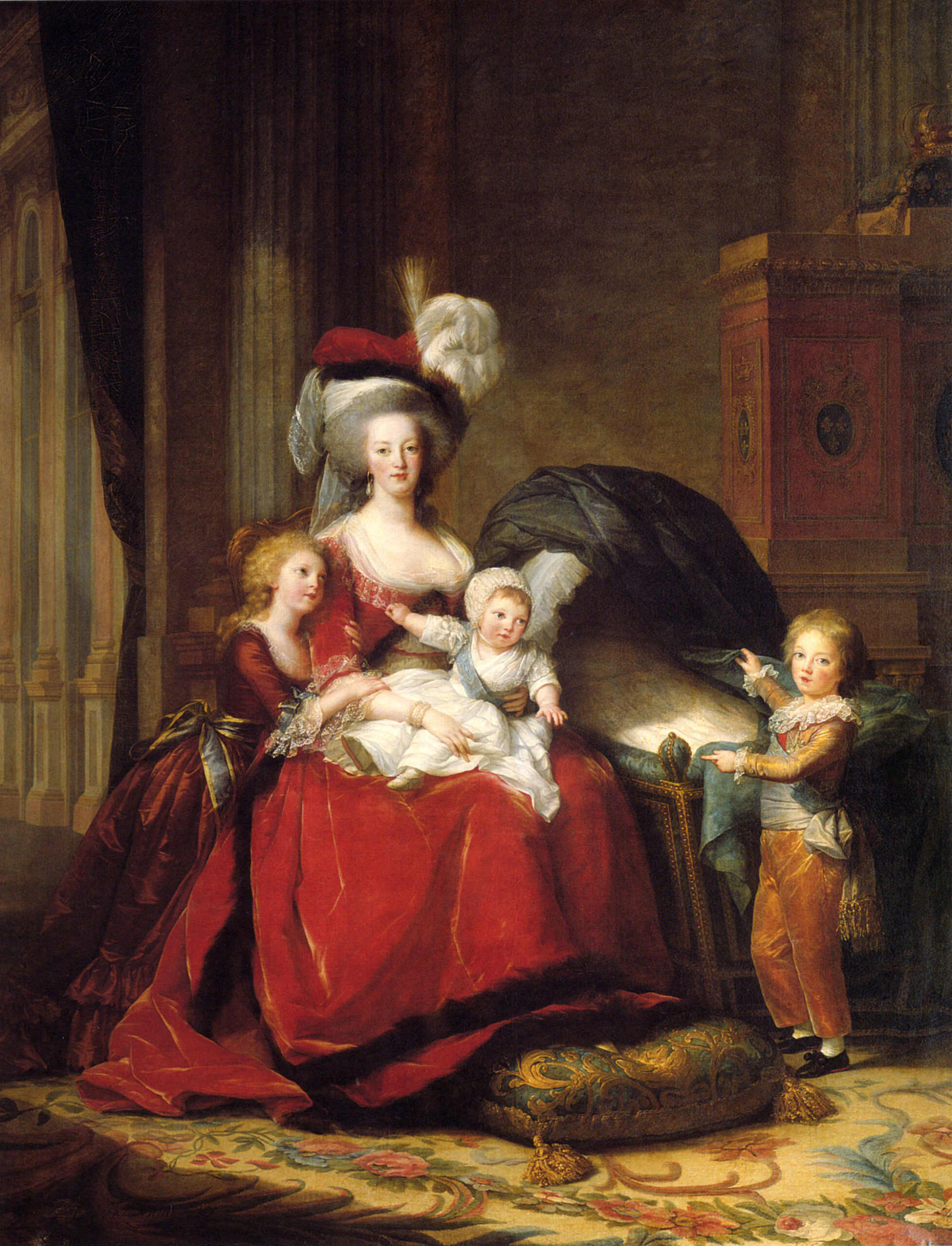
    I am currently reading the souvenirs of Élisabeth Vigée Le Brun, or, rather, a part of it focusing on her travels in Italy after having escaped the French Revolution. Madame Le Brun was no Raphael or Rembrandt, but she was a talented painter, mostly famous for her portraits, in particular for the several portraits she made of Queen Marie Antoinette.

    Marie Antoinette, as everyone knows, was the Queen dethroned and guillotined by the revolutionaries and famous for supposedly saying “let them eat brioche” (in fact, it is very unlikely that she really said that, and she had no small number of detractors who invented all kinds of rumours about her).

    Madame Le Brun herself, at least according to Wikipedia, was not an aristocrat by birth and had humble origins, showing that even in pre-Revolutionary France there was a certain social mobility. Her mother was a hairdresser and his father an unknown painter. He taught her painting, but died when she was only 12. Her mother remarried and the new husband, who became Élisabeth’s stepfather, was a rich jeweller, but also not an aristocrat by birth. Yet Élisabeth became a requested painter quite early in her career, painting the portraits of several nobles, and eventually married an important art dealer, Jean-Baptiste-Pierre Le Brun.

    Le Brun’s souvenirs, or at least the part I am reading, begin just as the royal family is removed from the palace and Le Brun flees France in disguise with her daughter (her husband remains in France and eventually joins the Revolutionary cause, but she remains a monarchist to the end of her life).

    Le Brun’s book depicts both her horror at the events taking place in France as well as her fascination with Italy, in particular Italian art (she’s a big fan of Raphael, Domenichino, Michelangelo and Corregio). It is a very interesting read, and I look forward to the volume about Russia, where she lived afterwards.

    But anyway — what I wanted to talk about was the French Revolution. To my mind, it was a senseless bloodbath and really the foundation of our modern world, based on idealistic but equivocated ideas of “equality”, “democracy” and “secularism” — in other words, the beginning of what we now call “globalism”.

    It is symptomatic that France, together with America, which was inspired by similar (Freemason’s) ideas, are the first countries poised to fall in the New World Order. France’s population is today composed of at least 40% non-European foreigners (they don’t keep statistics about ethnicity or religion, but a map of “sickle-cell anemia” gives the game away) and has so many social and economic problems that it is hard to see how it can survive as a “French” nation a hundred years from now — or even twenty.

    The funny thing about modern democracy — which started with the French and American Revolutions — is that it is supposed to be a system based on the will of the people instead of that of unaccountable elites, but, as we see more and more, the will of the people counts for very little. Just look at the farmers’ protests going on in France and other countries, which, despite their massive support by the public, have not moved the government’s position one inch. And why is the government set up against its own farmers, anyway?

    But, in fact, you can argue that everything that happens in modern democracy is done against the will of the population, or, at least, done without consulting them at all. Just look at massive immigration, gay marriage, the transgender stuff — all those are unpopular measures that no one voted or asked for, and yet keep being implemented.

    The problem of modern democracy is that the supposed leaders are no leaders at all, but puppets of a hidden cabal. So you have no one to protest against. Even if Macron or Biden became so unpopular that they were forced to resign, nothing much would happen — some other puppet would take their place and things would just go on as usual.

    Now the unaccountable elites are saying, not “let them eat brioche”, but, “let them eat bugs”. For some reason they really are pushing for insects on the menu, as well as all kinds of genetically modified veggies and artificial meat made in a lab. But the rich at Davos will still eat Kobe steak and caviar, thank you very much.

    I really don’t know what is the answer to our present quandaries, and as you can see I am not a great fan of violent revolutions — which are usually not the popular movements they are portrayed to be, but just the removal of one “elite” by another — but what can be done at this point? Except perhaps waiting and preparing for whatever may come?

    But let us finish with a short quotation from Le Brun’s book, while she visits a church in Bologna, and muses on the fate of her country. We are all Le Brun now.

    I went immediately to the church of Sant’Agnese, where this saint’s martyrdom is represented in a painting by Domenichino. The youth and innocence of Saint Agnes is so well captured on her beautiful face and the features of the torturer striking her with his sword form such a cruel contrast to her divine nature, that I was overwhelmed with pious admiration. As I knelt before the masterpiece, someone played the overture to Iphigenia on the organ. The involuntary link that I made between the young pagan victim of that story and the young Christian victim, the memory of the peaceful, happy time when I had last listened to that piece of music, and the sad thought of all the evils pressing upon my unhappy country, weighed down my heart to the point where I began to cry bitterly and to pray to God on behalf of France. Fortunately I was alone in the church and I was able to remain there for some time, giving vent to those painful emotions which took control of my soul.

    Whatever you think of the unfortunate Marie Antoinette, at least brioche — in the English translation of the phrase they usually say “cake”, but it is just a sweet bread — is delicious, nutritive and not difficult to make. While bugs are disgusting, dangerous and, when you make all the calculations, the economics for their production is not really that green. I know, Asians eat bugs, but I’d rather keep them out of my diet. I prefer the Italian/Mediterranean food.

    “Self-portrait”, Élisabeth Vigée Le Brun (1790)
  • Art - Featured - Italy

    How much did Renaissance painters make?

    An investigation into Caravaggio’s earnings

    And now for something completely different. According to historical records, the painter Michelangelo Merisi da Caravaggio signed a contract in 1600 to create two paintings (which ended up being “The conversion of Saint Paul” and “The martyrdom of Saint Peter”) during a period of eight months, for 400 scudi — even though in the end it took him more than a year to finish them, the first versions were rejected, and his final compensation was reduced to 300 scudi.

    It is also reported that he sold one of his earlier paintings, “The Fortune Teller” (1594), for just 8 scudi, as he was apparently broke at the time.

    So far, so good. But how much was a scudo?

    The answer is not as easy as it seems to find out. A Roman scudo was the highest value coin in the Papal States of Rome at the time. It was subdivided into 100 baiocchi, which was further divided into 5 quattrini (incidentally, in some regions of Italy they still say “quattrini” when they mean money or coins in general).

    A scudo came in the form of a gold or silver coin. The gold coins had a weight of 3.35 grams of gold 22K. Let’s say that Caravaggio had been paid in gold coins. Calculating with current gold prices (55 euros per gram at 22K), we would have 184 euros per scudo, so 300 scudi would mean a total of 55,275 euros today.

    But would that be an adequate way of measuring its real value at the time?

    No, not really. The price of gold and what it can buy can fluctuate quite a lot, so it is better to analyse it in terms of cost of living and what you could buy with a scudo in Rome in 1600.

    Now, in the 1600s, Italy wasn’t a unified republic as it is now, and each region had its own monetary system. While Rome used the scudo/baiocco/quattrini, other regions of Italy used the lira, which was subdivided into 20 soldi and then each soldi into 12 denari — `again, “soldi” and “denaro” are also general terms for “money” in Italy). But converting from one system to another is quite complicated, as their value could change from region to region or from year to year.

    In Florence, in the early 1500s, Leonardo da Vinci is known to have been paid 200 florins for a painting. The florin in Florence was more less the equivalent of a scudo in Rome, that is, a gold coin of about 3 to 4 grams. (Technically, Caravaggio would be placed more in the “Baroque” period than in the Renaissance, as that had peaked a 100 years earlier and mostly around Florence, but here for simplicity I’m calling both of them “Renaissance painters”.)

    Anyway — because of the conversion difficulties, let us focus just in Rome.

    Cost of living in the 1600s

    What was the cost of living in Rome in 1600? According to a paper by Richard E. Spear, living in the Eternal City was not cheap back then (it still isn’t today). Just rent would set you down between 12 scudi a year in the poorest neighbourhoods to up to a 100 scudi in the really posh ones. The painter Artemisia Gentileschi and her family is known to have rented two of the rooms in their house to lodgers for 18 scudi a year. In 1619, painter Guido Reni received an allowance of 50 scudi a year to pay for his rent (on top of a monthly salary of 9 scudi).

    What about food? Also according to Spear, a merchant would spend about 70 scudi a year on food. A dozen eggs would cost 1 baiocco (0.01 scudi), a litre of wine 3 baiocchi (0.03 scudi) and a kilogram of bread, between 4 to 5 baiocchi. Pasta was considered a luxury good and could cost you thrice as much, 12 to 15 baiocchi. Fish was also very expensive in Rome, at 24 baiocchi a kg, while you could get beef and lamb for 9 baiocchi a kg. A pair of shoes cost 50 baiocchi, or half a scudo.

    And what were average salaries like? Again according to Spear, “during 1605-7, a field worker made between 15 and 22 baiocchi a day, or about 50 scudi a year; a muratore, or skilled mason, earned 35 baiocchi a day in 1624, that is, about 85 scudi annually.” On average, an ordinary worker would spend about three quarters of his income in food, and a third of that just on bread.

    On the other hand, a wealthy merchant could make as much as 40,000 to 50,000 scudi in a year, and a cardinal could get an ecclesiastical income between 10,000 and 20,000 scudi. A few made even more. Cardinal Scipiano Borghese, of the famous Borghese family, made 405 scudi a month as “superintendent of the ecclesiastical state”, and in 1612 he earned an astonishing 140,000 scudi in just a year.

    Let’s say that Caravaggio’s average contract was for a duration of 8-10 months, so rounding up, with 300 scudi for that period he was making about 1 scudo a day. However, he might have have multiple commissions at the time. Considering that Caravaggio is known to have been paid a total 4,400 scudi in the last ten years of his life for 17 paintings, but he is known to have painted at lest 40 works during that time, if we average 250 scudi per commission (4,400 / 17), Spear calculates Caravaggio’s yearly income at 1,000 scudi.

    However, we have to deduce from that all his other expenses — paying his assistants and models, buying painting materials, which could be quite expensive, and were not included in the payment.

    Nevertheless, with just one scudo you could buy 20 kg of bread, or two pairs of shoes, or a barrel of 40 litres of wine, or 4 kg of fish.

    Considering today’s cost of bread in Italy is about 3 euro/kg, 20 kg of bread costs 60 euro. Therefore we could say — very approximately — that Caravaggio was receiving the equivalent of today’s 60 euro a day, 1,800 euros a month, or a total of 18,000 euros for the 300 scudi during 10 months. However, if we calculate his yearly income as 1,000 scudi a year, as Spear does, then we have an income of 60,000 euros a year, or 165 euros a day, which is more, but not much more than what an average worker makes in today’s Rome (43,000 euro/year).

    But considering that at the time there were lots of people living in extreme poverty in Rome, and than an average worker would not make more than 60 or 70 scudi a year, 1,000 a year was a very respectable sum.

    It doesn’t seem like a lot now — considering that today a single painting by Caravaggio is worth 40 millions of euros — but back then, with 1,000 scudi you could live quite comfortably for a year and even afford servants (as some painters did, and relatively few people could afford servants in Rome back then).

    Caravaggio was not average

    Caravaggio was paid more than other artists, since he was even back then famous and requested. On the other hand, he was also infamous for his bohemian lifestyle, and probably spent a lot of his money in gambling, booze and prostitutes (*). He was also constantly involved in brawls and duels and was arrested and sued a few times, so a lot of money probably went into that too.

    And life can change a lot in a few years. In 1594, Caravaggio was poor and selling a major painting for just 8 scudi. In 1601, he was the most sought after painter in Rome, earning lots of commissions. But just five years later, in 1606, he was accused of the murder of a wealthy young man, Rannuccio Tomassoni, and had to flee Rome in disgrace with a bounty on his head.

    After that he lived in exile in Naples, Sicily and Malta, but got involved in fights there and made new enemies, so he had to flee Malta too. He died in relative poverty at only 38 years of age in the beautiful peninsula of Porto Ercole, Tuscany, and the causes of his death are still unclear. Some say syphilis, some say malaria, some say sepsis from a wound in yet another fight, and some say he was murdered by assassins sent by the Tomassoni family.

    (1) Much is made in the current discourse of Caravaggio being homosexual, but that seems to be based exclusively on the fact that he liked to paint beautiful young boys, which is not much evidence of anything. His known affairs were all with women. He is known to have had a relationship with the prostitute Fillide Melandroni, who posed for several of his paintings, and also a certain “Lena” is listed as his companion — this is likely Maddalena Antognetti, who posed for him as Saint Catherine of Alexandria.


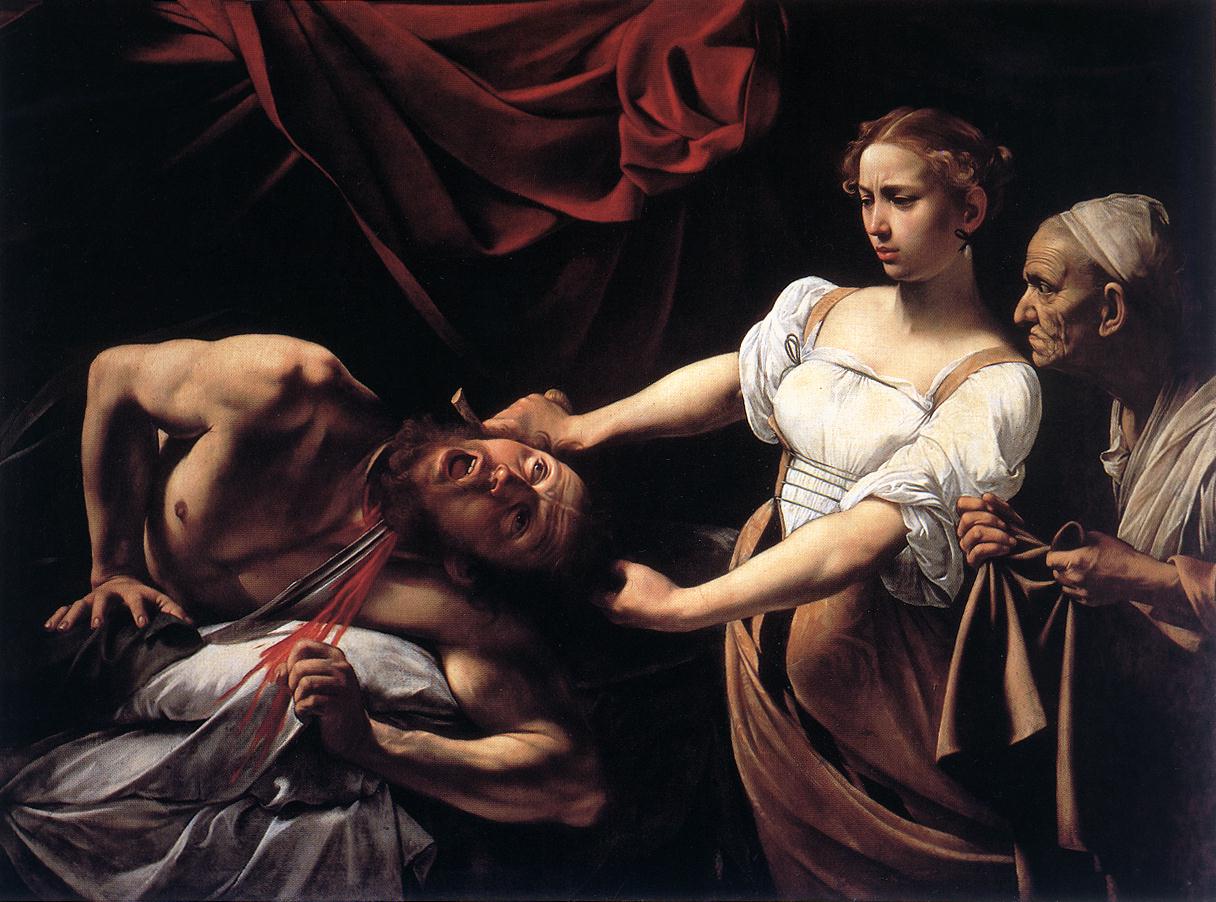
    Fillide as Judith in “Judith beheading Holofernes” (1599)
    Maddalena Antognetti as “Saint Catherine of Alexandria” (1599)
    “The conversion of Saint Paul” (1600-01)
    “The taking of the Christ” (1602)
  • Art - Articles - Featured - Psychology

    The Interior World

    In one of the stories by Frank O’Connor, “The Ugly Duckling” — the title is of course a reference to Hans Christian Andersen’s famous fairy tale, but this story about a tomboy girl is as Irish as it gets — there is a wonderful observation about certain types of people who, because of certain inadequacy or perceived inadequacy in their early life (poverty, ugliness, shyness, family problems etc), they escape their outside circumstances by creating for themselves a “rich interior world.”

    I suppose this is common enough. A child or teenager withdraws into himself and, if he’s at least a little bit creative, he will put his feelings into writing or drawing or singing. Some of these unhappy children or teenagers will later on grow up to become poets or artists or drunkards or saints, but not all.

    It has nothing to do with talent, necessarily, but with forging a sort of barrier against the perceived rejection by the world. As Paul Simon described the feeling in his classic song “I am a rock“:

    I am a rock
    I am an island
    I’ve built walls
    A fortress, steep and mighty
    That none may penetrate
    I have no need of friendship
    Friendship causes pain
    Its laughter and its loving I disdain

    This phenomenon is related to, but also not exactly the same, as the contrast between introversion and extroversion. Introversion and extroversion are more related to our abilities to socialize, but not to our creative impulse, although perhaps there is a relation there too. Introverted people will probably tend to go more towards solitary arts like writing and painting, while extroverted people will probably prefer more social arts such as acting or singing or dancing.

    But I have noticed — and it was almost a shock at the beginning — that there’s many people who have no creative or even meditative impulse whatsoever. All their energy is purely directed to the outside world, to action, to the material: to consuming and moving and talking and watching. People who can’t stay five seconds with their own thoughts, or they’d go mad. I’ve seen them, I even talked to them. Take away their smartphone for ten seconds and they start to panic: “And you see behind every face the mental emptiness deepen / Leaving only the growing terror of nothing to think about.” (T. S. Eliot, “Four Quartets”) Or, as Pascal said, “all of humanity’s problems stem from man’s inability to stay quietly in a room alone.”

    Introspection does not necessarily mean being alone. In fact, there is probably more loneliness among young people today than at any other period in history, and lots of people, perhaps even a third of all adults, live alone. It doesn’t mean they are introspective — they will be chatting online or watching pornography or playing video games or doing any para-social activity that will occupy their time, but mostly in negative ways.

    As our society creates more and more noisy distractions to avoid the horrors of inner gazing, people become less interested, not only in creating, but even in reading or watching more meditative, introspective forms of art. Instead of retreating into an interior world, they desire, on the contrary, to escape it at all costs.

    There was a time when film directors such as Ozu, Tarkovsky or Bresson could create slow, atmospheric films without “plot points” or special effects, and still be relatively successful, or at least find their niche audience. I watched Bresson’s “Mouchette” for the first time recently and it is such a masterpiece — the George Bernanos’ novel in which it is based is very good too.

    (Here’s a short clip about the filming that includes a brief interview with Bresson).

    Sure, it’s not a film for everyone. Reading the comments on a trailer of the movie, I saw a comment of someone who showed the film to a group of teenagers. All of them walked out in the first fifteen minutes, but one kid remained, and then when the film ended he asked: “can I watch it again?”

    I have similar experiences teaching film or literature in college. I would show a movie or talk about a book and most students would be bored out of their minds, but there would be that one kid or that one girl who loved the book or the movie because it touched deeply into his or her soul.

    Bresson and Tarkovsky and Ozu kept making movies until the end of their lives. But, as they say, those were different times. Is there anyone who even tries to do such kind of films today? Would he find someone to finance him? Or someone who creates actual poetry, or actual painting? Very few. Even when many people still have talent — and there’s always talented people in every generation — modern culture seem to lack the depth and spirituality to generate great transcending art. Almost everything these days seems to be done either just for money or to promote some kind of political message.

    But things will change, surely. I think that the last decades of the Western world, or this period of accelerated social change that we’ve seen from, say, the mid-1960s until today, is in the end an anomaly. Already we see cracks on the façade, and the yearning of many young people for something different. The New World Order will break apart, and I don’t think it will take that long.

    In the meantime, we can cultivate our interior world.

  • Art - Books - Featured

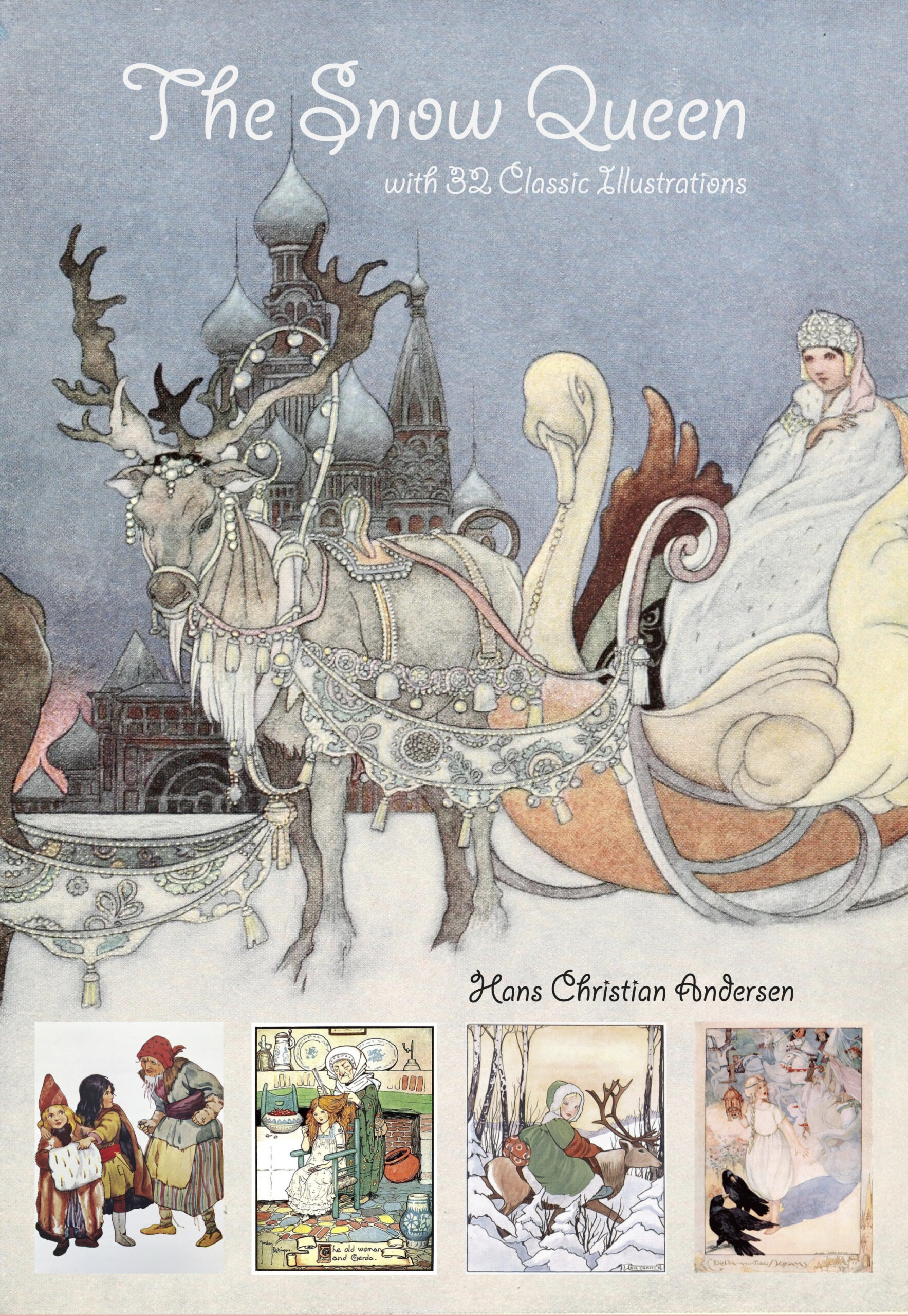
    The Snow Queen, with 32 classic illustrations

    Just in time for Christmas, we have created a new version of Hans Andersen’s Story “The Snow Queen”. Yes, you read it right, it’s not “The Drag Queen”, to keep up with modern times, it’s the original “The Snow Queen”, Andersen’s immortal beloved classic.

    You can buy it now at a cheaper price in our shop! Or at the regular price at Amazon.

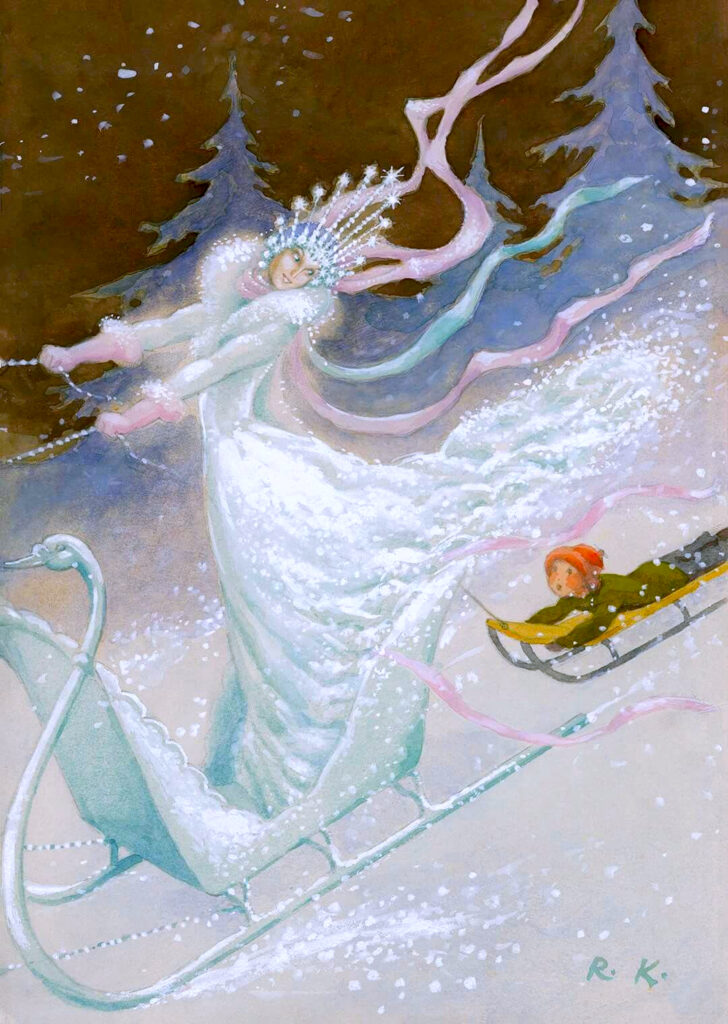
    The story is the same everyone knows and loves, but we revised and updated the English translation and, most importantly, we added 32 classic illustrations by 13 different illustrators, from Anne Anderson to Charles Robinson (there are in fact three different Robinsons illustrating here, including two who are brothers) to Edmund Dulac, Margaret Tarrant and Rudolf Koivu.

    Tarrant and Koivu are the ones who have more illustrations featured, in part to promote their work a bit more. Tarrant was an English illustrator from the early 20th century. But Rudolf Koivu was interesting to us because he was a Finnish illustrator, and while he’s relatively famous in Finland and has become the name of a prize for children’s books, he’s not so well-known abroad. So we thought it would be nice to use his illustrations in this version. Of course all the others are nice too.

    Anne Anderson, a Scottish illustrator, was interesting too: she lived in Argentina until she was a teenager, as her parents had some business there, and it appears that it was in Argentina where she became interested in illustration. She moved back to Britain as a teenager.

    I don’t know about you, but I’m a sucker for old-style illustrations, and for illustrated books in general. As Lewis Carrol’s Alice would say, “what’s the use of a book it it has no pictures in it?” Well, we wouldn’t go that far, but we do think that illustrations usually add to the enjoyment of reading. The book is available in paperback, hardcover and ebook, and is a nice Christmas gift for all.


  • Art - Articles

    The future of “AI Art”

    The other day I started playing with one of those new “AI art” tools. Bing’s one is the most popular, I suppose, but it’s also the most heavily censored. So I tried to play a bit around the politically correct filters. It was no surprise that all kinds of ethnic or religious descriptions were forbidden. “Jewish”, “Arab”, “Black”, “White”, whatever. Not possible.

    What was stranger was that the words “vaccine” or “injection” were also blocked. I suppose it’s because Bill Gates owns Bing? By the way, all kind of names of public personalities were forbidden, and some political themes, too. But I managed to create something with the prompt “homosexual screaming in front of a church,” and the resulting image was exactly that. Also “pink-haired feminist protesting for my body, my choice” was allowed. More surprisingly, it accepted the prompt “synagogue of Satan”, but the resulting images were nothing to write home about — some kind of cyberpunk building with domes and chimneys.

    Of course, no prompts requesting nudity or sex were allowed, and even kisses were frowned upon by the system. I did manage to get a kiss between two cartoon characters, but that was it.

    (I would publish the obtained images here so you could have a better idea, but I ended up thinking better of it — see below.)

    Another system, however, called Stable Diffusion, was not heavily censored. In fact, it was almost not censored at all. It accepted all kinds of racial slurs and sexual descriptions and produced really incredible — or appalling — images. It couldn’t really produce explicit pornography, but… pretty close to it. Lots of nudity, even if sometimes with weird anatomical changes. It seems that AI still hasn’t got the knack of the human body, or perhaps it just hasn’t been fed as much pornography as the average Western citizen.

    Still, it was a bit scary to see how far it has gone.

    As I said, I ended up not publishing the images because I decided that I don’t want to promote AI art, if I can choose, and stick to traditional art. In the end, I think “AI” is a misnomer. It’s more about Big Data. It’s not a robot creating images out of his own mind or imagination, which in fact it doesn’t have, but just a program that is fed all kinds of images, millions of them, then associating each image to a word or prompt, and then being able to recreate them and combine them in different ways. But the original work is still somebody else’s. In the end, it really amounts to stealing the artwork of millions of creators and combining them in different ways.

    This becomes clear if the prompt is to create a cartoon. Even if you don’t specify a particular artist, usually the resulting image will be clearly copied from some cartoonist or other, in a still recognizable shape. Otherwise, it’s just a generic picture. It doesn’t have an “original personal style”. So, they are basically stealing all creative work and repurposing it in other ways, this is what it is. I don’t know how copyright will work in such conditions.

    It’s like they stealing all our faces and personal data from social media — even our DNA information, from sites such 23andme — and using it to feed this giant Big Data juggernaut. Then they call it “AI” as if it was just some robot or software creating it all from scratch. But it isn’t. There’s people behind it, stealing all our data and creating this huge Big Data automated system — which is also not fully automated, as it actually needs a lot of humans to program the algorithms and even to feed the machine its “learning” data. I once worked briefly in some sort of small-scale AI project, and they still needed people to manually type in all the words and prompts requested by the machine.

    Even if many images are haunting, sometimes even beautiful, there is usually something slightly off about them. Sometimes it is just a little detail, like a moon that is not quite right, or an out of focus face, or some other weird detail that is not where it should be. It make even create by random chance human creatures with three feet or four hands seemingly out of Todd Browning’s “Freaks”.

    The machine also has trouble recognizing written text, which it seems to recognize visually but not alphabetically, so it is common to have gibberish text whenever signs or any written text appear. It is a bit like in dreams —at least it happens to me that sometimes I dream I am reading a book or some other written text but the letters are out of focus or mixed together. The same here.

    I cannot help but start to feel a bit nostalgic for the pre-digital age. Now, I basically grew up with computers, I was even one of the pioneers of the web, so to speak — I started my first website when most people didn’t even know what that was. But more and more I feel nostalgic for analog equipment, which are in many ways more natural and easier to understand.

    I suppose, however, that this kind of artificially digitally produced images are here to stay, as well as all kinds of automation.

    But why? What is the purpose behind it?

    The future of AI

    It is interesting to think that the same people who are now developing this new system may be replaced by it. After all, if AI systems can create images or produce a coherent text in English, why couldn’t they be automated to create a simple computer program or algorithm? That is probably easier, and I suppose more natural to a machine.

    On the other hand, AI doesn’t really reduce employment as much as it changes it. Perhaps less people will work as journalists or copywriters or designers or programmers, but there will always be a need of people to feed data to the machine, fix it when it’s broken and, well, make coffee and clean stuff.  Still, a lot of people will probably become useless.

    I remember once that the employees or Yahoo, Microsoft or some other company were forced to train the company’s new diversity hires before being fired. Now it’s the same thing. The programmers are programming a machine that will replace them. Cashiers are working for supermarkets that will get rid of them too, thanks to automated check-out. And so forth and so on.

    In the end, I felt that the whole thing was a huge waste of time. After all, it can become addictive. And also, I felt a bit uncomfortable with “AI art” . There is something strange about it. For instance, images of hellish or apocalyptical landscapes seem easier to produce than angelic ones. Even typing gibberish words will give you bizarre images of demons or skulls. I don’t know if it’s because that’s what most people try to create, or because that’s what the system has been fed (as contemporary culture is mostly dark stuff), or if it’s just something in the air. But it’s still a bit uncanny.

    Lately I’ve been trying to learn oil painting, and I hope that I can continue learning that in the future. In the end, there is no substitute for personal creativity. Perhaps machines can substitute us in the mass-production of generic images, and perhaps they can even alter our perception of what’s “real” and what isn’t — this will, in fact, be a huge problem in the near future, as we won’t know anymore which images shown in the media are “real”and which are not —but do we, even now? Sure, that was something which, in some ways, was already possible with things like Photoshop or CGI — or simply with actors and studio footage — but now can happen basically with the touch  of a button. Soon, AI will be able to produce video too, if it isn’t already. We won’t be able to trust anything that doesn’t happen in front of our own eyes without mediation, and perhaps not even that.

    In the following years, if we’re not all blown to Hell, many things can change and will.

    But they can’t really get rid of our creative impulse. As long as there are still humans, they will still draw, paint, write poems, and show their artistic work to others, even in a fully automated robotic world. At least, until they implant a chip in our brains and inject us with mRNAs and hook our brains directly to a huge global neural network, but well, that’s another story.

  • Art - Featured - Magazine

    Geist magazine nr. 5 and its future

    Our last and so far final number of Geist magazine (nr 5, Spring 2023) was received with great success and we did a small event to commemorate it. You can read it here, or purchase a print copy in full color at our shop. There are no plans at the moment for a new edition, although perhaps we will look into it in early 2024. We do thank all the people that participated in this project, as artists, writers or just readers. Perhaps we will continue it next year, we will see.