• Art - Articles

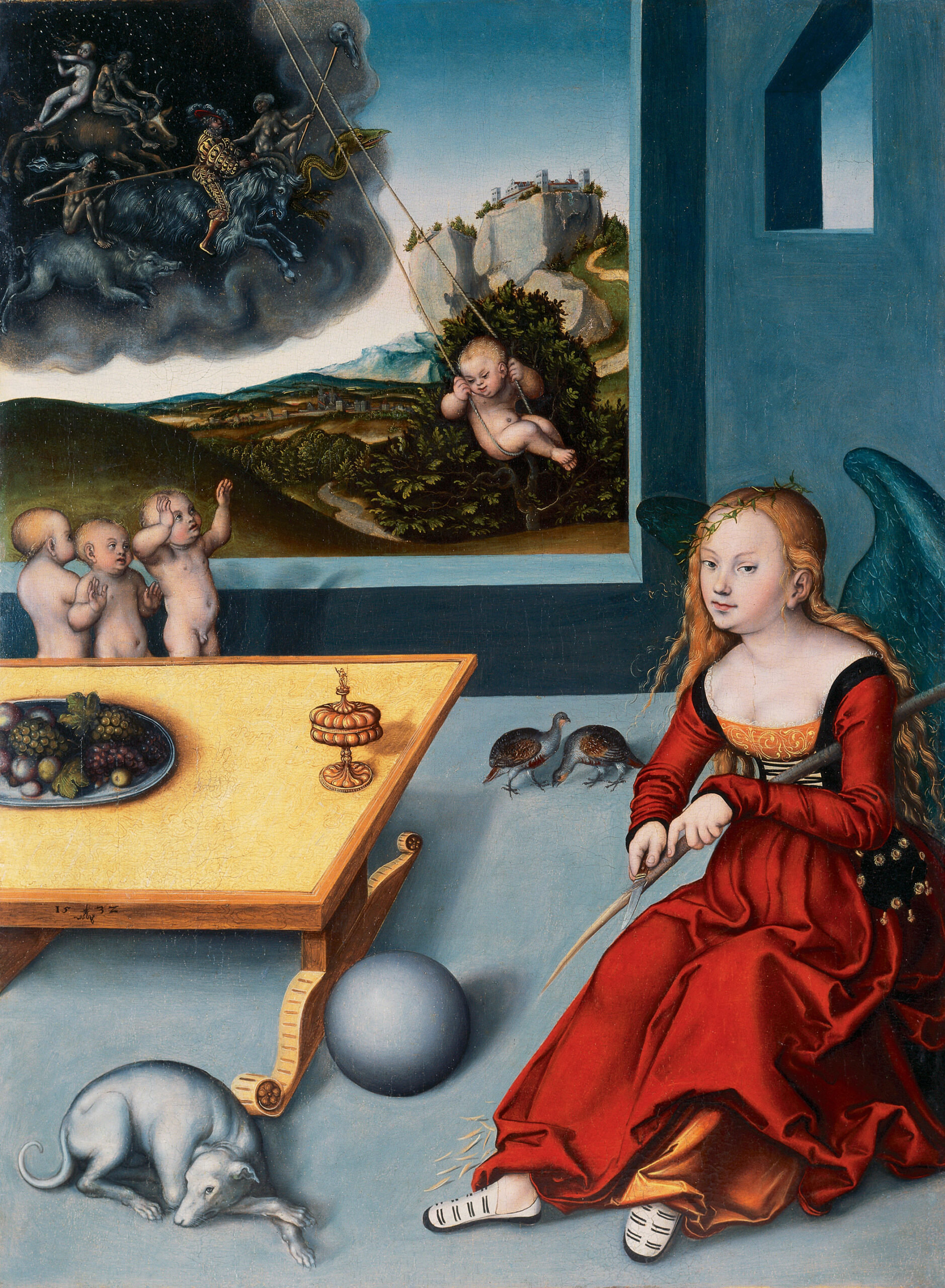
    The future of “AI Art”

    The other day I started playing with one of those new “AI art” tools. Bing’s one is the most popular, I suppose, but it’s also the most heavily censored. So I tried to play a bit around the politically correct filters. It was no surprise that all kinds of ethnic or religious descriptions were forbidden. “Jewish”, “Arab”, “Black”, “White”, whatever. Not possible.

    What was stranger was that the words “vaccine” or “injection” were also blocked. I suppose it’s because Bill Gates owns Bing? By the way, all kind of names of public personalities were forbidden, and some political themes, too. But I managed to create something with the prompt “homosexual screaming in front of a church,” and the resulting image was exactly that. Also “pink-haired feminist protesting for my body, my choice” was allowed. More surprisingly, it accepted the prompt “synagogue of Satan”, but the resulting images were nothing to write home about — some kind of cyberpunk building with domes and chimneys.

    Of course, no prompts requesting nudity or sex were allowed, and even kisses were frowned upon by the system. I did manage to get a kiss between two cartoon characters, but that was it.

    (I would publish the obtained images here so you could have a better idea, but I ended up thinking better of it — see below.)

    Another system, however, called Stable Diffusion, was not heavily censored. In fact, it was almost not censored at all. It accepted all kinds of racial slurs and sexual descriptions and produced really incredible — or appalling — images. It couldn’t really produce explicit pornography, but… pretty close to it. Lots of nudity, even if sometimes with weird anatomical changes. It seems that AI still hasn’t got the knack of the human body, or perhaps it just hasn’t been fed as much pornography as the average Western citizen.

    Still, it was a bit scary to see how far it has gone.

    As I said, I ended up not publishing the images because I decided that I don’t want to promote AI art, if I can choose, and stick to traditional art. In the end, I think “AI” is a misnomer. It’s more about Big Data. It’s not a robot creating images out of his own mind or imagination, which in fact it doesn’t have, but just a program that is fed all kinds of images, millions of them, then associating each image to a word or prompt, and then being able to recreate them and combine them in different ways. But the original work is still somebody else’s. In the end, it really amounts to stealing the artwork of millions of creators and combining them in different ways.

    This becomes clear if the prompt is to create a cartoon. Even if you don’t specify a particular artist, usually the resulting image will be clearly copied from some cartoonist or other, in a still recognizable shape. Otherwise, it’s just a generic picture. It doesn’t have an “original personal style”. So, they are basically stealing all creative work and repurposing it in other ways, this is what it is. I don’t know how copyright will work in such conditions.

    It’s like they stealing all our faces and personal data from social media — even our DNA information, from sites such 23andme — and using it to feed this giant Big Data juggernaut. Then they call it “AI” as if it was just some robot or software creating it all from scratch. But it isn’t. There’s people behind it, stealing all our data and creating this huge Big Data automated system — which is also not fully automated, as it actually needs a lot of humans to program the algorithms and even to feed the machine its “learning” data. I once worked briefly in some sort of small-scale AI project, and they still needed people to manually type in all the words and prompts requested by the machine.

    Even if many images are haunting, sometimes even beautiful, there is usually something slightly off about them. Sometimes it is just a little detail, like a moon that is not quite right, or an out of focus face, or some other weird detail that is not where it should be. It make even create by random chance human creatures with three feet or four hands seemingly out of Todd Browning’s “Freaks”.

    The machine also has trouble recognizing written text, which it seems to recognize visually but not alphabetically, so it is common to have gibberish text whenever signs or any written text appear. It is a bit like in dreams —at least it happens to me that sometimes I dream I am reading a book or some other written text but the letters are out of focus or mixed together. The same here.

    I cannot help but start to feel a bit nostalgic for the pre-digital age. Now, I basically grew up with computers, I was even one of the pioneers of the web, so to speak — I started my first website when most people didn’t even know what that was. But more and more I feel nostalgic for analog equipment, which are in many ways more natural and easier to understand.

    I suppose, however, that this kind of artificially digitally produced images are here to stay, as well as all kinds of automation.

    But why? What is the purpose behind it?

    The future of AI

    It is interesting to think that the same people who are now developing this new system may be replaced by it. After all, if AI systems can create images or produce a coherent text in English, why couldn’t they be automated to create a simple computer program or algorithm? That is probably easier, and I suppose more natural to a machine.

    On the other hand, AI doesn’t really reduce employment as much as it changes it. Perhaps less people will work as journalists or copywriters or designers or programmers, but there will always be a need of people to feed data to the machine, fix it when it’s broken and, well, make coffee and clean stuff.  Still, a lot of people will probably become useless.

    I remember once that the employees or Yahoo, Microsoft or some other company were forced to train the company’s new diversity hires before being fired. Now it’s the same thing. The programmers are programming a machine that will replace them. Cashiers are working for supermarkets that will get rid of them too, thanks to automated check-out. And so forth and so on.

    In the end, I felt that the whole thing was a huge waste of time. After all, it can become addictive. And also, I felt a bit uncomfortable with “AI art” . There is something strange about it. For instance, images of hellish or apocalyptical landscapes seem easier to produce than angelic ones. Even typing gibberish words will give you bizarre images of demons or skulls. I don’t know if it’s because that’s what most people try to create, or because that’s what the system has been fed (as contemporary culture is mostly dark stuff), or if it’s just something in the air. But it’s still a bit uncanny.

    Lately I’ve been trying to learn oil painting, and I hope that I can continue learning that in the future. In the end, there is no substitute for personal creativity. Perhaps machines can substitute us in the mass-production of generic images, and perhaps they can even alter our perception of what’s “real” and what isn’t — this will, in fact, be a huge problem in the near future, as we won’t know anymore which images shown in the media are “real”and which are not —but do we, even now? Sure, that was something which, in some ways, was already possible with things like Photoshop or CGI — or simply with actors and studio footage — but now can happen basically with the touch  of a button. Soon, AI will be able to produce video too, if it isn’t already. We won’t be able to trust anything that doesn’t happen in front of our own eyes without mediation, and perhaps not even that.

    In the following years, if we’re not all blown to Hell, many things can change and will.

    But they can’t really get rid of our creative impulse. As long as there are still humans, they will still draw, paint, write poems, and show their artistic work to others, even in a fully automated robotic world. At least, until they implant a chip in our brains and inject us with mRNAs and hook our brains directly to a huge global neural network, but well, that’s another story.
  • Articles

    Future of the past

    In George Orwell’s classic novel “1984”, the records of past history are constantly being modified by workers at the Ministry of Truth. As a Party member observes: “He who controls the past, controls the present. He who controls the present, controls the future.”

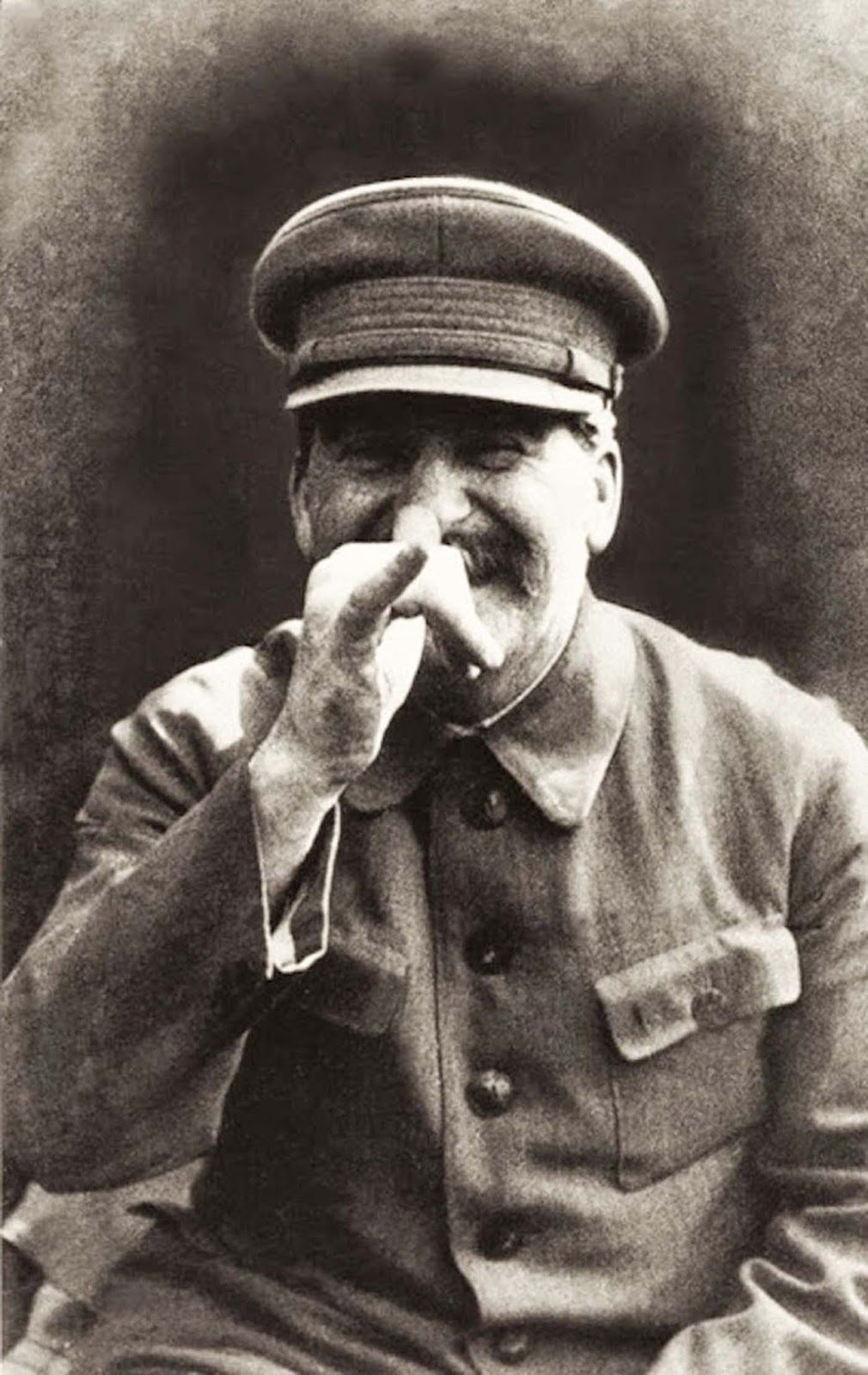
    Orwell had been, of course, inspired by Soviet communism, where Stalin would “disappear” you from a photograph after he had made you disappear from real life.

    Today’s rewriting of the past is even more insidious and dangerous than in Soviet times. Two recent stories published in the obnoxious British newspaper The Guardian show us why.

    One of them is about a statue of American Confederate General Robert E. Lee being destroyed and melted, to be later transformed into some kind of unspecified type of modern art. The article is celebratory. “It felt like an execution,” says one of the organizers about the destruction of the statue, barely containing a smile. (I thought progressives were against public executions?)

    The other article is about a “shocking” poll saying that “Half of Britons can’t name a single Black British historical figure“. Well, that’s hardly surprising, considering that Blacks have a very recent presence in the United Kingdom, having come in large numbers only after the 1960s as part of the “decolonization” movement (or a new colonization movement, now turned from the old colonies towards Europe). Sure, maybe there were other Blacks before, but very few and far between. I’ve read a bit of British History, and the only one I could think of was Idris Elba, and I wouldn’t call him a “historical figure”.

    To the modern, progressive mind, simply rewriting the past is not enough. The past was “racist”, so it must be completely eradicated, then turned into something “non-racist”, lest someone looks back at it and gets the wrong idea. To that end, statues must be destroyed, books censored, films recast with more dark-skinned actors, etc. They are not content with merely rewriting history, but they must also destroy artifacts, change words in books and remake films that shows us any kind different view.

    It’s, to me, a strange way of thinking. Obviously, lots of bad things happened during History, things that I’d rather wish had happened in a different way. But the idea of eliminating their existence from the records never crossed my mind. First of all, because historical writings, statues and other objects have a historical, artistic or archeological value in itself. And, second, because, well, what is the point? People who are interested in History want to learn about how the past really was, not about some nonsense propaganda version of it.

    Of course, it’s all about brainwashing — if you don’t know anything about the past, or know only a false, adulterated version of the past, you can’t complain about the present and certainly can’t try to change the future.

  • Books - Featured

    Three new books

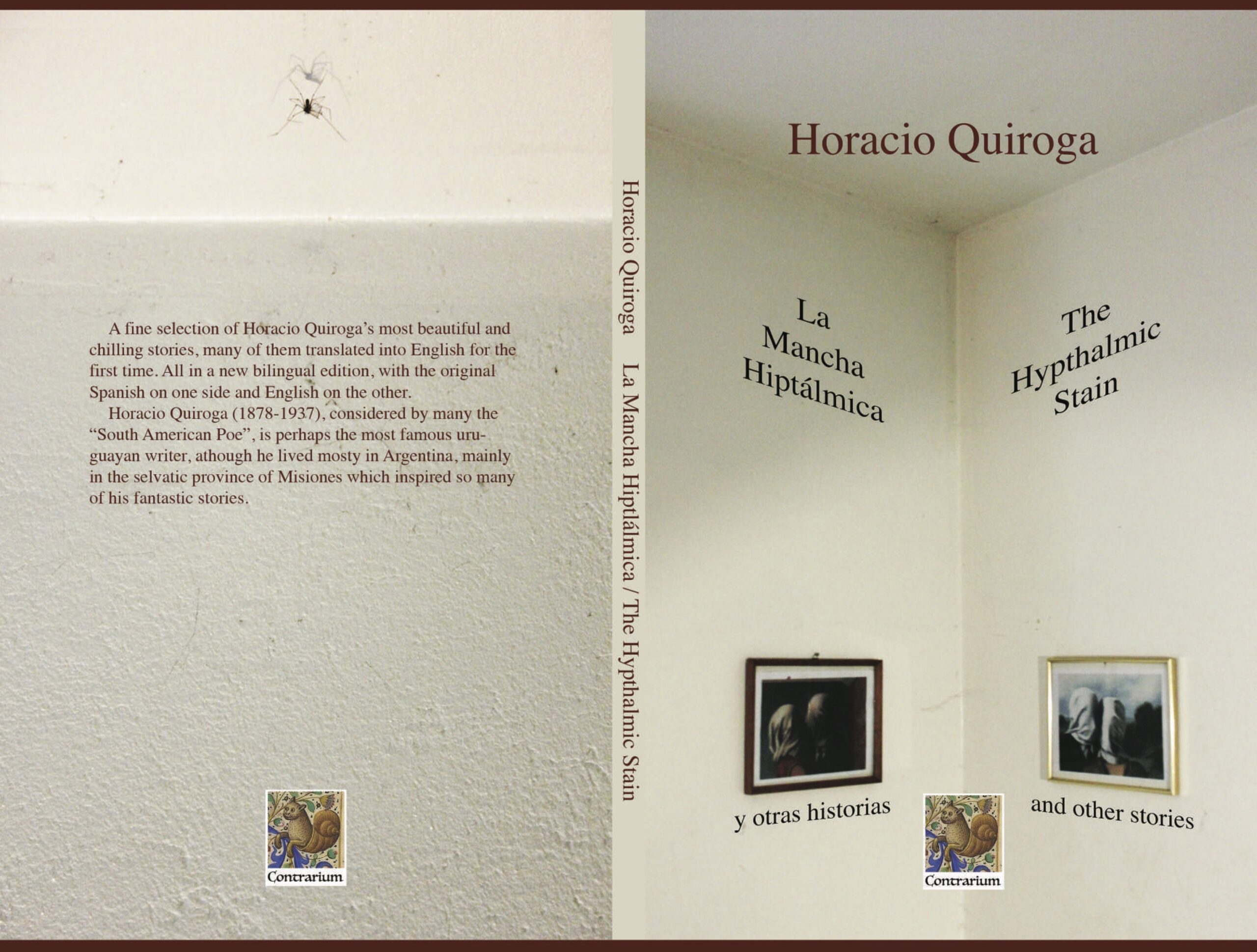
    We have published three new books by our imprint Contrarium. The first one is a bilingual Spanish-English edition of a selection of Horacio Quiroga’s short stories. Quiroga was a South American master of the short story genre. Many of the stories presented here are translated into English for the first time. Others are classics but presented here in a new, revised translation, next to the original Spanish text.

    Another book we published is Hilaire Belloc’s “The Path to Rome“, the narration of his walking journey from Toul, France, to Rome in Italy. There are other editions of this book, but this one has the original illustrations rescanned in high resolution. We also added two short biographical sketches, one by his friend G. K. Chesterton and one by Jorge Luis Borges.

    And the third book is Edward Burke’s “Bachelors’ Buttons“. Edward Burke is actually Winifred Boggs, an authoress of funny romantic comedies which were a success at the time. This book was originally published in 1914 and was out of print.

    We also have an illustrated anthology of stories for children on the way, but it may take a little bit more time to finish that one. In the meantime, you can check our Dark Fairy Tales collection.


  • Articles - Germany

    A postcard of modern Germany

    Pablo is dead. Who is Pablo, you may ask? I had no idea either, but the main street downtown suddenly appeared full of flowers and written notes and candles and teddy bears. “R.I.P. Pablo”, said a graffiti in the shape of a heart. I started to think he was a victim of terrorism.

    Turns out, he was a migrant from Gambia who sold marijuana. Perhaps for that reason, he was very popular among the young people who roamed downtown at night. It seems a couple of Algerians tried to rob him of his well-earned money. He ran away, and as he crossed the street, he was killed by an oncoming garbage truck. He was just 20 years old. He had been in Germany for just 2 years.

    (I’m a a bit jealous of Pablo. I doubt anyone here will put flowers or candles when/if I am run over by a garbage truck. I don’t sell marihuana and my popularity is very low.)

    A bit further north, in the neighbourhood of Sonnenberg, which means Sunny Mountain, there are other flowers and candles in the sidewalk. Those have been here for a few months already. Those are for Marie. Marie was also only 20 years old. She got drunk and fell from the window. Some thought it could be suicide, but she didn’t leave any note. She was German.

    There are quite a few German drunkards and drug addicts in the Sonnenberg area. They usually gather in the parking lot of the local supermarket, even if there is a sign prohibiting drinking and loitering in the premises. They are harmless. They just drink and talk. They are all white. They are poor and unemployed.

    The meth addicts, you can spot them by their thinness and weird eyes. There are not many of those, and they are rarely outside. There are no homeless people here, so whoever has drugs, he smokes, sniffs or shoots them at home. But sometimes someone has a bad trip and you can see him walking at night screaming or talking to himself without a phone. Or occasionally a drug addict couple arguing. They are all German too. The migrants are busy working or, like Pablo, selling drugs.

    It’s not all bad, I don’t want you to give you a bad idea. Mostly the neighbourhood is pretty quiet. It’s just your regular working class neighbourhood. It’s actually pretty rare for people to die like this, which explains the notes and flowers. People mostly stay at home and the streets are empty. It’s not noisy at all. Except when some drunk screams or a couple fights. But otherwise it’s fine.

    About half of the people around are German The immigrants are mainly Turk and Middle-Eastern. There are now many Ukrainians too — there used to be Russians and Poles but now they’ve been completely overran by the Ukrainians — and of course Syrians. Recently, a group of gypsies from Slovakia seem to have arrived too. They seem okay. They don’t steal. (Well, to be completely honest, I’ve heard that some of the children stole a neighbours’ bicycle, but they gave it back.) The same group also opened a small evangelical church. I’m not sure if they are gypsies to be honest. But they don’t look like the other Slovaks I’ve known.

    Germany is not what it once was. It is still not too bad either, but let me tell you just one thing: the Deutsche Bahn trains are often late. Years ago, this was unthinkable.

    There’s also much more vandalism. One of the brand new digital screens in the train station has been shattered with a rock.

    Since the Ukraine war and the Nordstream explosion, things have been going down, down, down in Germany. I am not sure how this new war will affect things, but probably for the worse. Perhaps we can expect some random terrorist attacks, or at least a false flag. Most of those attacks are probably paid by spy agencies or governments to cause terror and chaos, anyway. And some of them are fake, though not all, not all. Sometimes people really die.

    But what I’m trying to say is, I guess, that the death of Pablo or poor Marie (she seemed a pretty girl, there’s a picture of her next to a makeshift cross) is as important as whoever died in Gaza or Israel or anywhere else in the news. But no one will know about them.

    I miss home. But we Western people no longer have a home.


  • Articles

    How I learned to stop worrying and love the Apocalypse

    While most people were understandably driven to fear, rage or despair over the most recent massacres in that eternal conflict in the Middle East, while thousands were protesting in the streets for their preferred side and a few were even driven to violence over it, I, after an initial panic, spent my time trying to stop and think things over.

    Of course the situation is dramatic, especially for the people trapped in Gaza, but also for the Israeli hostages. (Even if the Israeli strategy of bombing all kinds of objectives seem incomprehensible. What the hell are they hoping to achieve? To be hated even more? Cause a global war?)

    Meanwhile, in France, a Muslim fanatic from Chechnya killed a French teacher, in a case related to the current troubles in Palestine, or perhaps because of the prohibition of islamic garb in schools, and another terrorist in Belgium, native from Tunisia, shot to death two swedes who went to the Sweden-Belgium match. Although the motive here appears to be the Koran burnings that took place a while ago in Stockholm, the newest flare-up in the Middle East and the several related protests taking place in European — or former European — capitals certainly didn’t help.

    And the U.S., Iran, Russia, and even China are all making gloomy pronouncements that threaten further international escalation of the war.

    In short: yes, things are bad and looking to get worse.

    And yet, I have come to realize that all this fretting and worrying — which is, after all, what the media promotes with its constant repetition of horrific images of such happenings — is not good for anyone, and doesn’t help. First because we don’t really know exactly for sure what happened or what is happening. Lots of initial images and facts have been revealed as fakes, and, in principle, one shouldn’t completely trust anything coming from the big media.

    And second because hate and panic are not good in themselves and actually contribute to the problem. The System wants you to panic and hate. That’s why they are constantly provoking all those conflicts. But, among other things, a recent post from Mr. Charlton as well as some of his earlier writings led me to think that writing in hate and fear only brings more hate and fear, and that we should instead strive to think more positive thoughts.

    You will ask, how is it possible to think positive thoughts, with the world going to the dogs like this?!? Well, even if the world is ending, or, at least, the modern western world — and that is, indeed, a possibility — we shouldn’t worry more than it is necessary about it. In fact, we shouldn’t think too much about the current end of this world at all, but instead try to concentrate in the new world that we want to build after that. Well, if we survive…

    As Yeats wrote in “Lapis Lazuli”:

    All things fall and are built again
    And those that build them again are gay.

    (Gay, here, of course, means “happy” or “joyful”, which is the meaning the word had before it was appropriated for other uses.)

    Now, how can we do that? Well, I suppose each one can do it his own way, some concentrating on raising well their families, some on doing well their job, some on applying their skill or talents for positive enterprises.

    I, for instance, have a hobby as a small-time publisher. Every month I receive something between 15 and 40 dollars from Amazon from the books sold by my independent imprint. It’s almost nothing, but it’s still more than I ever got paid for writing about politics and fretting about the state of the world, even when I wrote an actually successful political blog in Brazil years ago.

    Now I am preparing three new books, one a bilingual Spanish-English edition of Horacio Quiroga’s short stories, another a new edition of Hilaire Belloc’s “The Path to Rome”, and another one a compilation of stories for children. I am also writing myself a non-fiction book about the history of Argentina, although that will only be available next year. All books are available in both digital and print formats.

    Why do I do it, given that none of those books will probably sell much, if at all? Well, for one, I enjoy creating new editions of old books. It is fun to choose fonts and create a new design for the covers. I am a professor and translator by profession, so that’s also something I can do, I think, relatively well, even when I’m not paid. It is also good to think that I am doing a small part to keep old books alive.

    While other publishers have been doing the same thing — after all, works in the public domain are free to be republished by anyone, and lots of works are available for free at Gutenberg and other sites — I have noticed that the quality of such books, in general, is very bad. Printing quality and translations are generally dismal, with lots of errors, typos and ugly covers. So I wanted to provide something with a slightly better quality. Of course, given that this is Amazon print-by-demand, the printing quality is variable and not as good as what could be obtained if I could print my own books, and a real publishing company, but that costs money that I don’t have. So, for now, it’s really no more than a useless hobby.

    Another thing I can do, I think, is to focus my writing a bit less on the current apocalypse and more on the ways that we can build things again after they fall. At least, that is the challenge for this website and any other project that I may have in the future.

    Will you join me?

  • Articles

    “This is the real Gog and Magog”

    I knew something was afoot when they said that it was “Israel’s 911”. I mean, I guess it depends if you believe the official narrative or not. But for those of us who don’t necessarily believe the official story, this is a red flag.

    Now, I’m not saying people didn’t die. People also died in 9/11. But there’s something weird. How come this even happened? How come thousands of terrorists were able to cross one of the most guarded borders on earth and kill civilians en masse?

    Well, it’s possible it’s just incompetence, and the Mossad isn’t really all that we were told. It’s also possible, say, well, that the Mossad knew about it or suspected it, but let it happen anyway, because they didn’t think it would be so big.

    Maybe. But, in fact, 86% of people in Israel are blaming the Israeli government and saying what happened was a huge failure. 79% of Israelis want Netanyahu to resign. So whatever happened, it doesn’t seem to benefit him very much.

    Whatever they plan to do in Gaza, Israelis are not happy with the government, and things are not looking good in general for Israel right now. They do not have easy options on Gaza, and they may have war coming from the North too.

    I do have sympathy for the Israeli civilians killed. I don’t know if as many died as it is said, as there’s no way to verify, but I am sure many people died. I am sort of neutral on the conflict, as I try to see both sides.

    But they lost me a bit at the dead babies thing. I mean, this is a psychological trick, always used to manipulate public opinion, even when true. Babies killed by Saddam! Babies killed with poison gas by Assad! Now, children sometimes die in war, in bombings, in terrorism and even in mass shootings, it’s true. Some of those events are fake, but some aren’t. Many Iraqi and Palestinian children died in bombings. Many children died in bombings in the Donbass. Children are not immune to the horrific effects of war.

    But when you have stuff being brandished like that, it just becomes annoying, even if it’s true, because you see that it’s an attempt at psychological manipulation. It’s like Eli Wiesel in his Holocaust book, he also talks about babies being burned by the Nazis in an open field. I’m not a fan of the Nazis, and I’m sure a lot of Jews died in the camps, you don’t need to invent anything to make it more atrocious. But burning babies in an open field? Why would they do that?

    On the other hand, well, if you attack, don’t be surprised if they attack you back. That applies to both sides, of course.

    Now, I am not unsympathetic to Israel. You see, I have Jewish friends. Most of them are not religious and not very political, but some of them even visited Israel. I don’t know what is their position on the current conflict. But in general, I do think that Israel has a right to exist. I don’t see why, at least in theory, it should be so complicated for Israel to exist. You will say, the Arabs were there first. Yes, maybe, but the region was under British control, and before that under the Turks, and before that, Christian armies briefly conquered it during the Crusades, and throughout history lots of different peoples lived there, even some Jews.

    Besides, there are a lot of other Arab countries, with a huge territory. Is it really so complicated to share a small part of it with Jews, who otherwise have no country of their own?

    But of course, you forget that it is not just any “small part”. It’s the Holy Land, a place of immense importance to all the so-called Abrahamic religions. And there are lots of other interests, too. For the U.S., of course, Israel has huge geopolitical importance. For Europe, too. And for Iran, Palestine has become an important wedge. But also for Russia, who is somewhat between both camps, as they are now allied with Iran but, on the other hand, Israel has a lot of people of Russian origin, who left after the break up of the Soviet Union.
    I guess what most people dislike is just Israel’s hypocrisy. Being nationalist is evil. Except in Israel, where it’s okay. So I think that’s the main point of discord. Well, at least for me.

    What will happen now? I have no idea. Probably an expansion of the war. Lebanon, Syria, Iran, Saudi Arabia. Maybe even the U.S., Russia and China. Who knows. We are in uncharted territory here.

    I had a dream the other night. I remember little of it except someone talking about Gog and Magog. “This is the real Gog and Magog”, he said. Those are the name of evil nations that are supposed to be led by Satan to attack the Holy Land and then be destroyed during the Apocalypse. Many people debate what it means. Along history, they were associated with many different nations. The Mongol Empire. The Khazar Empire. Even the Vikings.

    Today, some associate them with Russia and Iran, some with the United States.

    Who knows? As they say, the only thing certain in life is death.

    There’s a story from Primo Levi’s “The Truce” that I like. It happens after the Second World War ends. On seeing him without shoes, a Greek friend criticizes him: “The first thing you need in a war is a good pair of shoes.” “But the war is over”, answers Levi. “It’s always war”, the other replies.

    Yes, my friends, it’s always war. And a big one is coming. Prepare accordingly.

    May God have mercy on our souls.


  • Articles

    Blessed are the peace-makers

    In February 2022, no one expected that Covid would suddenly disappear from the headlines from one day to the next due to some war in the Ukraine.

    In October 2023, I guess few people were expecting that the Ukraine war would suddenly disappear from the news because of another war between Israelis and Arabs, although both conflicts are not completely unrelated — and even the conflict in Nagorno-Kabarakh and the coup in Niger were related, too.

    Let’s admit it, we’ve been in World War III since 2022 and this is just another front. Perhaps an Asian front will happen over Taiwan later on.

    It’s difficult to talk about the Palestine question, and, honestly, I even dislike talking about it. There’s something about it that drives people to fits of rage, even people who do not live there and are neither Muslims nor Jews. No matter, they project their own anger on the side they hate the most, or even on those who refuse to take sides.

    For instance, just now, on another blog, I was accused of being a “sociopath” for a brief and, admittedly, perhaps slightly cynical comment saying that I disliked equally both sides and just wished they made a compromise and left the rest of the world alone.

    No one has accused me of being a “sociopath” for, as most of the rest of mankind and the whole media too, except perhaps Armenians and Azeris, not taking sides or even worrying very much about the recent conflict in Nagorno-Kabarakh, or any number of other atrocities in the world that are not so much portrayed in the media. You can’t really worry about everything that happens in the world, or you’d go mad.

    Now, about the recent events… I would think that the apparent murder of innocent young people at a “peace festival”, or families in kibbutzes, or even random Thai workers in Israel, would be condemned by most people, but it is not the case. Many people are actually supporting the Hamas side.

    Now, two caveats. First, I am well aware that it is possible that this was a “false flag”, or that there are many things about what happened that we don’t know about. I personally find it strange that the Israelis didn’t know anything about the “surprise attack” or were so incompetent in stopping it once it started. Miles Mathis says the whole thing is fake (But when did he say anything else about any other event? That’s his line, but sometimes he’s way off).

    Nevertheless, I am sure some level of deception is involved. After all, it has been called “Israel’s 9/11”, and we know what that means. Well, at least those of us who don’t believe the conventional narrative. They are also comparing Hamas to ISIS, and knowing that ISIS was a group created or at least used by CIA/Mossad/MI6, that’s another red flag. But, for now, at least for the purposes of this text, I am assuming that the attacks were real, even if the number of deaths on each side may be exaggerated, and in any case impossible to verify.

    Second caveat, of course the fact that atrocities were committed on one side do not justify atrocities on the other, in this case Israel bombing or levelling Gaza, or whatever they are planning to do to the Palestinians — we shall see soon enough.

    Whatever — false flag or not, the mutual hate is real and so is World War III.

    Now, who is right and who is wrong in the Palestine, and is there any solution?

    I think both sides are wrong, and there’s no solution. Let me explain.

    Both sides, mostly for religious but also historical reasons, lay claim to the whole area which is now called Israel but was called Palestine in Roman times, and won’t be satisfied with half-measures. The Arabs want the Jews out of “their turf”, period. They see it, rightly or wrongly, as stolen land. A “two-state solution” won’t do.

    And the Jews… Well, I guess it varies between the Haredim and the more secular ones, but in general I guess they want the whole area too. Except perhaps maybe Gaza, which they’d gladly rather give to Egypt or anybody else that would want it, although of course no one does.

    I’m aware that rich Jews in the West, like, say, George Soros, and even other not so rich Jews, are involved in a lot of negative things, and are perhaps the main group pushing for mass migration and multiculturalism, something I have criticized several times. I also know that Orthodox Jews in Israel dislike Christians and Christianity in general, even if lots of Christians, mostly of the evangelical variety, love Israel.

    On the other hand, does that make me an “anti-semite”, whatever this means these days? I don’t know, but I can’t bring myself to hate all Jews, just as I can’t bring myself to hate all Muslims. I have quite a few Jewish friends and acquaintances. Not all are close, but having spent many years studying and working in universities, it was perhaps inevitable that I would be in contact with several Jewish people. Most of they seemed nice people, at least on a superficial level. The ones I’m still in contact with are not very political or religious — in fact, they are not religious at all — and I think they didn’t even visit Israel, nor are very vocal about the Middle East conflict. And, of course, there are a lot of Jewish artists, writers, scientists that I admire.

    I also dislike Hamas and most Muslim fanatics, and I am also critical of the massive migration of Muslims into Europe, but does that make me hate them all as a group? Hardly. I met many Arabs, and they also seemed, on the whole, pretty nice people (there is a large Lebanese community in South America, although they are mostly Christians who left during the civil war there). In general, I’m not very much into hating large swaths of people, or, at least, I try to separate the personal from the political. I might dislike this or that group for their actions, but, on the level of individuals, I try to judge them case by case. It’s not always possible, of course.

    In some conflicts, such as Nagorno-Kabarakh, and possibly even in the Ukraine, a compromise eventually becomes possible, or perhaps one side simply wins. But I do not think a compromise is possible in Palestine. Add to that the interests and interference in the region of other powerful countries — Iran, Saudi Arabia, Russia, the U.S. — and, therefore, World War III.

    Well, I’d rather be in Finland, in a cabin in the woods by a lake, not having to worry about any of that — only that Finland is now also part of NATO, and thus part of World War III too…

    Perhaps the prophecies about the end of the world starting in the Holy Land are real.

    I still think that Jesus was onto something with that Sermon of the Mount thing, but no one wants to hear that, especially not these days, when war is around the corner and everybody seems to be hating everybody, and even those who don’t hate the other side enough are hated and criticized.

    You have heard that it was said, thou shalt love thy neighbour, and hate thine enemy. But I say to you, love your enemies, do good to them that hate you, and pray for them that persecute and abuse you. That you may be the children of your Father which is in Heaven, who maketh his sun to rise upon good and bad, and raineth upon just and unjust. For if you love only them that love you, what reward shall you have?

  • Articles - Featured - Italy - Russia

    You can’t go home again

    Language as a home

    “The Russian language is my homeland”, wrote the great poet Anna Akhmatova. She was born in Odessa but lived mostly in Saint Petersburg. She descended from Ukrainian cossacks on her father’s side and from Russian nobility on her mother’s side.

    She could have escaped during the 1917 Revolution, as friends of hers did, but chose to stay instead. She knew she was giving up freedom, but she said she could not bear to live in exile, like a stranger in a strange land.

    Her first husband was shot by Lenin and her son was sent to the gulag by Stalin. But she never left the Soviet Union, except for brief trips at the end of her life, authorized by the regime.

    She wrote patriotic poems and read them to soldiers during the siege of Leningrad, but she also wrote “Requiem”, a long poem about the Stalinist terror, published only posthumously in Russia in 1987.

    The English language is not my homeland. I write in English because I lived for many years in English-speaking countries but it’s not my mother tongue — I think I write decently in it, but it still doesn’t feel completely natural, and my pronunciation is not great. But I lived in so many countries, I don’t know in which language I should write anymore. And, unlike Akhmatova, I live in exile. A stranger in a strange land.

    Tradition as a home

    There is a YouTube channel I like called Pasta Grannies. It interviews year old Italian grandmas who make pasta the traditional way. The last one was about a 96-year old grandma making homemade pesto.

    It is beautiful, but it’s also kind of sad. Will this tradition be kept alive in the future?

    Italy has a fertility rate of less than 1.3 children per woman, and, on top of that, it is receiving thousands of foreign migrants every year. As in France, increasingly even small towns are full of immigrants, and locals are not having children, but just getting old.

    Will these African, Arab and Asian migrants keep the handmade pasta tradition alive? Highly unlikely. They are bringing their own traditions with them.

    Most of the illegal migrants board boats on the Libyan coast. They could be easily transported to Tunisia, which is much closer, but Tunis doesn’t want them. So German NGOs picks them up just a few miles off the Libyan coast, and bring them to Lampedusa. There, the EU makes it impossible for them to be deported. So they remain, but many don’t have jobs, and not even a lot of benefits.

    Italy is not really a rich country, and many Italians are struggling right now, so you can imagine that most of those migrants are not really having the dream life they were told they would have.

    Since it’s German NGOs that bring them, perhaps the Italians should put them all on buses and send them to Berlin. Germany also offers better benefits to migrants, so it would be win-win.

    But Meloni is not doing anything about it, and she recently even implied that she wants to increase legal immigration to the country, bringing in people from India too.

    Say what you want about Salvini, at least he wasn’t as big a disappointment as Meloni proved to be.

    Now the EU has a new agreement that all member countries must share the enrichment. So Poland, Hungary and other countries not so near the Mediterranean will receive their share too. It’s only fair.

    No home even at home

    In 1973, French writer Jean Raspail wrote the novel The Camp of the Saints, which was an early warning about mass immigration. Despite its relevant theme, the book is out of print. You can buy it at Amazon for 1,000 dollars, which is more than most immigrants pay to the smugglers for their boat ride to Europe.

    I don’t even blame the migrants. Some demonize them, but, well, most of them are just poor people who are just being used by others in power — to lower salaries, to create conflict, maybe one day to start a new war, who knows. They probably wouldn’t even come if there wasn’t an incentive from the European governments for them to do so. As Akhmatova knew, it’s hard to live away from one’s homeland.

    And in the end, that’s what it is all about. Those migrants only come because the European and American governments are pushing it, and even paying for it.

    Just the other day some mayor of a small town in Germany said he was going to install converted containers to house refugees in a primary school, against the parents’ wishes, and he even bragged that there was nothing anyone could do about it.

    What is that if not a big “F.U.” to the local population?

    Mass migration is portrayed as some kind of natural, unstoppable force, like a tsunami, but it’s exactly the opposite. Billions of dollars or euros are spent to bring those migrants, and then other billions are spent to host them in apartments or containers or camps, and sometimes they even receive a monthly wage.

    Occasionally the governments even complain that it costs too much. Well, what about, just stopping spending all those billions?

    Of course, it won’t happen. It’s an engineered program that could easily be stopped if there was just the will. But there isn’t.

    If the migrants feel bad, if they can’t find a job, if they suffer with racism and xenophobia, if their life sucks and Europe or America is not the shining city on the hill they were promised, they can always go home.

    But you, my friend, who grew up under the shadow of those native trees, whose ancestors built these old medieval towns and churches that still stand, you have nowhere to go.

    Your country has changed. Your life has changed.

    You can’t go home again.

    No one wants to help us
    Because we stayed home,
    Because, loving our city
    And not winged freedom,
    We preserved for ourselves
    Its palaces, its fire and water.

    (Anna Akhmatova, Petrograd, 1919)

  • Articles - Cinema

    Revisiting Hal Hartley

    The Criterion channel has been doing a Hal Hartley retrospective, so I decided to watch or re-watch some of his films. As you may know, Hartley was one of the indie cinema darlings of the early 1990s, together with the likes of Jim Jarmusch and others.

    Jarmusch is still around, but Hal Hartley, which had been my favourite at the time, more or less disappeared, at least from the mainstream discourse. His last successful film was “Henry Fool”, in 1997, and the last one he made, so far, is “Ned Rifle” which came out in 2014 and is in fact the closing of a trilogy that started with “Henry Fool”.  But he hasn’t made any film since.

    Watching again his movies was interesting. Many of the early ones haven’t completely lost the appeal. Trust (1990), one of his best films of his early period, still holds up pretty well. Simple Men (1993) is even better than I remembered it. Amateur (1994) may have a few dated jokes, but otherwise remains funny and engaging, and has Martin Donovan, Isabelle Huppert and Elina Löwensohn in great roles.

    I hadn’t watched The Book of Life (1999) and No Such Thing (2001) back then, and I knew they had mostly negative reviews. Watching them now, and I must say that the mixed reviews are in many ways justified.

    The Book of Life feels more like a somewhat interesting but dated experiment. The best thing about it is Miho Nikaido — I didn’t know, but she’s actually Hartley’s Japanese wife — as a good-hearted waitress whose soul is sold by her boyfriend to the Devil. But can one sell someone else’s soul? The theology of the film is inconsistent, but the film is short and has a few interesting bits. Martin Donovan plays Jesus, Thomas Jay Ryan plays Satan and singer P. J. Harvey plays Mary Magdalene.

    No Such Thing (2001) is Hartley’s only big budget movie. It has beautifully photographed Iceland landscapes, decent make-up and effects, and the general look of a mainstream production, as well as big-name actors such as Helen Mirren and Julie Christie in important roles. In some ways a variation on the myth of Beaty and the Beast, it has young Sarah Polley in the protagonist’s role, the dantesque Beatrice, while Hartley’s regular Robert John Burke plays the monster.

    While the film is well-directed and has a nice soundtrack — Hartley is also a talented musician and composed the music for many of his films, but he says that it was just to save money, as obtaining music rights can be expensive — the screenplay, perhaps surprisingly, is its weakest part.

    Characterizations are inconsistent. Beatrice acts one day like a suffering martyr, the next like a callous whore. She rejects the sensationalization of being the sole survivor of a plane accident, only to giddily accept later on to become “famous” presenting the monster to the press. The rhythm is uneven and the ending is confusing. [SPOILER: It seems to me that what happens or is implied by the ending is that the monster was just Beatrice’s dream or imagination during her surgery, after which she dies or ends up in a coma (i.e. the monster dies = she dies). This would explain why the machine where the monster is placed looks so much like the machine of her surgery, and also why the doctor (played by Julie Christie) is incongruously present assisting in this scene. But it could be just a personal interpretation.]

    After this failed project — it bombed big time — Hartley directed mostly shorts or experimental films with limited distribution, or sometimes, no distribution at all.

    Not everything is bad, though. The Henry Fool trilogy (discussed below) is interesting, and Meanwhile (2011) is a little light-hearted film (under one hour) about New York City which is, all in all, pretty nice. But, as the title implies, it feels a bit like something done “meanwhile” waiting for funding for more ambitious projects.

    The Henry Fool trilogy

    Henry Fool (1997) was the most critically and commercially successful of all Hartley’s films, but, despite having many good things going for it, it was never my favourite. However, now, after having watched the full trilogy, I think the first film becomes more interesting in retrospect. The sum is larger than its parts.

    Fay Grim (2006), the second instalment of the trilogy focusing on Henry’s wife is, to put it mildly, problematic. The story is so convoluted it becomes hard to follow, and many scenes are over the top. Hartley had already played with spoofing the spy or thriller genre in Amateur, but here it is not clear how much of it is to be taken seriously or not. The film starts as a zany comedy but it shifts tone somewhere towards the middle and concludes with more serious drama and political intrigue.

    On the other hand, it has Elina Löwhenson returning in a funny role, Parker Posey is also endearing as the protagonist, and there’s Jeff Goldblum too. The idea of the Henry character as a hapless amoral bastard with no great talent of his own, but who however inspires others to do great things — to become great poets, in the first movie, or, in this one, great terrorist leaders — is interesting. But the film feels incomplete, or perhaps botched.

    Ned Rifle (2014), however, the third and final part, is pretty good, and in some ways a return to the smaller, intimate, character-driven films of his early period. Liam Aiken as Ned (Fay and Henry’s son) does a pretty good job, and is one rare instance of a Christian character shown in a positive light. It is also interesting that he played the same character for the first time in Henry Fool, when he was 7 years old, then in Fay Grim at 16 (but playing a 14-year old), and here he plays him again, at 24 (although his character is supposedly 18-year old). Another curiosity is that “Ned Rifle” was Hartley’s pseudonym as music composer in his early movies. The name also appears in fake book covers, for instance in Trust.

    Aiken as Ned is alright, but it is bad girl Susan (Aubrey Plaza) who steals the show, especially after she gets together with Henry (Thomas Jay Ryan) in the later part of the film. It is also nice to see Martin Donovan returning in a small but significant role as a reverend.

    Surviving Desire 

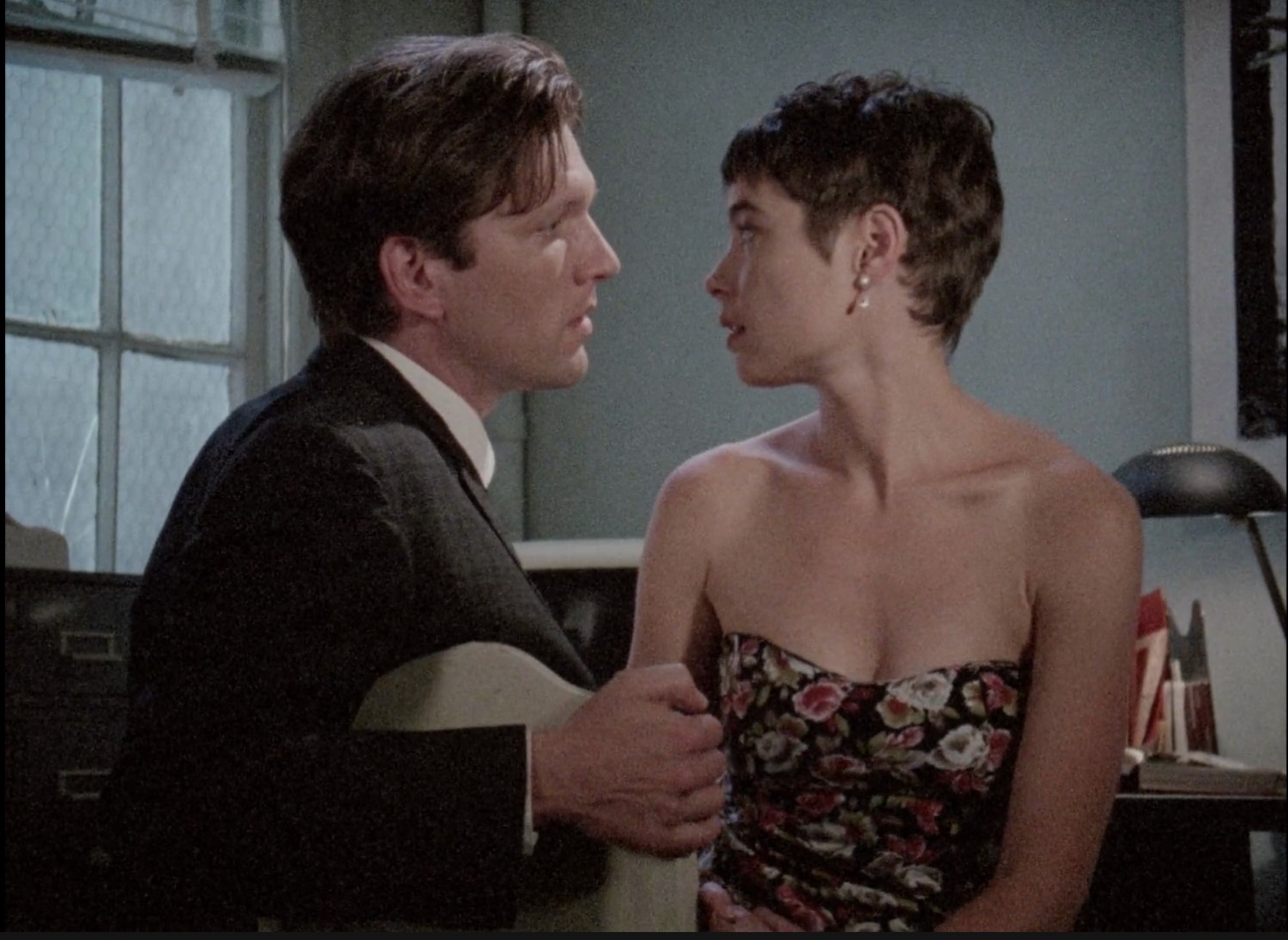
    Less is more. In the end, my favourite film of those I watched or rewatched was Surviving Desire (1992), which is as charming as I remembered way back then, and is perhaps Hartley’s masterpiece. Just one-hour long and focusing on very few characters in a small university town, with events happening over just a couple of days, it has the unity of time, place and action of a Greek tragedy, but feels more like a little comedy or short story turned into a film. The main character, played by Martin Donovan, is a literature professor who falls in love with a student (Mary B. Ward) who works part-time in a book store. Literary references abound, from Dostoevsky to Shakespeare to the Bible to Anatole France, but lightened by Hartley’s characteristic deadpan humour. Nothing much happens, and yet, the characters stay with you.

    Completing the package is The Theory of Achievement (1991) a short movie created around the same time of Surviving Desire. It is also quite nice. It features a group of broke young wannabe artists living in Williamsburg, Brooklyn, at a time when only broke young wannabe artists lived there — that is, just a few years before it was gentrified and occupied by tourists, Puerto Rican immigrants and Hasidic Jews. It features Elina Löwehnsohn in her first film role.

    There is a scene in Ned Rifle where Susan (Aubrey Plaza) eulogizes Simon Grim’s poems, delivering a speech about the artistic supremacy of “decisive, committed, admittedly obscure work, indifferent to mainstream approval and unafraid of moral and aesthetic absolutes.” This could be a good summary of Hal Hartley’s own work.

    “Surviving Desire”
    “Simple Men”
    “Trust”


  • Articles

    Ye shall know them by their fruits

    One of the strangest aspects of contemporary pop culture is how dark a lot of it is, and how drenched it has become in all kinds of occult symbolism.

    I am way too old to personally follow pop music, and I don’t really watch most Hollywood movies anymore either, but sites such as Vigilant Citizen, among others, are useful to keep track of what goes on in today’s so-called entertainment industry.

    For instance, Bebe Rexha’s “Sacrifice” videoclip shows the singer as some sort of vampire torturing and drinking the blood of her victims and finally covering herself in human blood. Doja Cat’s “Demons” shows the singer as, well, a demon. Ariana Grande’s lyrics for her 14-year-old fangirl base include gems such as “Fuck me till the daylight.” So much for teenage romanticism. Rap lyrics, luckily, continue to be traditional: it’s all about selling drugs and shooting rivals.

    Meanwhile, photographs of pop stars covering one eye or wearing satanic imagery have become almost a cliche.

    I could go on, but I guess you get the point.

    Transgenderism and androgyny are increasingly promoted. Androgyny was present in the fashion industry at least since the 1970s, but recently it has become so over-the-top that it is unclear if it is meant to be satyrical. As for the film industry, it’s not just Hollywood anymore. A recent hit comedy series from Argentina included a transexual actor, and a recent Japanese series that I watched also had a transgender character in one of the main roles. It’s everywhere.

    The visual arts, of course, have been at the forefront of promoting ugliness and debauchery for decades, with the shock value being much more important than beauty of talent. In fact, I can’t think of any recent famous work of modern art that could be considered beautiful, and, if it is, it might be just by accident.

    Recently in the news, artist Marina Abramovic, who has a new show opening at the Royal Academy in London, was chosen to become some sort of Ambassador to the Ukraine, supposedly to help rebuild schools.

    It’s a strange invitation.

    As you probably know, Marina Abramovic is a famous and controversial performance artist. Her name, which means daughter of Abraham, sounds Jewish — and she could be related to mogul Roman Abramovitch — but supposedly she’s Serbian Orthodox, at least by birth and family.

    She mostly does installations or performance stunts about sex, violence and death.

    There are many other contemporary artists who do this kind of thing, but they are not exactly swimming in money or media appearances. Marina, however, has been heavily promoted for some reason and is always seen cavorting with celebrities such as Lady Gaga.

    In 2016, during the leak of the Podesta emails, there was a whole discussion about an invitation for doing “spirit cooking” with the weird Podesta brothers and Hillary Clinton and other politicians. What did it meant exactly? Some say art, others say a type of magic ritual.

    There was a big scandal, and she publicly denied being a Satanist.

    But there is a famous photograph of her next to Lord Rothschild in front of a painting titled “Satan summoning his army”. (She has given talks to the Rothschild foundation. Maybe that picture is from that time.)

    Perhaps it’s really just provocative art. Whatever floats your boat.

    But some questions remain.

    Why does she always wear black?

    Or, if not, red?

    Why does she look to be in her 40s or 50s when she’s almost 80 years old?

    Why is she so obsessed with skeletons?

    Why is she constantly photographed with snakes?

    While the elite loves her, you can’t really blame the less sophisticated peasants for starting to think something else.