
• Articles - Cinema - Featured - Psychology - Women

    The Birth Rate Crisis: There’s something about Modernity

    Perfect Days

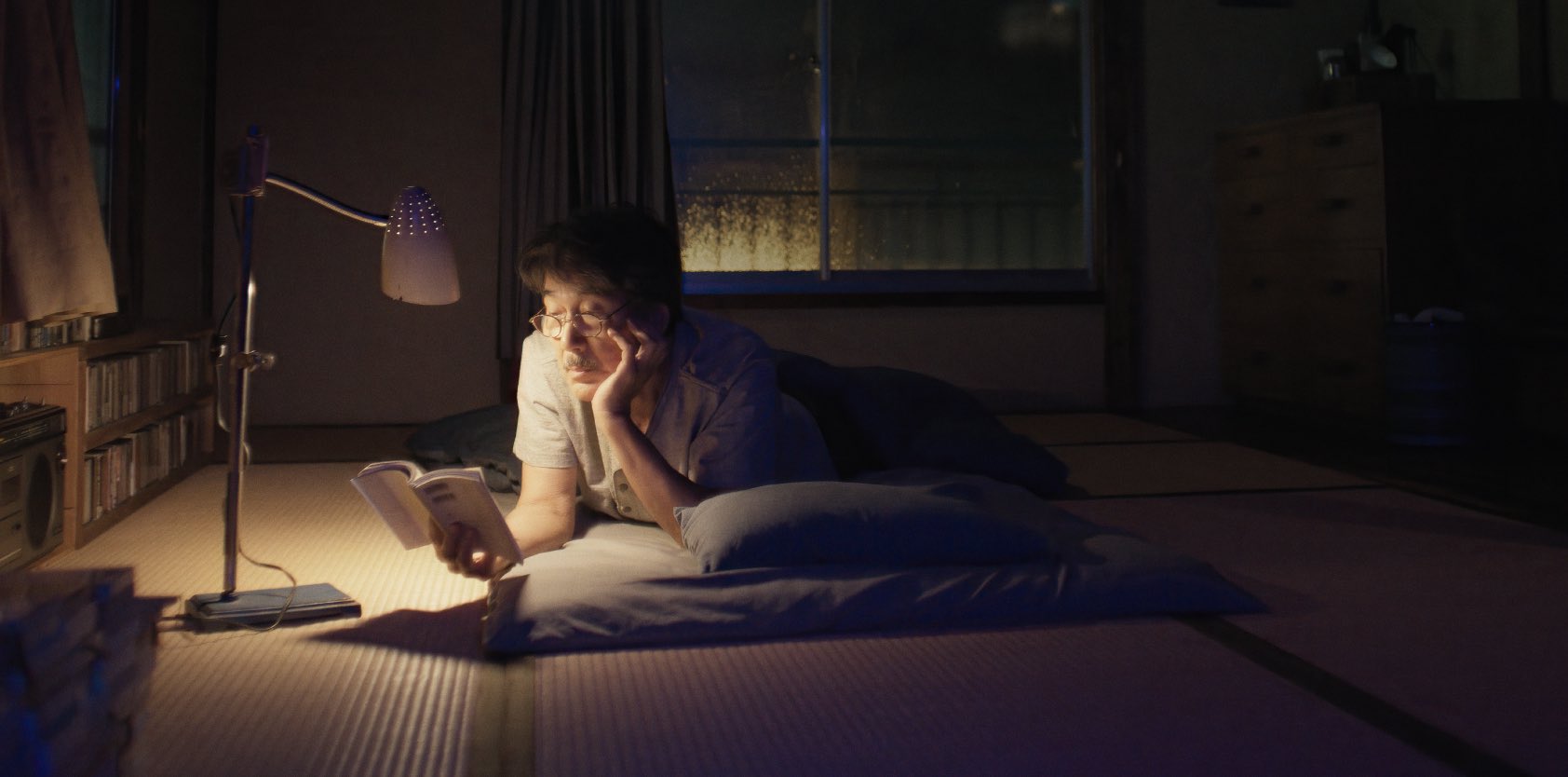
    “Perfect Days”, Wim Wenders’ latest movie set in Tokyo, is a very poetic, minimalistic film about finding joy in the simple things of life. (I am usually not a great fan of Wenders, but this is a good one).

    In the film, the main character works as a public toilet cleaner, although his education level seems to be relatively high. He’s an avid reader (Faulkner, Highsmith), an amateur photographer, and he enjoys listening to alternative American music from the 1960s and 1970s (Nina Simone, Lou Reed and The Kinks are the main hits of the soundtrack that he plays from cassette tapes in his car while driving to work). Excepting one Japanese song and at least one Japanese book, most books and songs shown in the film are by Americans, so this looks like a demonstration of how Americanized Japan has become, although that might be a generational thing: it represents the Japanese who came of age in the 1960s/1970s, of which writer Haruki Murakami might be another example. (Today, it’s in large part the American youth who watches Japanese animes and gets “Japanized”.)

    The main character is a single man in his 50s living alone in Tokyo. He has no children and apparently has never married, although the film implies he had some form of relationship with a woman years ago. His only family connections seem to be a sister and a niece he rarely sees.

    The film is not really about the appalling birth rates in Japan, nor about the increasing loneliness in modern Japanese cities. But characters like the one in the movie, once an exception, must be very common now. A recent survey informs us that “More than one-third of unmarried Japanese adults in their 20s to 40s have never been in a relationship and one-fourth have no intention of ever getting married.”

    It’s no wonder that Japan has one of the lowest fertility rates in the world.

    Why don’t Japanese people want to marry? For men, the alleged main cause was “the financial strain of married life”. For women, “they do not want to compromise their freedom and independence.”

    Freedom and independence, eh? How’s that working out for women, though? Most women appear to be increasingly unhappier than they were decades ago. In the following article from a left-leaning site, they call it a “paradox” and say that it is “strange”:

    Something strange is going on in women’s happiness research. Because despite having more freedom and employment opportunities than ever before, women have higher levels of anxiety and more mental health challenges, such as depression, anger, loneliness and more restless sleep. And these results are seen across many countries and different age groups.

    But who says it is a paradox? Isn’t it more likely that “freedom and employment” don’t lead to happiness, and that marriage and babies, while no guarantee of “happiness” either, at least give a more concrete sense of long-term satisfaction?

    As a fan of Ozu movies, I make a case that Japan should just go back to arranged or semi-arranged marriages. (By the way, in Ozu’s “Late Spring” there’s a good speech by the father about marriage.)

    Not just the Japs

    Japan may be an extreme case, with its young men “marrying” holograms or anime characters. But neighbouring South Korea has an even lower birth rate — and Asia is far from alone in that trend. In fact, most of the world, excepting perhaps Africa and India, is on a downward population trend. All Western countries right now, and many non-Western too, have below-replacement birth rates. Some, such as Germany or Italy, are dangerously close to the levels of Japan and South Korea.

    And recently even France, which for years used to be an exception with more robust birth rates — although that might have been caused by the influx of foreign migrants that the French government doesn’t like to count in its statistics — now had a “baby bust” with the lowest number of births since World War II.

    But why?

    There are lots of reasons, of course. Some are biological — micro-plastics, whatever they put in our food and water, vaccines. Some are economic — higher living costs and uncertainty about the future. Some are social — feminism, urbanization, loss of religion.

    The biological and economic causes warrant some investigation, but I’d say that the social causes are the most important ones.

    The loss of religion by itself seems to he a huge part of it. The groups with higher birth rates tend to be the most religious ones: the Amish, traditional Catholics, practising Muslims, Orthodox Jews. Having and taking care of several children is not easy. The idea of having a higher purpose in life beyond personal happiness certainly helps, as this memorable dialog from Tarkovsky’s “Nostalghia” reminds us: “I know, you want to be happy. But there are more important things.”

    Several years ago, I did a short documentary that no-one watched about exactly that issue. It was called “Childless in Europe” and you can watch it below.

    And Feminism?

    Feminism didn’t help either. Women, in the end, are the ones who decide if they will have children or not. And most are deciding not to, either because they prefer to focus on their career and marry later, or because they decide that having children interfere with their search for happiness, or because they consider marriage a form of prison, or… Who knows? Fact is, wherever feminism flourishes, the birth rate goes down.

    On top of that, there is a growing dissatisfaction between the sexes. Men and women no longer seem to understand each other. Many Western women, in particular, seem to have become totally unaware of what men want, and even of what they themselves want. A viral video recently showed a typical modern young Western woman saying that she “doesn’t cook, doesn’t clean, and doesn’t bring anything to the table in a relationship except her looks and personality”. Many such cases. Sad.

    Of course the men’s reaction is not much better, divided into either virgin MGTOWs or chad PUAs — both awful lifestyles that do not lead to higher birth rates, but rather increase even more the problem. Sexual liberation ends up being bad for both sexes.

    (This is not even new, as J. D. Unwin’s “Sex and Culture”, published in 1934, observed that sexual liberation and the end of strict monogamy always led to cultural decay).

    The role of digital technology

    Technology, and in particular digital technology in the form of social media and smartphones in general, might also be a factor.

    I don’t know the exact mechanism, but it seems that the more we live in the digital world, the less we want to interact with real people in real life. Some people even prefer to have “AI girlfriends” and pay for them.

    Autism is growing (although that could also be an effect of vaccines). Many young people no longer know how to communicate face to face.

    We have evolved into a society that talks a lot about sex, and inflicts graphic images of sex even on teenagers and children, but more and more it seems to be just images and talking. Narcissistic posturing. The more people talk or fantasize about sex and about their “sexual identity”, the less they seem to actually have sex, much less procreative sex.

    Many young people seem to make themselves ugly on purpose, consciously or subconsciously, with tattoos, blue hair, pink hair, piercings, nose rings. It might be a subtle, or perhaps not so subtle, way of avoiding sexual interest from others and further social interaction. Safer to interact just from behind a screen.

    Even prostitution has receded mostly to cams, nudes and other interactions at a distance. OnlyFans is the new brothel. Phones are the new bed. Everything is virtual.

    If it goes on like that, a few European ethnicities could disappear in the not too distant future, either by mixing into the general globalized gene pool or simply by failing to reproduce in enough numbers.

    No children.

    Is there hope?

    If there is, it lies in the young Catholic converts I saw singing in the Latin Mass in Finland. In the young woman in Spain kneeling in front of the crucifix during a Corpus Christi procession. In the young woman in Leipzig playing the piano at church. They are the future, whether they know it or not.

    And not necessarily because they are better or more moral than their blue-haired brethren, but simply because the blue-haired, tattooed, pierced folks will likely have zero or few children — if they even marry at all, I mean someone of their own sex — while those Catholic young men and women are more likely to form large families one day.

    But, more importantly, even if they don’t have any children themselves, they are establishing the foundations of a more stable society based on stable, time-tested values. Blue-haired, pierced, socially atomized individuals who marry holograms or anime characters don’t lead to any kind of society that can last.

    Latin Mass.


  • Articles - Cinema

    Revisiting Hal Hartley

    The Criterion channel has been doing a Hal Hartley retrospective, so I decided to watch or re-watch some of his films. As you may know, Hartley was one of the indie cinema darlings of the early 1990s, together with the likes of Jim Jarmusch and others.

    Jarmusch is still around, but Hal Hartley, which had been my favourite at the time, more or less disappeared, at least from the mainstream discourse. His last successful film was “Henry Fool”, in 1997, and the last one he made, so far, is “Ned Rifle” which came out in 2014 and is in fact the closing of a trilogy that started with “Henry Fool”.  But he hasn’t made any film since.

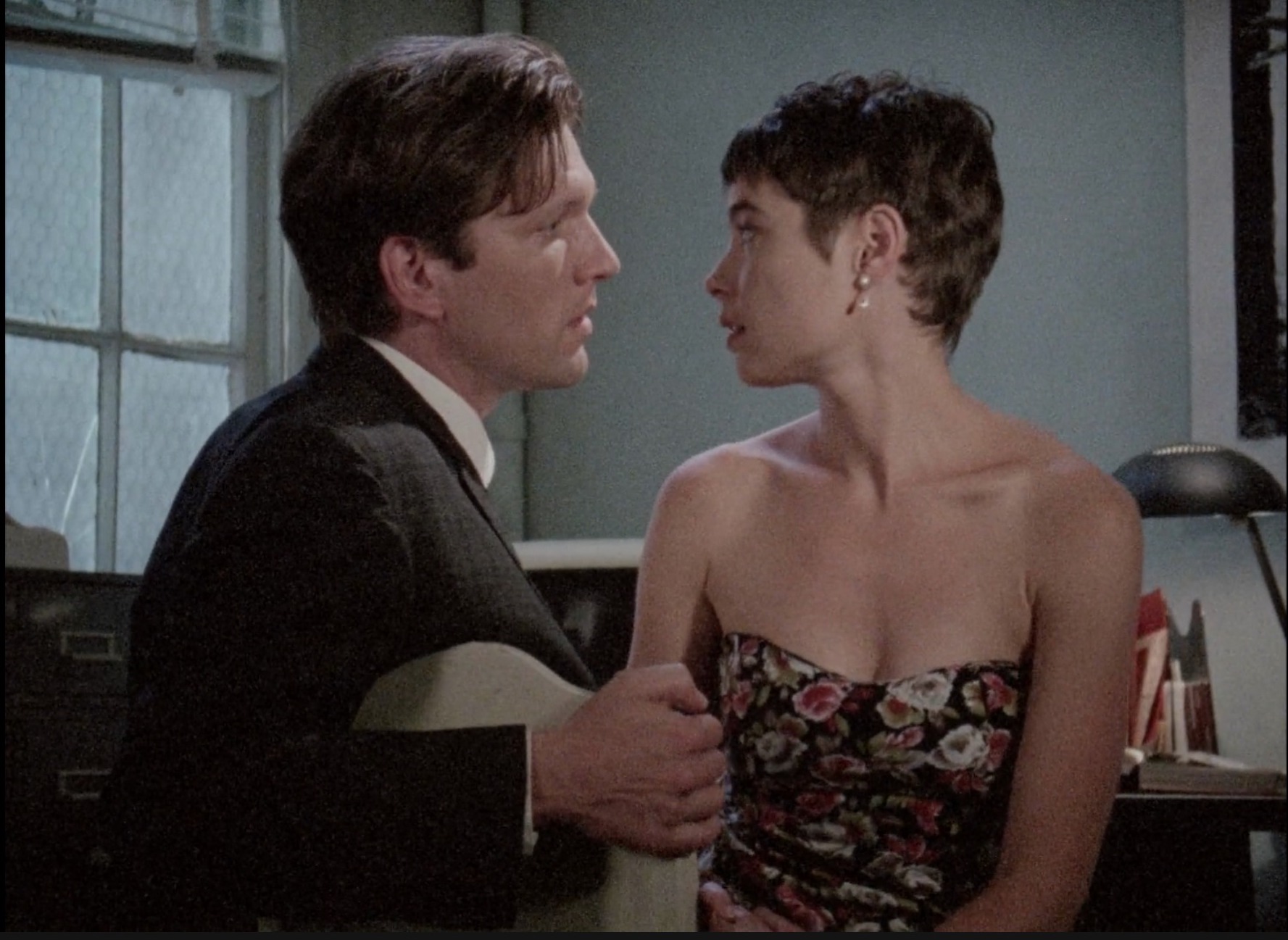
    Watching again his movies was interesting. Many of the early ones haven’t completely lost the appeal. Trust (1990), one of his best films of his early period, still holds up pretty well. Simple Men (1993) is even better than I remembered it. Amateur (1994) may have a few dated jokes, but otherwise remains funny and engaging, and has Martin Donovan, Isabelle Huppert and Elina Löwensohn in great roles.

    I hadn’t watched The Book of Life (1999) and No Such Thing (2001) back then, and I knew they had mostly negative reviews. Watching them now, and I must say that the mixed reviews are in many ways justified.

    The Book of Life feels more like a somewhat interesting but dated experiment. The best thing about it is Miho Nikaido — I didn’t know, but she’s actually Hartley’s Japanese wife — as a good-hearted waitress whose soul is sold by her boyfriend to the Devil. But can one sell someone else’s soul? The theology of the film is inconsistent, but the film is short and has a few interesting bits. Martin Donovan plays Jesus, Thomas Jay Ryan plays Satan and singer P. J. Harvey plays Mary Magdalene.

    No Such Thing (2001) is Hartley’s only big budget movie. It has beautifully photographed Iceland landscapes, decent make-up and effects, and the general look of a mainstream production, as well as big-name actors such as Helen Mirren and Julie Christie in important roles. In some ways a variation on the myth of Beaty and the Beast, it has young Sarah Polley in the protagonist’s role, the dantesque Beatrice, while Hartley’s regular Robert John Burke plays the monster.

    While the film is well-directed and has a nice soundtrack — Hartley is also a talented musician and composed the music for many of his films, but he says that it was just to save money, as obtaining music rights can be expensive — the screenplay, perhaps surprisingly, is its weakest part.

    Characterizations are inconsistent. Beatrice acts one day like a suffering martyr, the next like a callous whore. She rejects the sensationalization of being the sole survivor of a plane accident, only to giddily accept later on to become “famous” presenting the monster to the press. The rhythm is uneven and the ending is confusing. [SPOILER: It seems to me that what happens or is implied by the ending is that the monster was just Beatrice’s dream or imagination during her surgery, after which she dies or ends up in a coma (i.e. the monster dies = she dies). This would explain why the machine where the monster is placed looks so much like the machine of her surgery, and also why the doctor (played by Julie Christie) is incongruously present assisting in this scene. But it could be just a personal interpretation.]

    After this failed project — it bombed big time — Hartley directed mostly shorts or experimental films with limited distribution, or sometimes, no distribution at all.

    Not everything is bad, though. The Henry Fool trilogy (discussed below) is interesting, and Meanwhile (2011) is a little light-hearted film (under one hour) about New York City which is, all in all, pretty nice. But, as the title implies, it feels a bit like something done “meanwhile” waiting for funding for more ambitious projects.

    The Henry Fool trilogy

    Henry Fool (1997) was the most critically and commercially successful of all Hartley’s films, but, despite having many good things going for it, it was never my favourite. However, now, after having watched the full trilogy, I think the first film becomes more interesting in retrospect. The sum is larger than its parts.

    Fay Grim (2006), the second instalment of the trilogy focusing on Henry’s wife is, to put it mildly, problematic. The story is so convoluted it becomes hard to follow, and many scenes are over the top. Hartley had already played with spoofing the spy or thriller genre in Amateur, but here it is not clear how much of it is to be taken seriously or not. The film starts as a zany comedy but it shifts tone somewhere towards the middle and concludes with more serious drama and political intrigue.

    On the other hand, it has Elina Löwhenson returning in a funny role, Parker Posey is also endearing as the protagonist, and there’s Jeff Goldblum too. The idea of the Henry character as a hapless amoral bastard with no great talent of his own, but who however inspires others to do great things — to become great poets, in the first movie, or, in this one, great terrorist leaders — is interesting. But the film feels incomplete, or perhaps botched.

    Ned Rifle (2014), however, the third and final part, is pretty good, and in some ways a return to the smaller, intimate, character-driven films of his early period. Liam Aiken as Ned (Fay and Henry’s son) does a pretty good job, and is one rare instance of a Christian character shown in a positive light. It is also interesting that he played the same character for the first time in Henry Fool, when he was 7 years old, then in Fay Grim at 16 (but playing a 14-year old), and here he plays him again, at 24 (although his character is supposedly 18-year old). Another curiosity is that “Ned Rifle” was Hartley’s pseudonym as music composer in his early movies. The name also appears in fake book covers, for instance in Trust.

    Aiken as Ned is alright, but it is bad girl Susan (Aubrey Plaza) who steals the show, especially after she gets together with Henry (Thomas Jay Ryan) in the later part of the film. It is also nice to see Martin Donovan returning in a small but significant role as a reverend.

    Surviving Desire 

    Less is more. In the end, my favourite film of those I watched or rewatched was Surviving Desire (1992), which is as charming as I remembered way back then, and is perhaps Hartley’s masterpiece. Just one-hour long and focusing on very few characters in a small university town, with events happening over just a couple of days, it has the unity of time, place and action of a Greek tragedy, but feels more like a little comedy or short story turned into a film. The main character, played by Martin Donovan, is a literature professor who falls in love with a student (Mary B. Ward) who works part-time in a book store. Literary references abound, from Dostoevsky to Shakespeare to the Bible to Anatole France, but lightened by Hartley’s characteristic deadpan humour. Nothing much happens, and yet, the characters stay with you.

    Completing the package is The Theory of Achievement (1991) a short movie created around the same time of Surviving Desire. It is also quite nice. It features a group of broke young wannabe artists living in Williamsburg, Brooklyn, at a time when only broke young wannabe artists lived there — that is, just a few years before it was gentrified and occupied by tourists, Puerto Rican immigrants and Hasidic Jews. It features Elina Löwehnsohn in her first film role.

    There is a scene in Ned Rifle where Susan (Aubrey Plaza) eulogizes Simon Grim’s poems, delivering a speech about the artistic supremacy of “decisive, committed, admittedly obscure work, indifferent to mainstream approval and unafraid of moral and aesthetic absolutes.” This could be a good summary of Hal Hartley’s own work.

    “Surviving Desire”
    “Simple Men”
    “Trust”


  • Articles - Cinema

    Barbieland behind the curtain

    It’s a Barbie world, sang a song, and now we hear the same tune in a movie. 

    But we do NOT live in a Barbie world. 

    If anything, it’s quite the opposite. 

    For all its defects and its shallow consumerism, Barbie’s world was kitsch but at least it was pink and cheerful. 

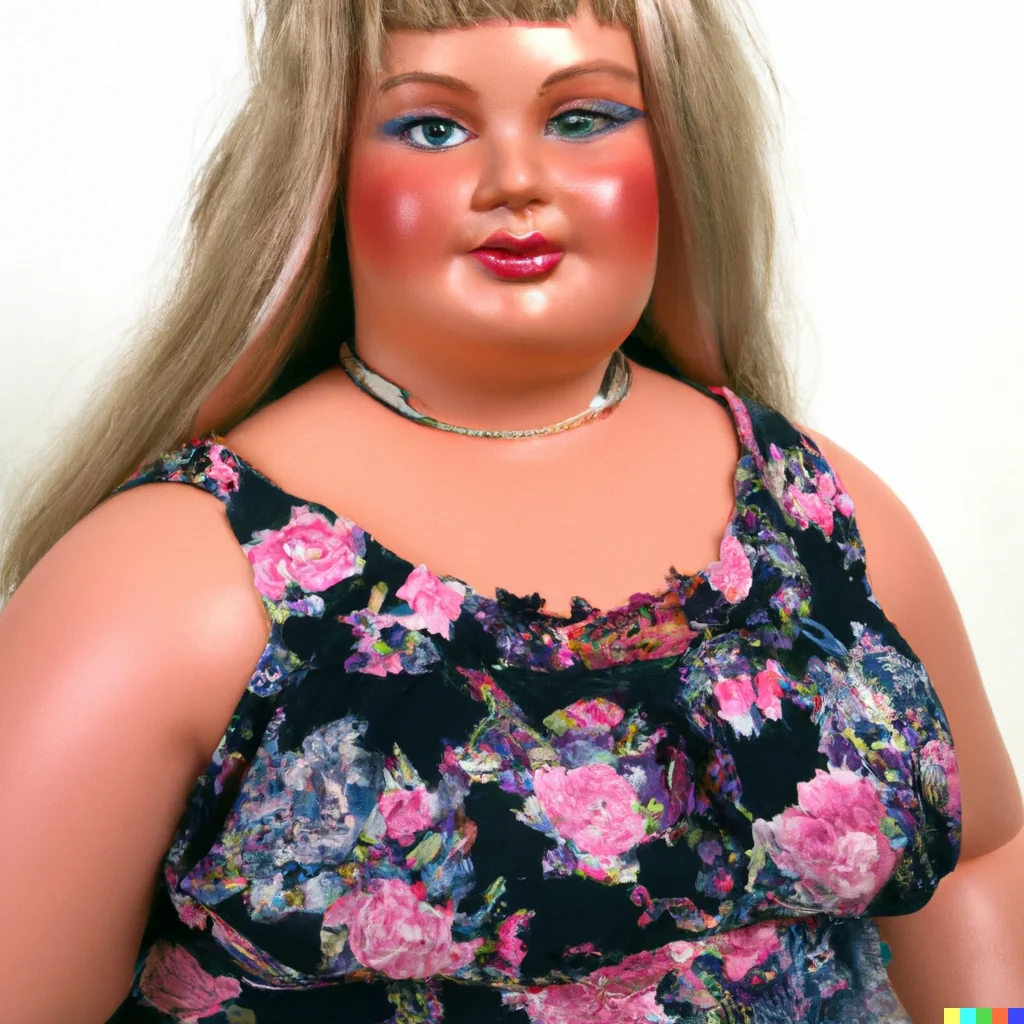
    But our modern world is, in lots of ways, grey and ugly and sad. Most men and women are overweight. Women dress mostly in black, dye their hair in unnatural colours and vandalize their bodies with tattoos. And all this is pushed from above, of course. This is from a recent fashion show in Berlin, telling modern women how they should dress. 

    After years of mostly not watching any recent Hollywood movies, I ended up watching “Barbie”. 

    I know I shouldn’t, but the only other option was the latest “Indiana Jones”, which I knew was really bad, and “Oppenheimer”, which was three hours long and was also another obvious propaganda film. But we’ll talk about this one some other time.  

    Anyway… “Barbie” was really, really bad. I knew it was going to be bad, having read a few reviews, but I didn’t expect it to be this bad. It is almost unbelievable that it is making so much money. I think the marketing was very clever, and the brand name is of course very strong. The art direction is pretty good, I suppose — but otherwise the movie just sucks. 

    They could have made a good movie for the “Barbie” doll audience — you know, girls from 5 to 13 or so. Before they went full woke, Pixar and Disney used to make relatively good movies that were fun for children and bearable for adults. 

    But Barbie is something else. 

    First of all, the plot makes no sense. It’s a lazy script, never bothering to explain the rules of its own universe. It feels more like an essay written by a Women’s Studies major. It even has this very annoying narration that puts you off from the minute it starts, and I lost count of how many times they use the word patriarchy.  

    The only thing that I found remotely interesting, was that at some point they suggest that whatever children do with their plastic dolls ends up affecting the living dolls in “Barbieland”, in some kind of voodoo effect. 

    I thought this could become a cool plot for a horror movie. 

    But alas, that was not to be. 

    No, they preferred to  insert two annoying LatinX women, mother and daughter, preaching feminist cliches.  

    And the mother of course has a pathetic white husband, another classic trope. It’s even implied that he’s not even the real father of the girl. 

    Then there’s the always awful Collin Farrell in a retarded role that is not funny and doesn’t make any sense either — why do they want to capture Barbie anyway? It’s never really explained.  

    I find it strange that it is NOT a film for children. It is really a cynical film directed to adults, or to people who played with Barbies long ago but now for some reason find this “problematic”. 

    Is Barbie problematic? While the film apparently makes a big deal of the fact that the doll doesn’t have a vagina — er, I think only sex dolls have it — or that it brainwashes girls with an unattainable ideal of beauty, for me the main problem of Barbie is its consumerist aspect. Barbie has lots of clothes, accessories, houses, cars. If you have a Barbie, you need to have a Barbie house, a Barbie pool, a Barbie car, a Barbie private jet. Lots of grown-up western women are like that these days, they want more and more. But to be honest, I don’t think it’s Barbie’s fault… 

    The film also talks about feminism against patriarchy, putting men against women. Was there any age such as ours, in which men and women seemed to be so far apart and hating each other so much? Men blame women, and women blame men. And both are increasingly alone. Lonely men end up watching OnlyFans and lonely women end up having cats and drinking wine. 

    Some people criticized the film saying that it was against men, but I don’t think what the film is really about. So what is it really about?  

    I think it is about showing what and who’s behind the curtain and rubbing our faces in it. 

    The film starts with a scene showing children playing with baby-like dolls. Then, in a parody of the scene in 2001, a giant Barbie appears, and the girls crush their little baby dolls.  

    So it’s basically saying, very directly, “yes, we created Barbie to stir away little girls from natural impulses such as becoming mothers, to make them want to become future single women and party girls.” They even say at another point that a pregnant Barbie doll is weird.  

    Then there’s the whole Ken patriarchy subplot, which again is about the usual dialectics of setting one group against the other. While women get poisoned by feminist influencers, men are led by the so-called PUAs of the manosphere. Now they are trying to sell us this Andrew Tate guy. I never watched his videos, but he’s a clearly manufactured icon. He’s being sold as some kind of role model of masculinity, but… What kind of “role model” for young men is involved in prostitution, porn and corruption? It’s just the other side of the coin — women are sold the OnlyFans prostitution lifestyle, and I guess men should become sugar daddies or pimps. In fact, in the movie, patriarchy Ken dresses very much like a pimp. 

    Finally, there is a scene in which Ruth Handler, the Jewish creator of the Barbie doll appears and talks to her own creation. This is also about showing what’s behind the curtain. 

    Bear in mind that the film is written by Jewish filmmaker Noah Baumbach, who is the husband of director Greta Gerwig, who may or may not be Jewish herself, but who grew up in a very Jewish environment. The film is of course produced by the Jews at Warner Brothers and by Mattel, which was founded by Jewish Ruth Handler and her husband Elliot Handler, and currently has an Israeli CEO, Ynon Kreiz. You can’t get much more Jewish than that. 

    I wouldn’t mind if they had made a half-decent movie, and I never had much of a problem with the Barbie doll itself, but this is a really annoying and preachy film. My advice is, stay away.  


  • Articles - Cinema - Memories

    Fellini, Scorsese and the end of cinema

    Martin Scorsese has just published an article about Fellini at Harper’s magazine, but which also discusses a bit the current sad state of cinema. Today, he says, everything has become merely indistinct “content”, and the magic of cinema and its artistic auteurs has been lost.


    I tend to agree. When I was a teenager, I used to go to the now defunct street cinemas, or to specialized art cinemas, to watch films by Fellini, Truffaut, Renoir. Granted, in the 80s and 90s this was already a culture in extinction, much farther from the golden age of the 1960s and 1970s that Scorsese mentions, but there were still a few remains of that era.
    Then the local cinemas were replaced by the multiplexes, which would show mostly super-hero movies or other blockbusters. Auteur or art cinema became an even smaller niche. And then cinema was replaced by television and streaming.

    Going to the cinema is a social experience, closer to going to the theatre or to church; watching a film on television or VCR reduced this experience to a smaller screen and the familiar unit. People no longer paid so much attention to what was on the screen, it became a sort of mere background for other activities. Fellini was already very critical of television; he mentioned it in several interviews, and his “Ginger and Fred”, one of his last works, from the 80s, is a satirical view of the medium.

    Today, of course, it’s even worse in some ways. Television was replaced by streaming, and the familiar unit was further reduced to an individual, watching it most likely on a cell phone screen. The reduction of the screen size and of the viewing public reflects the growing social atomization that took place in the last decades, culminating in the current “corona” lockdown where people are “social distancing” and locked in their own homes.

    It was the final nail in the coffin of cinema as a social spectacle, and who knows if it will return? Even if the lockdown is lifted and people start going again to the cinemas, it is unlikely that the auteur era will return. This doesn’t mean that cinema as an art is dead, but its golden age seems long past.