You know what’s funny? That while we are not allowed to know anything about the lives of the rich and the famous and the politicians and who they spend their time with, they are collecting all our personal data — social, financial, biometric, genetic — to feed a new AI super-system that will control basically all our lives.
And, while the elite parties in their secret chambers, and no one releases a list that in fact doesn’t exist, society is slowly disintegrating and turning into a living nightmare for the rest of us.
There are riots going on in Murcia in Spain after an old man was attacked by a Moroccan national. But if you read the Spanish media, it’s all about Spanish people going racist against innocent migrants for no reason. But “racism” is a fake accusation. It is gaslighting. After all, it is the same government that is aiding and abetting this migratory policy that no one voted or asked for, but then call you a racist if you complain, as if the fault was yours. And there’s not even any real “racism” involved, as the main complaint is that a lot of those people are just criminals.
Conservative or progressive, it’s all the same.
In Italy, the supposedly right wing government of Meloni just announced an agreement to bring in half a million Indians to Italy to “fight a labour shortage”. Meanwhile, thousands of young Italians have to move to Germany and England to find jobs. Italy doesn’t want them. They prefer to import foreigners and pay them less.
In Germany, there is now a supposed conservative leader, but did he change the policy of the previous government? No, they are still sending money and weapons to corrupt politicians in the Ukraine, a project that by now no one except politicians and their handlers care about.
The economy is going down in most European countries. Even Germany, the former European powerhouse, is struggling. But does any politician care? No, why should they? They have their champagne and their caviar. They have their bunkers in case things go wrong.
Of course, the politicians are just actors, puppets. Their job is just to spew platitudes and pretend that they are doing something. But did you notice that, no matter whose politician is supposedly in charge, things seem to go always only one way? Other people in the shadows control things. Politicians can be easily replaced when they become useless. The same hidden hand controls both left and right.
In “The Shadow over Innsmouth”, horror writer H. P. Lovecraft imagined a degenerate race of inbred fish-people who slowly take over the world. This seems to be the reality of our present elite.
I don’t know if they are lizard people or fish people or just inbred ancient bloodlines, but they clearly see themselves as a separate species from the rest of us. Untouchable and destined to rule over us slaves. Forever and ever and ever.
This one starts with a sad story. Not about someone I know personally, but a friend of a friend of a friend. But it could happen to anyone these days.
So, basically, there was this middle-aged guy, divorced, no kids, no girlfriend, lonely. His life was just work-home-work-home.
Then he met this cute Asian girl on social media. Mostly they exchanged messages and pictures, but they even had a voice call once or twice. She lived in another country far away but wanted to move to the West. Everything was going well, they had great chemistry. They talked for months. Finally he said he had saved some money and could travel, they were supposed to meet in person, when suddenly tragedy struck. She had an accident. Her mother became very ill. Or maybe it was her father. Anyway, the travel had to be postponed. Then she needed money for the hospital or some other emergency. First one thousand. Then two thousand. Then some more.
Yeah, I know, you can already see where this is going. But he didn’t. Or it took him a longer time that it would take you and me. At the end of it all, he gave her over 20,000 euros, before she suddenly disappeared, never to be seen again. Driven to depression and alcoholism, the man then also lost his job and his health insurance and now his life is basically in shambles because of this woman.
I say “woman” because that’s what he believed, or wanted to believe, but, well, let’s be honest. It was probably a bunch of guys in Lagos or Hyderabad. The pictures were all fake, the voice, probably fake too (it can be done these days, you know).
There are entire businesses specialized in such sort of scam. Most of them operating from India and other places in the third world. Even I almost fell into one, not about relationships, but something about taxes, which sounded serious until I realized there was something fishy about the IRS wanting to be paid by PayPal.
But back to relationships, I find it interesting that most of those relationship scams for men involve Asian women. I suppose it’s because trust in the West is so low these days that no middle-aged guy would believe a twenty-something Western woman would be interested in him. But an Asian woman is still in the realm of possibilities, at least in theory.
Such scams exist for women too, of course, but in those cases they involve supposedly famous or rich men, because if men mostly desire youth, sex appeal and beauty, women desire status, money and fame. Brad Pitt, George Clooney, Bradley Cooper. Or just some random billionaire. I remember a recent case in which the guy pretended to be a billionaire, but then came up with some story about having been persecuted by gangsters and losing his suitcase with all his bank cards and documents and needing money that he would pay back very soon. So even though he was supposedly a billionaire, this woman ended up giving him I don’t know how many thousands of dollars.
Humans are very stupid creatures.
But such scams happen because people want to believe. They are lonely and they want to be loved. Perhaps deep down they know it can’t be true. But they pay for the dream to continue just a little bit longer.
And of course, with AI and all the current tools of deception this type of scam will only grow. Voices can be cloned and even video can be realistically faked today.
But the main problem is that loneliness is also growing, because social trust is being eroded. Paradoxically, the less trust there is between people, the more people fall for such scams, because there is no longer any measure of what is trustworthy. No one knows who to believe anymore.
Politicians? Forget it. They have less credibility than street whores. They have proven again and again to be just actors, and not even very good ones.
Journalists? Come on, man. They have a lower reputation than drug addicts and criminals. No one believes a word they say.
But even doctors and scientists, who had the trust of most of the public until recently, suffered a huge setback with the Covid stuff. “Trust the Science” has become an enormous own-goal for scientists and the medical industry.
Universities have also been heavily hit by their support of censorship and of extreme leftist stuff.
The arts, publishing and the entertainment industry have been for years little more than a propaganda operation, in many cases run directly by the CIA.
And the police? Back the blue? You must be kidding. Paid goons for the regime, that’s all.
The church, too, with all the scandals and the changes that took place since Vatican II, has lost a lot of credibility and public trust, even among religious people. Many people are still wondering if the new Pope is catholic or not.
Not even “Artificial Intelligence” and technology are being trusted by most people, despite the huge amount of propaganda being used to sell this stuff to us.
A recent poll called “2025 Trust Barometer” investigated the status of trust in institutions in 26 countries, both Western and non-Western, both first-world and third-world (whatever happened to the “second world”, by the way?).
They found that there has been a huge erosion of trust, which has been going on for more than twenty years, but really accelerated in the last five. Among other findings, they discovered that:
69% of people in 26 countries believe that their leaders are constantly lying to them.
68% of people in 26 countries believe that rich businessmen are constantly lying to them.
70% of people in 26 countries believe that the media are constantly lying to them.
After that, there is only one question remaining that is indeed quite puzzling: what the hell is wrong with the remaining 30%?
But even trust in families, in partners, is going down. In my grandparents’ generation, divorce was unheard of and everyone stayed together. Even in my parents generation, most couples stayed together. My parents did. But from my generation and younger generations, I don’t think I know a single person who has not been divorced or separated at least once. Most separated more than once, or are single mothers or single fathers, and many never even married at all. There is today a huge distrust between males and females.
I don’t know if there was a time when things were much better. Perhaps things always sucked. But it seems that years ago at least there was still a certain sense of community. I remember that the parents of our generation let us play in the street alone with other kids for hours, something that you rarely see these days. Of course, children don’t even play outdoors these days, they are just glued to screens, but you know what I mean.
I suppose a certain dose of skepticism is healthy, you don’t want to fall into scams, which have always existed one way or another, but you also need at least a minimum amount of trust to be able to live in a society. And this basically doesn’t exist today anymore. It’s one against all, and all against one.
I saw baby seagulls walking on the roofs of ancient cathedrals. I saw stray cats sleeping on Roman ruins. I saw nuns running towards the Vatican to watch the announcement of the new pontiff.
I saw crowded metros and empty churches.
I saw a Russian woman walking under the watchful eyes of a hundred popes, all painted by old masters. I saw an old homeless man painting with oil on a canvas in Piazza del Popolo (how did he afford those materials?) — so concentrated on his painting that he didn’t even ask for money. I saw a Muslim woman with her baby begging for money with screams and cursing those who ignored her.
I saw American tourists making huge lines in front of an Italian restaurant managed by Chinese owners with Indian waiters. I saw a white prostitute exchanging obscene insults with a dark drunk man in the night tram while crows and seagulls flew overhead.
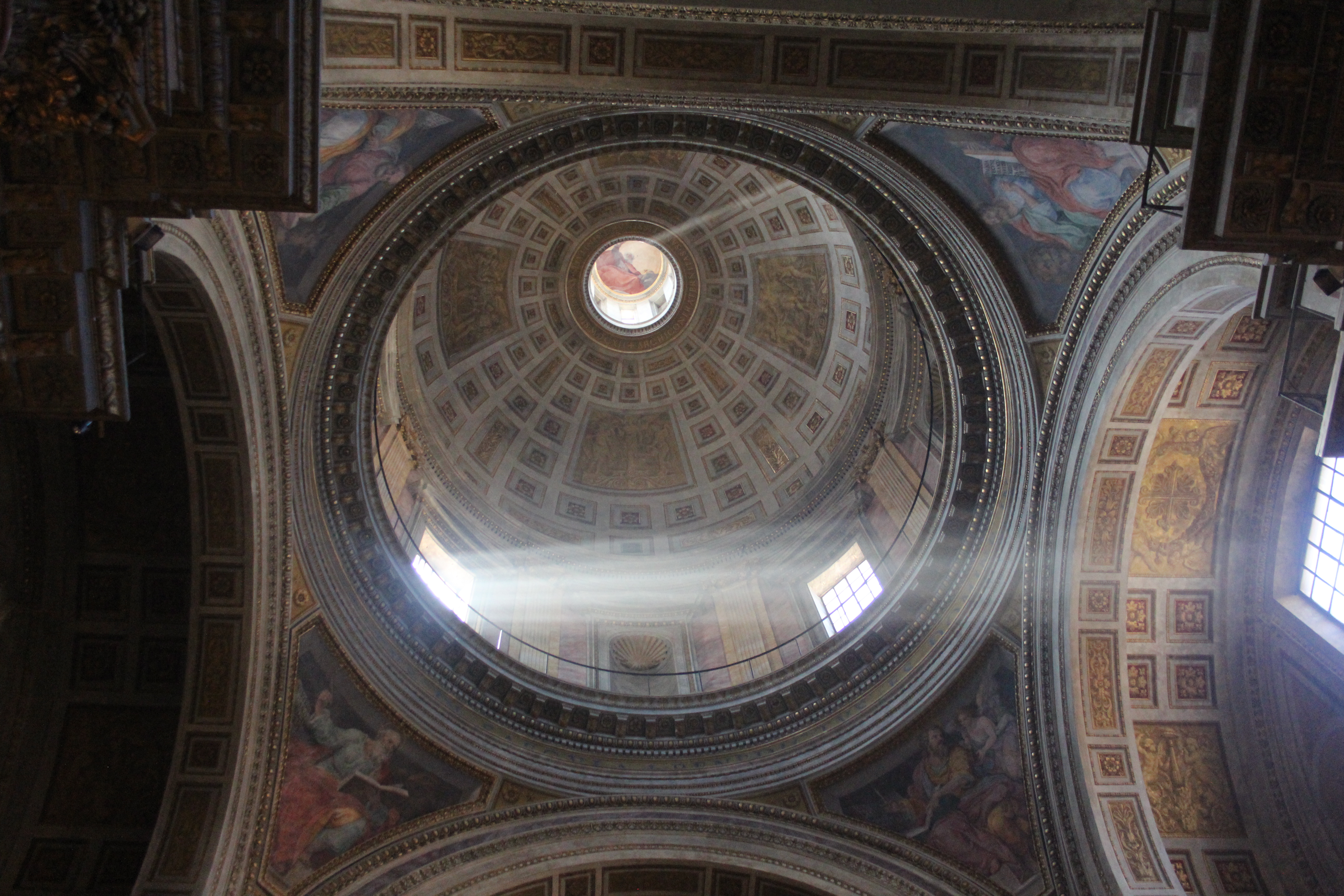
I saw poor Italian cashiers saying they missed Mussolini and rich Italian students saying they missed Lenin. I saw a young woman crying in front of an image of the Holy Virgin in Latin Mass. I saw the sunlight coming through the cupola to illuminate a painting of the Cross.
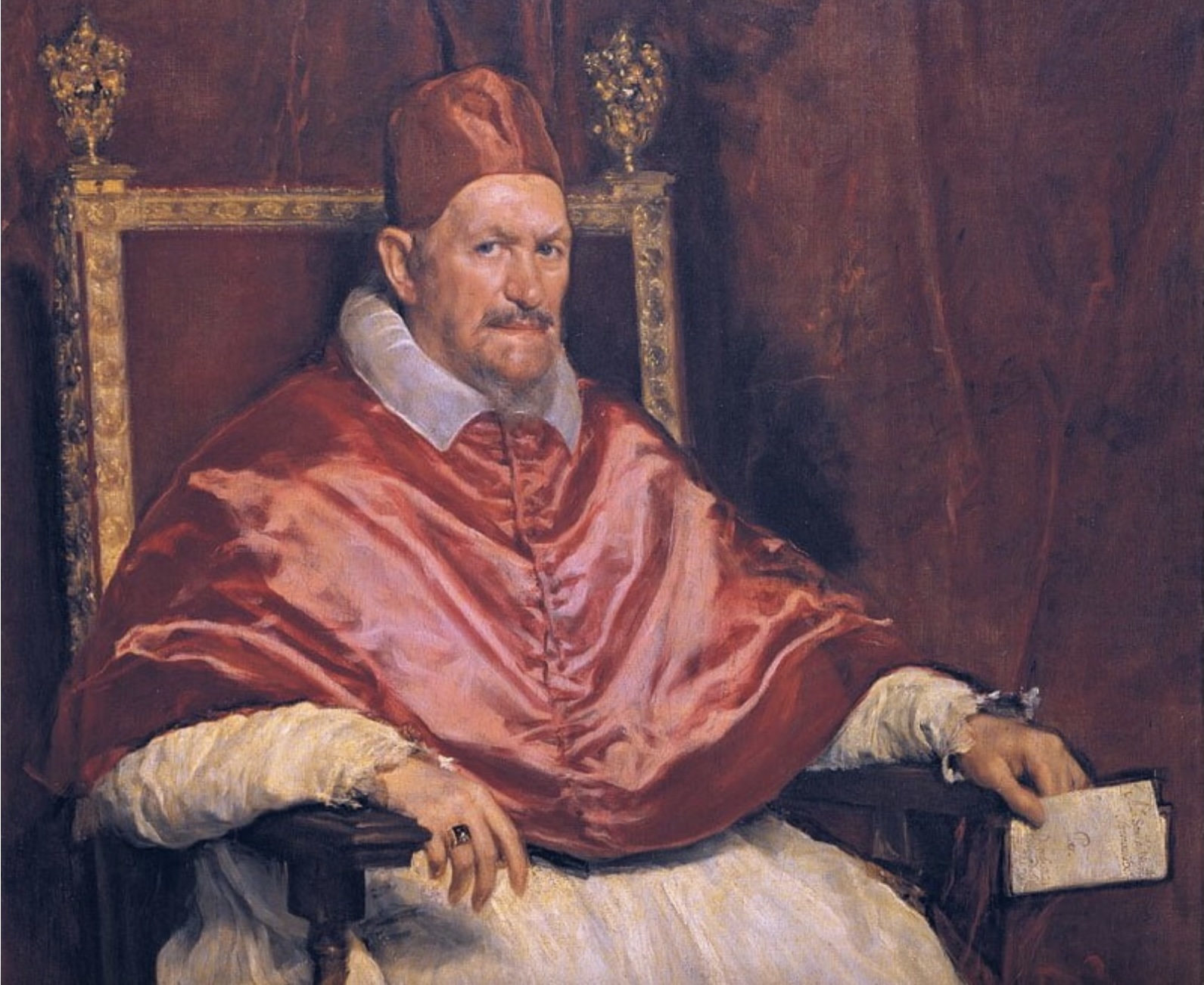
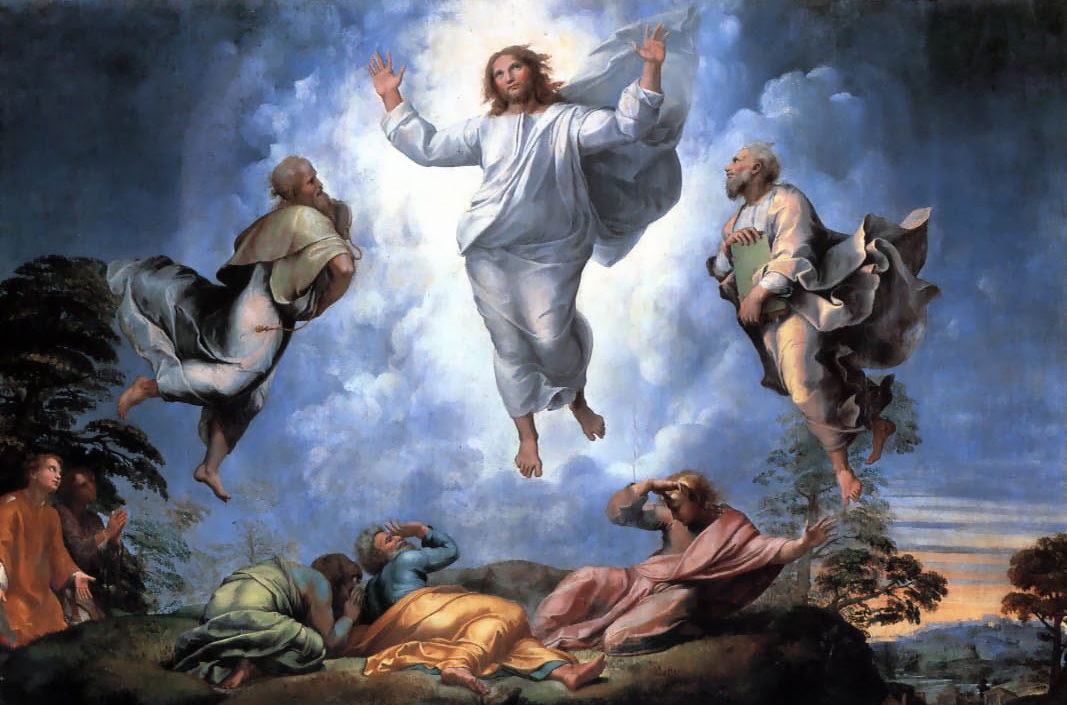
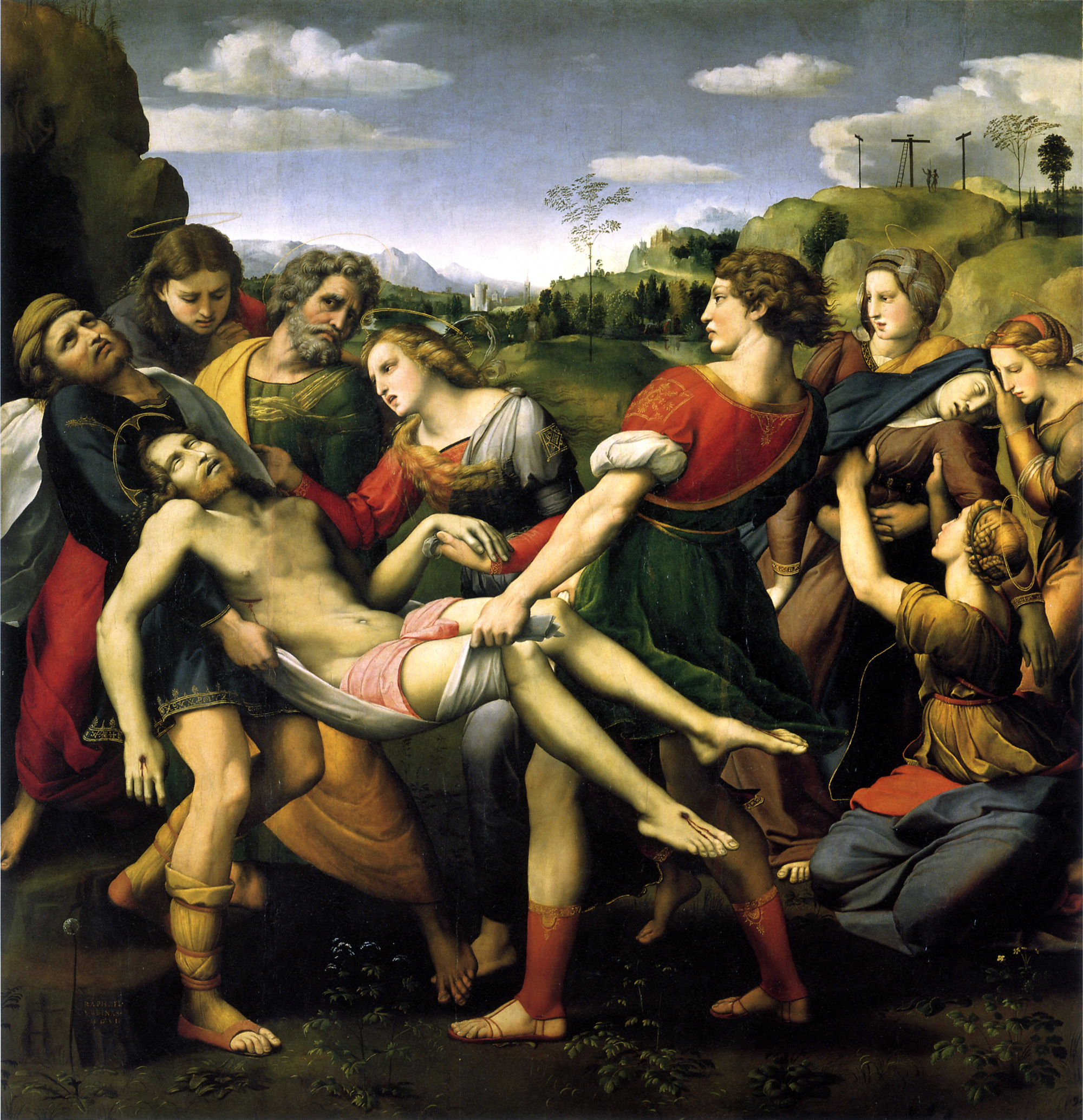
I saw bureaucrats of a government agency telling me that they couldn’t do anything for me and it was time to close for lunch anyway. I saw the golden ceilings of the villa of one of the richest and oldest families in Rome who still privately owns paintings by Raphael, Velázquez and Caravaggio and I saw a street full of beggars, prostitutes and migrants in one of the poorest neighbourhoods.
I saw pomegranate flowers and musk roses. I saw the Colosseum shining under the moonlight and San Peter’s basilica hidden by the blinding sun.
All this and much more I saw during my brief sojourn in this dirty, chaotic and wonderful town that is Rome.
But now it is time to leave.
Arrivederci.
Oh, I really loved Rome — it’s not the first time I visited it, but the first time I spent a considerable amount of time here, and to live in a place even if just for a couple of months is different than to be a tourist. I wish I could have written more about it, but then again, travel writing seems to have turned into one of those things that no one cares much more about, with TikTok and YouTube and Instagram and all that.
And yet, sometimes written observations can be more interesting that videos simply showing things1, at least to me. Personally, I really enjoyed Elizabeth Vigée Le Brun’s travel diaries in Italy (I wrote about it a while ago), as well as some of Stendhal’s notes and short stories about Rome.
But of course, most people, even my two or three readers, are more concerned about current affairs.
In one of Hemingway’s most famous novels — I’m no big fan of Hemingway, but I think this was the only novel of his I read — one character asks another how he went from rich to poor. He answers: “first, gradually, then all at once”.
The same tends to happen with world events. There are first almost imperceptible movements, and then, suddenly, all hell breaks loose.
Things are changing in the world, even if it seems that they aren’t. I am sure we are in the final stages of the present system — some call it liberalism, some call it liberal democracy, some call it late-stage capitalism, some call it globalism, some call it — whatever, it is clearly ending.
But what rough beast is coming in its place, it’s hard to know.
War, chaos totalitarianism?
The Apocalypse?
Or just a slightly different political system?
Perhaps a new type of Pax Romana, only without the Romans?
Who knows.
What’s interesting is that most people, at any rate most Western people, are completely apathetic. Terrible, wondrous things are happening all around them, but they are completely careless and unaware, just playing some stupid game on their phones.
I suppose they are right in a way — I mean, what is the point of worrying about things we can’t control? The difference is that they are simply unaware that anything is happening, while a few others are.
But in the end, is there really a difference?
Perhaps they are right. It is time to change. I’ll think things over about what to do with this strange blog that lacks a bit more focus, not to mention readers, and I’ll be back soon.
(In the last paragraph, I meant back to writing here, but — hopefully — back to Rome as well. Did I say I really loved spending a longer time in this town, even with all of its troubles?)
Today many people talk about autism and Asperger’s syndrome, some even complain that it is caused by vaccines.
I don’t know if it is caused by vaccines, or by chemtrails, or by modern diets, or by smartphones, or by something else, but it is true that it seems much more prevalent today than it used to be. I see a lot of people with that condition today, and this wasn’t a reality years ago.
I am afraid I am also in the spectrum. Not something very serious, I wouldn’t consider myself really autistic or even Asperger, but sometimes I have trouble socializing or even understanding social codes.
Now, first of all, let us make clear that socializing is basically learning to lie. In order to successfully be part of society you have to talk to people you hate and pretend to like them, you need to be able to laugh at unfunny jokes, you need to be able to say one thing while meaning the total opposite, you need to master the subtle art of stabbing people in the back with a smile, and you need to quickly learn non-verbal cues which are many times more important than the actual words spoken.
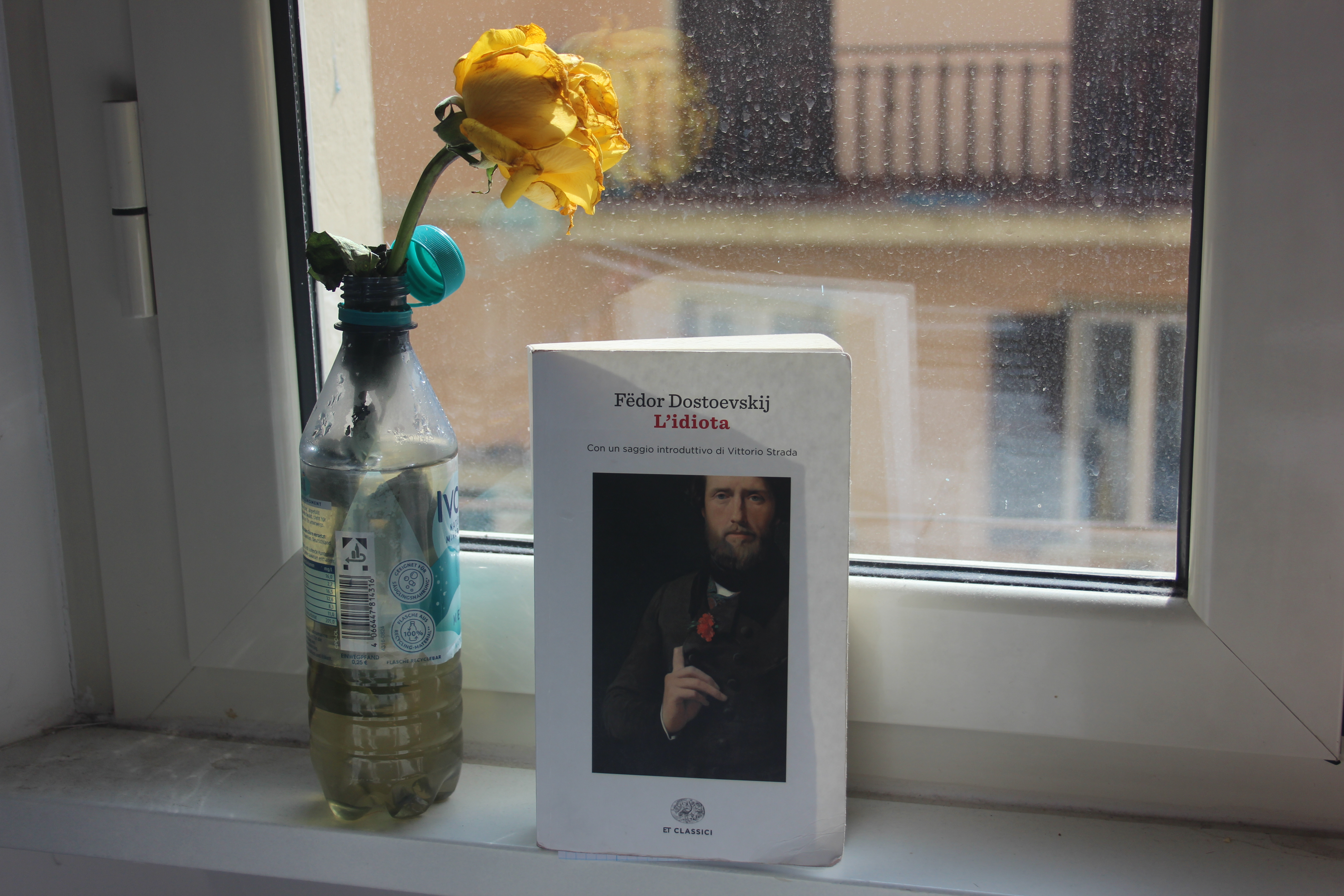
One of my favourite novels by Dostoevsky is “The Idiot”. The main character is this young man, Prince Mishkin, who is very honest and pure of heart, and of course everyone takes him for an idiot. Or if not, then they assume he must have some other hidden and more sly intentions behind his innocence. They think: “Oh, I get it, he’s saying this because he wants to impress the Baroness so-and-so.” That’s the great irony of the novel, that people just can’t believe that someone could actually be honest and pure of heart in social situations. If you are, then you are either an idiot or pretending to be one.
I’m not saying that autists or people in the Asperger’s spectrum are more pure of heart than other people, far from that, but they do have trouble understanding others when social codes are not direct and straightforward and and when interactions are based on lies and everyone knows they are lies, except the autists.
I myself am what I would call a delayed autist. It’s not that I don’t understand social codes, but sometimes I am a bit… slow. I may not pick things up immediately. A recent example: I was speaking with this girl in an art gallery, and then she then said something like, “okay, now I’m going to the next room”. And that was code for, “okay, now I don’t want to talk to you anymore, I want to be alone or talk to other people”. But I didn’t understand it immediately and followed her to the next room in the gallery, and only afterwards when she gave me an impatient look I understood. “Ooh I see”.
Being socially defective it’s like being deaf or blind. Actually, it’s worse, because people understand deafness and blindness and they are compassionate and treat you with kindness. But with social disabilities, they just think you’re being an asshole. “I just told this guy very clearly that I didn’t want to talk to him anymore, why the hell is he still here?”
And of course women in particular are specialists in being extremely indirect and giving non-verbal or visual cues, that men, or at least some men, have trouble understanding.
Another thing I’m bad at is pretending to like people I don’t like or that I know that don’t like me. But this is something that is unavoidable in social situations.
For me, it’s not that I am rude, but I just prefer not to talk to someone that I don’t like or that I know that doesn’t like me. It feels like a waste of time. But the rules of society are that you have to pretend to be equally nice to everyone. This is especially important at work, where you depend or have to collaborate with other people, and so you have to constantly interact with people that are not really that into you.
Now, the other thing with social interactions is that they have a cumulative effect. The more popular you are, the more people will want to be with you, and conversely, the more unpopular and lonelier you are, the more people will see you as strange and try to avoid you. The worse you are at interacting with others, the worse it’s going to get, and the worse people are going to treat you.
You learn that pretty quickly in high school, where all the popular kids hang together and the unpopular ones have to form their own little groups of outcasts and freaks. If they manage even that.
But there is one saving grace for the socially disabled, and this is the point I wanted to make, that they tend to see things more clearly, or, at least, they are less blinded by socialization. They believe what they see, not what they are told to believe. That’s why conspiracy theories are popular with this group, and unpopular with the rest of the more socialized population.
A lot of things people believe are simply because the majority of other people believe it. Just that. Socialization.
We are told that when Jesus entered into Jerusalem for the first time he was received with cheers, and a week later the same people were crying, “Crucify him!”
The same people.
It seems hard to understand, until you realize that this is simply how human nature works. Just look at any celebrity that falls in disgrace and suddenly becomes unpopular, the same people who first cheered them will heavily criticize them.
And the same is true of political and social issues. People believe what they are told to believe or whatever the majority of people believe. Today, most people claim to value diversity and multiculturalism and sing its praises. But if a fascist government came to power and the message changed overnight, the same people would be chanting fascist hymns and screaming for concentration camps for foreigners. The same people.
We saw this with Covid or with the war, people changing their opinions basically overnight.
And so, all hope of understanding complex political and social issues depends on the socially defective, but, since we are unpopular and weird, no one listens to us. We are like modern-day Cassandras, eternally warning of conspiracy theories to people who won’t listen.
May God bless the autists and the socially inept, for they shall be consoled, if not in this life, then maybe in the next.
So, because I started making videos about the Ukraine war — remember that? It seems it is still going on, but I’m not sure — I used to have a few Russian viewers, although I am not sure they are still there. Hello? Dobry den?
Anyway, what happened was that I was going to take a break, but I decided to talk about this subject because I met a Russian girl the other day. Really nice girl, we were casually waiting for a train and it wasn’t coming and we just had a nice conversation about art, history, Russia and so on. And nothing else happened — nothing ever happens — just a brief but nice conversation with a stranger, but it reminded me that these kind of things are becoming rare in the West.
I mean, Western women are bombarded with so much radical feminist propaganda, and men are bombarded with so much anti-white male hatred, that men and women are increasingly suspicious of each other. If you start a similar conversation with a Western woman, even if it’s just to ask for information, she may give you that look of “Oh gee, another creep that wants to have sex with me, leave me alone”. That is, if she even lifts her face from her phone.
And sometimes it’s not about flirting or that you are interested in the person, sometimes it’s really just about talking or actually asking for information.
And I remember that not so long ago, a similar thing happened with a Polish girl that I met in a museum, she was also so very nice and polite. So it seems to me that Eastern European women are still more, you know, normal. Probably the men are more normal too.
Things like this make me think about visiting and learning more about Eastern Europe.
But anyway, what I was going to say was something completely different, what happened is that we talked a bit about Russian literature, and I showed the Dostoevsky book I had with me, and she said that many young people in Russia don’t like Dostoevsky because they are forced to read it in school.
And the same is true in other countries. In Italy students have to read Dante, and in Germany they have to read Goethe, and in England they have to read Shakespeare, and many find it boring, even if those are all great writers, the best each country produced. But, it’s true, they are not for everyone. Or maybe when you’re sixteen is not the best time to read those old books.
I remember that I also didn’t like the books I was forced to read in school, but I read a lot of other stuff. And later on I also read, or re-read, some of those books that I had to read in school, and ended up enjoying them.
So maybe I was just not ready for them yet.
Reading should be a pleasure.
Why force people to read? It seems kinda stupid and counterproductive.
Of course the same is true of Math, and Geography, and History, and so on. Why do people have to learn all this stuff that most of them will never need?
We tend to have an extremely negative view of the Middle Ages. In movies, it is always portrayed as a terrible time, dirty, smelly, full of diseases and fanaticism. But it was not like that. In many ways, life was normal for most people. You farmed, you went to the market, you married, you had children. Just normal stuff.
A while ago I saw this awful Italian movie about Dante, who lived in the 1300s. At one point they show him taking a dump outdoors. At another time they show him having sex with a fat and toothless prostitute. Why?!? The only reason was to show the Middle Ages and Dante in the ugliest way possible.
In those times, there was no public school. The rich would have private tutors. Monks and some nuns would learn to read. But the rest of the population would not study things they didn’t need. The young would become apprentices for a job, and learn the skills they needed for that, and that was it.
Even my grand-grandparents, who lived in a small town Italy in the 19th century, they never learned to read and write. They became apprentices and then started working.
Today everybody is supposedly educated, even overeducated, but what good is it for?
You can be in the university until your thirties and have a PhD diploma in Ethnic Studies, and then you’re jobless and in debt, basically forever.
And are people really smarter and more knowledgeable than they were in other previous centuries? It doesn’t seem so to me. People worship the trashiest celebrities imaginable and their idea of success in life is being trashy and stupid.
We actually live in a very anti-intellectual age. In other centuries, people of culture really had a culture, but, today, even upper-class people tend to be very ignorant.
Public education as we know it today was invented in the 19th century because people were moving from the countryside to the cities, to work in factories instead of in farming. Well, you had religious schools before, which I guess was the origin of the concept, but mandatory public education started really in the 19th century.
Public education today serves two basic purposes that have nothing to do with education. One is as a daycare for children and teens. I mean, for parents, staying with kids the whole day can be tiresome, and usually both parents have to work anyway. But even if one manages to stay home, I know people who do homeschooling, and it can be exhausting. It’s not as easy as it seems. And hiring private tutors is expensive. So school is a place where you drop your kid and don’t have to worry about him for the whole day.
The second purpose is brainwashing. I mentioned for example the feminist propaganda. This really worked. I mean, I teach university students, and they’re all repeating stuff about feminism and how women are being horribly oppressed in the West, and how every man is a potential rapist, and how other races are being oppressed by the white man, who is to blame for everything and so on.
A lot of it comes from the TV, the culture at large, but a lot of it also comes from public education, from pre-school all the way to the university
I remember during the covid era that they were teaching kindergarten children about face masks and social distancing and so on. Today they teach gender stuff. Anything but, you know, something you may actually need.
Also, public schools feel like a prison for a lot of students. You have to be there when you’d prefer to be somewhere else, you may suffer bullying, there’s a lot of social competition, there are fights.
Sometimes even the quality of teaching is very bad. I know people who graduated from high school and they hardly could spell.
And many people remain with traumas from their school years that they carry for their whole life.
I don’t know, it doesn’t seem a very healthy place for a child. And yet, most governments will force you to do it.
Should public education be abolished? Shouldn’t we just accept that education is not for everyone? I think most people would be content in just learning reading, basic math, and then just acquiring a basic skill in a trade and starting to work.
For others, that are more intellectual or artistically minded, or that require more advanced skills for their chosen profession, they could go on to a university — which should be a place nor for everyone, but just for those who are really interested in learning.
We would save a lot of money, and most people would be happier.
But the governments wouldn’t be able to brainwash people so easily, and parents wouldn’t know what to do with their children all day long, so there’s the rub.
On the other hand, I am not completely sure that abolishing it completely is the best idea, because it seems to benefit at least some people. Personally, I never had too many problems at school, I studied for many years from pre-school to PhD, and now in my old age I am even thinking of going to art school again.
I was visiting the Roseto Comunale in Rome, a very beautiful rose garden which opens only in the Spring, quietly reading a book, when a nun passed running by, seemingly in great agitation. I thought it was strange, then I heard police cars, screams and general commotion in the city, and then I realized: white smoke had just come out from the Vatican’s chimney. The conclave had elected a new Pope.
I went straight to the Vatican — a walk of about forty minutes, but it was faster than trying to take a bus in that chaos — and I was able to hear live the announcement and the first pronouncement of the new elected Pope. I say hear, and not see, because there was a huge crowd, and from where I was I could not see the balcony.
At first, from his accent, I thought the new Pope was Peruvian, but apparently he is an American of French, Italian and Spanish origin who lived in Peru for many years.
I’m not sure what to think of him yet. Word is he is politically liberal and very close to Bergoglio, in fact chosen by him for his previous position.
The fact that he is American could be significant. It could be an attempt to further consolidate the progressive movement in one of the few more conservative areas remaining.
Two of the most outspoken critics of the former Pope Francis, and who have been excommunicated or censored by him, are Americans or live in America: Archbishop Carlo Maria Viganò (Italian, but was for many years the Papal Ambassador to the U.S.), excommunicated this year, and Bishop Joseph Strickland, who was not excommunicated yet, but was removed from his position by Bergoglio. In fact, it seems that the new Pope, Robert Prevost, now going by Leo XIV, helped to remove Bishop Strickland from his position.
So the fight between reformers and traditionalists is going on, and the reformers are winning.
It was not just Francis that was heavily criticized by the more traditionally minded. Some even go so far as saying that all Popes elected since Vatican II are invalid, since, according to them, Vatican II completely changed the direction of the Catholic Church, modifying the traditional faith with an attempt to create a new, modern, “humanistic” global religion. The fact is that, Vatican II was a watershed, and, since 1962, “conservatives” and “progressives” have been fighting it out.
Of course, talking about “conservative” and “progressive” movements inside the Church is a bit of a contradiction. It would be more correct to talk about “traditionalists” and “reformers”, or perhaps even more correctly, “catholics” and “non-catholics”. Either a religion has pretty much inflexible principles and dogmas, or it is not a religion.
Many people today, and even many church members, don’t understand the main purpose and function of religion in society, confusing it with a political party. It is supposed to be a bedrock of principles that remain fixed and do not change according to the whims of the time or the fads followed by the people.
Otherwise, what is its point?
Of course, a church cannot completely lose touch with its flock, so I suppose it also has to engage with at least some contemporary topics, but it shouldn’t be its main purpose.
In any case, I am not a particularly hardline Catholic, and in fact I am almost wholly ignorant of most Catholic dogma — I like the old-style Latin Mass mainly for aesthetic reasons — but even I can see that a “progressive church” is a sort of contradiction in terms.
Just look at protestantism, which changed so much along the years that is now completely indistinguishable from any leftist political movement. Women priests, rainbow flags, you name it, they have it all. And Catholicism seems to be going the same way. In any case, to me, Protestantism was always a (heretical?) form of Christianity, deprived of almost all of the elements that make it interesting or beautiful (except for the music — they did make beautiful music, in particular the Germans). Funnily enough, protestantism was supposedly created to counter the corruption of the Catholic Church, but it became even more corrupt — just look at the evangelical megachurches in the U.S. (and not just there) which have become basically like enterprises, almost wholly about making money.
So, the election of Robert Prevost seem to indicate that the reforms will continue, but we’ll see what happens. There are prophecies, I think I mentioned them previously, that this Pope could be the last one, after which Rome, “the city of the seven hills”, will be destroyed, and Judgment Day will come.
Oh well. I guess at least I could visit Rome for a little while before its apocalyptical destruction… It’s a nice town indeed.
“The modern world will not be punished. The modern world is the punishment.” Nicolás Gomez Dávila
Many times I think about stopping writing and making videos, simply because they occupy time, bring no money, don’t reach a large audience, and are therefore a waste of time that could be better applied to, I don’t know, painting. Although, arguably, painting is also a waste of time and I should focus on activities that make money.
But there is also another reason, which is that we are constantly bombarded with too much information, and a lot if it is not even real, and I feel sometimes that I may be contributing to this process too.
Just as a random example, this story of the Amazon rocket supposedly sending Katy Perry and other women into space, then landing backwards. It’s not real. I think it’s almost all CGI and bad acting. In fact, there is a part of the “live” video in which the door of the capsule is open, then they cut the feed and when it’s back the door is closed and Bezos has to pretend to open it for the first time. Fake, fake, fake, fake.
Of course it’s not just those fake events. With the rise of the so-called “AI”, almost every page you find online is written by a bot and illustrated by a bot. I hate “AI art” and “AI writing” and it is one of the reasons why I took up oil painting. There is no substitute for the real thing, for the satisfaction of actually creating something with your own hands.
People think that “AI” is some sort of thinking robot, when it’s really a process that is using huge amounts of data (a lot of it simply stolen from you, from art history, from millions of material created, not by robots, but by human beings) and recycling them in different ways. As someone else defined it, it is plagiarism on an industrial scale.
What is interesting is that if you use without authorization, say, the image of Mickey Mouse, those huge corporations will sue the hell out of you. But they are allowed to steal all your data and the work of thousands of artists and now even people’s voices and people’s images, and use it to “train” their bots and call it “artificial intelligence” instead of what it is. Plagiarism.
I suppose a lot of people are really lazy and they don’t mind having a fake bot creating things for them, but in the end what is happening is that we end up with a lot of material that simply looks and feels the same. Eventually, people will get tired of it and we will see a backlash.
It is even possible that it is going to become a sort of class marker — the dumb masses will continue to be hooked on their devices like the drug addicts they are, but upper class people will probably return to dumb phones and non-digital sources. In fact, it is already like this in many ways.
I think we may even witness the end of the digital revolution. People keep talking about it being impossible to live without those new tools, but I grew up before personal computers and then smartphones were a thing, and have things really changed so much for the better? I’m not sure. I suppose it sped up the exchange of information, but at what cost? Now we also have a lot of “spam”, “viruses”, identity theft, and lots of other problems that we didn’t have before.
With “AI”, those problems will become much bigger. Voice cloning, deepfakes, all this is going to be a disaster. So what is the benefit of “AI”, except ending jobs or reducing wages, and therefore making the rich richer and the poor poorer?
Now, I suppose it does have some uses, such as, I don’t know, trains without conductors and driverless cabs. Although, to be honest, I am not sure why we have to have conductor-less trains and driverless cars. I like my vehicles operated by people, especially in the case something goes wrong. Imagine being stuck in a driverless car or train because the door malfunctions, and having no one but a chatbot to talk to?
I think that with “AI” a lot of problems will become intractable, and it will in fact accelerate the collapse of civilization.
What to do? How do we survive the collapse of the modern world until something else comes along? How do we “ride the tiger”?
Recently there was a national blackout in Spain, I am sure this will eventually happen in other countries too. I don’t think it’s completely bad. In fact, learning to live off the grid could be a good idea.
I spent the whole Lent period avoiding reading news and social media, and did I miss anything important? No, not really. Nothing had changed, and I saved a lot of useless worrying.
For those who can, living in the countryside or somewhere near nature is another option. I would do that if I could. Maybe I will, one day. It is certainly more relaxing that living in cities and teaches you more self-sufficiency.
Learning to paint and draw is good too. Or, if you don’t feel you have talent for the visual arts, try writing, or making pottery, or learning a musical instrument, or even cooking. It is good to concentrate on any activity that takes you away from this useless worrying about the world.
You don’t need to have a lot of talent, although you should try to make it the best you can. But even small things have their beauty. (The poet Fernando Pessoa said that if life gave us nothing more than a prison cell, let’s at least make it beautiful.)
Marrying and having lots of white kids? By all means, if you’re still able to do so in this day and age. “The rest shall keep as they are.”
Spiritual growth could be another idea. Praying, fasting, going to church, reading spiritual and religious texts and so on. I think the West may eventually have a spiritual reawakening, simply because people are getting tired of all that constant hedonism and consumerism and materialism. Although which form this will take is anyone’s guess.
I am Catholic, because that is how I was raised, and recently I developed a strange interest in the pre-1962 Latin Mass, but I think that the modern Catholic Church is hopelessly corrupt. So I don’t have a lot of hope that a new pope, whoever he may be, will change things. I think Vatican II basically killed the Catholic Church. But I suppose that eventually things will go back to some form of order, even there. Corruption has always existed in the Church, but it didn’t stop its mission, as in the famous story by Boccaccio of the conversion of the Jew.
As for other religions, well, I like the Russian Orthodox Church, at least as seen from the distance, and I find interesting some aspects of Buddhism. I know very little about other religions.
But if you prefer to worship trees or rocks, or ancient Greek muses, or Japanese spirits, and that gives you peace, I suppose it is an option too. (Although Jesus said he was “The Way, the Truth and the Life”, so bear that in mind.) As long as you don’t worship Satan or make sacrifices to Moloch. (They already do that too much in the upper echelons.)
I think the question, as Hamlet put it, is the old to be or not to be — if this that we call “real world” and “real life” is the only thing that exists, or there are other realms, other realities, and a life after death.
I think it was Pascal who said something interesting, that when we are dreaming we believe that the dream is “real”, that it is really happening, so how can we know for sure that we are really “awake” when we are awake?
But sometimes we have those dreams in which we realize that we are dreaming. And the same is true of “real life”. There are moments in which we have a sensation that we are just living inside a dream and there is another reality beyond it. Doesn’t it happen to you?
The Swedish playwright August Strindberg, who became religious and given to mysticism later in life, wrote that people who believe only in the material, physical world are like deaf and blind people who somehow became convinced that they are the only ones who can see.
It is true, materialism is limiting. There are other realities.
The main thing is not to fret so much about “the real world”, much less about the fake “AI” world. We will witness all kinds of calamities in our lifetimes. There is nothing we can do about it.
Just relax. Learn to paint or to play the piano, or move to a farm and raise goats, or read long Russian novels — Dostoevsky is the best, but I think Tolstoy’s good too — or abandon all your possessions and become a monk or a hermit, or find something else to occupy your time that doesn’t require constant fretting.
Whenever someone talks about the problems related to mass migration, as well as a lot of other radical social changes being promoted by the powers above, he runs the risk of being labeled a hater.
You don’t want your country to be flooded with millions of foreigners? That means you hate them! You are a racist!
You criticize George Soros and other billionaires who promote negative trends? You are a hater! Maybe even an anti-semite!
Well, ethnic and religious hatred exists. Some Whites hate Blacks, some Blacks hate Whites, some Chinese hate the Japanese, many Croats hate Serbs and lots of Sunnis hate Shia. It’s like that old song by Tom Lehrer:
The Protestants hate the Catholics And the Catholics hate the Protestants And the Hindus hate the Muslims And everybody hates the Jews
But, in general, I think the whole thing is overblown. Most people don’t really hate other groups, much less every single person in a group.
But the media describes almost everything as hate. Whites not wanting to disappear is labeled as “hate”. Even saying “It’s okay to be white” was labeled “hate”. It is not okay.
I personally don’t think I hate any group.
I’m not going to say that old line that I have black friends, because I don’t, but, actually, I don’t have many white friends either.
But I wanted to talk about European people.
European people are basically disappearing. They are not breeding and they are being replaced. In a 100 years there probably won’t be a single majority-white country in the world.
Notice that I say European people, and not white people.
I don’t even understand the concept of white people, to be honest. I don’t think white people exist as a general category. It’s something too vast and too vague. Some include Jews, Arabs, Armenians and Albanians as white, for instance. Maybe they are.
But they are not European.
European, to me, means a person of a traditional European ethnicity and Christian religion. And this is what is slowly disappearing.
Let’s talk a bit about the different European ethnicities.
First, the Americans. Well, they are not European and they are not even really an ethnic group, but a mix of all kinds of people, mostly Anglo and Germanic, but mixed with others too. I am not sure I like them very much. They always give me the impression of being fake. They tend to be very extrovert and overtly friendly, but there is a certain sense of superficiality. Like those waiters in American restaurants who constantly smile and ask if everything is okay, and they seem really friendly but it’s just fake and it’s only because they want a good tip.
The Brits are a bit similar to the Americans. Only that they have a very big difference between the upper classes and the lower classes, even up to the way they talk or dress. And they don’t smile as much.
The Irish are the ones I sympathize more with from that group. They tend to be drunks, poets, or, even more likely, drunk poets.
Then, the Nordics. I like them because they are very polite. The Swedes in particular are always extremely nice and polite. They dislike conflict, so they always try to be super nice to everyone, but without that feeling fake as with the Americans. But they are also very politically correct, and perhaps even a bit naive and superficial. They go overboard with feminism, too.
The Finns. I like the Finns. They tend to be less politically correct than the Swedes and say more what’s really on their mind. Except that they are also a bit autistic, and they don’t really talk all that much. They don’t enjoy small talk. But I like that about them. They don’t need to pretend to be friendly all the time and it doesn’t feel uncomfortable to just be in silence.
The Germans. Germans initially give you the impression of being cold or even rude, but it’s not so much that as that they are just very direct and pragmatic. They say things as they are, and sometimes that sounds rude. At the beginning it may be hard to form friendships with them, but when you do, they tend to be very good friends. Very reliable people. But still, they are not always the easiest people to be around.
The French… I have a problem with the French. French women are very beautiful, and I like the French language. But they tend to be snobbish or arrogant, especially if they are from Paris. They think everything in France is better, from the food to the art. It’s funny, because the Italians, and even the Germans, probably contributed much more to European culture than the French, but they are not so snobbish about it. Also, I don’t like the French Revolution and all that fraternité egalité thing. But of course, there are some very nice French people too.
Then, the Italians. I like the Italians. They are more down-to-earth and friendly. They can also be very corrupt and disorganized and lazy, it’s true. But I still like them. They, and the Spanish, which are a bit similar, are my people.
Politically, Italy is strange.
The other day I overheard two supermarket cashiers in Rome talking to each other. One was telling her about a friend of hers who had her phone stolen in the subway by a Moroccan migrant. She was complaining that no one was doing anything about the situation. The other one said, “We need Salvini”. “Ma che Salvini”, replied the first one, “Qui ci vuole Mussolini!”. What we need is Mussolini!
I thought it was funny. But there are many Italian communists too, especially among the intellectual classes. Italy is probably the Western country with more Communists. They still sell a Communist newspaper. Many young people still talk about Marx and Lenin as if we were still in the 1970s.
The intellectual classes in Italy are like, “let’s lead the working class to glorious socialism!”. And meanwhile the working classes are like, “Bring back Mussolini!” Very funny.
Now, public servants in Italy hardly work, some government offices are open to the public for just a couple of hours a week, I kid you not, and they don’t answer the phone or emails. So imagine if Italy became communist and everyone became a government worker. The country would basically stop.
But what’s even funnier is that capitalism vs socialism or even fascism versus communism is just an artificial creation to divide people. Italy is run by freemasons, and has been since at least the unification. Garibaldi, Mazzini, all those people were freemasons. Even today, Meloni’s ruling party is called Fratelli d’Italia. Fratelli. Brothers. Italian brotherhood. Brotherhood is codename for freemasons. It’s all in the open.
So now you know.
I could go on and talk about the Slavs, which seem to me a weird mix of both Southern and Northern European characteristics, but I don’t know them so much, so I’ll stop here.
Anyway, European people are disappearing, and no one cares about it. Not even most European people. And, to be honest, even I no longer care so much either. You can’t help those who don’t want to help themselves.
Also, again, if I have to be honest, I probably got more grief from white people than from any non-whites. Many non-whites, even migrants, have been nice and helpful to me, while white people have been cold or unfriendly and left me out in the cold. Once, when I got lost outside at night in a small town with no public transportation and no way to get home, Europeans ignored me but a Chinese migrant who barely spoke any European language helped me and gave me a ride, and wouldn’t even accept any payment for it. So I will always remember that.
Therefore, it’s sad that there are no longer going to be any white countries, even in Europe, but it’s also part of life. Let’s play a Requiem for the European people. Let’s salute them for their contributions to mankind, and then move on. Life goes on, regardless.
Blessed are the merciful, for they shall obtain mercy.
Blessed are the meek, for they shall inherit the Earth.
As you may know by now, yesterday a giant power outage affected all of Spain and regions of Portugal and France, and no one knows why. Perhaps by the time this is published they will have come with a decent excuse or an explanation, but so far nothing official has been said.
Russians hackers? Aliens? Climate change?
You might remember that a couple of years ago the recently retired Klaus Schwab talked several times about a “cyberattack” as the “next menace”, so this seems to be the part of the plan. Perhaps just a test for a global blackout soon.
I have no idea what happened, but I have no doubt that this was planned, and that there is more to come.
So be prepared.
Another thing I’ve noticed is that they are pushing this “AI” thing everywhere, basically forcing it on everyone. First it was all major search engines, then Meta, now Apple. I don’t want any “AI” chatbot on my phone or my computer, but you can’t even turn the damn thing off.
This might be related to the blackouts — I would wager that eventually they will come up with some story about “AI going rogue” and causing all kinds of chaos. I’m pretty sure this is in the works as we speak, if not now, in the near future.
So, again — be prepared.
(Remember, you read it here first).
But I started writing this days ago, as the funeral of Francis was happening, attended by a multitude of world leaders. After the Mass at San Pietro there was a procession to Santa Maria Maggiore where was laid to rest. Since I imagined there would be tons of people and lots of streets would be blocked, I avoided going downtown. However, from what a friend told me, many people had the same thought and stayed home, and in the end it turns out that, except for the roads where the papal hearse was passing, downtown was actually quieter than usual. (Well, for Roman standards.)
The Conclave has been set for May 7 and I suppose I will still be around here to report if the smoke coming out of the Vatican chimneys is black, white or pink. No, it’s not supposed to be a gender reveal, although who knows these days. (In the recent movie “Conclave”, it appears that they elect an hermaphrodite pope).
Whatever happens, it is unlikely that the next Pope will be any good. Out of the 130 Cardinals who will elect the new Pope, 108 were chosen by Francis, so this indicates that the process of “modernization” of the Church will likely continue.
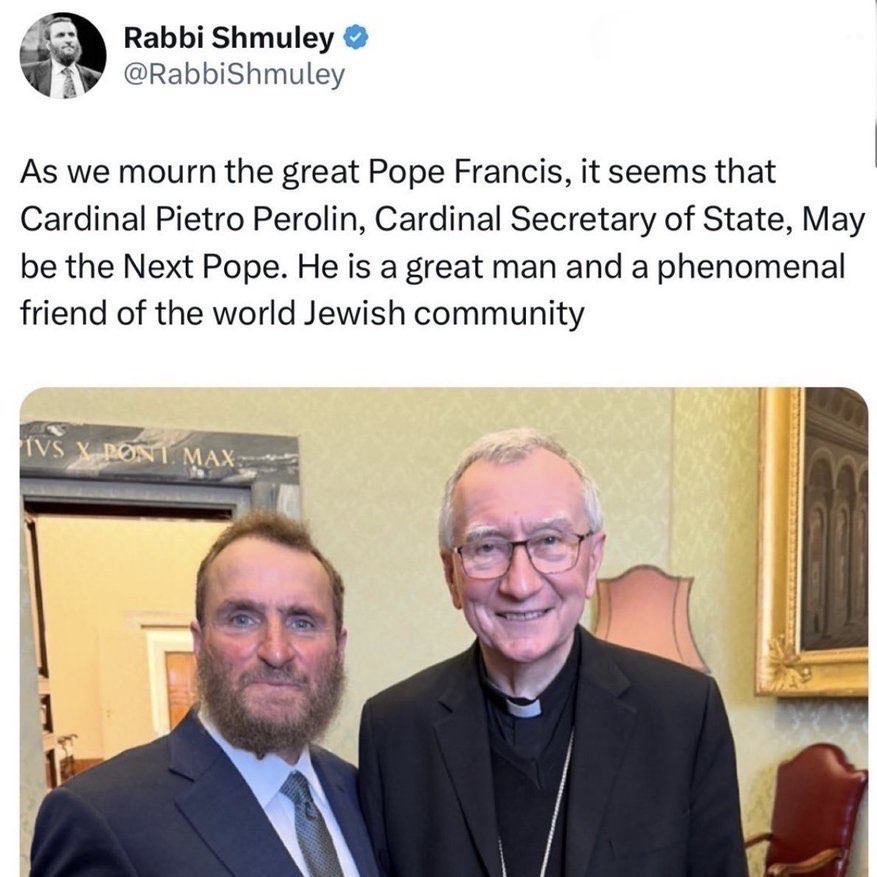
The media, as expected, is cheering for an African or Asian pope (they are obsessed with racial replacement) while other power players are more supportive of someone like this:
In any case, the Catholic Church has bigger problems than the next Pope.
Something happened in 1962. Something called Vatican II, which changed completely the direction of the church, and unless the next Pope completely rejects the decisions of Vatican II, then nothing will really change.
It’s not just the changes in the Mass, which I mentioned before and basically mean a “protestantization” of the liturgy. It is the whole idea of transforming the church into something “cool, modern, inclusive”. In other words, adapting it to the “modern world” in the hopes of attracting more young people.
This process failed miserably. Let’s look at Quebec, which up to the 1960s was a very traditional Catholic society, with families having lots of children and going to church every week.
Then Vatican II happened, then just after what they call the “Quiet Revolution”, where people basically stopped going to church and having children. Today, only 4% of Quebecers go to church once a month, and the fertility rate has dropped to 1.4 or less. Many churches have been converted into gyms, cinemas or even nightclubs.
(By the way, almost the only masses where I see relevant numbers of young men and women are traditional Latin Masses; Novus Ordo rituals are performed usually for an audience of nonagenarians and occasional families with small children).
Accordingly, as traditional rules went down, so went society. Abortion and euthanasia have been long legal in the province, and now the Superior Court in Quebec is forcing all courts to recognize families “with more than two parents”.
Remember, not so long ago everyone assumed that you could only have a mother and a father, as this is indeed the only form that is biologically possible. Then people started talking about “two dads” and “two moms”, when obviously at least one of those was not the actual father or mother of the child, and the arrangement usually included shady deals with sperm banks and the womb rental of Filipino women. Now, they are talking of families with “three parents” or even more. In Ontario, already four people can be declared “parents” of one single child. Don’t ask me about the mechanics of that.
What is interesting is this. If the modernization of the Church failed so miserably, why do they want to continue with it?
Is it because they are completely clueless and have not realized the ill social effects of such choice?
Or, more likely, is it because they know it failed, but the intention is to completely destroy the church and any form of traditional society, from the inside?
Stay tuned for more news of blackouts, terror, social disintegration and chaos.
I didn’t want to talk about what everyone else is talking, but how to avoid it? Just last Saturday I was strolling in the Vatican. On Sunday, a friend of mine watched the Easter Mass at the San Pietro square, and Francis appeared for a few seconds to wish Happy Easter.
Then the very next day his passing was announced and it’s news everywhere.
I didn’t come to Rome for the Pope, but to study painting for a couple of months. No place better for that than the Eternal City, as there is great art here in practically every corner. No need to go to expensive museums or wait in long lines: you can just walk into any random church and find Caravaggios and Raphaels, as it happens to me quite often.
I’m not following the Jubilee pilgrims, although I met several of them around, including a nice young couple who walked all the way from Genoa to Rome.
I didn’t even enter inside San Pietro yet this time. I try to go only to traditional Latin Mass. In fact, my only two interests these days are learning oil painting and going to Latin Mass.
I know this puts me in an extreme minority of people, and further reduces my audience, not to mention my bank account. But I’m too old to care now.
I should say that I wasn’t exactly a great fan of the late Pope Francis. In fact, I am not even sure he was a “valid” Pope, as some insist that Benedict’s resignation while remaining in the Vatican was a strange and perhaps unique phenomenon, and there are many other arguments in favour of “sedevacantism“. I won’t go into that, as I lack the knowledge of Church hierarchy and Vatican politics, and, honestly, despite being raised as a Catholic — although not always very practising — I have somewhat of a problem with the figure of the Pope.
I mentioned Dostoevsky a while ago, and he — who, naturally, followed the Russian Orthodox Church— criticized Rome as having fallen to the temptation of obtaining vast earthly powers. In fact, visiting Rome is becoming witness of the amazing power that the Vatican used to have (and still has, in some ways, although no longer a shadow of what it was when the Papal States covered a huge territory).
But, regardless of all that — mostly, I just didn’t like Francis’ modern style. More like a religious figure, he acted like a politician or an “influencer”, promoting all kinds of social and political issues, from mass migration to vaccination. I believe he even said at some point that not getting vaccinated against Covid was a sin. (I wonder what Saint Augustine or Thomas Aquinas would make of that.)
He did have some charisma, although perhaps not as much as, say, John Paul II, but it is true that millions of people genuinely loved him.
I suppose he also appealed to the same kind of people who are not religious but follow those leftist celebrities who keep pontificating about climate change and social change and so on. In that sense, Francis could certainly read the zeitgeist.
Francis wasn’t a great fan of Latin Mass. In fact, he tried several times to end the old rituals completely.
Now, let me tell you why I like Latin Mass. It’s not because it’s in Latin, although that helps. It’s not because I am a hard-line, reactionary Catholic. It is mostly on aesthetic grounds: I find the pre-1962 rituals just much more beautiful and solemn.
Let me give you a counter-example. I went to Latin Mass in a medium-sized church all during Holy Week, except for the Easter Vigil, where I decided to accompany a friend to San Giovanni in Latterano, the oldest of the four Papal Basilicas in Rome, and a beautiful church in its own right.
But Easter Vigil there was completely modern. All songs were modern and in Italian, nothing in Latin, and mostly by soloists, not choirs. Then, at some point, someone took out a guitar and started singing a cheerful folk song, while the audience clapped hands. I thought I had entered a Protestant church by mistake, but it was one of the oldest churches in Rome, originally built in the third century (although little of the original construction survives).
Nothing against guitars and cheerful folk songs, but I am old-fashioned and I like my church music with organ and choirs. Guitars remind me of a campfire.
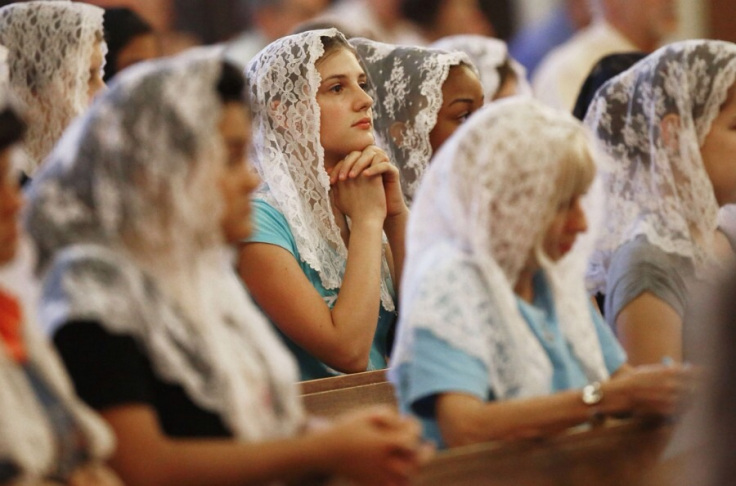
Compare this with the Latin Mass where I went before, where it is just an organ and a choir and Gregorian chants and the men are respectful and the women wear veils, and clapping to the rhythm of the music would be considered simply absurd.
It’s like two different worlds.
Some may find strange that I like both Latin Mass and classic art. But in fact, it is the same thing. Classic art and traditional mass come from the same source. And that is why modern mass is not as beautiful as the older mass, just as (a lot of) modern art is not as beautiful as the old classic art.
The Vatican has been one of the major sponsors of great art, from Raphael to Bernini. But now even they forgot how to create great art.
What to do with a church that no longer understands its own history and mission?
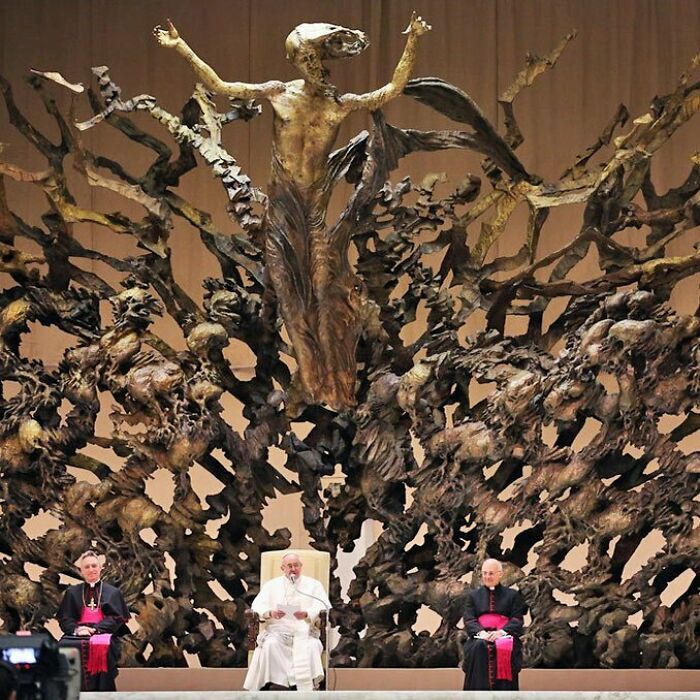
Compare this:
To this:
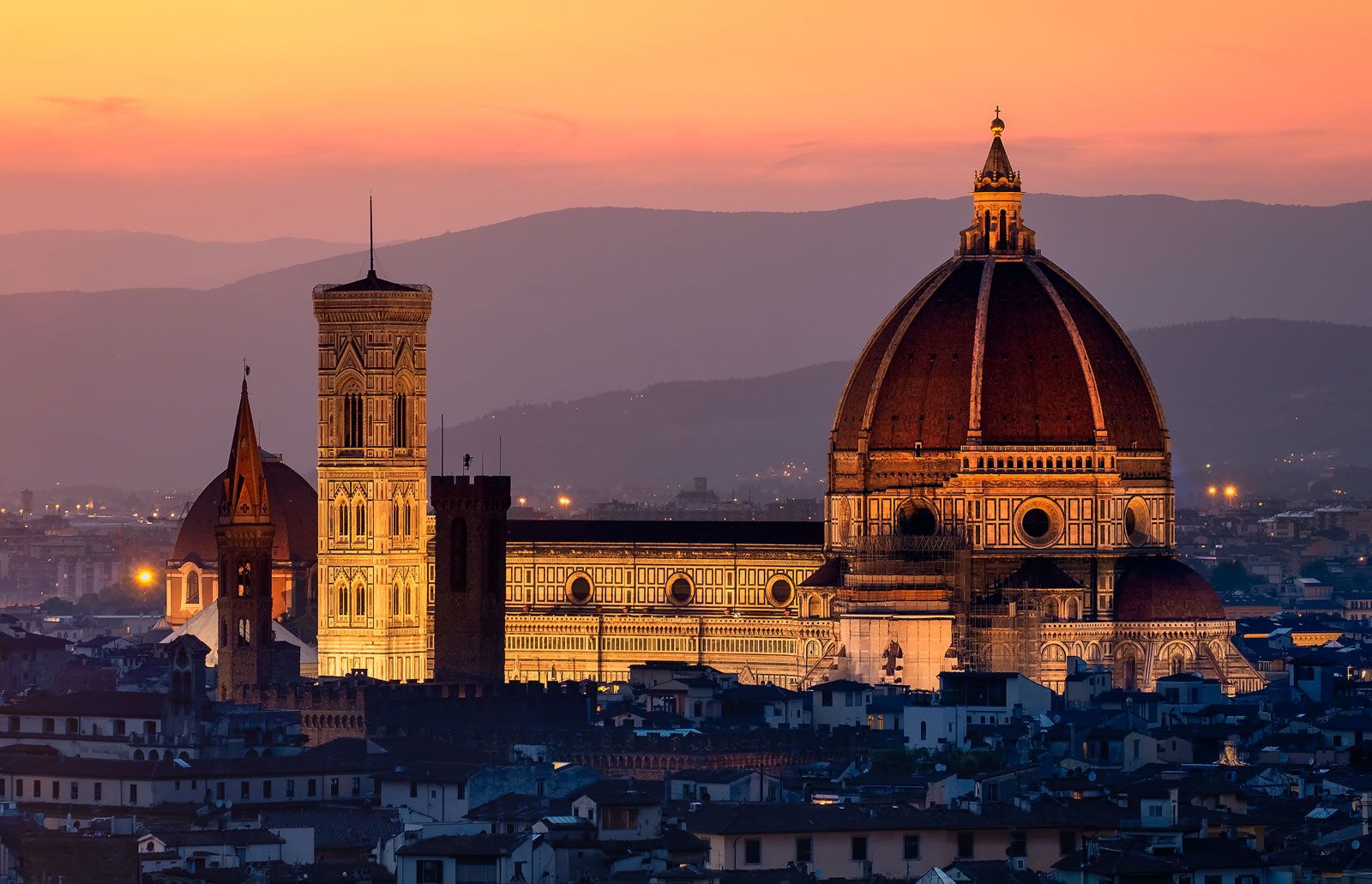
Or this:
To this:
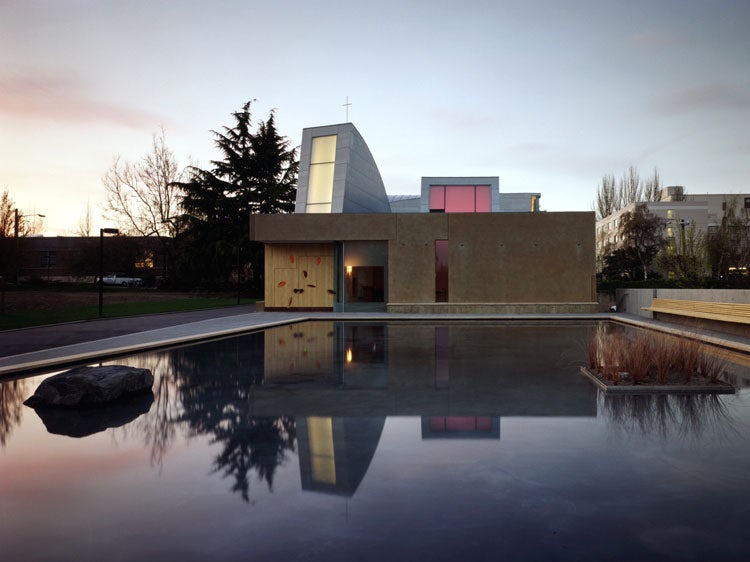
Or even this:
To this:
Anyway, as bad as Francis was — and some people who are more knowledgeable of theological matters say he was really bad — it is very likely that the next Pope will be even worse. In fact, I’m going to be very surprised if it doesn’t end up being a progressive transgender African who will further modernize the Church, ban Latin Mass, allow women to be priests, and promote abortion.
Besides, in any case the Catholic Church is now already full of “new Europeans”— Asian, African, and Indian priests, so to expect them to take a sensible pro-native position on immigration will be impossible, even if by mistake they end up electing a more conservative Pope.
The Church also followed all Covid regulations, to the point of banning Mass and processions at some point. In 2021, the Santa Rosalia procession in Palermo was banned for the first time in more than 400 years. Bear in mind that this is a Saint that was celebrated for supposedly having ended a plague. I guess she could cure the black plague, but not Covid.
If the modern Church does not really believe in its own processions and miracles, then what is its point?
In San Paolo Fuori le Mura, the fourth Papal Basilica (and the only one of the four I haven’t visited yet) there is a wall filled with hundreds of circles, each one containing an image of a previous Pope. All Popes are represented there, up to Francis.
But it appears that there are only three or four empty circles now.
Some interpret this to be a prophecy, that there will only be three more Popes, then the Anti-Christ, then the end of the world and Judgement Day.