
• Argentina - Articles - Film

    Merry Christmas!

    When I was a child, we didn’t have snow for Christmas. In fact, it was usually very hot, since I grew up in the Southern Hemisphere with December 25th falling on one of the hottest days of the year. One time it got to 42 degrees Celsius. Luckily we had a small swimming pool at our house.

    My earliest memories from Christmas are from Argentina, in the house where we lived at the time. I remember mostly eating a lot and seeing a lot of family members I wouldn’t see for the rest of the year. Uncles, cousins, aunts. I don’t really remember any gifts I may have received at that time, or whether I liked them or not. But I remember the good moments filled with food and family.

    I don’t know if I saw any religious significance in it at that time, or perhaps I was too young to think about it. But my parents used to put up a small Nativity scene, as it’s traditional in Argentina (my parents still do it, although on a smaller scale), so the Christian imagery wasn’t completely absent. Also, in Argentina, as in Spain, they used to celebrate Reyes too (Epiphany or the visit of the three Wise Kings) on January 6th, and I remember putting straw and a bowl of water by the door for the camels.

    I don’t remember any particular Christmas tree, although I suppose we put them up. I have a vague remembrance of a general green-and-red decoration. I don’t even remember if Santa Claus came or not, or if anyone dressed like him. I think that the three Wise Kings were more important in Argentina back then, and Santa Claus only took over the holiday season later. But I remember spending time with family.

    Was Christmas less commercial back then? I just rewatched “A Charlie Brown Christmas”, Charles Schulz’s masterpiece, and apparently the commercialization of Christmas was a concern already back in 1965, years before I was even born. And yet, I don’t remember it in my childhood being so much about receiving lots of gifts or buying a lot of stuff as it was about meeting with relatives, even distant ones that I hardly met otherwise.

    Even as I grew up, it remained like that, and that’s why I always liked Christmas. For several years it was still possible in Christmas to meet with parents, siblings and other family members, even with everyone living in a different part of the world. This year is an exception. This year everyone is even farther away than usual, so, we’ll have to do with Skype. (No, sorry, Microsoft killed Skype. It will have to be some other similar video call service.)

    I wish I had something deep or important to say. But I really don’t. I just wanted to note down a few random memories and to wish everyone a Merry Christmas.

    In the last few days, I made a short animation which was supposed to be a parody of Charles Dickens’ “A Christmas Carol” — originally it would include a visit of the three ghosts to Mr. Scrooge — but, without time or resources, I had to simplify it a lot. I am not even sure the story makes sense now. But it is what it is. A call for world peace, I suppose, as naive as that sounds in this day and age.

    Merry Christmas!
  • Argentina - Articles

    Argentina’s turn

    In Latin America, it is customary for governments to alternate between “right-wing” pro-American populists and “left-wing” anti-American populists. Last year, Bolsonaro was replaced by Lula in Brazil; now Argentina, with the pendulum swinging in the opposite direction, ousted the left-wing peronista government and elected right-wing populist Javier Milei.

    The conventional wisdom is that the rightists tend to do better in the economy and leftists better on social issues, but it doesn’t always work like that. The right-wing sometimes pushes for too extreme neoliberal policies that benefits bankers at the expense of workers, while, on social issues, the left pushes for all current negative fads such as transgenders, radical feminism, abortion, etc.

    On social issues, I prefer the right. On the economy, I’m more mixed. Sometimes the right promotes good policies, but sometimes it doesn’t. I am not sure at all about Milei’s dollarization plans, but the peronistas have completely wrecked Argentina’s economy, creating an inflation of 140% and causing more than a third of Argentines to live now beyond the poverty line. I’ve heard tales from Argentina’s growing poverty, and it’s unsettling. I still have relatives there.

    But the main problem of the “right” in Latin America is their foreign policy. They always align with the United States (and Israel), with all the pressure that that entails. Leftists are sometimes too extreme in the other direction, but it is usually healthier to be, or at least try to be, more independent. The shadow of the U.S. looms large.

    While Bolsonaro had the Brazilian evangelicals firmly on his side, Milei’s religious views are unclear. Supposedly he’s Catholic, but I am not sure if he practices it. Some time ago he called Pope Francis “an envoy of Satan”, but I think it has to do less with the fake Pope’s heretical policies than with his sympathy and support for Milei’s rival peronistas, in particular for Cristina Kirchner.

    Milei is supposedly a libertarian, so he’s not exactly a social conservative. His views on social issues are mixed. One one way, he says he’s against abortion. On the other hand, he seems to favour gay marriage, drug use liberalization, and he mentioned new policies such as “legalizing the free sale and purchase of organs for transplants.” I don’t know, but this seems like a very bad idea.

    Abused childhood

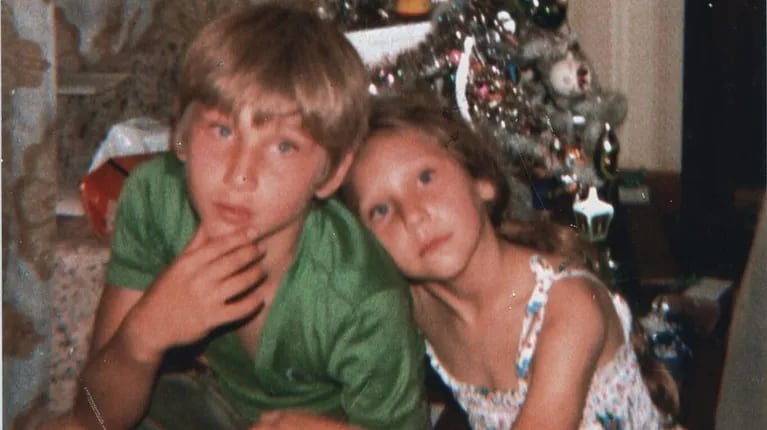
    Milei appears in many campaign pictures next to a blonde woman whom I thought was his wife, but turns out it’s actually his sister. It seems they had a difficult childhood, with parents that abused them — not sexual, but violent and psychological abuse.

    Violent abuse in childhood is something that is not much talked about — we hear more about sex tales — and yet it causes terrible repercussions for those involved, perhaps being as bad as sexual abuse. I’ve read terrible tales of people who had a childhood like that, and they never forget it. John Darnielle, the singer of The Mountain Goats, was constantly beaten by his stepfather since he was six years old. It led him to drug addiction, attempted suicide and other problems. Only becoming a musician and writing lyrics about that period seems to have helped him.

    The sad thing is that it’s so easy to be happy as a child. I had a very happy childhood — incidentally, in Argentina — and yet it was nothing out of the ordinary. “All you need is love” is a tired cliché, and I do not think that it is completely true for adults, but it’s true for children. All you need to be happy as a child is love from your parents. That is all.

    Note that this has nothing to do with currents prohibition of spanking and other attempts by modern government to interfere in the rearing of children. I think I and my siblings were lightly spanked on occasions when we deserved it, and it didn’t affect any of us at all. No, I’m talking about being violently kicked and punched all across the kitchen floor by a drunk father, as Milei apparently was.

    I don’t know if it’s because of the abuse, but Milei has had a curious, atypical personal history that earned him the nickname “El Loco”. Then again, that may be part of his appeal.

    He never married although he’s supposedly dating an Argentine model now. He has no children but had a dog that he considered a son; when the dog died in 2017, he fell into a deep depression. He had it cloned and now lives with the three cloned dogs that he also treats as children. He says he talks to his dead dog through a medium. The medium also helps him to communicate with the libertarian economist Murray Rothbard, who may have been the one who suggested to him the dollarization policy…

    We will see how it goes. I’m no fan of peronistas, so in that sense the change is welcome, but this could go either way.

    Milei and his sister: back then and now.
    Milei and his sister: back then and now.