• Articles

    Traveling with Vigée Le Brun

    Brief notes on an artist’s travel diary

    As the world moves closer to WWIII for reasons no sane man can understand, I prefer for the moment to write about travel.

    I am still reading Vigée Le Brun’s memories about her travels in Italy, and finding them pretty interesting. But then again, I usually like to read diaries or travel journals, even by relatively unknown or obscure people, and especially if they are from a different period. They provide a window into a different time.

    You can find here a version in English translated by Lionel Strachey, who was the brother of the more famous Lytton Strachey from the Bloomsbury circle. (I tried to find more info about Lionel, but all I could find was that he was tragically killed by a train). Be aware however that this translation seems to be a reduced version as it does not contain all the chapters that the one in French does.

    This being the 18th century, all the traveling was done in coaches pulled by horses, when not by mules or simply walking, but we don’t hear any lamentations from Mme Le Brun. At least she didn’t have to worry about TSA patting or faulty Boeing planes.

    In fact, what is particularly nice about Le Brun’s souvenirs is that she is usually very cheerful. She can’t stop raving about Italian landscapes and Italian music and Italian artists, and she meets and talks to lots of interesting people on the way. She can be a bit snobbish but not as much as you’d expect. Her major complaint is about how hard it is to find an apartment in Rome that is not noisy.

    I guess some people like traveling, and some don’t. I remember reading years ago a book by V. S. Naipaul about Argentina. The guy was always complaining, and couldn’t find a single nice thing to say about the country. Not even dulce de leche! Next time, buddy, maybe stay home?

    It’s like that classic cartoon of two people riding the same bus, but the one on one side sees a gloomy rock wall, and the one on the other side sees a beautiful sunny landscape.

    In fact, Vigée Le Brun has exactly this experience as she rides in a coach from Rome to Napoli. She sees a beautiful pastoral landscape filled with sheep and exclaims that it would make a wonderful painting. His traveling companion (a Frenchman married to Voltaire’s niece) replies: “They’re all dirty with dung. The English sheep, those are the ones you should see”.

    Then she points to a group low clouds in the horizon coloured by the setting sun and leaning against the Appenines, exclaiming how beautiful it all is. Her companion replies: “The only thing those clouds tell us is that it’s going to rain tomorrow”. From then on, she just ignores her companion, whom she nicknames “éteignoir” (killjoy).

    Of course, one advantage that Le Brun has is that she is very sociable and extremely well-connected. Wherever she goes, she meets all the local ambassadors, counts and duchesses, as well as several French emigré (understandably, there were many abroad at that time, as heads were rolling in France).

    Sometimes I wish people more would read my travel articles, but being an introvert and not particularly well-connected with the upper classes, I rarely meet other people except tourists, proles or local bums at cafes. But, instead of someone like, say, Linh Dinh, who manages to extract from them wonderful or bizarre stories, I usually prefer to leave them on their own.

    And yet, descriptions of places or events only take us so far. It is meeting and talking to people who provides most of the interest in travel writing.

    Lady Hamilton

    One of the interesting people Le Brun meets in Napoli is Lady Hamilton. There are different versions of her life, some of them contradicting others, but let us follow Vigée Le Brun’s account.

    Born to a hairdresser and a sailor, she started to work as a maid but soon lost her job and would soon have become some sort of lower class prostitute if she had not discovered a very particular talent: she was neither actress nor painter, but she could be a very expressive model. After being discovered by the celebrated painter George Romney, she became a sort of celebrity herself.

    Apt as well at social climbing, soon she became the lover of a succession of rich men who, however, didn’t keep her for long. She was supposed to marry Charles Greville, a rich antiquarian, but ended up marrying her older uncle instead, Lord William Hamilton, who was even richer and lived in Napoli as an ambassador. This is where Le Brun meets her and paints several portraits of her.

    Lady Hamilton remained nominally married to Lord Hamilton until he died, but the real love of her life was Lord Nelson, the famous English admiral who defeated Napoleon in the Battle of Trafalgar. Everyone, even Lord Hamilton, knew that Nelson was her lover. (Vigée Le Brun’s meets her again later in London and doesn’t buy her sadness at having recently becoming a widow).

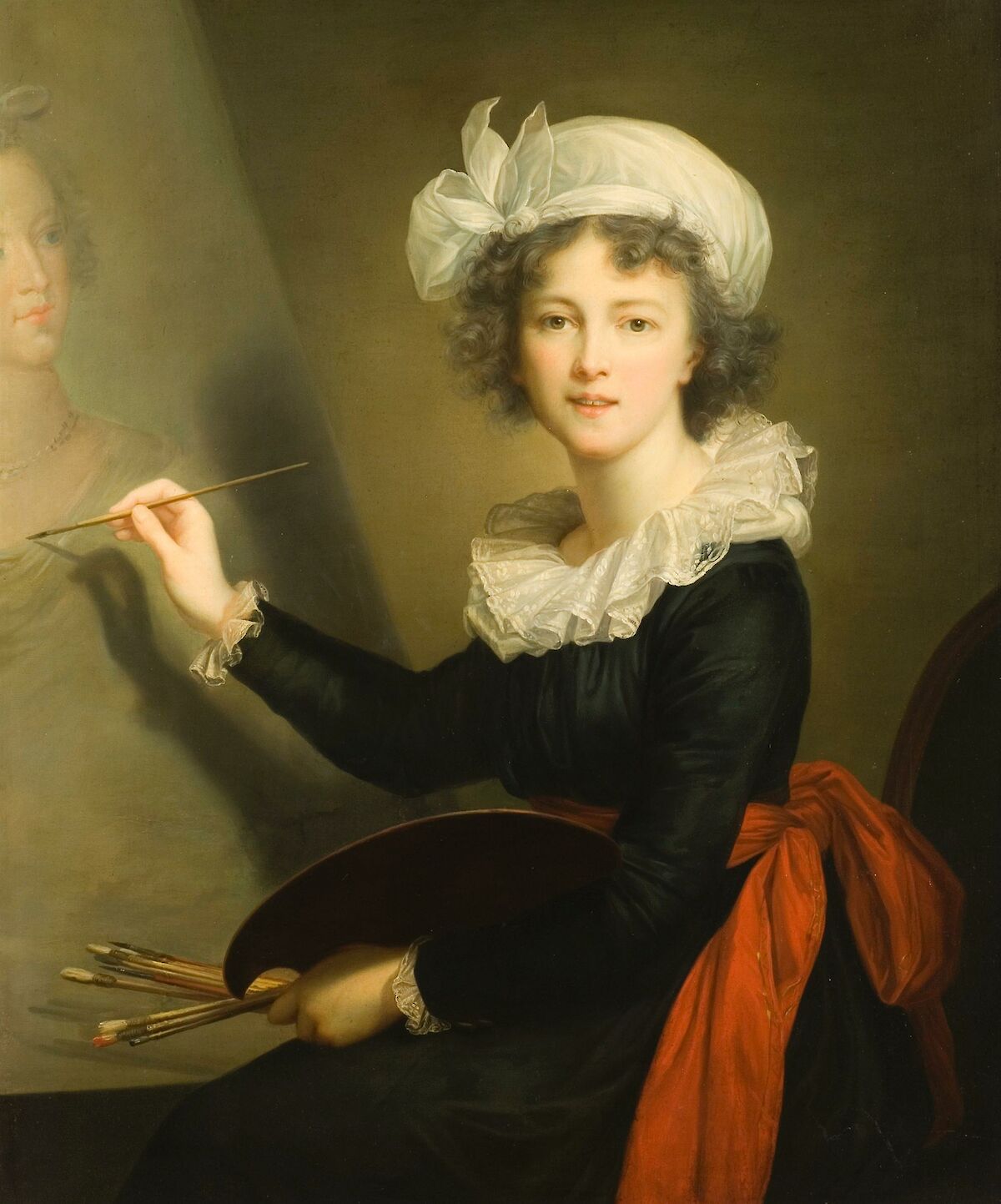
    I haven’t seen Le Brun’s several portraits of Lady Hamilton, but I managed to see Vigée Le Brun self-portrait which is still hanging on the Ufizzi Gallery in Florence. It is very nice. While not reaching the heights of her beloved Raphael and Correggio (bur who has?) she was a talented painter alright.

    Russia

    Interestingly, after leaving Italy Vigée Le Brun ended up in Russia, where she lived for several years, mostly in Saint Petersburg. She has a surprisingly positive view of Russia and the Russian people. (I say surprisingly because it doesn’t seem the usual Western European view, either back then or now.)

    She even says at one point that Russians rarely drink and that she never saw a drunk Russian, which makes me doubt of her powers of observation. Then again, I suppose she lived mostly among the upper classes and exiles in Czarist Russia, so who knows.

    She leaves Russia shortly after her daughter marries Gaëtan Bertrand Nigris, a Frenchman who works in Saint Petersburg, a marriage she doesn’t approve. She might have been right: the couple divorce just a few years later after and the daughter returns to France, but she never fully reconciles with her mother. She dies in poverty at only 39 years of age.

    After further periods of exile in England, Switzerland and the Netherlands, Vigée Le Brun returned to France definitely in 1809. She died in 1842 at 86 years of age. Her Souvenirs were written and published in 1835. Besides her self-portrait hanging in the Uffizzi Gallery in Florence, she has many works in the Metropolitan Museum of Art in New York and in the Louvre. During her life, she painted more than 600 paintings, mostly portraits.

  • Articles - Featured

    Freedom is just another word for nothing left to lose

    For several weeks, protests against Israel’s campaign in Gaza have been ongoing at several American universities and a few European ones. It’s basically the same crowd of leftist students that protested for Black Lives Matters, for abortion or for other popular causes (but not against Covid lockdowns).

    But while those protests were accepted and even cheered by the establishment, and hardly anyone was arrested, now the police is coming in full force against the students. Some are being expelled from the university. Other have lost their jobs. A few were gassed or beaten up.

    It must have been quite a rude awakening.

    These are people who were brainwashed from childhood that the world is divided between “oppressors” and “oppressed”, so when they see unarmed women and children being bombed by a superior army, they naturally respond with indignation.

    But now they find out that, in this case, things are not so simple anymore.
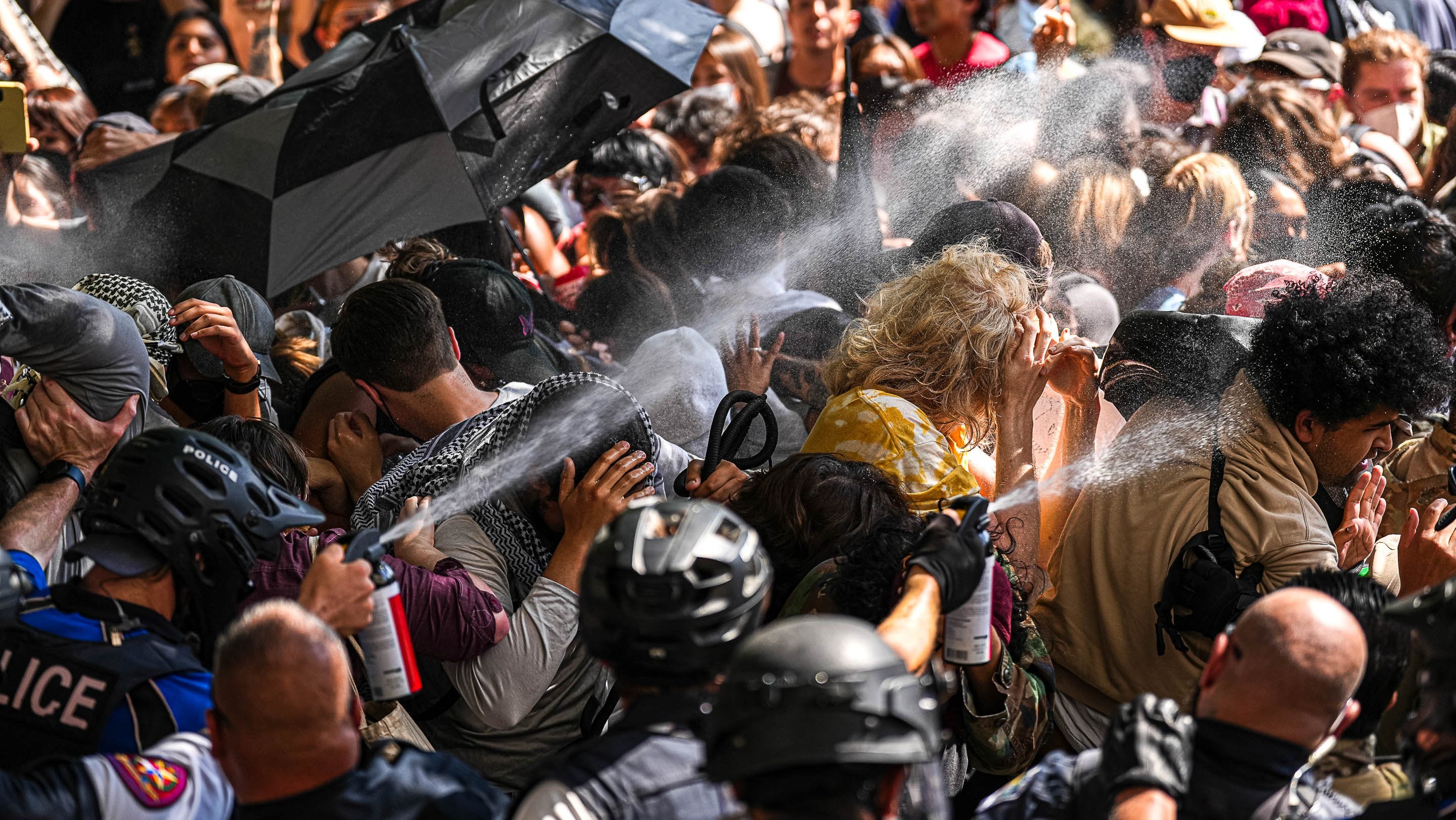
    It is clear right now that are things you’re allowed to protest against — “white supremacy”, “patriarchy”, the Church — and things that you are not — vaccines, immigration, Israel.

    The protesters are being accused of being “anti-semitic”, but I doubt that they really are. Most of them support most Jewish causes and I am sure there are a few Jewish students among the protesters too (although a large part is likely of Arab origin).

    Politicians keep telling us that we have “freedom” in the West. In a way, it’s true.

    For instance, a man in Canada recently was free to ask a doctor to amputate two of his healthy fingers because of “body dysphoria”. He thought he was an amputee, so, using modern language, this was an “amputee-affirming” event.

    Amputation is now a “highly satisfying curative treatment”, according to doctors.

    Another man was also free to declare himself as “non-binary” and to create an artificial “vagina”, but he also wanted to keep his penis just in case, because he wasn’t sure which “gender” he belonged to. So he obtained that right. And he even got the government, I mean, the Canadian taxpayers, to pay for the surgery.

    Meanwhile, also in Canada — one of the countries closest to being a modern liberal utopia — a physically healthy 27-year old autistic woman was also free to take part in the government’s “MAID” program — a cute acronym for “Medical Assistance in Dying” — against the wishes of her own parents, because, otherwise, according to the authorities, she would suffer “irreparable harm.”

    And death can prevent “irreparable harm”.

    So you’re “free” to do any of those things in the modern Western world. Also to abort, smoke marihuana, and get married to your pet.

    But try to protest or even post something against verboten topics, and see where that takes you.

    Digital Slaves

    A few days ago, Amazon terminated my Kindle Direct Publishing account, where I self-published a few books, with no reason or warning. They just sent me an email informing that they believe I violated their “Terms of Service”, although they did not specify in which way. They cancelled my account, deleted all my titles from Amazon, forbade me to ever opening a new Kindle account, and are not even going to pay for the unpaid royalties that they owe me. I can’t even access my previous sales reports.

    I wrote several emails asking for more information as to why I was “canceled”, but got no answer. There is no way to contact them by phone either.

    Since I didn’t publish anything particularly divisive, and all titles were either under my own copyright or works in the public domain, it is unclear what I did wrong.

    I never made more than 30-50 dollars a month from those books, so it’s not a big deal. But it sobering to find out that they can just delete all your work in a matter of seconds, under any excuse.

    I never liked Amazon very much for the way they destroyed first local bookstores and now all kinds of local shops, but when you see how little they care for publishers who use their platform, it’s quite a shock.


    The poor get poorer…

    …and the rich get richer.

    For the moment, I will be moving the books to Barnes & Noble and Apple Books.

    However, the same is true of any other digital platform. YouTube, Facebook, Twitter, Google, Apple. They can just close your account at any time for any reason. In the digital world, nothing belongs to you.

    And that’s just the start.

    You might remember that during the anti-lockdown protests in Canada, Justin Trudeau froze the bank accounts of several protesters. So they already can do that. But as the world moves to a digital currency, things are going to get worse. They will be able to just take away all your money with the push of a button, for any reason, just like Amazon did with my KDP account.

    The European Union is already moving into the direction of banning cash. There’s already a law being considered that would ban all individual cash transactions over 3,000 euros. The excuse is “terrorism”, but we all know the score.

    But hey, at least you are free to amputate any body part you want.

  • Art - Articles - Featured - Travel

    Traveling with Vigée Le Brun

    As the world moves closer to WWIII for reasons no sane man can understand, I prefer for the moment to write about travel.

    I am still reading Vigée Le Brun’s memories about her travels in Italy, and finding them pretty interesting. But then again, I usually like to read diaries or travel journals, even by relatively unknown or obscure people, and especially if they are from a different period. They provide a window into a different time.

    You can find here a version in English translated by Lionel Strachey, who was the brother of the more famous Lytton Strachey from the Bloomsbury circle. (I tried to find more info about Lionel, but all I could find was that he was tragically killed by a train). Be aware however that this translation seems to be a reduced version as it does not contain all the chapters that the one in French does.

    This being the 18th century, all the traveling was done in coaches pulled by horses, when not by mules or simply walking, but we don’t hear any lamentations from Mme Le Brun. At least she didn’t have to worry about TSA patting or faulty Boeing planes.

    In fact, what is particularly nice about Le Brun’s souvenirs is that she is usually very cheerful. She can’t stop raving about Italian landscapes and Italian music and Italian artists, and she meets and talks to lots of interesting people on the way. She can be a bit snobbish but not as much as you’d expect. Her major complaint is about how hard it is to find an apartment in Rome that is not noisy.

    I guess some people like traveling, and some don’t. I remember reading years ago a book by V. S. Naipaul about Argentina. The guy was always complaining, and couldn’t find a single nice thing to say about the country. Not even dulce de leche! Next time, buddy, maybe stay home?

    It’s like that classic cartoon of two people riding the same bus, but the one on one side sees a gloomy rock wall, and the one on the other side sees a beautiful sunny landscape.

    In fact, Vigée Le Brun has exactly this experience as she rides in a coach from Rome to Napoli. She sees a beautiful pastoral landscape filled with sheep and exclaims that it would make a wonderful painting. His traveling companion (a Frenchman married to Voltaire’s niece) replies: “They’re all dirty with dung. The English sheep, those are the ones you should see”.

    Then she points to a group low clouds in the horizon coloured by the setting sun and leaning against the Appenines, exclaiming how beautiful it all is. Her companion replies: “The only thing those clouds tell us is that it’s going to rain tomorrow”. From then on, she just ignores her companion, whom she nicknames “éteignoir” (killjoy).

    Of course, one advantage that Le Brun has is that she is very sociable and extremely well-connected. Wherever she goes, she meets all the local ambassadors, counts and duchesses, as well as several French emigré (understandably, there were many abroad at that time, as heads were rolling in France).

    Sometimes I wish people more would read my travel articles, but being an introvert and not particularly well-connected with the upper classes, I rarely meet other people except tourists, proles or local bums at cafes. But, instead of someone like, say, Linh Dinh, who manages to extract from them wonderful or bizarre stories, I usually prefer to leave them on their own.

    And yet, descriptions of places or events only take us so far. It is meeting and talking to people who provides most of the interest in travel writing.

    Lady Hamilton

    One of the interesting people Le Brun meets in Napoli is Lady Hamilton. There are different versions of her life, some of them contradicting others, but let us follow Vigée Le Brun’s account.
    Born to a hairdresser and a sailor, she started to work as a maid but soon lost her job and would soon have become some sort of lower class prostitute if she had not discovered a very particular talent: she was neither actress nor painter, but she could be a very expressive model. After being discovered by the celebrated painter George Romney, she became a sort of celebrity herself.

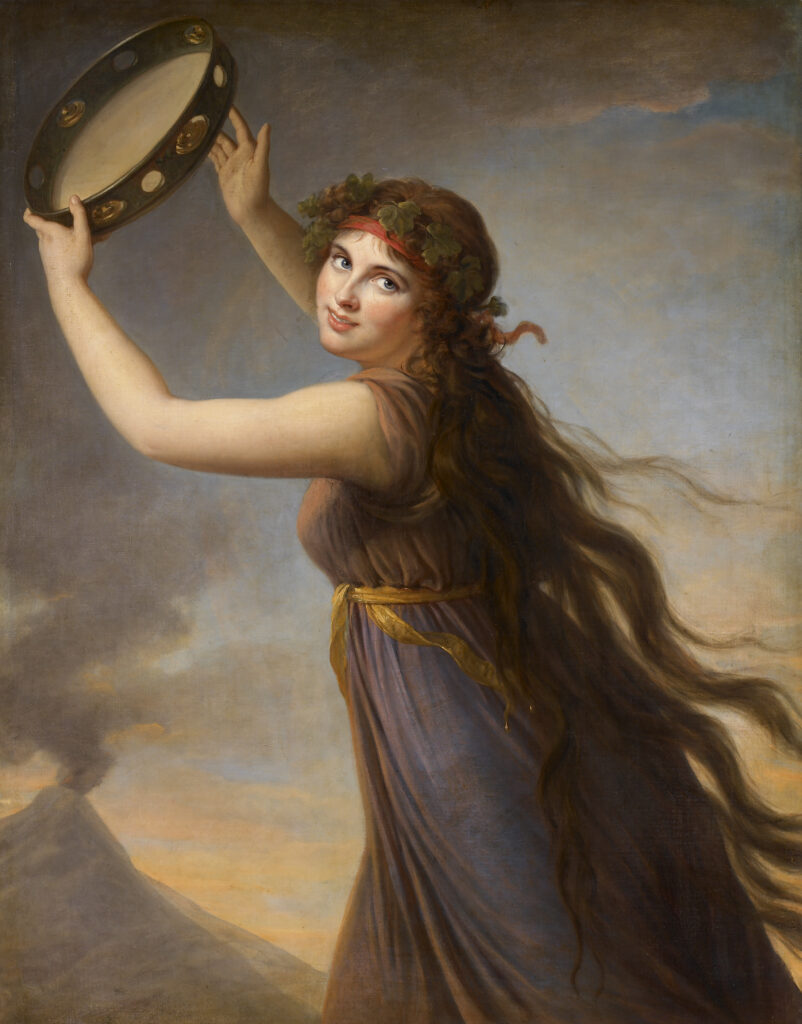
    Apt as well at social climbing, soon she became the lover of a succession of rich men who, however, didn’t keep her for long. She was supposed to marry Charles Greville, a rich antiquarian, but ended up marrying her older uncle instead, Lord William Hamilton, who was even richer and lived in Napoli as an ambassador. This is where Le Brun meets her and paints several portraits of her.

    Lady Hamilton remained nominally married to Lord Hamilton until he died, but the real love of her life was Lord Nelson, the famous English admiral who defeated Napoleon in the Battle of Trafalgar. Everyone, even Lord Hamilton, knew that Nelson was her lover. (Vigée Le Brun’s meets her again later in London and doesn’t buy her sadness at having recently becoming a widow).

    I haven’t seen Le Brun’s several portraits of Lady Hamilton, but I managed to see Vigée Le Brun self-portrait which is still hanging on the Ufizzi Gallery in Florence. It is very nice. While not reaching the heights of her beloved Raphael and Correggio (bur who has?) she was a talented painter alright.

    Russia

    Interestingly, after leaving Italy Vigée Le Brun ended up in Russia, where she lived for several years, mostly in Saint Petersburg. She has a surprisingly positive view of Russia and the Russian people. (I say surprisingly because it doesn’t seem the usual Western European view, either back then or now.)

    She even says at one point that Russians rarely drink and that she never saw a drunk Russian, which makes me doubt of her powers of observation. Then again, I suppose she lived mostly among the upper classes and exiles in Czarist Russia, so who knows.

    She leaves Russia shortly after her daughter marries Gaëtan Bertrand Nigris, a Frenchman who works in Saint Petersburg, a marriage she doesn’t approve. She might have been right: the couple divorce just a few years later after and the daughter returns to France, but she never fully reconciles with her mother. She dies in poverty at only 39 years of age.

    After further periods of exile in England, Switzerland and the Netherlands, Vigée Le Brun returned to France definitely in 1809. She died in 1842 at 86 years of age. Her Souvenirs were written and published in 1835. Besides her self-portrait hanging in the Uffizzi Gallery in Florence, she has many works in the Metropolitan Museum of Art in New York and in the Louvre. During her life, she painted more than 600 paintings, mostly portraits.

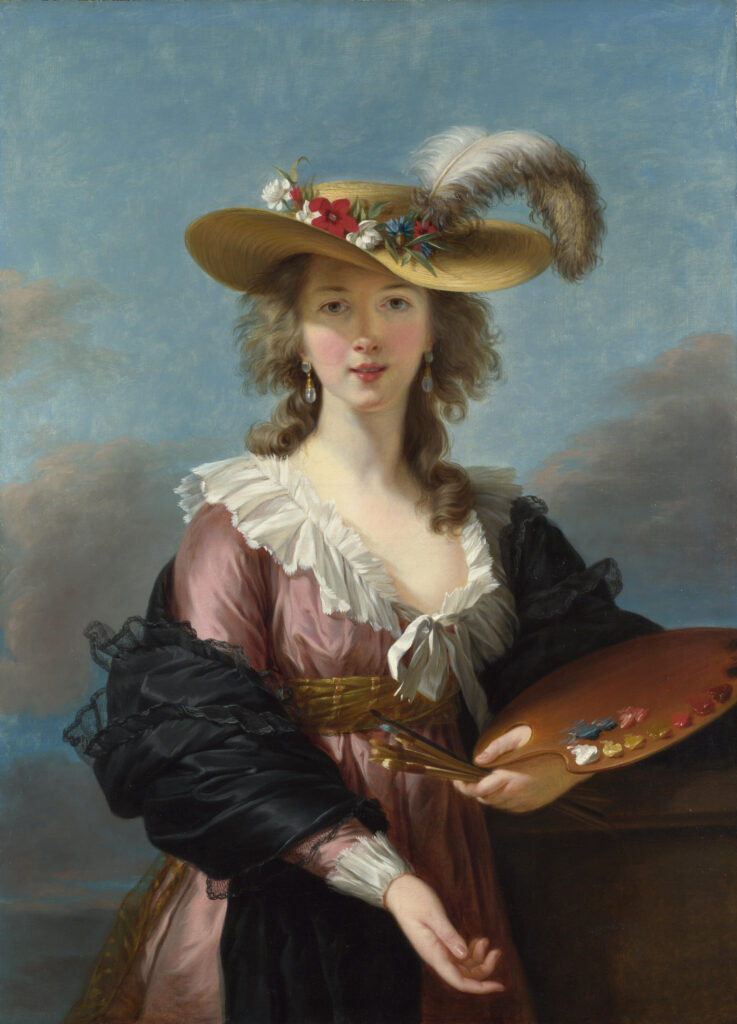
    “Self-portrait with a straw hat” (1782)

    “Lady Hamilton as a Bacchante” (Elisabeth Vigée Le Brun, 1792)

  • Articles

    Why can't we make beautiful art anymore?

    And why are Western people so apathetic?

    Some people say I am too harsh on the modern world. That we have wonderful technology and people live in comfort and we have so many ways of amusing ourselves and we can find any ethnic restaurant we want in any town on Earth.

    Fair enough, I guess.

    But why is so difficult to make beautiful art and architecture in this world?

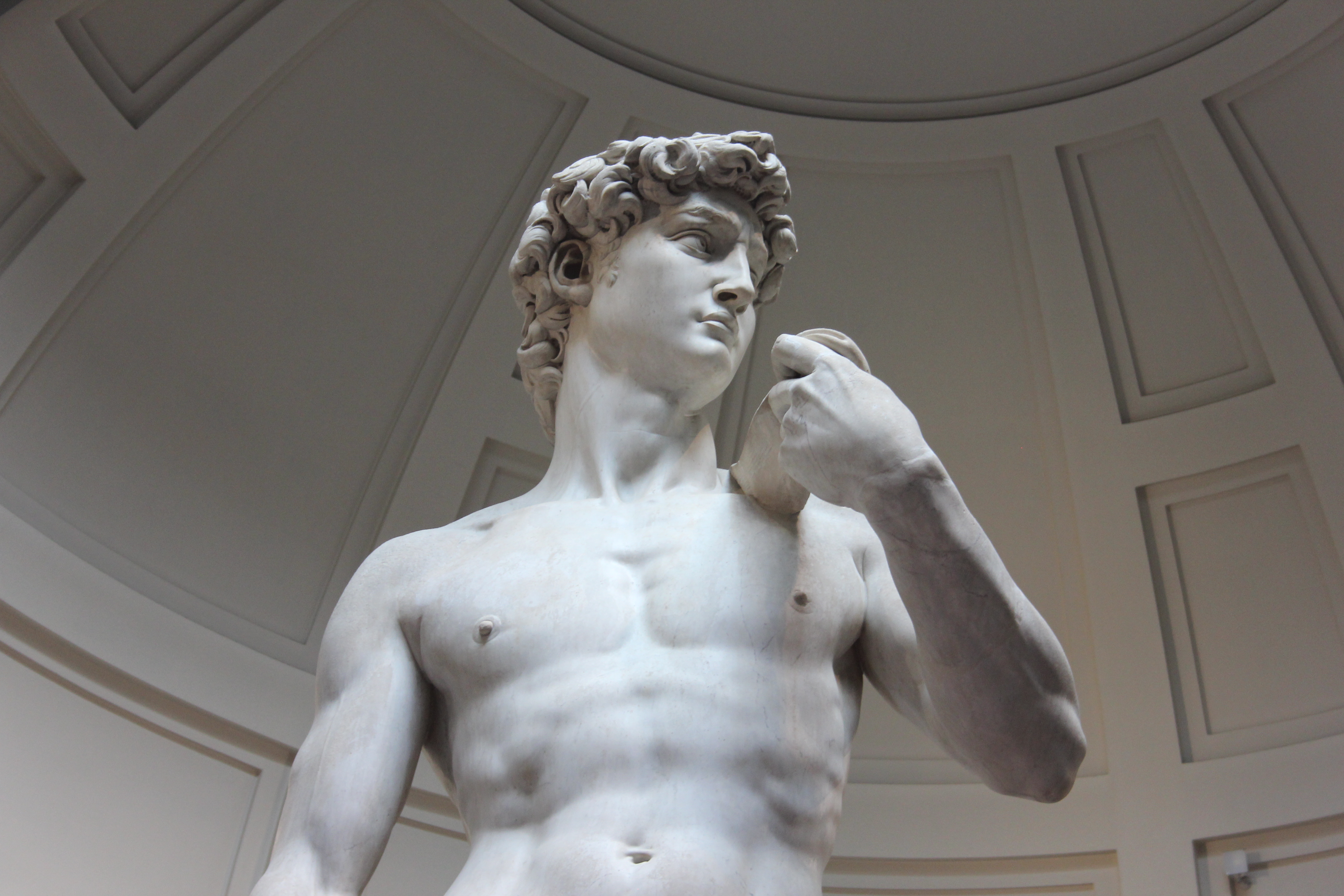
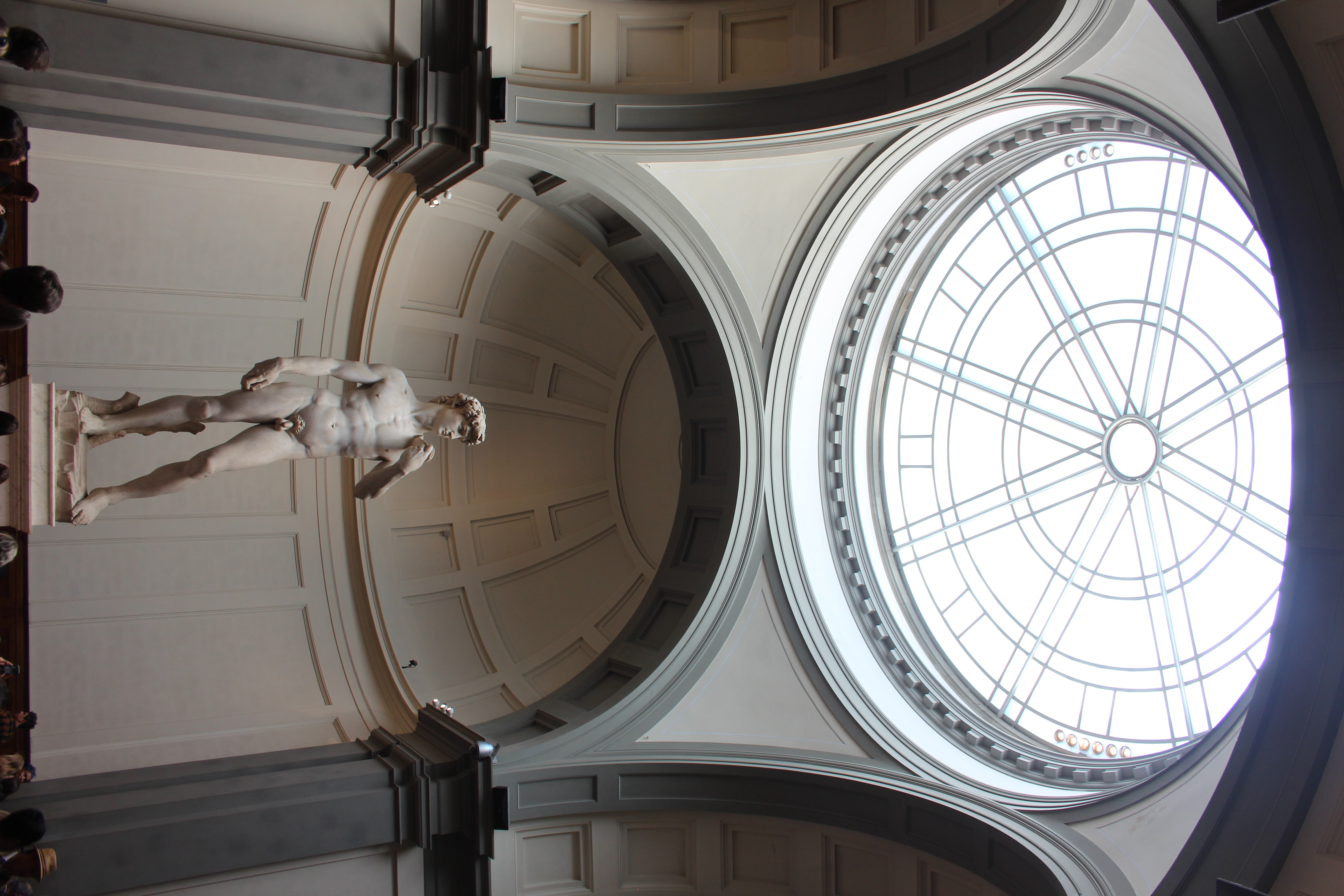
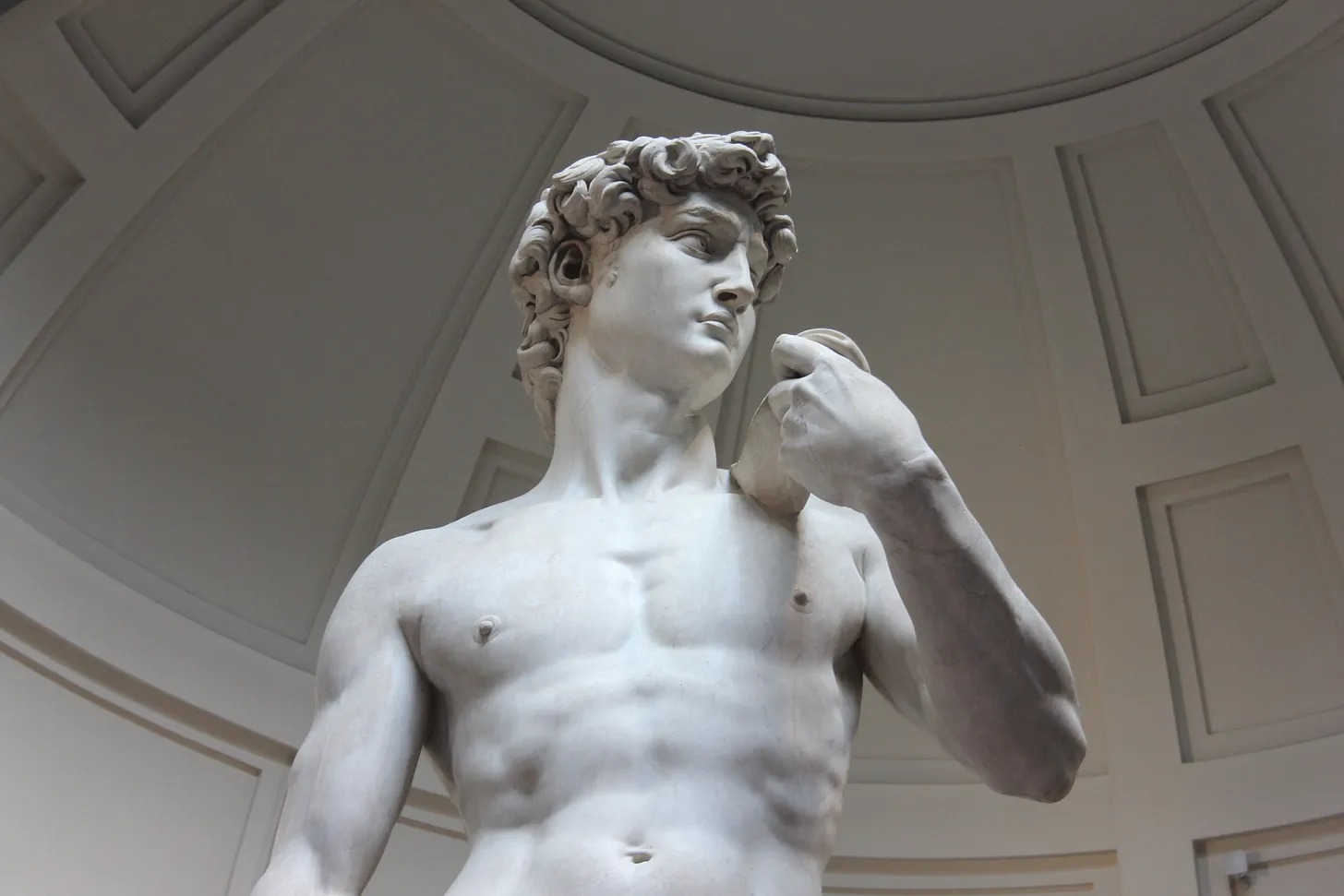
    In my third visit to Tuscany, I finally had time to see Michelangelo’s “David”. It is one of those works that is actually more impressive in real life than in pictures.

    I say this because the “Mona Lisa”, for instance, is a bit underwhelming. (Then again, I never understood why critics singled out Leonardo’s “Mona Lisa” as his “masterpiece” out of his hundreds of much more impressive works. Perhaps they chose a simple portrait as a way to distract from his much more beautiful religious paintings?)

    Of course, in Tuscany, beautiful art is everywhere.

    Visiting San Gimignano, which is basically a medieval town frozen in time, there are so many churches with wonderful paintings, and this is a very small town — if you go to Florence, you will find a thousand others.

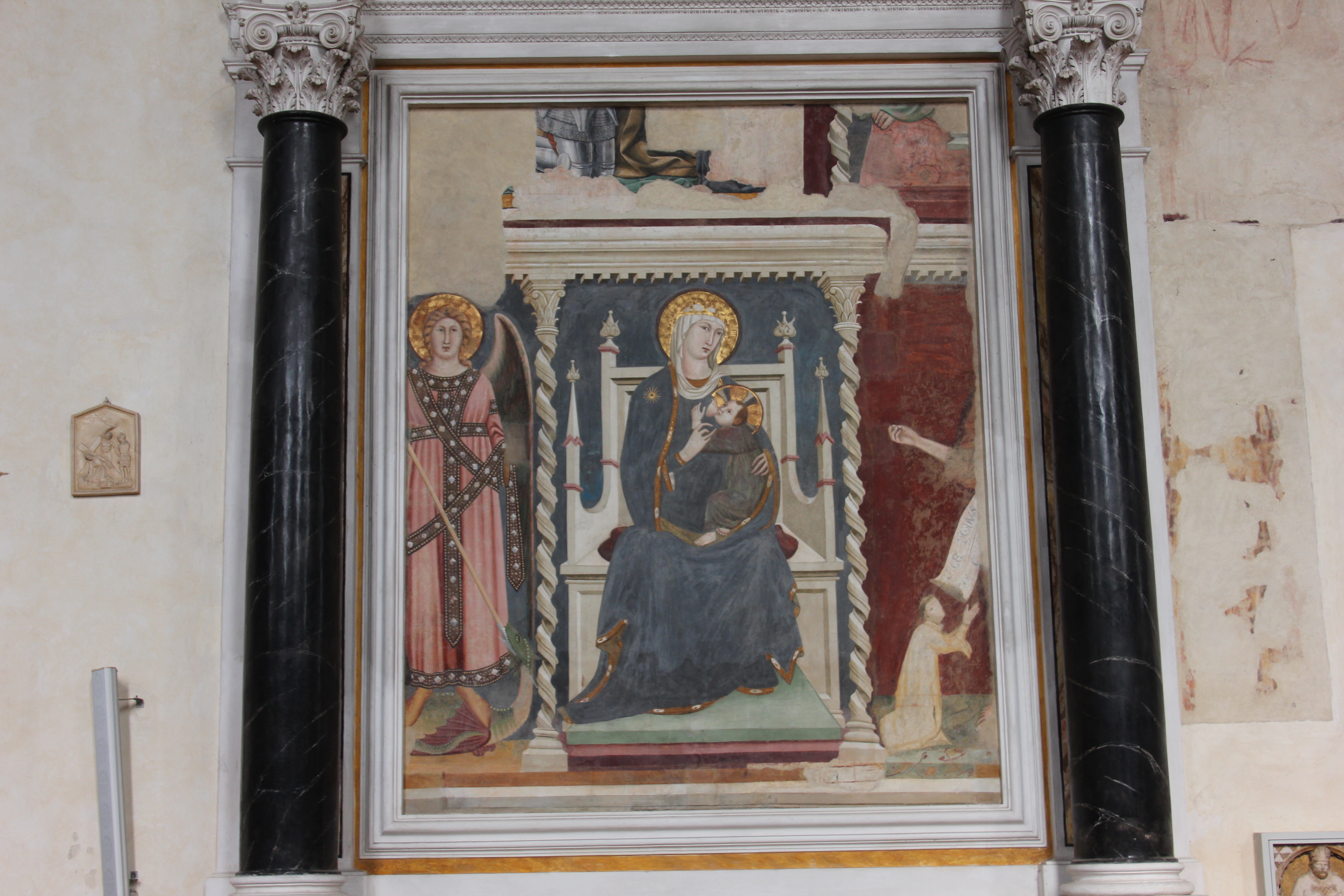
    Of course beauty didn’t start in the Renaissance. This is a painting from 1317, in the Church and Monastery of Saint Augustine in San Gimignano.

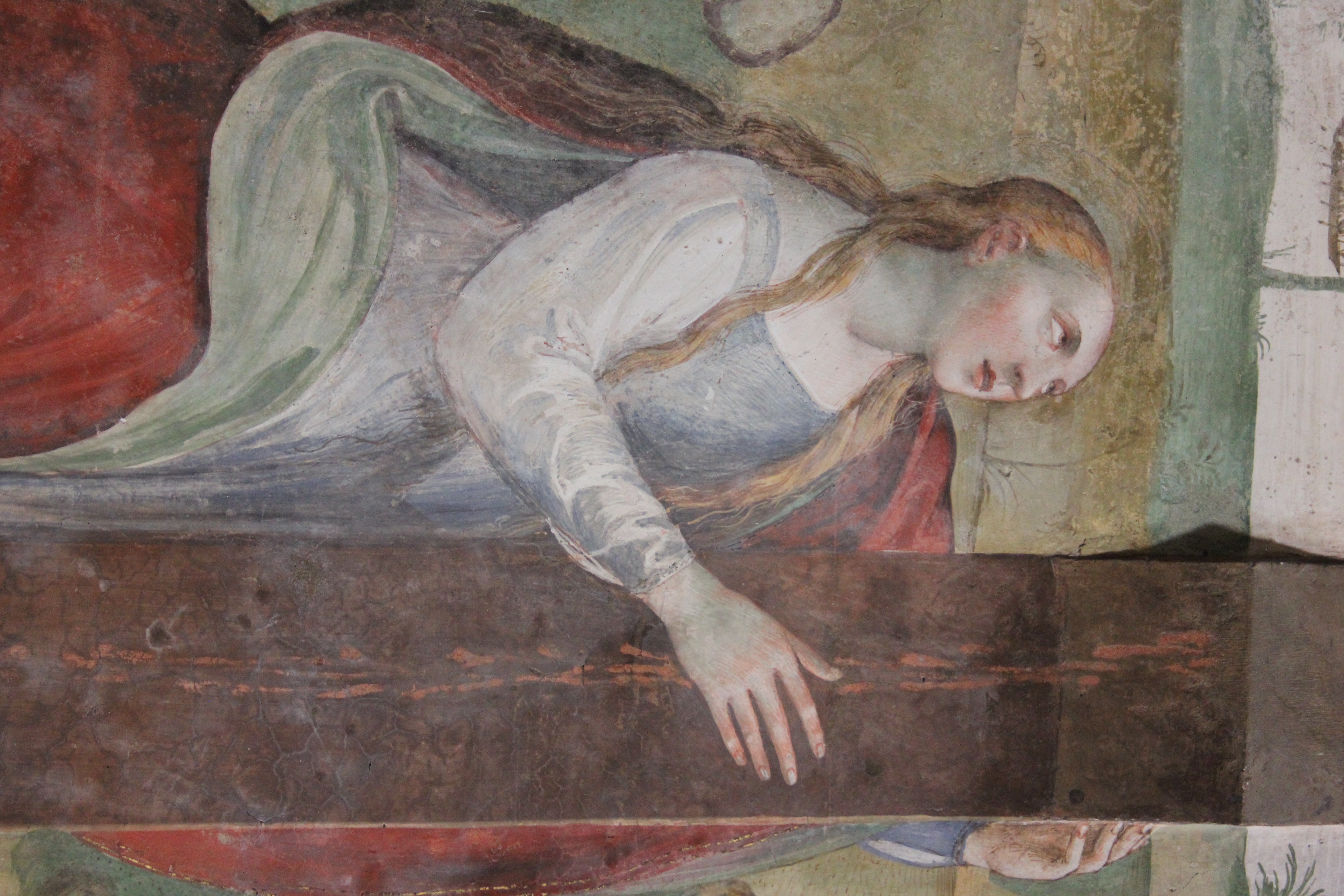
    And this is a detail of another one, no date indicated but from about a hundred years later.

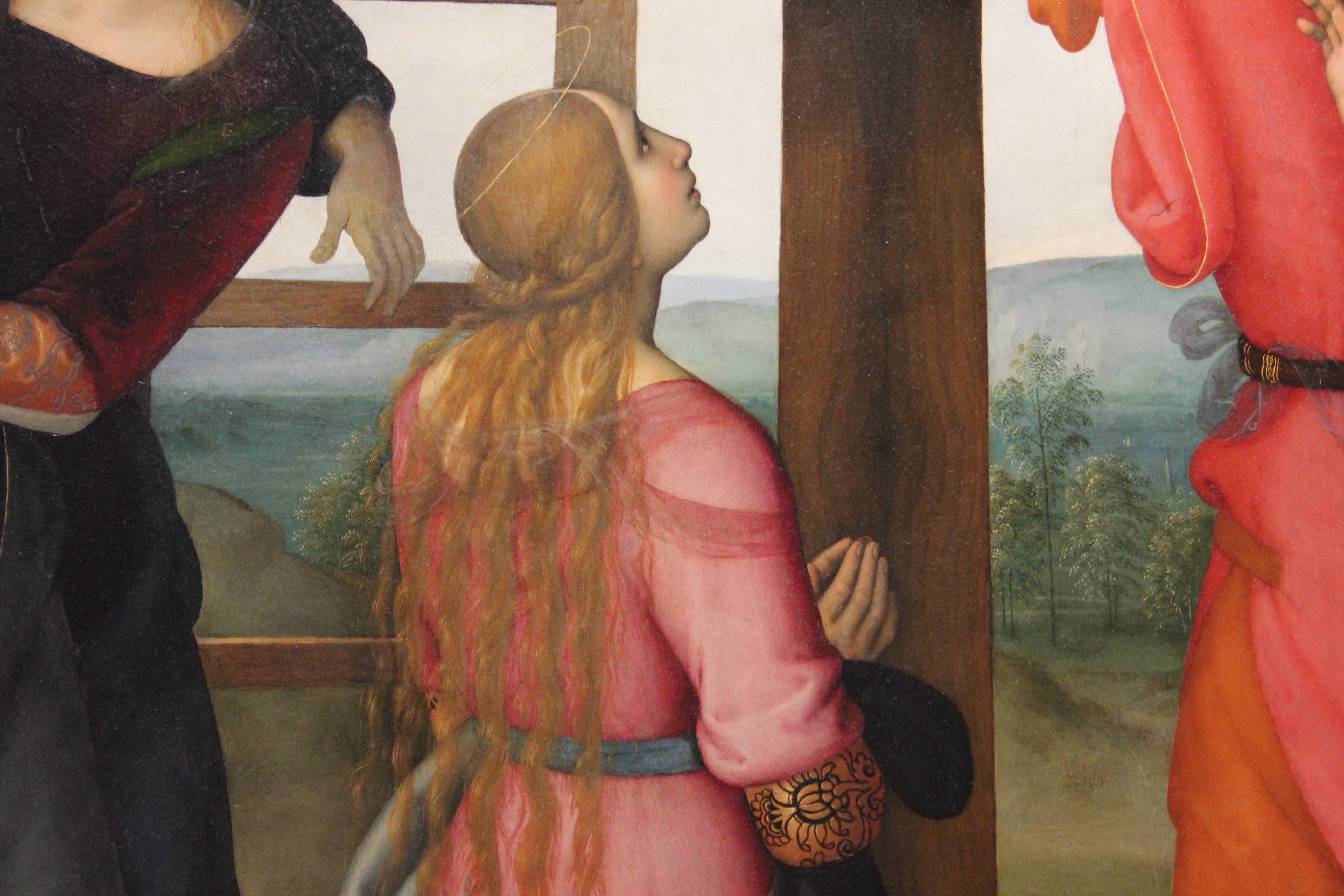
    This one below, in a museum, with a similar theme (Santa Maddalena by the cross) is also from the 1400s.

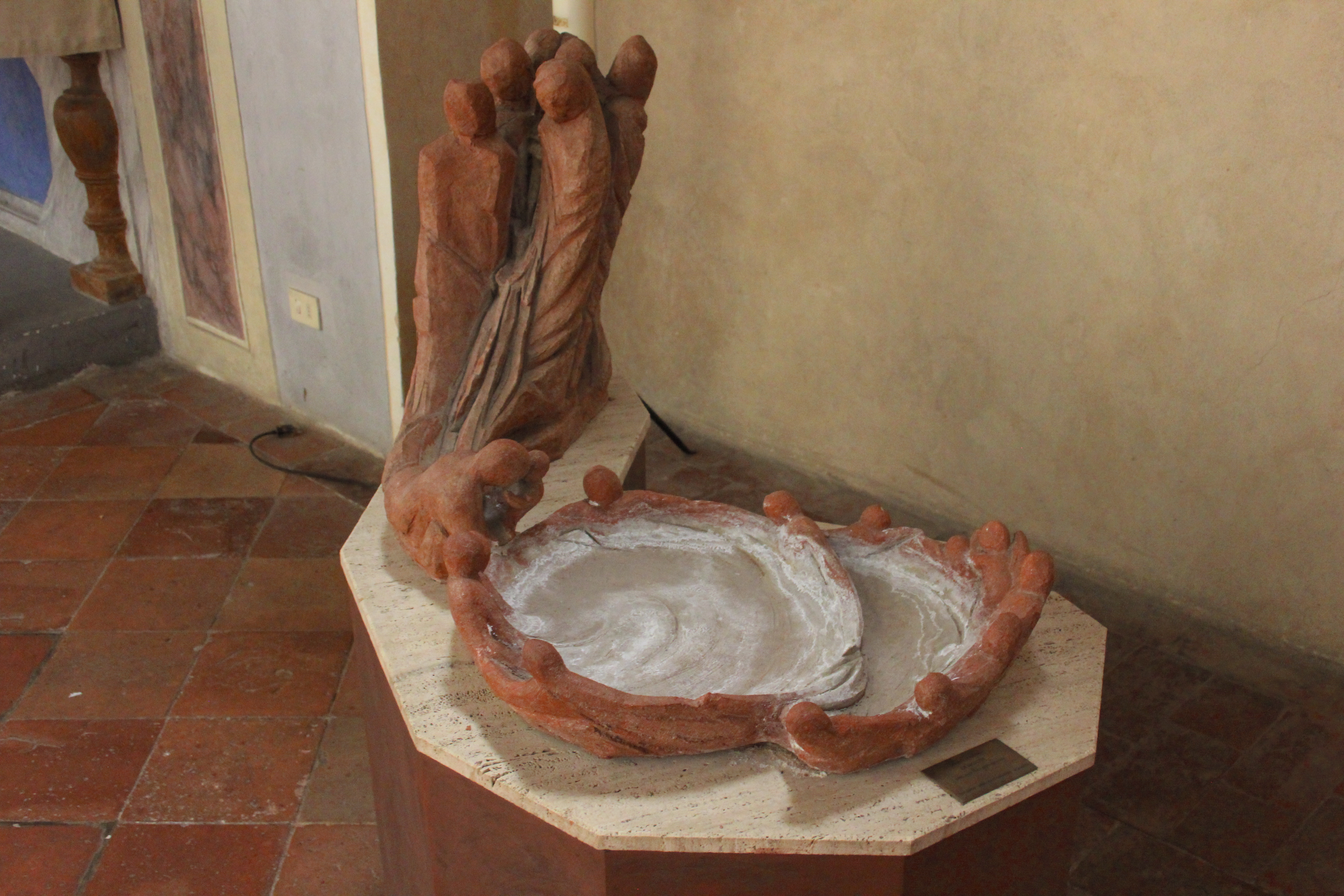
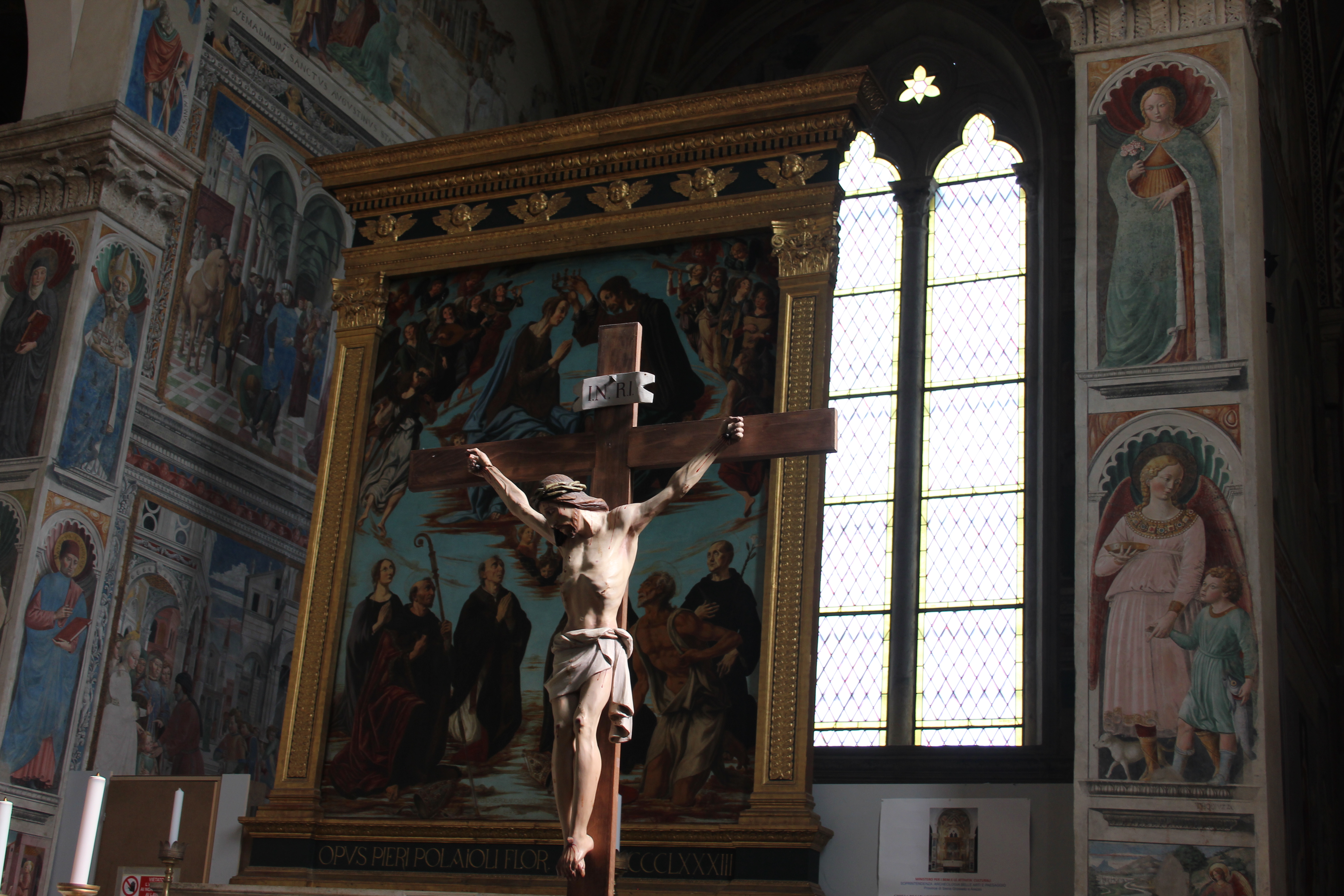
    In the same church, however, you can (regrettably) see this sculpture from 1995.

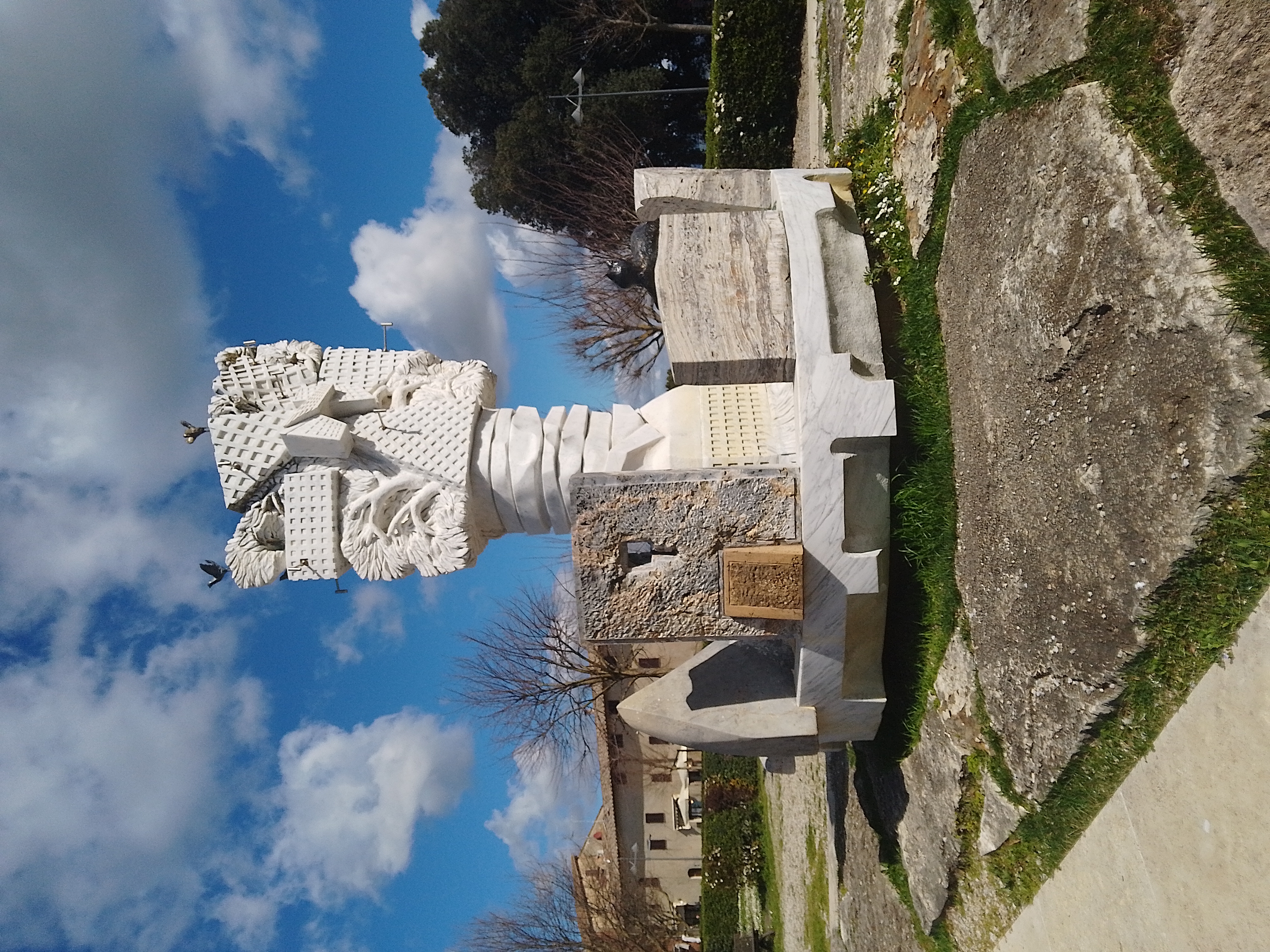
    And then there is this fountain built in 2014, sitting nearby, just outside the walls of the old town. Compare it to the Fontana di Trevi in Rome, or, really, anything built before the 20th century.

    Ugly stuff! Even the most mediocre medieval sculptor could certainly do better than that. And that’s not even the ugliest stuff. If you want really ugly modern stuff, just check this page with sculptures in some American university campus. It’s so horrifying, it cannot not be on purpose.

    If you are one of the two or three people who have read my article about how much money the Renaissance and Baroque painters made, you may have found that the Catholic Church at the time invested a lot of money in creating beautiful churches and paintings and sculptures. They had an almost limitless budget for that stuff. They spent what would be millions today.

    Today we have even more money — we can print all the money we want, it’s all digital anyway! — but it all goes to create mostly… the worst kind of trash they can find?

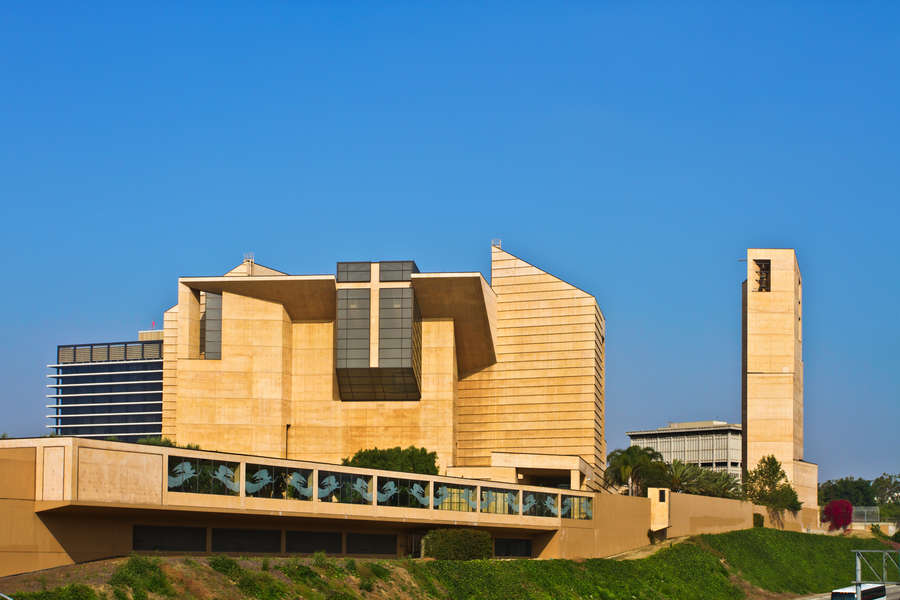
    I mean, we can’t even make beautiful churches anymore. This is a Catholic church in Los Angeles.

    But there are similar examples even in Italy. Any church built after, say, 1960, is usually ugly or bland.

    Why is that? What the Hell is going on?

    It’s not that people no longer care for beauty. I mean, if people didn’t care for beauty, there wouldn’t be millions of tourists visiting Florence and San Gimignano and Siena and Paris and Barcelona every year. They want to see the old, beautiful stuff. Not the ugly modern stuff.

    And in private, people also like beautiful things. Inside many apartments and in a few shops you can find that many places are still arranged with relative good taste (although usually tending more towards the clean/functional look than to the decorative.)

    It’s also not that there are no talented people anymore. There are still a few good book illustrators and designers, for instance. I suppose a few good filmmakers, although even those are rare these days.

    But in visual arts and public sculpture, the money seems to go to the worst things you can find. So there seems to be a deliberate attempt to promote ugly stuff. I mean, all those ugly sculptures cost money, and someone is paying for them.

    But that’s not all. Even when there are talented artists, they create mostly meaningless things. Most classic art was about religious or mythological themes. There is a reason for that. Art is about transcendence. About a connection with the world beyond our senses and our daily experience.

    Even the good portrait painters (when portrait painting was basically just catering to the vanity of rich people to have their “portrait taken”) understood that, and that’s why their paintings are still valuable and interesting even when the person portrayed has been dead and forgotten for hundreds of years.

    But now… “Art” is not just ugly (it doesn’t even try to be beautiful), it’s usually about some random political or social theme that will be forgotten in a few years. Or about some trivial, mundane event. Or even pornography. There is just no effort to connect the individual to the universal and the material to the spiritual.

    Why are Western people so apathetic?

    But it goes beyond art and beauty, which in the end are just a reflex of our world. If our art is ugly it’s probably because our society is, in many ways, ugly. It is a symptom of disease.

    Most Western people seem to be very apathetic in the face of extinction. Extinction? Well, not only birth rates are plummeting in all the Western world, there is an ongoing demographic replacement by foreigners, and while things seem relatively fine on the surface, everyone knows or at least fears that the possibility of war and economic doom is just around the corner.

    Or am I exaggerating? Sometimes I don’t know. It is true that level of prosperity in the West is still quite high. People on average are able to live in comfort and without too many worries.

    Then again, none of that matters if people are not having children and the economy crashes and there’s war.

    But most Western people are just… I don’t know. They don’t seem to care about the future, or anything, really. Or they care about fake, obviously manufactured problems such as “global warming” or “Covid” or “Trump” or whatever the media will bring next week, but not about the very real problem of the survival of their own culture and their own people into the future.

    I don’t know what to make of it, but I suppose my opinion is also irrelevant, bound to flutter for a few seconds in the air like a fallen leave and then disappear forever.

    In the meantime, I take a few pictures and write a few words to register a few beautiful moments in time, before I’m gone, too.

  • Art - Featured - Italy - Memories

    Why can’t we make beautiful art anymore?

    Some people say I am too harsh on the modern world. That we have wonderful technology and people live in comfort and we have so many ways of amusing ourselves and we can find any ethnic restaurant we want in any town on Earth.

    Fair enough, I guess.

    But why is so difficult to make beautiful art and architecture in this world?

    In my third visit to Tuscany, I finally had time to see Michelangelo’s “David”. It is one of those works that is actually more impressive in real life than in pictures.

    I say this because the “Mona Lisa”, for instance, is a bit underwhelming. (Then again, I never understood why critics singled out Leonardo’s “Mona Lisa” as his “masterpiece” out of his hundreds of much more impressive works. Perhaps they chose a simple portrait as a way to distract from his much more beautiful religious paintings?)

    Of course, in Tuscany, beautiful art is everywhere.

    Visiting San Gimignano, which is basically a medieval town frozen in time, there are so many churches with wonderful paintings, and this is a very small town — if you go to Florence, you will find a thousand others.

    Of course beauty didn’t start in the Renaissance. This is a painting from 1317, in the Church and Monastery of Saint Augustine in San Gimignano.

    And this is a detail of another one, no date indicated but from about a hundred years later.

    This one below, in a museum, with a similar theme (Saint Magdalene by the cross) is also from the 1400s.

    In the same church, however, you can (regrettably) see this sculpture from 1995.

    And then there is this fountain built in 2014, sitting nearby, just outside the walls of the old town. Compare it to the Fontana di Trevi in Rome, or, really, anything built before the 20th century.

    Ugly stuff! Even the most mediocre medieval sculptor could certainly do better than that. And that’s not even the ugliest stuff. If you want really ugly modern stuff, just check this page with sculptures in some American university campus. It’s so horrifying, it cannot not be on purpose.

    If you are one of the two or three people who have read my article about how much money the Renaissance and Baroque painters made, you may have found that the Catholic Church at the time invested a lot of money in creating beautiful churches and paintings and sculptures. They had an almost limitless budget for that stuff. They spent what would be millions today.

    Today we have even more money — we can print all the money we want, it’s all digital anyway! — but it all goes to create mostly… the worst kind of trash they can find?

    I mean, we can’t even make beautiful churches anymore. This is a Catholic church in Los Angeles.


    But there are similar examples even in Italy. Any church built after, say, 1960, is usually ugly or bland.

    Why is that? What the Hell is going on?

    It’s not that people no longer care for beauty. I mean, if people didn’t care for beauty, there wouldn’t be millions of tourists visiting Florence and San Gimignano and Siena and Paris and Barcelona every year. They want to see the old, beautiful stuff. Not the ugly modern stuff.

    And in private, people also like beautiful things. Inside many apartments and in a few shops you can find that many places are still arranged with relative good taste (although usually tending more towards the clean/functional look than to the decorative.)

    It’s also not that there are no talented people anymore. There are still a few good book illustrators and designers, for instance. I suppose a few good filmmakers, although even those are rare these days.

    But in visual arts and public sculpture, the money seems to go to the worst things you can find. So there seems to be a deliberate attempt to promote ugly stuff. I mean, all those ugly sculptures cost money, and someone is paying for them.

    But that’s not all. Even when there are talented artists, they create mostly meaningless things. Most classic art was about religious or mythological themes. There is a reason for that. Art is about transcendence. About a connection with the world beyond our senses and our daily experience.

    Even the good portrait painters (when portrait painting was basically just catering to the vanity of rich people to have their “portrait taken”) understood that, and that’s why their paintings are still valuable and interesting even when the person portrayed has been dead and forgotten for hundreds of years.

    But now… “Art” is not just ugly (it doesn’t even try to be beautiful), it’s usually about some random political or social theme that will be forgotten in a few years. Or about some trivial, mundane event. Or even pornography. There is just no effort to connect the individual to the universal and the material to the spiritual.

    Why are Western people so apathetic?

    But it goes beyond art and beauty, which in the end are just a reflex of our world. If our art is ugly it’s probably because our society is, in many ways, ugly. It is a symptom of disease.

    Most Western people seem to be very apathetic in the face of extinction. Extinction? Well, not only birth rates are plummeting in all the Western world, there is an ongoing demographic replacement by foreigners, and while things seem relatively fine on the surface, everyone knows or at least fears that the possibility of war and economic doom is just around the corner.

    Or am I exaggerating? Sometimes I don’t know. It is true that level of prosperity in the West is still quite high. People on average are able to live in comfort and without too many worries.

    Then again, none of that matters if people are not having children and the economy crashes and there’s war.

    But most Western people are just… I don’t know. They don’t seem to care about the future, or anything, really. Or they care about fake, obviously manufactured problems such as “global warming” or “Covid” or “Trump” or whatever the media will bring next week, but not about the very real problem of the survival of their own culture and their own people into the future.

    I don’t know what to make of it, but I suppose my opinion is also irrelevant, bound to flutter for a few seconds in the air like a fallen leave and then disappear forever.

    In the meantime, I take a few pictures and write a few words to register a few beautiful moments in time, before I’m gone, too.

    Church of Saint Augustine, San Gimignano.


  • Articles

    Santa Fina and miracles for unbelievers

    The limits of our materialist view

    We live in an age that, for the most part, doesn’t believe in miracles or in any form of transcendence from the material world.

    Some believe in the miracles of “science” — although I suppose that has also taken a hit in the recent “Covid” years — but, other than that, I think most people simply accept, as modern “philosophers” say, and recent polls show, the idea of life as a meaningless existence that starts and ends with our material bodies.

    And, sometimes, not even that. After all, for many, fetuses are not considered “living beings”, as they have not have yet started “life”, which is for us defined as the period from birth until death — and now “assisted dying” is becoming a thing.

    We consider ourselves wiser or more knowledgeable than people from earlier periods, in particular those from medieval times, a period often dismissed as a “dark age”.

    But perhaps that’s a limitation. “There are more things in Heaven and Earth”, says Shakespeare through Hamlet. And August Strindberg, in his “Blue Book“, said that modern materialists are “like deaf and blind people who are convinced that they are the only ones who can see.”

    We think we see more than them, but, in fact, perhaps we see less.

    In medieval times, for instance, there was not a clear separation between the material and the spiritual, the “real” and the magic, the “normal life” and miracles, Heaven and Earth.

    Let’s talk, for instance, about Fina dei Ciardi.

    Life and Death of Santa Fina

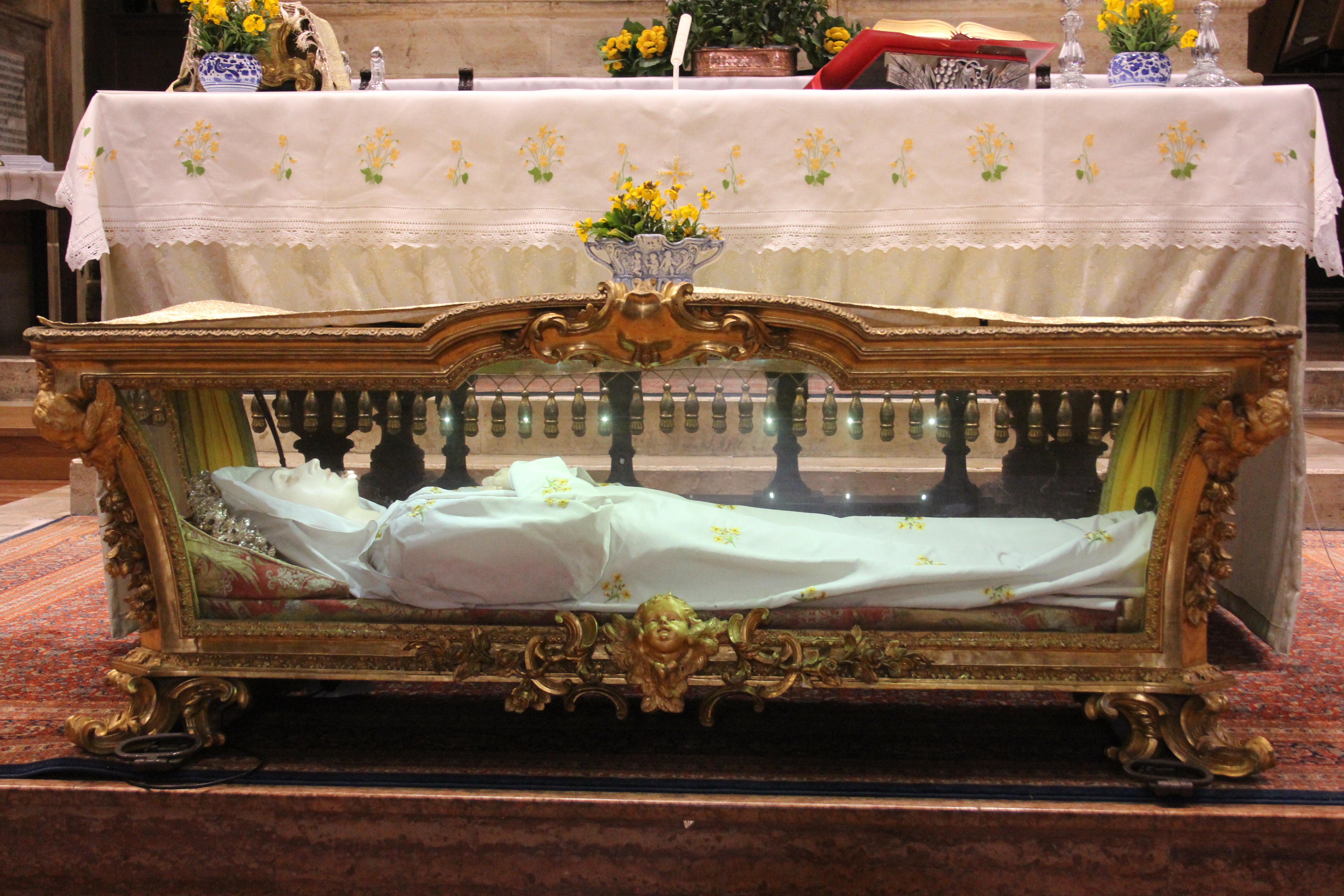
    On March 12th, 1253, a young girl named Fina (possibly a nickname for Iosefina or Serafina, although no one knows for sure) died after five long years of suffering.

    At only ten years of age, she had been struck with a disease that rendered her almost incapable of moving. Refusing a more comfortable bed, Fina dei Ciardi lied down on an oak board, and there she remained for the rest of her short life. While she was ill, she first lost her father, and then her mother also died in an accidental fall.

    With her body full of sores and even, according to some, bitten by worms or rats that nested in the rotten wood, she seemed always peaceful, and she even comforted the visitors who came to see her.

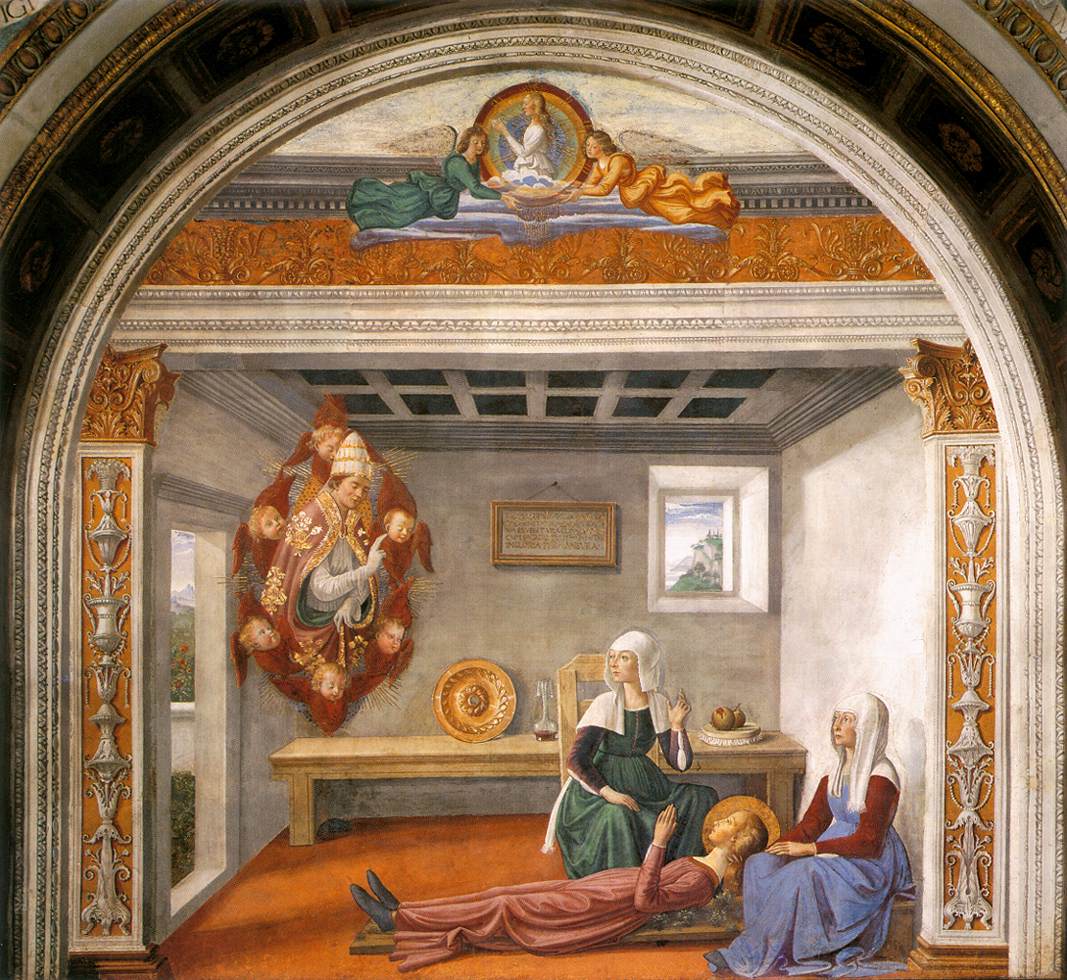
    One night, Saint Gregory appeared to her and predicted the date of her death, which came to take place in the aforementioned March 12th. She was only fifteen.

    To us, modern people, the life and death of Santa Fina seems just a sad and meaningless tragedy, an almost grotesque story that we cannot understand.

    Today, she could have avoided her five years of suffering and simply said her last goodbyes in a “suicide pod”, like those now common in Switzerland, the Netherlands and Canada — and maybe soon former Catholic France, too.

    But it was not so back then. Back then, they believed in miracles.

    Back then, just after Fina’s death, the people claimed that bells rang without no one touching them, and that violets started to bloom in places where they had never bloomed before, high up in the walls and the towers of San Gimignano, the small medieval town where she lived and she died.

    San Gimignano today

    San Gimignano is now like a living museum, almost a theme park for American and British tourists who flock every summer to eat pizza and gelato and drink Chianti wine and spend the money from their pensions in the overpriced local markets and shops.

    I came here to teach a brief workshop, having arrived just in time for the celebration of Santa Fina — who, by the way, was never officially canonized as a “Saint” by the Church but is a “beata vergine.

    I almost didn’t get to be here, in fact. I arrived late at night by train in the nearby town of Poggibonsi. I assumed I could find there a taxi or a bus from there to San Gimignano, where I had my booked apartment, about 15 km away.

    But I found out that buses only operate until 7 pm, and all taxi services I called were “closed for the day”. My only remaining option was to walk (it would take two and a half hours, according to Google Maps, and that in the middle of light rain) or perhaps to sleep in the train station until the next day (there was already some hobo sleeping there, so at least I would have company.)

    I started walking, but after a mile or so, I realized it wasn’t an easy task. It was very dark and the roads had barely room for cars, much less for pedestrians. I thought the risk of being run over was not negligible. It was all uphill, too. Finally, I entered into a local sushi restaurant, Miò Sushi. (If you’re ever in this region, visit it). I asked if they knew of any taxi service that was working at that time. They didn’t.

    After asking me what I was going to do, and hearing the answer “no idea”, a young Chinese employee simply said, “I will take you there.” So he kindly interrupted his work to give me a ride.

    I offered him the money that I would have paid for the taxi, but he refused it. He just asked that perhaps one day I visit their restaurant and leave a 5-star review, if I liked it. A kind soul, such as are rare these days, I suppose.

    And that’s how I arrived to San Gimignano, just in time to sleep soundly and then see the celebration of Santa Fina at the local church on the very next morning.

    (It was very beautiful, too).

    Was it a new small miracle of Santa Fina? Or just a series of lucky and unlucky coincidences in a random universe?

    Honestly, I don’t know. I was also born in this materialistic age that has amazing planes and computers and believes in “Artificial Intelligence”, but has a hard time believing in any kind of transcendence or supernatural event.

    I don’t know what is “real” and what isn’t, nor if there is anything beyond our mortal coil. But, as Agent Mulder said, “I want to believe”. No, not in UFOs (that’s just another silly government psy-op), but in the idea that there is something else beyond what we can touch and see.

    Who knows? Perhaps Santa Fina knew all the answers that we, modern people, are still struggling to figure out.

  • Articles - Featured - Italy

    Santa Fina and miracles for unbelievers

    We live in an age that, for the most part, doesn’t believe in miracles or in any form of transcendence from the material world.

    Some believe in the miracles of “science” — although I suppose that has also taken a hit in the recent “Covid” years — but, other than that, I think most people simply accept, as modern “philosophers” say, and recent polls show, the idea of life as a meaningless existence that starts and ends with our material bodies.

    And, sometimes, not even that. After all, for many, fetuses are not considered “living beings”, as they have not have yet started “life”, which is for us defined as the period from birth until death — and now “assisted dying” is becoming a thing.

    We consider ourselves wiser or more knowledgeable than people from earlier periods, in particular those from medieval times, a period often dismissed as a “dark age”.

    But perhaps that’s a limitation. “There are more things in Heaven and Earth”, says Shakespeare through Hamlet. And August Strindberg, in his “Blue Book“, said that modern materialists are “like deaf and blind people who are convinced that they are the only ones who can see.”

    We think we see more than them, but, in fact, perhaps we see less.

    In medieval times, for instance, there was not a clear separation between the material and the spiritual, the “real” and the magic, the “normal life” and miracles, Heaven and Earth.

    Let’s talk, for instance, about Fina dei Ciardi.

    Santa Fina

    Life and Death of Santa Fina

    On March 12th, 1253, a young girl named Fina (possibly a nickname for Iosefina or Serafina, although no one knows for sure) died after five long years of suffering.

    At only ten years of age, she had been struck with a disease that rendered her almost incapable of moving. Refusing a more comfortable bed, Fina dei Ciardi lied down on an oak board, and there she remained for the rest of her short life. While she was ill, she first lost her father, and then her mother also died in an accidental fall.

    With her body full of sores and even, according to some, bitten by worms or rats that nested in the rotten wood, she seemed always peaceful, and she even comforted the visitors who came to see her.

    One night, Saint Gregory appeared to her and predicted the date of her death, which came to take place in the aforementioned March 12th. She was only fifteen.

    To us, modern people, the life and death of Santa Fina seems just a sad and meaningless tragedy, an almost grotesque story that we cannot understand.

    Today, she could have avoided her five years of suffering and simply said her last goodbyes in a “suicide pod”, like those now common in Switzerland, the Netherlands and Canada — and maybe soon former Catholic France, too.

    “Bye bye” – in a legally available suicide pod

    But it was not so back then. Back then, they believed in miracles.

    Back then, just after Fina’s death, the people claimed that bells rang without no one touching them, and that violets started to bloom in places where they had never bloomed before, high up in the walls and the towers of San Gimignano, the small medieval town where she lived and she died.

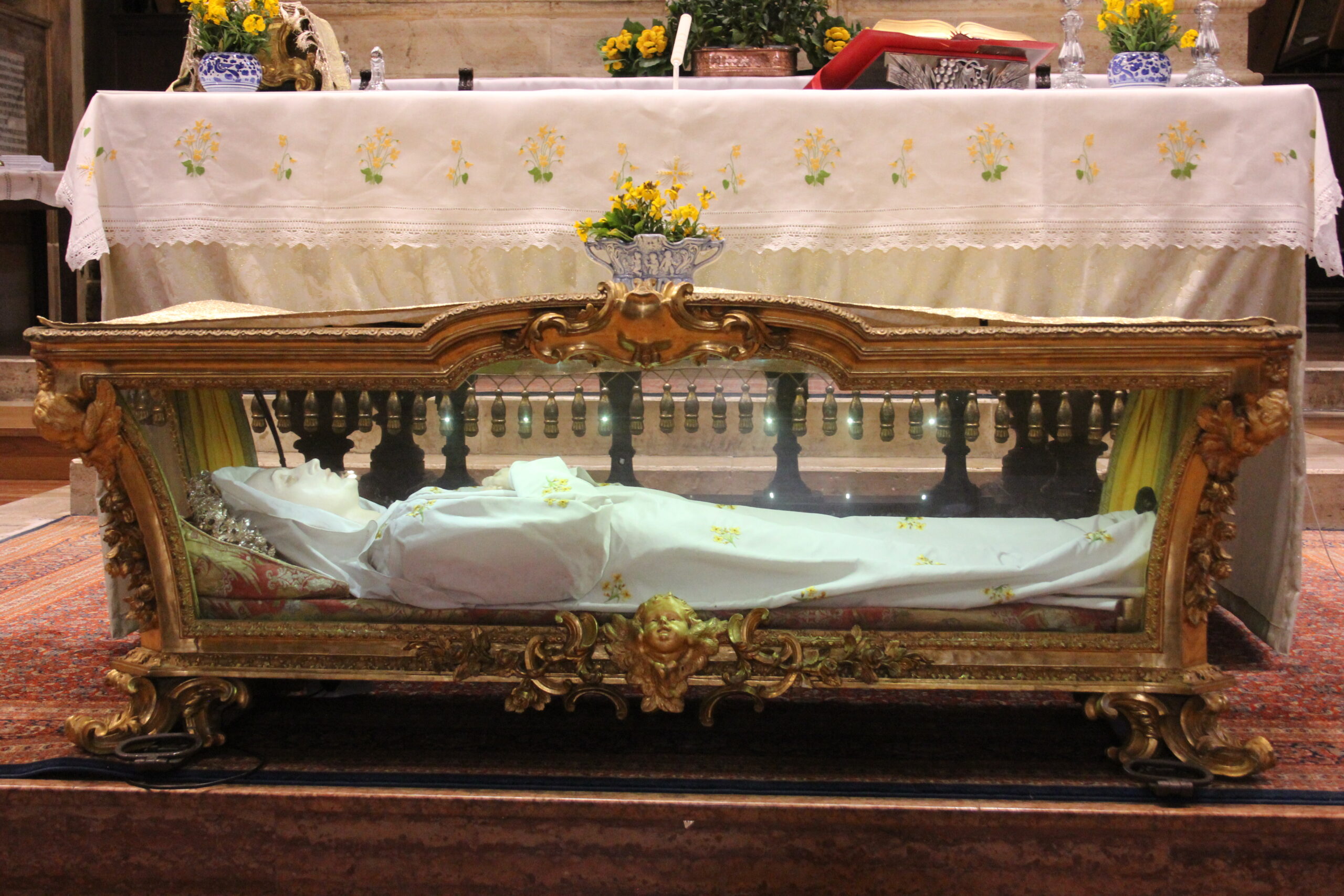
    Death of Santa Fina, by Ghirlandaio (1475)

    San Gimignano today

    San Gimignano is now like a living museum, almost a medieval theme park for American and British tourists who flock every summer to eat pizza and gelato and drink Chianti wine and spend the money from their pensions in the overpriced local markets and shops.

    I came here to teach a brief workshop, having arrived just in time for the celebration of Santa Fina — who, by the way, was never officially canonized as a “Saint” by the Church but is a “beata vergine.

    I almost didn’t get to be here, in fact. I arrived late at night by train in the nearby town of Poggibonsi. I assumed I could find there a taxi or a bus from there to San Gimignano, where I had my booked apartment, about 15 km away.

    But I found out that buses only operate until 7 pm, and all taxi services I called were “closed for the day”. My only remaining option was to walk (it would take two and a half hours, according to Google Maps, and that in the middle of light rain) or perhaps to sleep in the train station until the next day (there was already some hobo sleeping there, so at least I would have company.)

    I started walking, but after a mile or so, I realized it wasn’t an easy task. It was very dark and the roads had barely room for cars, much less for pedestrians. I thought the risk of being run over was not negligible. It was all uphill, too. Finally, I entered into a local sushi restaurant, Miò Sushi. (If you’re ever in this region, visit it). I asked if they knew of any taxi service that was working at that time. They didn’t.

    After asking me what I was going to do, and hearing the answer “no idea”, a young Chinese employee simply said, “I will take you there.” So he kindly interrupted his work to give me a ride.

    I offered him the money that I would have paid for the taxi, but he refused it. He just asked that perhaps one day I visit their restaurant and leave a 5-star review, if I liked it. A kind soul, such as are rare these days, I suppose.

    And that’s how I arrived to San Gimignano, just in time to sleep soundly and then see the celebration of Santa Fina at the local church on the very next morning.

    (It was very beautiful, too).

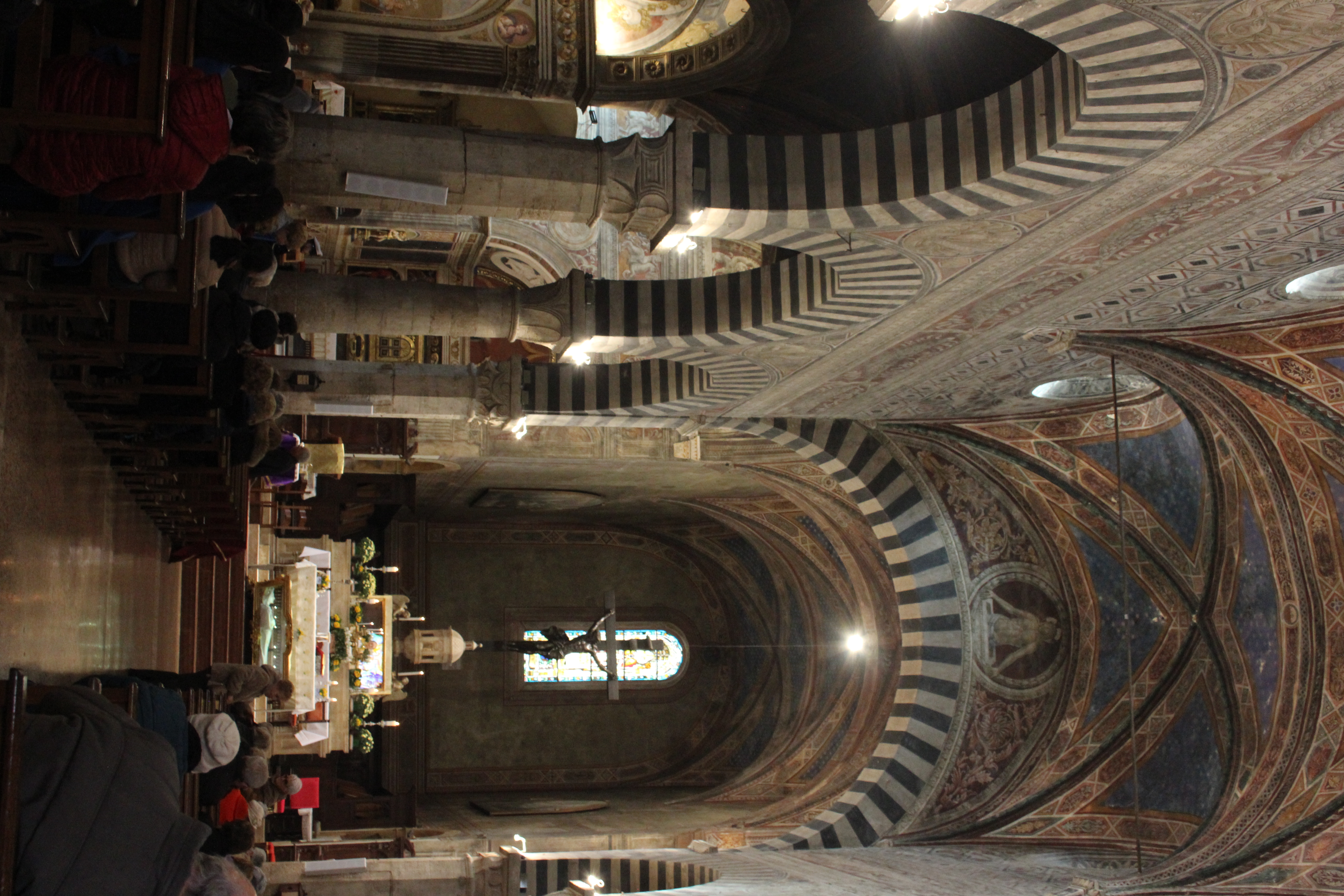
    During the celebration at the Duomo.

    Was it a new small miracle of Santa Fina? Or just a series of lucky and unlucky coincidences in a random universe?

    Honestly, I don’t know. I was also born in this materialistic age that has amazing planes and computers and believes in “Artificial Intelligence”, but has a hard time believing in any kind of transcendence or supernatural event.

    I don’t know what is “real” and what isn’t, nor if there is anything beyond our mortal coil. But, as Agent Mulder said, “I want to believe”. No, not in UFOs (that’s just another silly government psy-op), but in the idea that there is something else beyond what we can touch and see.

    Who knows? Perhaps Santa Fina knew all the answers that we, modern people, are still struggling to figure out.

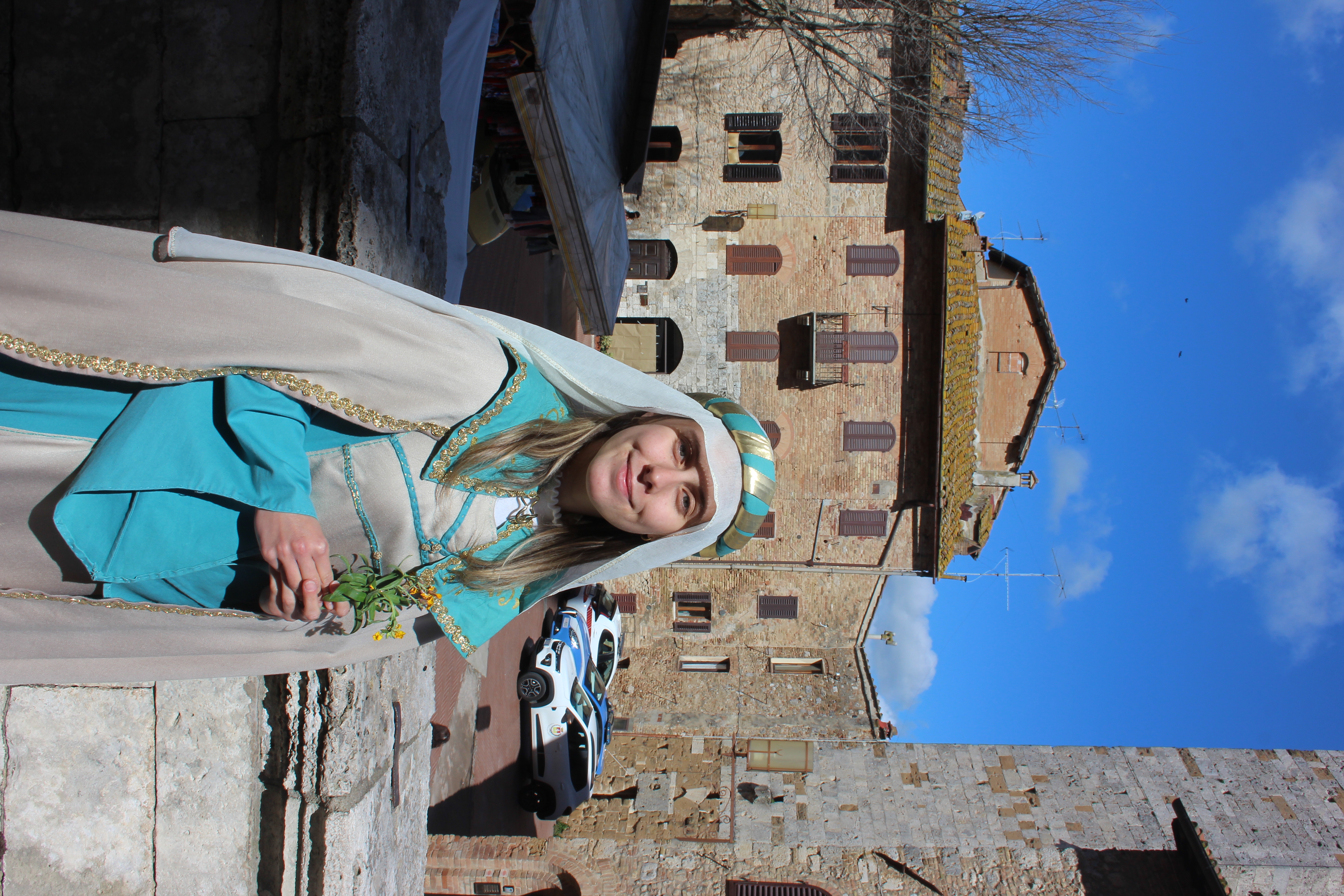
    A young woman in San Gimignano today dressed as a medieval peasant holding “Santa Fina violets.”

  • Articles

    Snapshots from life in modern Germany

    An an adventure at a hotel in Nuremberg

    I haven’t written so much about Germany, even though I have been living here for the past three years, for several reasons. The main one is that I never expected this country to be my permanent home, but just a place in which I accidentally and temporarily ended up for a while before moving to other pastures. But now after three years, I’m starting to question whether I will ever leave…

    Germany is changing. Once known as the land of efficiency, now it has been plagued by several economic and social problems. The economy is in recession, and inflation has been steadily growing. The energy crisis that started with the sanctions against Russian gas, but damaged Germany more than Russia, is still ongoing.

    Farmers have been protesting, as they have in other European countries, against proposed changes in legislation that single them out as “un-green” and cut their subsidies for fuel, among other things.

    Deutsche Bahn, its national rail service, has been having more and more train delays due to construction or strikes. Believe it or not, I experienced less train delays in a recent trip to Italy than in my recent weeks in Germany (but, to be fair, that was a period of heavy strikes).

    Population changes

    German population is changing, too. Migration levels remain high, while the fertility rate has stationed at around 1.46 per woman. For a few years, Germany held the title of the European country with the lowest fertility rate, but now in 2024 that distinction is going to Spain, with 1.19. The caliente Spanish are having less babies (and, presumably, less sex, or perhaps just more abortions) than the kalt Germans.

    (Parenthesis: part of the reason could be that Spain went from übercatholic to überfeminist in basically just one generation. It is interesting that the countries that experienced the most drastic reduction in birth rates where former Catholic ones: Ireland, Italy, France and Canada’s Quebec.)

    Demographic changes bring cultural changes.

    Advenstkalender are traditional German calendars containing chocolates or gifts inside that are marketed to children (and, sometimes, adults) in the period of Advent ending in Christmas. But, some time ago, in a supermarket, I noticed a curious thing: an “Adventskalender” for Ramadan! I doubt this is traditional in Muslim countries. It’s probably Germany trying to square the high number of immigrants with its own traditions.

    However, despite the large number of Arabs and Turks, the most recent migrants are all Ukrainian. In some neighbourhoods, you hear more Russian than German in the streets. And yes, it’s Russian, not Ukrainian — until very recently, most Ukrainians spoke only Russian, although that is probably changing now. Germany took in over a million Ukrainian refugees, perhaps even two or three million. They will probably never return to the Ukraine. Germany is going to become more slavic. (There was already a relatively high number of Poles).

    A world without people

    Preparing us for a world without people, or at least much fewer people, automation is more and more present in Germany. I think I already mentioned that many supermarkets and shops are moving to automatic checkout, and also that many commerces including bars are starting to refuse cash — you can only pay with your credit card, phone or similar digital appliance — and soon, I suppose, also with a microchip inserted under your skin or in your brain.

    But a recent episode in a visit to Nuremberg illustrates de dangers of living in a world where everything is automatic and you have to deal with machines instead of humans.

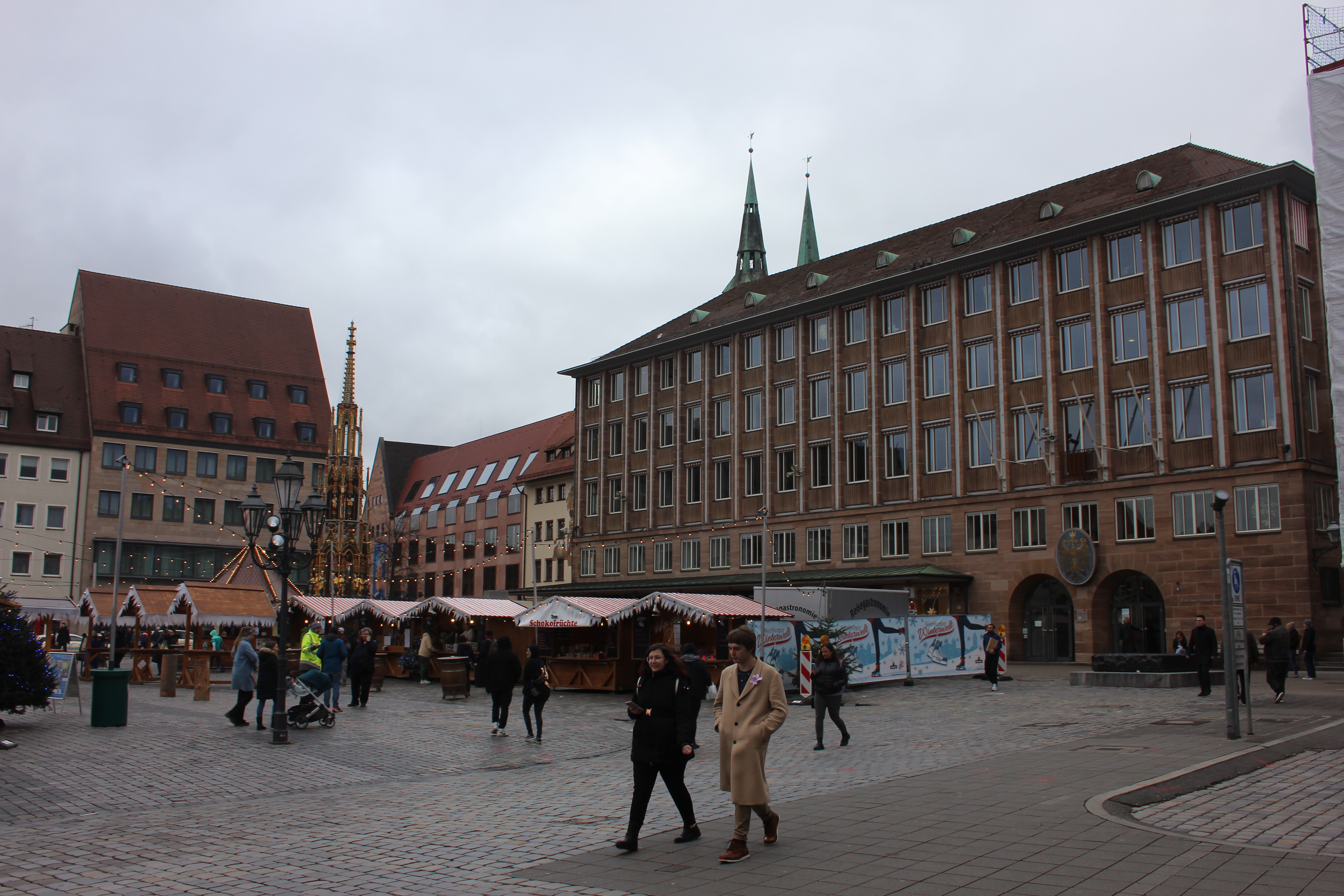
    Now, first of all I must say that Nuremberg is a very charming city. Not too big and not too small, plus it also has at least two wonderful medieval churches. Saint Sebald in particular is very interesting. A volunteer working as guide at the church, a retired architect, explained to us that Nuremberg was a very important town in medieval times and the stopping point for many pilgrims going south. (Too bad both churches have become protestant since the Reform). Also, the Albrecht Dürer house and museum is worth a visit, as Dürer is the most famous artist from Nuremberg.

    But anyway, what happened was that I made a reservation online for a night at a hotel. The hotel, called “Hotel Continental”, promised old-world charm, elegant rooms and a convenient central location. Only that, except for the central location, it all was a lie.

    The hotel didn’t have a reception. You had to type in a code in the door outside, then, once inside, there was another machine where you typed in your reservation code. Once verified, this printed out a new code that you could use to open the door of your room.

    We had reserved and paid for two rooms — I was in Nuremberg with a friend — but the machine, for some reason, only printed out one door code. As I said, there was no reception and, at a phone number listed “for emergencies”, no one answered. My friend was able to get into her room — no old-world charm, but a small single bed, dirty carpets and no other furniture but a small bedside table. The bathroom was located outside, in the corridor. Not that great.

    As the original reservation was no longer recognized by the system, in the end I had to purchase a new room from the machine. So far, so good? Wrong. As I went to the door of my newly purchased room, the code didn’t work! No matter how many times I tried, the door would not open. I checked and double-checked, tried it in different ways (and even in different doors) but there was no way to get in. Later, reading reviews of the hotel, I found out it was a not uncommon problem, and some guests had to sleep in the corridor.

    Since there was no one to call and by that time it was too late to find another hotel, I ended up just walking along the empty corridors and up and down the stairs for hours, like a ghost in the “Shining” movie, in search of a living soul. I didn’t see anyone, employee or guest.

    The hotel had four floors and what was interesting was that each floor was different — the lower, and, I suppose, cheaper one, had corridors wish stained carpets, ugly paintings on the walls, some room doors missing their numbers, and just a single small armchair on each end. But as you went up, the decoration improved.

    The second floor already looked a bit better: only one door had a missing number and the carpets seemed less dirty. The third floor had an even cleaner carpet and more comfortable-looking armchairs, and the fourth and last floor had much more elegant colours, wider doors with no missing numbers and not just armchairs on each end of the corridor but even a vase with flowers sitting on an elegant table. I assume it was not just the corridors, but the quality (and the price) of the rooms also increased as you went up.

    It reminded me of a short story by Dino Buzatti called “Seven Floors”, about a hospital with a similar configuration.

    Eventually I found an unlocked deposit room downstairs where they had a small foldable bed, and there’s where I ended up sleeping. And undisturbed, too, for eight straight hours. I suppose someone must clean the hotel at some point, but, even during the next morning, I didn’t see a single employee at that ghostly and ghastly hotel — not at the reception, not cleaning the rooms, not guarding the doors. Later I tried to call asking for a refund, but no one answered. No one answered the dozens of emails I sent either.

    If you ever visit Nürnberg, don’t stay at the “Hotel Continental”!

    A call from above

    German children can be enchanting and friendly (older German people, a bit less).

    Just a few days ago, I was walking down the street when I heard the voice of a little girl calling from above. “Hallo, hallo!” She was standing in an elevated courtyard at the school next to the church, looking down. She and other children were playing in the recess from school. I thought they would ask me about a ball or something else that had fallen down, but no. She said, “Hallo, wie heißt du?” (What’s your name). I answered, “Thomas”. “Schöne name”, (nice name) she said. The boy next to her mentioned “Thomas Müller”, a football player. Then she waved goodbye and so did I.

    And that would be it, but a little later I was returning and crossed the corner of the same street, and I wondered if the girl was still there and if she would still see me from so far away. And indeed I heard her calling, and I turned and saw her waving. “Hallo, Thomas!” she called.

    What was that? A vision? An angel? Or a real child?

    Somehow it reminded me of the end of Fellini’s “La Dolce Vita”, where Marcelo Mastroianni is on the beach and the young girl representing innocence waves at him, but he can’t hear what she says, and eventually turns away, in shame.

    Or perhaps I’ve been in Germany for too long and I’m just seeing things.

  • Germany - Travel

    Snapshots from life in modern Germany

    I haven’t written so much about Germany, even though I have been living here for the past three years, for several reasons. The main one is that I never expected this country to be my permanent home, but just a place in which I accidentally and temporarily ended up for a while before moving to other pastures. But now after three years, I’m starting to question whether I will ever leave…

    Germany is changing. Once known as the land of efficiency, now it has been plagued by several economic and social problems. The economy is in recession, and inflation has been steadily growing. The energy crisis that started with the sanctions against Russian gas is ongoing, and damaged Germany more than Russia.

    Farmers have been protesting, as they have in other European countries, against proposed changes in legislation that single them out as “un-green” and cut their subsidies for fuel, among other things.

    Deutsche Bahn, its national rail service, has been having more and more train delays due to construction or strikes. Believe it or not, I experienced less train delays in a recent trip to Italy than in my recent weeks in Germany (but, to be fair, that was a period of heavy strikes).

    Population changes

    German population is changing, too. Migration levels remain high, while the fertility rate has stationed at around 1.46 per woman. For a few years, Germany held the title of the European country with the lowest fertility rate, but now in 2024 that distinction is going to Spain, with 1.19. The caliente Spanish are having less babies (and, presumably, less sex, or perhaps just more abortions) than the kalt Germans.

    (Parenthesis: part of the reason could be that Spain went from übercatholic to überfeminist in basically just one generation. It is interesting that the countries that experienced the most drastic reduction in birth rates where former Catholic ones: Ireland, Italy, France and Canada’s Quebec.)

    Demographic changes bring cultural changes.

    Advenstkalender are traditional German calendars containing chocolates or gifts inside that are marketed to children (and, sometimes, adults) in the period of Advent ending in Christmas. But, some time ago, in a supermarket, I noticed a curious thing: an “Adventskalender” for Ramadan! I doubt this is traditional in Muslim countries. It’s probably Germany trying to square the high number of immigrants with its own traditions.

    However, despite the large number of Arabs and Turks, the most recent migrants are all Ukrainian. In some neighbourhoods, you hear more Russian than German in the streets. And yes, it’s Russian, not Ukrainian — until very recently, most Ukrainians spoke only Russian, although that is probably changing now. Germany took in over a million Ukrainian refugees, perhaps even two or three million. They will probably never return to the Ukraine. Germany is going to become more slavic. (There was already a relatively high number of Poles).

    A world without people

    Preparing us for a world without people, or at least much fewer people, automation is more and more present in Germany. I think I already mentioned that many supermarkets and shops are moving to automatic checkout, and also that many commerces including bars are starting to refuse cash — you can only pay with your credit card, phone or similar digital appliance — and soon, I suppose, also with a microchip inserted under your skin or in your brain.

    But a recent episode in a visit to Nuremberg illustrates de dangers of living in a world where everything is automatic and you have to deal with machines instead of humans.

    Now, first of all I must say that Nuremberg is a very charming city. Not too big and not too small, plus it also has at least two wonderful medieval churches. Saint Sebald in particular is very interesting. A volunteer working as guide at the church, a retired architect, explained to us that Nuremberg was a very important town in medieval times and the stopping point for many pilgrims going south. (Too bad both churches have become protestant since the Reform). Also, the Albrecht Dürer house and museum is worth a visit, as Dürer is the most famous artist from Nuremberg.

    But anyway, what happened was that I made a reservation online for a night at a hotel. The hotel, called “Hotel Continental”, promised old-world charm, elegant rooms and a convenient central location. Only that, except for the central location, it all was a lie.

    The hotel didn’t have a reception. You had to type in a code in the door outside, then, once inside, there was another machine where you typed in your reservation code. Once verified, this printed out a new code that you could use to open the door of your room.

    We had reserved and paid for two rooms — I was in Nuremberg with a friend — but the machine, for some reason, only printed out one door code. As I said, there was no reception and, at a phone number listed “for emergencies”, no one answered. My friend was able to get into her room — no old-world charm, but a small single bed, dirty carpets and no other furniture but a small bedside table. The bathroom was located outside, in the corridor. Not that great.

    As the original reservation was no longer recognized by the system, in the end I had to purchase a new room from the machine. So far, so good? Wrong. As I went to the door of my newly purchased room, the code didn’t work! No matter how many times I tried, the door would not open. I checked and double-checked, tried it in different ways (and even in different doors) but there was no way to get in. Later, reading reviews of the hotel, I found out it was a not uncommon problem, and some guests had to sleep in the corridor.

    Since there was no one to call and by that time it was too late to find another hotel, I ended up just walking along the empty corridors and up and down the stairs for hours, like a ghost in the “Shining” movie, in search of a living soul. I didn’t see anyone, employee or guest.

    The hotel had four floors and what was interesting was that each floor was different — the lower, and, I suppose, cheaper one, had corridors wish stained carpets, ugly paintings on the walls, some room doors missing their numbers, and just a single small armchair on each end. But as you went up, the decoration improved.

    The second floor already looked a bit better: only one door had a missing number and the carpets seemed less dirty. The third floor had an even cleaner carpet and more comfortable-looking armchairs, and the fourth and last floor had much more elegant colours, wider doors with no missing numbers and not just armchairs on each end of the corridor but even a vase with flowers sitting on an elegant table. I assume it was not just the corridors, but the quality (and the price) of the rooms also increased as you went up.

    It reminded me of a short story by Dino Buzatti called “Seven Floors”, about a hospital with a similar configuration.

    Eventually I found an unlocked deposit room downstairs where they had a small foldable bed, and there’s where I ended up sleeping. And undisturbed, too, for eight straight hours. I suppose someone must clean the hotel at some point, but, even during the next morning, I didn’t see a single employee at that ghostly and ghastly hotel — not at the reception, not cleaning the rooms, not guarding the doors. Later I tried to call asking for a refund, but no one answered. No one answered the dozens of emails I sent either.

    If you ever visit Nürnberg, don’t stay at the “Hotel Continental”.

    A call from above

    German children can be enchanting and friendly (older German people, a bit less).

    Just a few days ago, I was walking down the street when I heard the voice of a little girl calling from above. “Hallo, hallo!” She was standing in an elevated courtyard at the school next to the church, looking down. She and other children were playing in the recess from school. I thought they would ask me about a ball or something else that had fallen down, but no. She said, “Hallo, wie heißt du?” (What’s your name). I answered, “Thomas”. “Schöne name”, (nice name) she said. The boy next to her mentioned “Thomas Müller”, a football player. Then she waved goodbye and so did I.

    And that would be it, but a little later I was returning and crossed the corner of the same street, and I wondered if the girl was still there and if she would still see me from so far away. And indeed I heard her calling, and I turned and saw her waving. “Hallo, Thomas!” she called.

    What was that? A vision? An angel? Or a real child?

    Somehow it reminded me of the end of Fellini’s “La Dolce Vita”, where Marcelo Mastroianni is on the beach and the young girl representing innocence waves at him, but he can’t hear what she says, and eventually turns away, in shame.

    Or perhaps I’ve been too long in Germany and I’m just seeing things.

  • Articles

    Let them eat bugs

    Brief thoughts on the French Revolution and the current world

    I am currently reading the souvenirs of Élisabeth Vigée Le Brun, or, rather, a part of it focusing on her travels in Italy after having escaped the French Revolution. Madame Le Brun was no Raphael or Rembrandt, but she was a talented painter, mostly famous for her portraits, in particular for the several portraits she made of Queen Marie Antoinette.

    Marie Antoinette, as everyone knows, was the Queen dethroned and guillotined by the revolutionaries and famous for supposedly saying “let them eat brioche” (in fact, it is very unlikely that she really said that, and she had no small number of detractors who invented all kinds of rumours about her).

    Madame Le Brun herself, at least according to Wikipedia, was not an aristocrat by birth and had humble origins, showing that even in pre-Revolutionary France there was a certain social mobility. Her mother was a hairdresser and his father an unknown painter. He taught her painting, but died when she was only 12. Her mother remarried and the new husband, who became Élisabeth’s stepfather, was a rich jeweller, but also not an aristocrat by birth. Yet Élisabeth became a requested painter quite early in her career, painting the portraits of several nobles, and eventually married an important art dealer, Jean-Baptiste-Pierre Le Brun.

    Le Brun’s souvenirs, or at least the part I am reading, begin just as the royal family is removed from the palace and Le Brun flees France in disguise with her daughter (her husband remains in France and eventually joins the Revolutionary cause, but she remains a monarchist to the end of her life).

    Le Brun’s book depicts both her horror at the events taking place in France as well as her fascination with Italy, in particular Italian art (she’s a big fan of Raphael, Domenichino, Michelangelo and Corregio). It is a very interesting read, and I look forward to the volume about Russia, where she lived afterwards.

    But anyway — what I wanted to talk about was the French Revolution. To my mind, it was a senseless bloodbath and really the foundation of our modern world, based on idealistic but equivocated ideas of “equality”, “democracy” and “secularism” — in other words, the beginning of what we now call “globalism”.

    It is symptomatic that France, together with America, which was inspired by similar (Freemason’s) ideas, are the first countries poised to fall in the New World Order. France’s population is today composed of at least 40% non-European foreigners (they don’t keep statistics about ethnicity or religion, but a map of “sickle-cell anemia” gives the game away) and has so many social and economic problems that it is hard to see how it can survive as a “French” nation a hundred years from now — or even twenty.

    The funny thing about modern democracy — which started with the French and American Revolutions — is that it is supposed to be a system based on the will of the people instead of that of unaccountable elites, but, as we see more and more, the will of the people counts for very little. Just look at the farmers’ protests going on in France and other countries, which, despite their massive support by the public, have not moved the government’s position one inch. And why is the government set up against its own farmers, anyway?

    But, in fact, you can argue that everything that happens in modern democracy is done against the will of the population, or, at least, done without consulting them at all. Just look at massive immigration, gay marriage, the transgender stuff — all those are unpopular measures that no one voted or asked for, and yet keep being implemented.

    The problem of modern democracy is that the supposed leaders are no leaders at all, but puppets of a hidden cabal. So you have no one to protest against. Even if Macron or Biden became so unpopular that they were forced to resign, nothing much would happen — some other puppet would take their place and things would just go on as usual.

    Now the unaccountable elites are saying, not “let them eat brioche”, but, “let them eat bugs”. For some reason they really are pushing for insects on the menu, as well as all kinds of genetically modified veggies and artificial meat made in a lab. But the rich at Davos will still eat Kobe steak and caviar, thank you very much.

    I really don’t know what is the answer to our present quandaries, and as you can see I am not a great fan of violent revolutions — which are usually not the popular movements they are portrayed to be, but just the removal of one “elite” by another — but what can be done at this point? Except perhaps waiting and preparing for whatever may come?

    But let us finish with a short quotation from Le Brun’s book, while she visits a church in Bologna, and muses on the fate of her country. We are all Le Brun now.

    I went immediately to the church of Sant’Agnese, where this saint’s martyrdom is represented in a painting by Domenichino. The youth and innocence of Saint Agnes is so well captured on her beautiful face and the features of the torturer striking her with his sword form such a cruel contrast to her divine nature, that I was overwhelmed with pious admiration. As I knelt before the masterpiece, someone played the overture to Iphigenia on the organ. The involuntary link that I made between the young pagan victim of that story and the young Christian victim, the memory of the peaceful, happy time when I had last listened to that piece of music, and the sad thought of all the evils pressing upon my unhappy country, weighed down my heart to the point where I began to cry bitterly and to pray to God on behalf of France. Fortunately I was alone in the church and I was able to remain there for some time, giving vent to those painful emotions which took control of my soul.

    Whatever you think of the unfortunate Marie Antoinette, at least brioche — in the English translation of the phrase they usually say “cake”, but it is just a sweet bread — is delicious, nutritive and not difficult to make. While bugs are disgusting, dangerous and, when you make all the calculations, the economics for their production is not really that green. I know, Asians eat bugs, but I’d rather keep them out of my diet. I prefer the Italian/Mediterranean food.