
• Articles - Writers

    The fight for free speech

    The writer C. J. Hopkins, who is an American but lives in Germany, is being sentenced to pay a fine or face prison for a couple of tweets comparing the Covid lockdown totalitarianism to Nazi Germany. His “crime” is to have posted two tweets showing a swastika, which, as you know, can be considered a crime in Germany, even if it’s an ancient symbol that predates National Socialism by thousands of years.

    (To be honest, German laws can be a bit retarded. At some point they also wanted to prohibit using the letter Z, as it was considered Russian propaganda.)

    Now, what’s bizarre about all this is that Hopkins was actually criticizing Nazi Germany. Far from being a Nazi, he is one of those guys who sees Nazis everywhere, and Nazism as the epitome of evil. But mostly, he was talking about Covid and Covid lockdowns, not Nazi Germany. It was just an old, tired metaphor.

    Now, there have been people who have been arrested in Germany for actually defending Nazism: 93-year old Ursula Havenbeck — wow, a dangerous grandma! — and also Monika Schaefer, a 63-year old Canadian woman who posted a video about the Holocaust. (It seems Germany specializes in arresting old Omas but letting psychopathic young criminals roam free.) If that’s not anarcho-tyranny, I don’t know what is.

    Even if they were “Nazis”, I don’t think they should have been arrested, to be honest. I’m not a great fan of Nazi Germany — or of modern Germany, for that matter — but the so-called Holocaust is a historical event and as such it should be possible to openly discuss it or even deny it, like anything else. No one is arrested for denying that Napoleon invaded Russia. Maybe it’s stupid, but it’s not a crime. So I don’t really see why people should be punished for denying the Holocaust, or the Moon Landings, or 911.

    I mentioned Miles Mathis the other day. His theory is that all the Nazi leaders, including Hitler, were actually Jewish.  It’s an intriguing theory. It could be wrong, but there’s no harm in hearing it. I don’t know what would happen if he lived in Germany. Probably he would get the death penalty, even if there’s no death penalty in Germany right now, but perhaps they would make an exception for that.

    On the other hand, we’ve seen many Ukrainian soldiers, especially in the infamous Azov squad, openly displaying swastikas and other Nazi symbols, and Germany was and is supporting them. So, I really don’t know. I think the whole “Nazi” thing, to be honest, is just a distraction.

    C. J. Hopkins real crime is not a stupid swastika — it is discussing the Covid era totalitarianism. That’s why they are punishing him, the Nazi thing is just an excuse to attack him him for bad-think.

    But the question is, why now after two years? Are Covid lockdowns and forced vaccinations coming back?

    I wouldn’t think so, after their complete failure, but after a period of silence where war dominated the headlines, the media is now again talking about supposed “variants”. There’s even one called “Eris”, which is the Greek goddess of chaos, strife and discord. So, it is possible that this is on the works. “The war failed, let’s bring back Covid again”?

    C. J. Hopkins’ alleged fine, all things considered, is not that big: 3500 euros. Or 60 days in a German prison, which might arguably be worse, especially if you end up raped by some big Arab Bubba type.

    But there are legal fees which could amount to thousands of euros. I don’t really understand how they already determined his guilt and the fine amount before the trial, but German law, as I said, is complicated and sometimes make no sense.

    Another annoying thing about Germany, but also present in many other European countries, is the TV tax. You’re not just bombarded with propaganda 24/7, you’re also expected to pay for it. You’re literally forced to fund government propaganda, even if you don’t watch it. (And you thought income tax was bad enough.)

    It seems that the more people talk about “free speech”, the less we seem to have it. Until recently it was a rallying cry of the left, now they are more into limiting what they call “hate speech” or “misinformation”, which means they don’t really understand the concept of free speech at all.

    For many years or even decades, the “fight for free speech” concentrated on sexual stuff. There was even a famous Hollywood movie lionizing the figure of pornographer Larry Flint, turning him into some kind of free speech hero. Whatever it is, pornography is not “speech”, and it’s not good for you. It’s more like a drug, really. There are reasons to limit it.

    While, on the other hand, there have been more and more restrictions on what they call “hate speech”, which is actually the only kind of speech that needs to be protected. If I say something banal or trite, like, “I like ice cream”, there is really no reason to “protect” it, as no one cares. But if I say something that may be deemed offensive or critical to some people, especially if it’s a powerful group of people, then I might have problems. So there should be laws to avoid that. That’s the only reason for protecting “free speech”.

    But of course, they know all that. It’s just that more and more people are realizing that the system is based on lies, so they want to silence all dissent, one way or another.


  • Articles - Travel

    Finland, Sicily and something in between

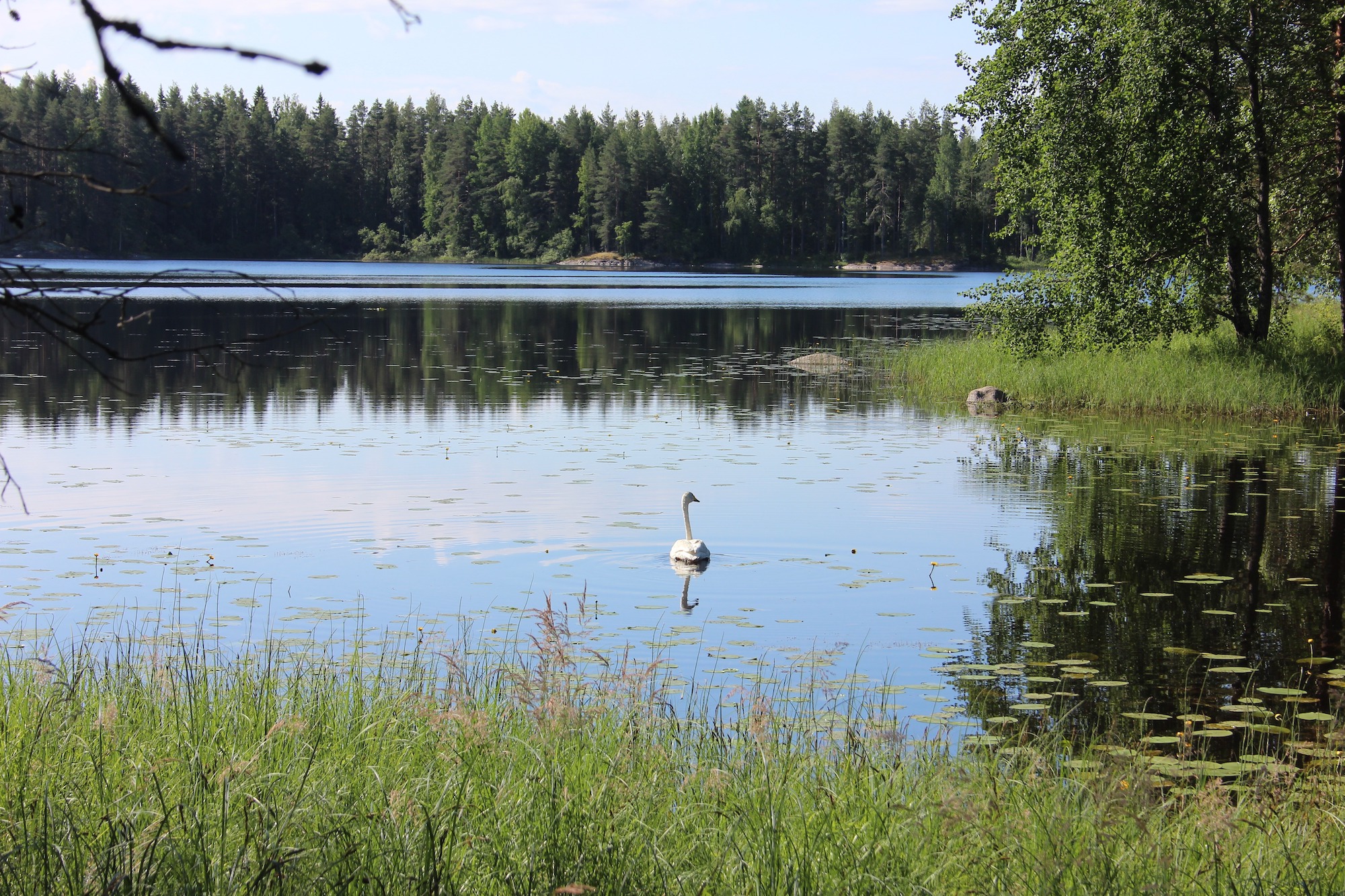
    There probably couldn’t be two more dissimilar places than Sicily and Finland and, yet, somehow, I love them both.

    If Finland is calm and order, then Sicily is noise and chaos.

    In Finland, people would wait for the pedestrian’s green light to appear before they crossed the street — any street, even if it was a remote street that was so completely deserted that there was more chances that a moose would appear than a car.

    In Sicily, you have to carefully look both ways and be prepared to dodge oncoming vehicles, even if the light is green for you and you’re walking on the zebra line.

    In Finland, people are usually quiet, disliking small talk or loud conversations, and the only sounds you hear at night are those of nature: birds, wind, rain.

    In Sicily, the streets are filled with people, both tourists and locals, who seem to do nothing all day except walk, talk, argue, shout, laugh, eat and drink from morning to night. The noise goes on until very late and you better get used to it, or buy earplugs. Even the sounds of nature seems louder in Sicily — seagulls, pigeons and sea waves compete for your attention when not drowned by the traffic noise.

    My more autistic side loves Finland and its silence and its people, but my more bon vivant side loves Sicily and its sun, its food, its beach, its markets, its chaos.

    In Finland, you can go to sauna almost anywhere. In Sicily, walking outside under 40 degrees Celsius already feels like a sauna, so there’s no need to go to a special place for that. It’s free, too. But there’s no frozen lake where you can cool down. Even the ocean water is warm.

    Finland has a great education and health system. Everything just works.

    In Sicily… Well, let’s say that I accompanied a friend to a hospital to request a medical visit for a relative — turns out that, after waiting one hour on the line, she had the wrong formulary, so she needed to fill a new one in order request a new doctor which would take two or three months to finally assist her relative. On the other hand, the hospital had an amazing view of the ocean. If you die while waiting for your appointment, as you probably will, at least you’ll have a great view.

    Finland is expensive. A beer at a pub costed 6 or 7 euros; dinner could set you back on 25 or 40 euros without even being that great. Sicily is cheap. A beer can cost as little as 1.50 and you can eat delicious food almost anywhere for not much more.

    You’d expect that Germany, being approximately in the midpoint between Helsinki and Palermo, would be a good middle ground with the best of both worlds, but this is not exactly the case. In terms of efficiency, Germany is closer to Finland, but its slow bureaucracy is, in some ways, worse than the Italian one.

    Germans are not as extroverted and noisy as Sicilians, but they are also not as quiet and polite as the Finns. Honestly, they are perceived more as cold or rude, even if in many cases it’s just an impression caused by what Mark Twain called “the awful German language.” (It’s not really that awful, but it’s certainly not as soft on the ears as Italian).

    Perhaps I am someone who prefers extremes, I don’t know. But I love both the calm of the Scandinavian countries and the confusion of Southern Europe.

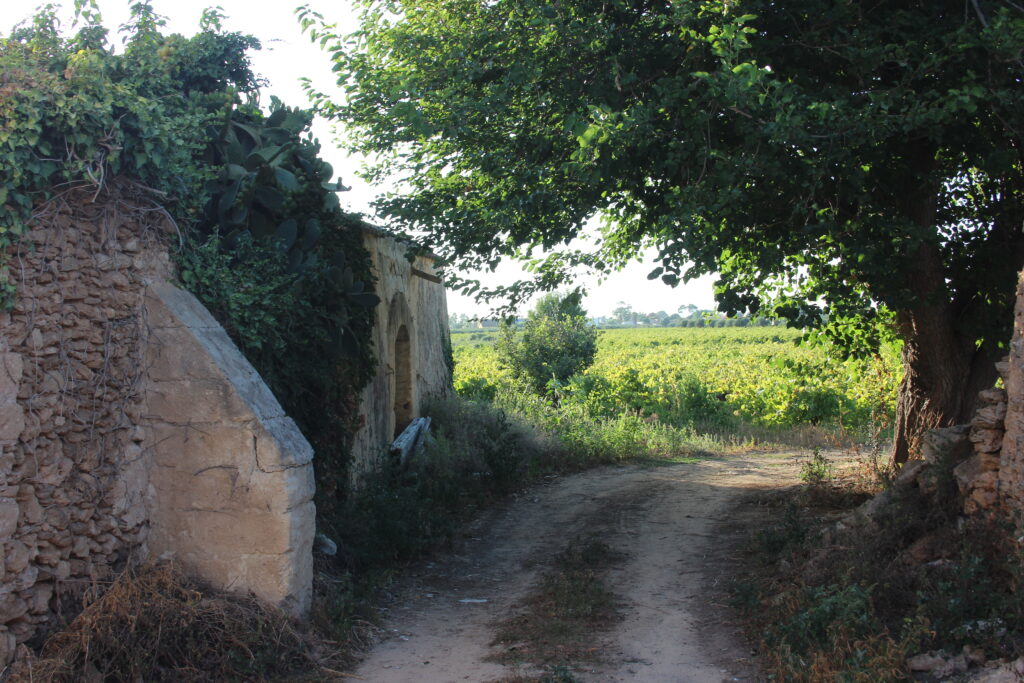
    I leave you with a few pictures of my recent visit to Palermo. Enjoy.


  • Articles - Cinema

    Barbieland behind the curtain

    It’s a Barbie world, sang a song, and now we hear the same tune in a movie. 

    But we do NOT live in a Barbie world. 

    If anything, it’s quite the opposite. 

    For all its defects and its shallow consumerism, Barbie’s world was kitsch but at least it was pink and cheerful. 

    But our modern world is, in lots of ways, grey and ugly and sad. Most men and women are overweight. Women dress mostly in black, dye their hair in unnatural colours and vandalize their bodies with tattoos. And all this is pushed from above, of course. This is from a recent fashion show in Berlin, telling modern women how they should dress. 

    After years of mostly not watching any recent Hollywood movies, I ended up watching “Barbie”. 

    I know I shouldn’t, but the only other option was the latest “Indiana Jones”, which I knew was really bad, and “Oppenheimer”, which was three hours long and was also another obvious propaganda film. But we’ll talk about this one some other time.  

    Anyway… “Barbie” was really, really bad. I knew it was going to be bad, having read a few reviews, but I didn’t expect it to be this bad. It is almost unbelievable that it is making so much money. I think the marketing was very clever, and the brand name is of course very strong. The art direction is pretty good, I suppose — but otherwise the movie just sucks. 

    They could have made a good movie for the “Barbie” doll audience — you know, girls from 5 to 13 or so. Before they went full woke, Pixar and Disney used to make relatively good movies that were fun for children and bearable for adults. 

    But Barbie is something else. 

    First of all, the plot makes no sense. It’s a lazy script, never bothering to explain the rules of its own universe. It feels more like an essay written by a Women’s Studies major. It even has this very annoying narration that puts you off from the minute it starts, and I lost count of how many times they use the word patriarchy.  

    The only thing that I found remotely interesting, was that at some point they suggest that whatever children do with their plastic dolls ends up affecting the living dolls in “Barbieland”, in some kind of voodoo effect. 

    I thought this could become a cool plot for a horror movie. 

    But alas, that was not to be. 

    No, they preferred to  insert two annoying LatinX women, mother and daughter, preaching feminist cliches.  

    And the mother of course has a pathetic white husband, another classic trope. It’s even implied that he’s not even the real father of the girl. 

    Then there’s the always awful Collin Farrell in a retarded role that is not funny and doesn’t make any sense either — why do they want to capture Barbie anyway? It’s never really explained.  

    I find it strange that it is NOT a film for children. It is really a cynical film directed to adults, or to people who played with Barbies long ago but now for some reason find this “problematic”. 

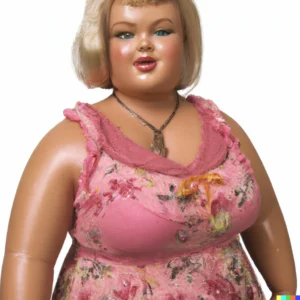
    Is Barbie problematic? While the film apparently makes a big deal of the fact that the doll doesn’t have a vagina — er, I think only sex dolls have it — or that it brainwashes girls with an unattainable ideal of beauty, for me the main problem of Barbie is its consumerist aspect. Barbie has lots of clothes, accessories, houses, cars. If you have a Barbie, you need to have a Barbie house, a Barbie pool, a Barbie car, a Barbie private jet. Lots of grown-up western women are like that these days, they want more and more. But to be honest, I don’t think it’s Barbie’s fault… 

    The film also talks about feminism against patriarchy, putting men against women. Was there any age such as ours, in which men and women seemed to be so far apart and hating each other so much? Men blame women, and women blame men. And both are increasingly alone. Lonely men end up watching OnlyFans and lonely women end up having cats and drinking wine. 

    Some people criticized the film saying that it was against men, but I don’t think what the film is really about. So what is it really about?  

    I think it is about showing what and who’s behind the curtain and rubbing our faces in it. 

    The film starts with a scene showing children playing with baby-like dolls. Then, in a parody of the scene in 2001, a giant Barbie appears, and the girls crush their little baby dolls.  

    So it’s basically saying, very directly, “yes, we created Barbie to stir away little girls from natural impulses such as becoming mothers, to make them want to become future single women and party girls.” They even say at another point that a pregnant Barbie doll is weird.  

    Then there’s the whole Ken patriarchy subplot, which again is about the usual dialectics of setting one group against the other. While women get poisoned by feminist influencers, men are led by the so-called PUAs of the manosphere. Now they are trying to sell us this Andrew Tate guy. I never watched his videos, but he’s a clearly manufactured icon. He’s being sold as some kind of role model of masculinity, but… What kind of “role model” for young men is involved in prostitution, porn and corruption? It’s just the other side of the coin — women are sold the OnlyFans prostitution lifestyle, and I guess men should become sugar daddies or pimps. In fact, in the movie, patriarchy Ken dresses very much like a pimp. 

    Finally, there is a scene in which Ruth Handler, the Jewish creator of the Barbie doll appears and talks to her own creation. This is also about showing what’s behind the curtain. 

    Bear in mind that the film is written by Jewish filmmaker Noah Baumbach, who is the husband of director Greta Gerwig, who may or may not be Jewish herself, but who grew up in a very Jewish environment. The film is of course produced by the Jews at Warner Brothers and by Mattel, which was founded by Jewish Ruth Handler and her husband Elliot Handler, and currently has an Israeli CEO, Ynon Kreiz. You can’t get much more Jewish than that. 

    I wouldn’t mind if they had made a half-decent movie, and I never had much of a problem with the Barbie doll itself, but this is a really annoying and preachy film. My advice is, stay away.  


  • Articles

    The Dog That Didn’t Bark

    In a famous Sherlock Holmes story, the detective draws attention to a curious incident of a dog that didn’t bark at night. Sometimes, what we don’t hear is almost as important as what we hear. While we are bombarded with news about global warming, what is the media NOT barking about? 

    There are a lot of environmental catastrophes that are simply ignored. Our food is full of plastics, chemicals and pesticides, rivers are overflowing with pharmaceutical compounds. But the media is mostly silent on this. Big Pharma and big corporations have big pockets.  

    The long-term effects of mass migration are also hardly discussed, even when they had for now a much higher impact on society than so-called “climate change”. 

    Now the media is stoking fear against any possible type reduction in migration, with Spain, Germany and other European countries having supposedly right-wing parties coming to power. 

    I wouldn’t worry. Nothing will change. The Right is as useless as the Left. Or perhaps even worse. 

    Just look at Italy, where a supposedly far-right Georgia Meloni was elected on the promise to reduce the number of illegal migrants coming in boats, and ended up triplicating it. Now she’s even saying that “Italy needs migrants” and is increasing legal migration channels from Africa and India. 

    I don’t see much difference between legal and illegal migration, to be honest. Canada has mostly legal migration. In Germany, most of the refugees are legal. So what? The problem is not if it’s legal or illegal which is just a question of papers. The question is where they come from, and how many. 

    If Italy really needs migrants, which I doubt, what they could easily do is to bring more Italian descendants. Currently the process to obtain Italian citizenship by “jus sanguinis” (proving you have Italian ancestors) is very long and arduous. It may take years, sometimes even a decade. Why not bring immediately those people, who at least has some Italian ancestry, instead of random non-Italian foreigners? 

    Even when authorities act against migration, it’s in stupid ways. For instance, now in Germany a Vietnamese family who lived legally in the country for 30 years and has no criminal record is to be deported on a technicality. I don’t know the details, but I am sure there is a long list of convicted criminals who could be given priority on deportation. But the deal seems to be that you have to keep the worst elements and expel the best.

    It’s not just immigration. In all things, so-called conservatives do little more than complain while the changes keep happening. Because, what are conservatives conserving really? While the left acts and makes changes to society, those changes become part of the system, then conservatives try to defend what years ago they were fighting against. Many conservatives today defend gay marriage, for instance. And of course they are the first to be in favour of war, big corporations, Big Pharma, big everything.   

    You may think this is something new, but already a 100 years ago, G. K. Chesterton wrote: 

    “The whole modern world has divided itself into Conservatives and Progressives. The business of Progressives is to go on making mistakes. The business of Conservatives is to prevent mistakes from being corrected. Even when the revolutionist might himself repent of his revolution, the traditionalist is already defending it as part of his tradition.” 

    So, don’t count on politicians to save us. We are alone. Well, perhaps that’s a liberation. It’s better to realize our situation than to cling to false hopes. Only the man who has nothing to lose is really free. And, as some seasoned politician is said to have told a newbie who had just come to Washington, D.C.: “If you want a friend in this town, buy a dog”. 


    Man and dog.
  • Articles

    The Mystery of North Korea

    An American soldier stationed in South Korea appears to have escaped into North Korea, effectively becoming a defector. It appears that he was involved in some fights in Seoul, and he had been previously arrested for assault. He was about to be arrested again or deported to the US, and that seems to be the reason why he wanted to escape. But going to North Korea is a bit of risky proposition. 

    Yes, he’s African-American by the way. 

    That raises a few interesting questions. First, about all those American soldiers stationed all over the world, and in particular in Asian countries. Many times they are involved in crimes and are resented by the local population. In Japan, there were more than a few cases of rape committed by American soldiers. And when it’s not rape, it’s general anti-social activity. And this seems to be common in South Korea too. 

    But many times nothings happen to them, because they obey to a different legislation. They are under the jurisdiction of the U.S. law. In Italy, in the American base in Aviano, a drunk-driving female soldier run over a kid, killing him. She’s probably going to be sent back to the US and never prosecuted, as it already happened in a similar case before that. 

    But in this case, well, the soldier went to North Korea, and of course they don’t have extradition treaties with the U.S., and it’s not sure what will happen to him there. 

    North Korea is a very interesting and mysterious country. No one knows very well what goes on in there. According to the American propaganda, it is some kine of Communist hellhole where people are put in prison camps killed and tortured for no reason, but that doesn’t seem to be exactly the case. A few images that leak from there now and then show a more or less normal, if a bit old-fashioned, country. 

    I’m not a big fan of Communism. I think it’s an awful political system, and I am not a big fan of authoritarian states in general. On the other hand, the modern liberal world isn’t that great either. In some ways, the rigidity of Communism worked as a time capsule to protect the population from the worst changes of the 20th and 21st century. Just look at Eastern Europe. The reason that they have less immigration and are in general more socially conservative, is really because they were under Communist occupation for a long time, and thus isolated from Western influence, money and propaganda. 

    Just look at the way people dress. These are some pictures of women in North Korea. Aren’t they cute? They look nice with those uniforms or just more traditional clothes. In North Korea, people are not rich, they mostly ride bicycles to get around, but they still seem to dress with a certain elegance. Just compare it with anywhere in the West, or even with South Korea. 

    South Korea is obviously more prosperous, but also much more Westernized.  

    Now, it’s interesting to compare both worlds. On one hand, you have places like North Korea, or even China, where the state controls basically everything in society. Now, of course China is no longer a Communist country in any significant way. People can own property and there are even many Chinese billionaires. But it is still a very controlled system, where people are not allowed to do many things without authorization, there are bad policies such as the social credit system or some of the worst lockdowns in the world during Covid.

    On the other hand, the West tried, at least for a while, “total freedom”. But it turns out that, when given total freedom, most people don’t really know what to do with it. They are just interested in watching Netflix or porn, doing drugs or eating too much, and being brainwashed by big corporations.

    It seems to me that freedom, when lacking a coherent moral system as a frame around it, is not that great. You really have to have some kind of system where vices are punished or discouraged, and virtue is rewarded. It doesn’t need to come from the State. It can come from other institutions, such as the Church, citizen groups, or even society self-policing itself.

    A big problem in the West is the mass media, which is constantly propagating bad behaviour and bad ideas to the people, and basically saying that bad is good, and black is white. Even most churches in the West today just regurgitate liberal propaganda. They are not that much different from Netflix.

    Supposedly, North Korea s an Atheist state where religion is forbidden and religious people are persecuted. But I am not sure how much of that is true and how much is propaganda.

    There is even a Catholic Church in Pyongyang, there are about 1000 Catholics in the city, and according to this state official, they have complete freedom of religion. Who knows who’s telling the truth?

    This is from a previous video in a Catholic Church in North Korea. Look at that choir singing. Pretty nice. Today in the West, that’s very rare. Catholic Churches are completely modernized and usually empty. To find anything similar to that, you have to go to a small church that still does the traditional mass, but there are not many of those around.

    So, yes, North Korea is basically a time capsule. Perhaps not the best place in the world to be. But probably also not the worst. And they do have some beautiful women.

  • Articles

    Finland, or this dream called life

    Also, Swedes vs Finns

    Living the dream is an expression that means living a luxurious, ideal lifestyle, but it can also be taken to mean being out of touch with reality. Stop dreaming, bitch. Life is hard. Wake up and smell the coffee.

    My time in Finland is almost up, and it was a dream in many ways. It was mostly a happy, relaxing, beautiful period, with just a few sad moments, but being in an arts residency also meant being away from the daily grind in a sort of alternate vacation time, which was really unsustainable for a much longer period. So it’s time to go.

    And yet…

    Some experiences, like some dreams, are easily forgettable, while others are memorable and remain with you for a long time. The ancient Greeks had two gates from which dreams came. The false or meaningless dreams came from the ivory gate; the true or prophetic dreams came from the horn gate. I suppose Finland, for me, was of the second type. While the dream is ending, some part of the experience will remain, and perhaps even become the basis for a new foundation in life.

    Dreams can be captivating, but hard to explain, to ourselves and to others. While a dream can be exciting as it happens, it fades away as soon as you wake up, and you struggle to even remember it. There is something incommunicable about dreams. Hearing other people tell their dreams is usually boring. I suppose that’s why my Finland columns were not so exciting for readers — it’s hard to talk about a dream.

    But one thing I find interesting is that Finland lies at the very edge of the West. Just next door to Russia, the West’s old-new nemesis, and, on the other side, to Sweden, the poster-child of current Western progressive values. Finland has only been independent since 1917, belonging to the Russian Empire for over a century before, and to Sweden for several hundreds of years before that.

    While relations with Russia are historically complicated, especially now, they have not always been completely hostile, and there are many Russians living in Finland. Sweden and Finland, however, tend to get along better.

    And yet… Historically, Sweden dominated Finland, but it was not exactly an equal relation. As someone local told me, during the period of Swedish domination, Swedes were the elite, and Finns were peasants: “Finns were basically used as workers and soldiers”. Still today, Swedish-speaking areas in Finland, closer to Sweden, are more upper-class, dominated by a few rich, traditional families. While the eastern area next to Russia (Karelia) was poorer and traditionally less developed, and still is. Peasants then as now.

    Perhaps because of that, despite their major similarities, Finland and Sweden are, in some ways, very different. Or perhaps I should say that, while the landscape and many aspect of the culture in both countries are similar, Finns and Swedes are not.

    Swedes today are very much into political correctness and virtue-signalling. Swedes tend to dislike conflicts, so they always try to find some sort of general consensus. But that, on the other hand, leads to conformism and to a certain sheep-like mentality. Everyone must support the same thing in order to avoid conflict, and for that they take their cues from the media. So they tend to like to support whatever is the fad of the day. In the 1930s, they supported eugenics because that was the vogue; now they support immigration and BLM.

    It is interesting that such characteristics do not change even when you displace Swedes from Sweden. Minnesota is an American state famous for its large presence of Swedish immigrants. It is also one of the states more famous for pushing Somali immigration and BLM stuff. You might remember that the state was shook up by the George Floyd riots in 2020. But nothing much changed. If anything, it just made them even more supportive of BLM and other progressive stuff.

    Finns are different. I don’t know if it is because of their proximity to Russia or for other reasons, but they seem less preachy and less consensus-oriented than the Swedes. They do not seem to care all that much about political correctness and seem to be more independent in their ways of thinking. Of course, they are still part of the current West and as such subject to the same type of propaganda and values and ideals. But it seems to be less pronounced than in Sweden.

    One thing about the Scandinavian countries is that in the last decades they have become very Americanized. The same is true of the whole world, I suppose — American culture is global culture now, from the Halls of Montezuma to the shores of Tripoli — but since Scandinavians tend to be very fluent in English (more than Germans, and much more than Southern Europeans) the influence is felt more directly.

    Personally, I don’t really like that a lot. I wish each country just kept more of their own culture and traditions. Finns have much to be proud of, and it’s not just Nokia, sauna and Moomins. I’ve learned a lot about Finland during this period, and I wish I could have learned even more.

    Unfortunately, the experience is ending and now it’s time to leave for other shores. Thank you and goodbye, Finland. Kiitos and moi moi.

  • Articles

    Scorsese’s mom

    And other immigration stories

    You might remember Scorsese’s mother from the hilarious dinner scene in “Goodfellas”, shown below, where she plays Joe Pesci’s mother. That’s Scorsese’s real mom, and she’s amazing. She also plays a small part in “Casino”. (I didn’t realize it before, but Scorsese’s father also has a brief cameo in “Goodfellas”, as Vinnie, a prisoner cooking tomato sauce.)

    But if you want to see more of Scorsese’s parents, I recommend watching “Italianamerican”, which I just watched. It is a short documentary (less than 50 minutes long) made by Martin Scorsese in 1974 about his parents. Basically it’s just a home movie of him having dinner with his parents and asking them questions about their background.

    Many people bitch and moan about massive immigration today — including me. But it is important to understand the differences between immigration back then and now. The Italians, while very poor at the beginning, worked hard to integrate and to improve their lives, and eventually their children and grandchildren became completely assimilated to the new way of life, and, in many ways, were more “American” than “Italian”.

    My own grandparents had similar experiences. My great-grandmother came from Italy, only not from Sicily but from Lombardy, and to Argentina instead of to the U.S. But her parents were poor, illiterate peasants, who thought they would find a better life on the other side of the Atlantic. She arrived in Argentina when she was only 5. About a decade later, just 17, she was already married and working as a seamstress, and at 18 she had her first child. The second one, a year later, was my grandmother.

    What is the difference with the current migration wave? Well, for one, the ones coming now are mostly non-white people migrating to white countries, so it’s a reverse process of colonization. Also, in the case of Europe, they are mostly Muslim, so it’s a different religion and culture which makes assimilation harder. In fact, considering the numbers, you might even ask — who is “assimilating” to whom, in the end?

    Besides that, previous immigrants had to work very hard to survive and lived in dire conditions. Scorsese’s mother tells us in the movie that at one time they were 14 people living in a small apartment with three rooms — the mother, the father, the uncle, the aunt, a nephew, and nine children. And, occasionally, they even took paying boarders too.

    Current immigrants, on the other hand, have paid apartments or hotel rooms and receive welfare and other benefits, which is the main reason they are resented. Germany pays billions of euros every year to host refugees. And why? The excuse is that they are needed because of a supposed shortage of workers, but with the economy shrinking and automation taking over many jobs, it is unclear if they are really needed. Besides, as mentioned, many don’t even work and resort to criminal activities instead.

    On one hand, the powers that be tell us that the world is overpopulated and that we’re destroying the planet with climate change. On the other hand, they tell us that developed countries need to receive a lot more people from Africa, Latin America and the Middle East, which will consume more resources. It doesn’t make sense, and there is not even any attempt to hide the contradictions in the discourse. Because it’s all just based on lies, and the real objectives are clearly not the ones stated.

    In any case, this is a separate issue, which is unrelated to Scorsese’s film, which talks about a different time — about an America, a New York that, like the Europe of old, does not really exist anymore. Seen today, it is a nostalgic movie about what was and what could have been.

    Plus, Scorsese’s parents are so genuine and funny that you could watch them for hours. The film is so intimate, it is like you were having dinner with them too. Only, unfortunately, you can’t taste the food, which must be amazing. (However, Scorsese’s mom secret sauce recipe is described in the credits, you might try that).

    I recommend watching this little gem of a documentary, which is, at least for now, fully available on YouTube.

    https://youtu.be/pcWUNfmf0tI
    https://youtu.be/MTJz_hj6GXw
     
  • Articles

    Butter as a litmus test for civilization

    A brief comment and nutrition advice

    When I was still a child, they started rolling a propaganda that “margarine is healthier than butter”. It was obviously bankrolled by margarine producers. To me, even back then, it never made any sense that an artificial concoction with bland taste and bad smell could somehow be healthier than natural and delicious butter. My family, however, switched temporarily to margarine, also because it was cheaper and we were not rich. I never liked it, though, and since I became an adult, I’ve only bought butter. (I’m still not rich, but priorities are priorities.)

    The point is that I’ve learned from early on that a lot of nutrition and health advice coming from the media or government or “experts” is bullshit, intended to sell you bad stuff, when not to harm you. Then, usually, after 30 years or so, someone comes up and says, “yeah, we were wrong, this is not really healthy.” But, by then, it is too late.

    Aspartame, for instance, 40 years after the FDA approved it, is now being associated with severe health risks. And not just that, several other artificial sweeteners, such as Splenda, have also been outed as damaging. Sugar (in excess) may be bad for you, but all artificial sweeteners are worse.

    A good rule of thumb is the taste. If it doesn’t taste as good as the natural version, it’s usually not healthy. Except for liver. Liver is supposedly natural and good for you, but I never liked its bitter taste.

    However, there are things that taste good — or are at least addictive — such as chips, instant noodle soup, burgers, etc, but which are not good for you. Mostly, not because of the food itself, but because of the additives and chemicals inserted into it.

    As a society, it seems that we evolved or devolved into childish habits. A child likes sweets and fast food, basically. And that is true of most adults now, too. Traditional cuisine is left for a few in the middle and upper classes. Most working-class people eat trash food, and that’s the main reason why they are so fat.

    But I’m thinking now that lying about butter marked the end of civilization as we know it. Because it showed that we were living in a society basically based on lies, lies promoted as truth. From “margarine is better than butter” to “you can choose your sex” to “diversity is our strength” is one small step. Once you accept one lie, you can easily accept all others.

    In fact, the “transgender” and “diversity” stuff is perhaps easier to swallow, being abstract concepts with difficult proof. But saying that “margarine is healthier than butter” was a complete fabrication, an inversion of the truth that is very easy to disprove. After all, we have consumed butter for thousands of years, but margarine made with processed oils is a very recent invention which was only possible with industrialization.

    Modern technology, who can deny it, brought a lot of comfort and facilitated people’s lives in many ways. But one area in which it arguably was counter-productive was in food production. Industrialization made it possible to produce much more food, it is true, so hunger is not a big issue today even in poor countries — in fact, obesity among the poor is the big problem now. But, on the other hand, industrialization also made food worse and less natural. From cows fed with hormones to chemical additives to HCFS to genetically modified seeds, 20th and 21st century food production became increasingly artificial and unhealthier. So much so that for eating “organic food” (the only type of food available to our ancestors) you have to pay a premium.

    But don’t expect a return to more natural ways. Things are, if anything, getting worse. Now besides the usual processed food they are offering us “lab-grown meat”, “edible vaccines” and “bugs on the menu”. Margarine is going to be the least of your worries. You will eat the genetically-modified bugs, and you will be happy.

  • Articles

    Life is but a dream

    Time to wake up

    There is little we can do about the next developments that are soon coming in the Modern West. From “new pandemics” to “fifteen minute cities” to social credit tied to your bank account, bad things are going to happen, whether we like it or not. Complaining won’t solve anything, and it seems to me that most people are happy with the status quo anyway.

    Of all the black pills, hat’s the hardest black pill to swallow. That most people today are content with the way things go. Or that they even fret about mostly imaginary problems (“climate change”, “transgender children”) while completely ignoring real ones, such as collapsing birth rates or the rise in the cost of living or the increasing violence.

    Well, as Chesterton said, we all agree that there are problems, but we really disagree about what those problems are:

    “But exactly the whole difficulty in our public problems is that some men are aiming at cures which other men would regard as worse maladies; are offering ultimate conditions as states of health which others would uncompromisingly call states of disease. Mr. Belloc once said that he would no more part with the idea of property than with his teeth; yet to Mr. Bernard Shaw property is not a tooth, but a toothache. Lord Milner has sincerely attempted to introduce German efficiency; and many of us would as soon welcome German measles. Dr. Saleeby would honestly like to have Eugenics; but I would rather have rheumatics. (…) In social matters we must actually find the cure before we find the disease.”

    I don’t really care.

    I’d rather just check out, you know what I mean? Living in a small community in the woods or in a farm, away from it all, with the very few people I like.

    Yet I fear that that, too, is a dream. I mean, people have to make a living somehow, and that’s hard enough inside the system, imagine outside.

    But at least it seem to be something worth trying — to find an alternative on how to live the best you can, while things around you slowly disintegrate.

    Truth is, I’m tired of complaining. I’ve been complaining all my life, and it never took me anywhere. I think the main problem of the opposition to globalism is that this seems to be a bunch of guys who are always complaining, complaining, complaining, but that doesn’t really inspire anyone. People don’t like complainers. What’s inspiring is someone who does something.

    But… Oh, well, that’s hard.

    So, what to do?

    I lived in Finland for two months, and in many ways, it felt like a dream. Perhaps because it was a period limited in time, perhaps because I had a lot of different experiences that didn’t quite fit together, perhaps because the foreign language and landscape and people made me feel displaced, perhaps because the film project I was working on was about dreams, or perhaps because I was influenced by some dreams I had even before coming here, fact is, I had a general sensation of unreality that hasn’t been dispelled yet.

    It was mostly a wonderful experience, even if with a few setbacks — setbacks that appeared to be more frequent in my final days, as if signalling that the dream was coming to an end.

    Now, very soon, I will be going back to Germany, and there I must go back to “normal life” — working or trying to find work, worrying about my residency permit, paying bills, moving to another apartment, and in general trying to solve several practical things that I have been postponing for a long time.

    Besides, while Finland (or at least the small town where I resided) felt like a place out of time, seemingly isolated from all the problems of our contemporary world, it is not the same in Germany. Oh no Siree. Germany does indeed feel like the modern world, from climate change to inflation to refugee drama to all that’s wrong with the world today.

    (“What’s wrong with the world?”, asked Chesterton. “What is wrong is that we do not ask what is right.”)

    Anyway, I don’t know if I will continue writing when I am back there, or at least, I will probably be taking a break for a while. Perhaps I need some time to rethink this blog. People don’t read much blogs anyway these days — they watch videos and social media. But videos take time, and I hate social media.

    So, we’ll see. In the meantime, thanks for reading.

    Time to wake up.

    https://youtu.be/CnM4cl5LZn4
    https://youtu.be/Zx4doqynooA
     
     
  • Articles

    No Country for White Men

    Paris is burning, but where to escape?

    The current and still ongoing riots in France — some call it even a budding civil war — will perhaps serve as a wake-up for many people living in the West, about what is really happening in their lands. Perhaps. I am not really sure, as most White people are so brainwashed and alienated from reality that I really doubt much of anything will change.

    For years, it was known that violence among migrants and locals would eventually escalate. In fact, Michel Houellebecq predicted a very similar scenario in his novel “Submission” (2015). Sure, they are mostly attacking the cops and looting shops, a bit like the George Floyd riots in the U.S.A., but it is a level of sustained violence never seen before, at least not in recent years in a European country. The closest thing to it were the riots in England in 2011, which were also, by the way, mostly done by migrants (Muslims and Blacks).

    There are several elements here, one is obviously racial — the thug shot by the police was Algerian — the other religious, as most immigrants in France are Muslims. In any case, it is clear that this goes beyond the teenage thug that was shot. There are several things coming together: resentment by Algerians of French colonialism, resentment of Muslims against the French government, general anger by a despised minority against the police, influence from BLM stuff in America, etc. But, in general, it just shows that “multiculturalism” was always one of the dumbest ideas ever. The belief that people who are very different and in many cases hate each other would live in peace and harmony because of ??? was always unrealistic and utopian.

    The problem is that France might be the worst country — I’ve been to Paris not long ago, and I made a short video about it — but it is far from being the only one with such troubles in Europe. All European countries have been targeted with massive immigration by non-white people from poor third-world countries. For years we were told that the “Great Replacement” was just a “conspiracy theory” promoted by “right-wing extremists”, but what now? France is more than 20% to 30% non-French now, and things don’t look good.

    But why can’t whites — French, Germans, Italians, Irish etc — have their own countries where they are the ethnic majority or even the only ethnicity? I never heard any explanation for that. Supposedly it is because, if countries are allowed to remain majority white, this is somehow “racist”, or they will become “Nazis” and do “another Holocaust”, but that is a complete non-sequitur. Also, Japan is still mostly Japanese, China is mostly Chinese, and no one seems to have much of a problem with that. It’s just White countries that for some reason need to become all “multicultural”.

    Now, I am not completely naive and I do know why this is happening and who is doing it, but most white people don’t. They really believe in the multicultural utopia, against all possible evidence.

    Now, immigrants themselves are just pawns. Most of them might really just be good family people who want to work. Still, they are competing with the locals and driving down wages.

    I don’t have much time for the “they just want to make their life better” argument. It’s an opportunistic outlook. Sure, they want to go where someone will give them more money or more advantages, but there is little interest in what they will contribute to society. They would change countries in a whim, if they got a better deal. I remember talking to two young Turkish immigrants in Germany, and they were not working-class, they were middle-class, highly educated young men who studied in Germany, spoke fluent German and English. And yet, at one point one of them said that what they really wanted was to go to Canada, because they thought they could get more benefits there.

    Who needs such people? Why can’t they make their life better where they are? Turkey itself is not so bad these days.

    Then there is also the sexual element, which is a bit distasteful, so I haven’t seen anyone talk about that, except perhaps for people like Anglin. But it’s true, most of the Middle Eastern and African refugees are men, and their coming was cheered on mostly by women. Not that most women are sexually interested in refugees, but more men around just means more options for women. For men, it is the opposite. It means more competition, not just for jobs, but for women too. Contrast that with the Ukrainian refugees, who were mostly women and so there wasn’t so much complaint from European men, but neither the same enthusiasm by women.

    Of course, the main problem is that European governments are not on the side of their own native population, but are actively aiding and abetting the replacement and generating all this chaos that we see.

    Anyway, the whole thing is a mess. But hey, at least France has a good multicultural football team, even if they still lost the Cup to Argentina (who, ironically enough, had a relatively whiter team, and Messi is almost fully Italian).