• Articles - Writers

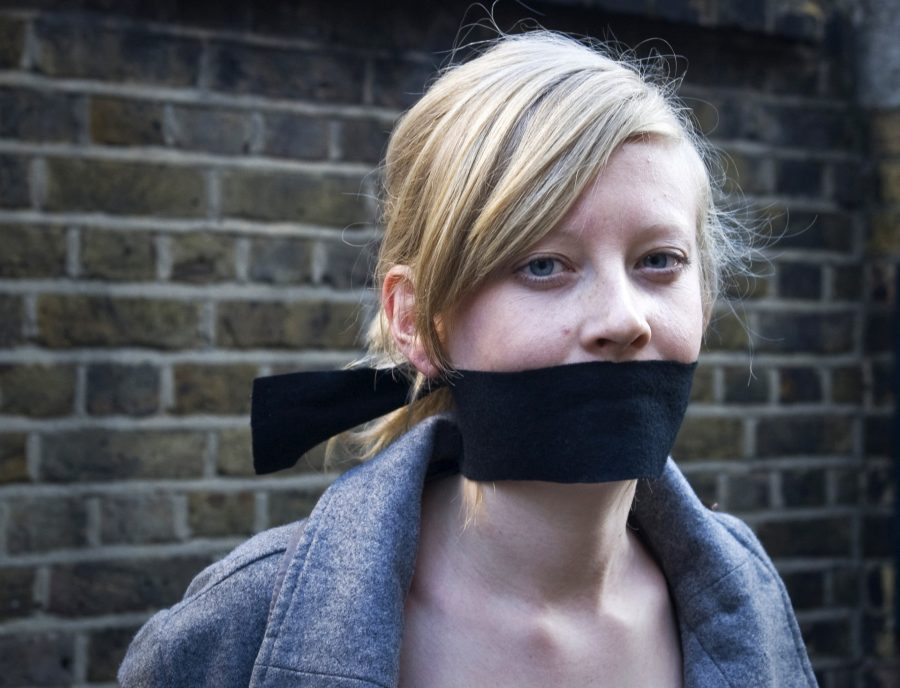
    The fight for free speech

    The writer C. J. Hopkins, who is an American but lives in Germany, is being sentenced to pay a fine or face prison for a couple of tweets comparing the Covid lockdown totalitarianism to Nazi Germany. His “crime” is to have posted two tweets showing a swastika, which, as you know, can be considered a crime in Germany, even if it’s an ancient symbol that predates National Socialism by thousands of years.

    (To be honest, German laws can be a bit retarded. At some point they also wanted to prohibit using the letter Z, as it was considered Russian propaganda.)

    Now, what’s bizarre about all this is that Hopkins was actually criticizing Nazi Germany. Far from being a Nazi, he is one of those guys who sees Nazis everywhere, and Nazism as the epitome of evil. But mostly, he was talking about Covid and Covid lockdowns, not Nazi Germany. It was just an old, tired metaphor.

    Now, there have been people who have been arrested in Germany for actually defending Nazism: 93-year old Ursula Havenbeck — wow, a dangerous grandma! — and also Monika Schaefer, a 63-year old Canadian woman who posted a video about the Holocaust. (It seems Germany specializes in arresting old Omas but letting psychopathic young criminals roam free.) If that’s not anarcho-tyranny, I don’t know what is.

    Even if they were “Nazis”, I don’t think they should have been arrested, to be honest. I’m not a great fan of Nazi Germany — or of modern Germany, for that matter — but the so-called Holocaust is a historical event and as such it should be possible to openly discuss it or even deny it, like anything else. No one is arrested for denying that Napoleon invaded Russia. Maybe it’s stupid, but it’s not a crime. So I don’t really see why people should be punished for denying the Holocaust, or the Moon Landings, or 911.

    I mentioned Miles Mathis the other day. His theory is that all the Nazi leaders, including Hitler, were actually Jewish.  It’s an intriguing theory. It could be wrong, but there’s no harm in hearing it. I don’t know what would happen if he lived in Germany. Probably he would get the death penalty, even if there’s no death penalty in Germany right now, but perhaps they would make an exception for that.

    On the other hand, we’ve seen many Ukrainian soldiers, especially in the infamous Azov squad, openly displaying swastikas and other Nazi symbols, and Germany was and is supporting them. So, I really don’t know. I think the whole “Nazi” thing, to be honest, is just a distraction.

    C. J. Hopkins real crime is not a stupid swastika — it is discussing the Covid era totalitarianism. That’s why they are punishing him, the Nazi thing is just an excuse to attack him him for bad-think.

    But the question is, why now after two years? Are Covid lockdowns and forced vaccinations coming back?

    I wouldn’t think so, after their complete failure, but after a period of silence where war dominated the headlines, the media is now again talking about supposed “variants”. There’s even one called “Eris”, which is the Greek goddess of chaos, strife and discord. So, it is possible that this is on the works. “The war failed, let’s bring back Covid again”?

    C. J. Hopkins’ alleged fine, all things considered, is not that big: 3500 euros. Or 60 days in a German prison, which might arguably be worse, especially if you end up raped by some big Arab Bubba type.

    But there are legal fees which could amount to thousands of euros. I don’t really understand how they already determined his guilt and the fine amount before the trial, but German law, as I said, is complicated and sometimes make no sense.

    Another annoying thing about Germany, but also present in many other European countries, is the TV tax. You’re not just bombarded with propaganda 24/7, you’re also expected to pay for it. You’re literally forced to fund government propaganda, even if you don’t watch it. (And you thought income tax was bad enough.)

    It seems that the more people talk about “free speech”, the less we seem to have it. Until recently it was a rallying cry of the left, now they are more into limiting what they call “hate speech” or “misinformation”, which means they don’t really understand the concept of free speech at all.

    For many years or even decades, the “fight for free speech” concentrated on sexual stuff. There was even a famous Hollywood movie lionizing the figure of pornographer Larry Flint, turning him into some kind of free speech hero. Whatever it is, pornography is not “speech”, and it’s not good for you. It’s more like a drug, really. There are reasons to limit it.

    While, on the other hand, there have been more and more restrictions on what they call “hate speech”, which is actually the only kind of speech that needs to be protected. If I say something banal or trite, like, “I like ice cream”, there is really no reason to “protect” it, as no one cares. But if I say something that may be deemed offensive or critical to some people, especially if it’s a powerful group of people, then I might have problems. So there should be laws to avoid that. That’s the only reason for protecting “free speech”.

    But of course, they know all that. It’s just that more and more people are realizing that the system is based on lies, so they want to silence all dissent, one way or another.

  • Poetry - Writers

    A poem

    I am not usually a great fan of contemporary poetry, but here’s a pretty nice poem by American poet Christine E. Black about living under lockdown. Republished from here.

    Ragamuffins in Lockdown Time

    I want to be the child
    In my neighborhood,
    Kicking a ball down a wet street,
    Dirty snow and ice crusting cars,
    Paint-chipped wagon
    And a pile of bikes in the yard,
    His little brother
    And a gang of more children,
    Trailing behind. One bangs a stick
    On the ground, all their clear
    Brown faces shine, eyes dance
    In the cold. His immune system
    Wrestles earnestly, playfully
    With wondrous germs of the air,
    And on the skin of his little brother,
    In the slobber of the dog,
    The grime on the ball
    From the corner of the basement
    Next to the crumple
    Of his father’s work clothes,
    His mother’s nurse’s aide uniform,
    Blood splattered on a sleeve.

    I want to be their parents,
    Gathering at a neighbor’s house
    For Holy Communion.
    They made a hand-lettered
    Church sign for the yard,
    Invited the priest to hold Mass
    In the living room
    For all the neighbors.
    And after taking the body and blood,
    Those words made flesh
    By breath and speech,
    I kiss an old aunt, press my cheek
    To hers, smell her hair and skin,
    Remembered from childhood.
    My breath deepens, quiets the cells,
    Bathes them in strength and health.

    I want to be one of the Boys and Girls
    Club children, still driven
    To the closed school
    Because her mother has to go work
    At the chicken factory each day.
    The mask they make the girl wear
    Drags her chin while she plays
    With twenty or so other children
    In the abandoned school gym
    Or outside behind the vacant building.
    She sits in the grass across from a friend,
    Clapping patterns, telling stories,
    Their caretaker, reading her phone.

    I want to be one of the children,
    Following behind their father,
    Who can’t have them inside
    One more day this winter, playing
    Video games, watching TV.
    They head into the trampoline park,
    Dark for months, but now somehow
    Open, a few cars in the lot.
    Inside, high school and college students,
    Who have to have the job
    Are face-masked seven or eight hours,
    Like all the others, delivering Dominoes
    Or Grub Hub, waiting tables
    In half-capacity restaurants,
    Stocking Walmart shelves, scanning,
    Bagging at grocery stores, their glasses
    Fogging, acne worsening, minds dulled
    From low oxygen, wondering what
    In the world may happen next.

    I want to be a child piled in the family car,
    Driving narrow, steep West Virginia roads
    To a mountain cabin, where they’ll meet
    Maybe a dozen or more family and friends.
    Some will forage for mushrooms
    Or bow hunt, they’ll tell stories,
    Wade in cold streams, build a fire
    To cook meat at dusk. I want to be
    One of their parents in a sleeping bag
    With my husband, by the fire
    After everyone else has gone to bed.

  • Anthology - Art - Writers

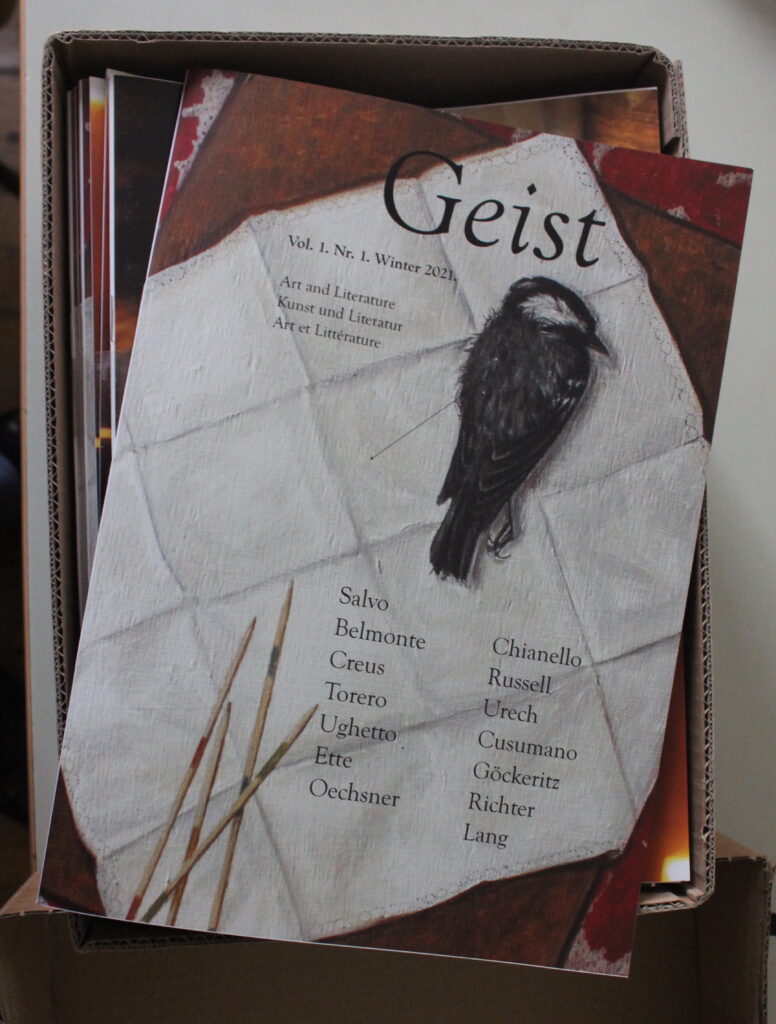
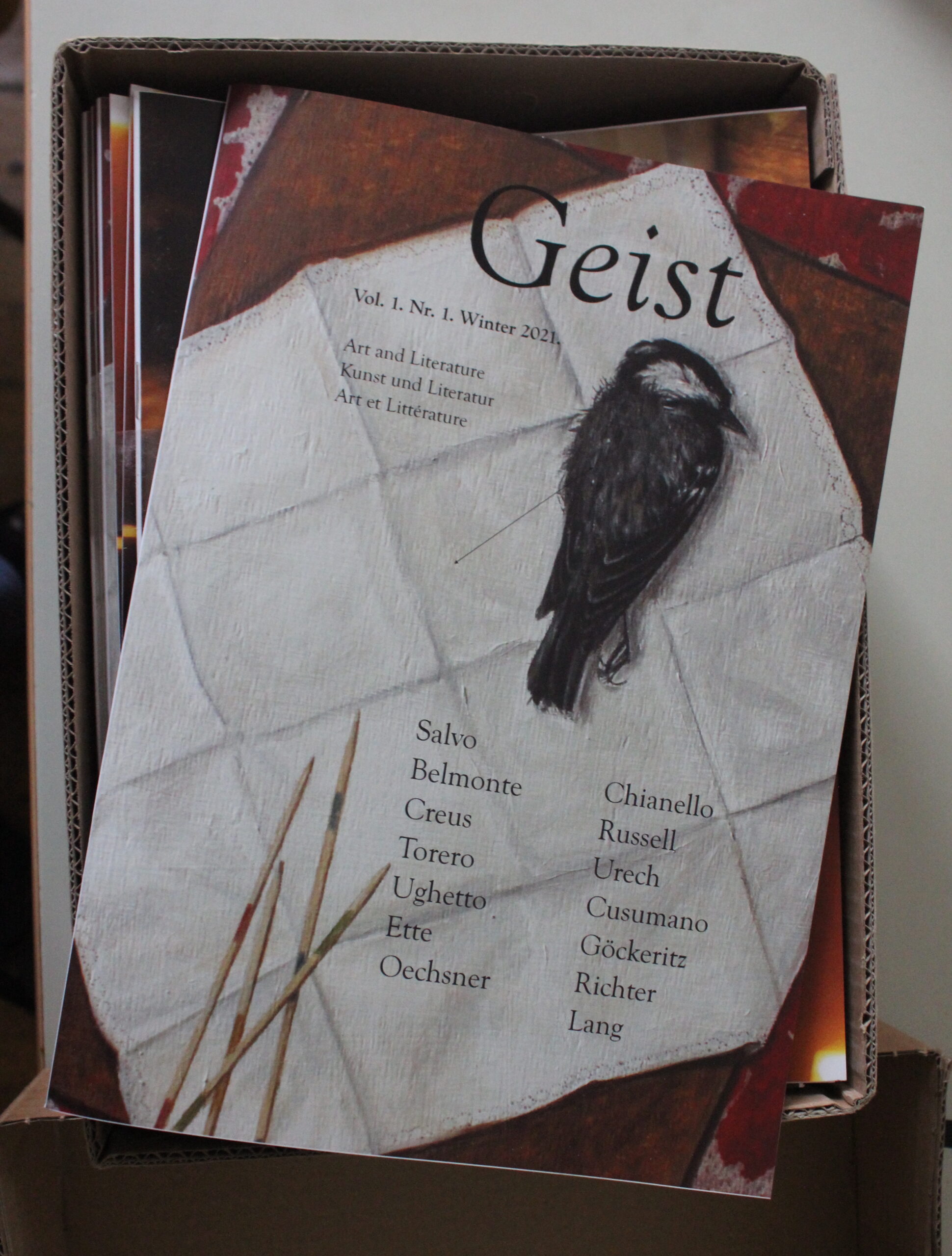
    Geist Magazine in print

    The first number of our magazine is now in its print version, in very limited number, but high quality. With A4 size, 250g glossy paper, and full-quality colour images, it is really a sight to behold.

    The magazine can be purchased in our shop, or read in the online version.

    It contains short stories and poems in different languages (all translated to English), plus illustrations and photographs by several very talented artists.

    Art and literature – to combine them in a beautiful way was the idea behind this project. I hope you like it and read the magazine, be it in print or online (we recommend print – it’s always nicer to read in print).

  • News - Writers

    Jorge Luis Borges

    A few days ago (August 24th) marked 121 years since the birth of Jorge Luis Borges. I am currently researching a bit about his life, as one of my future projects would be to write a new book about Argentinean literature.

    Of course, a lot has been written about Borges, and I’ve read a lot of it. My father is a great fan of Borges and we had all his books at home, plus many other books about him.

    And yet, there are always some new things that you can discover about someone, especially in the case of a writer of such importance. One of the things I didn’t know so much about was the period of his youth and the several literary projects during his early 20s, which included a mural magazine called Prisma.

    I am also rereading quite a lot of his work. Not only the short stories, but also some essays (although of course, for Borges there is not always a difference between both).

    It is always better to read him in Spanish, if you can understand the language, but if not, there are quite a few translations to choose from. Which one is the best? It’s difficult to say. I prefer the earliest ones, but here there’s a more detailed article describing some of the differences in each version, as well as a discussion of Borges’ work with Norman Di Giovanni, the only translator with whom he directly collaborated.

    Here there’s one of his last interviews, the day of his 85th birthday, still in Argentina (he would die less than two years later, in Geneva). He seems pretty cheerful.