• Articles

    The Internet is dead

    “AI” killed the Internet star

    You know what, I miss the 1990s. All the way up to the early 2000s. And not just because I was young in that period. It’s not just nostalgia. Those years were objectively better. There were great movies (too many to list), great music (many great bands from the 1980s still active and many good new ones), even great sitcoms — I’ve recently re-watched “Spaced”, a classic British sitcom from 1999-2000, and I still found it funny and endearing, although in that case it could be just nostalgia: I did live in London in those years, after all).

    But, more importantly, in those times the so-called Internet was just beginning to show its vast potential.

    We called it the “world wide web” back then. I think no one uses this expression anymore. (I know the “web” and “Internet” technically refer to different things, but anyway, the point is that no one says “world wide web” or even “www” anymore.)

    Up until 2010 or so, the main form of publishing was blogging. You set up a blog with Blogger or WordPress, and voilà. You could get thousands of readers. Sometimes friendships were formed. And you could find a lot of free, interesting and uncensored information.

    No one uses Blogger or WordPress anymore. Now there’s mostly social media: Facebook, Instagram. Even Twitter became “X”, one of the worst rebrands ever.

    It’s not the same thing at all. Now everything is controlled, spied, branded, censored.

    For former bloggers, there is Substack, but it’s also not really the same thing. For one, it is really an email newsletter, not a blog. And two, perhaps because of the competition with the other companies that monopolize searching, most Substack sites are really hard to find.

    Speaking of Google: it became much worse. It is really hard to find anything useful sometimes. I’m not sure if it’s because their search engine got worse or simply because there is a lot more material online these days.

    Youtube got much worse too, especially since they started to censor people heavily during the Covid era. The most interesting creators migrated to other platforms. A lot of the videos now are very commercial. Gone are the days when any Youtuber could become a star just doing random videos without any major corporate support.

    But all that was before “AI”, of course. The new type of software that some misname “intelligence” was the killing shot.

    If “video killed the radio star“, then AI killed the Internet.

    I am not sure of the exact percentages, but a lot of texts you find online today, probably the majority, are written by bots. Just google any article about anything. Everything seems written by ChatGPT or a similar software. And as such, everything reads exactly the same. More than once I located two articles in different sites but with an identical text. I guess both authors used the same bot. Lots of commenters are bots, too.

    Image search was also contaminated by the so-called “AI art”. Google “baby peacock“, for instance, and at least half of the resulting images will be ugly, unrealistic digital images created by one of those bots.

    (The other day I watched “Beetlejuice Beetlejuice”, the sequel to Tim Burton’s 1988’s classic, and one of the good things about it was that most of the effects were, like in the 1980s/90s, practical effects, make-up or stop-motion. Little CGI, and certainly no random “AI art”.)

    Alas, “AI” is going to be ever more present in our lives. It is going to “curate” all of our online experience (and not only), so that you don’t risk running into some dangerous “conspiracy theory” blogger, or, God forbid, a text or an image created by a real person from scratch, and not merely recycled from data fed to a “software language model”. You’ll have to get used to use facial recognition to get into a self-driving car that you will pay with a scan of your retina, the whole shebang. It is sold as a utopia, but those of us who grew up in the 1980s and 1990s know better. We watched all those old sci-fi movies. We know how they end.


    While I decide what to do with my own personal creations in a new Internet that has little space for them, I leave you with two little gifts.

    One is my recent documentary about Finland, “Dreaming of Finland”, linked below. The few people who have followed this blog — or well, newsletter — know that I visited Finland last year and wrote about it. Well, now there’s a film about it too. It even has some 90s style stop-motion.

    The other is Geist magazine, an independent (very independent!) magazine of literature and art that I occasionally publish. There is a new issue, number 6, Fall 2024, that just came out this past Halloween. You can read a preview here or just order an old-fashioned print copy in full colour and quality paper at our online shop here.

    Thank you.
  • Articles - Books - Featured - Russia

    “Everything is allowed”

    There’s a lot of doom in the Internet, especially among the alternative news crowd. People can’t get enough of the “end of the world/end of the West” type of thing. While I do understand that we are living in highly worrying times, with war expanding everywhere, economic downturn, birth rate collapse, mass migration, and radical technological and social changes, I try to avoid falling in the trap of looking only at the collapse, as there are occasionally good things too. Besides, it’s a bit depressive to only having to write about doom, gloom and conspiracy theories.

    Recently I’ve been doing much more reading than writing — I haven’t published a text here in months — and I decided to revisit classic novels, reading or re-reading them. I started, where else, with the Russians. I’ve recently finished Dostoevsky’s “The Brothers Karamazov” — it took me only forty years. I kid, but in fact I started reading this novel when I was 16 or 17, and never finished it. Then a few months ago, I found the book in my local library and decided to pick it up again, reading it all from the start. It took me just a couple of months. I really enjoyed it, so much so that I am reading Dostoevsky’s “The Idiot” now.

    The following is a somewhat disjointed digression about a famous sentence found in the Karamazov book — the text can also be watched in video form, perhaps it works better this way — and how it could apply to our current reality. Or not.


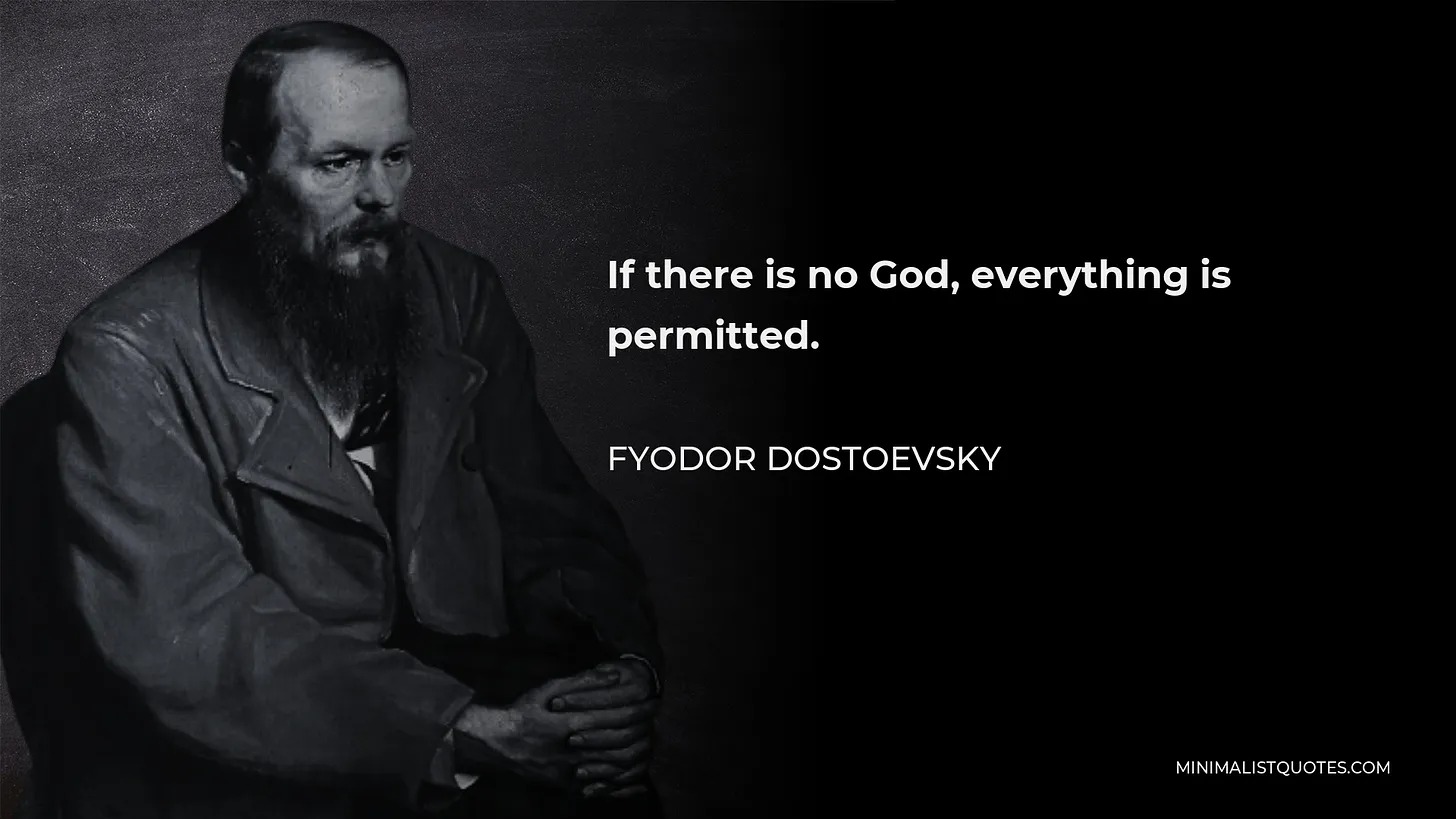
    “If there is no God, everything is allowed.”

    This sentence that became famous appears in the great novel by Fyodor Dostoevsky, “The Brothers Karamázov”, one of the greatest novels in the history of literature. A great, great book which I’ve only recently read. Without giving any spoilers, let’s just say that it is the story of three brothers with three very different personalities and destinies. Dmitri is the impulsive and reckless one, Alyosha is the moral and good-hearted one, and Ivan is the intellectual and cynical one. And Ivan is the one who says this sentence.

    But what does it mean?

    It means that without God there are no moral rules, and man can do anything he wants. Rape, incest, murder.

    “Do what thou wilt, that shall be the law”.

    There are two consequences to this. One is that moral notions of good and evil have to come from God, from above. Otherwise it just comes from one man to another group of men, and it becomes merely a question of power.

    The second part is that you should have clear, inflexible rules.”Thou shall not murder.” “Thou shall not covet thy neighbours’ wife”.  Otherwise, you have relativism. Or things like utilitarianism: “the greater good for the greater number of people”.

    But then, if you have four people and three of them don’t like the fourth one, they can kill him, because that would be “the greater good for the greater number of people”, right?

    And so we are back to “Everything is allowed.”

    This idea comes, a bit, from Nietzsche’s sentence that “God is dead”, and the growing nihilism that was already at the time very noticeable in society, not just in Russia but in Europe in general. We are talking here about the late 19th century, when science was advancing, society was changing and more traditional notions of behaviour were starting to disappear.

    The 20th century saw even greater changes, with feminism, the sexual revolution, the rise of modern democracy, and the further secularization of society, as well as incredible technological changes.

    Today, things have gone much further. We live in times of extreme moral confusion, or maybe we should even say moral inversion. Good is called bad, and bad is called good. Black is called white, and white, black. Women are called men and men are called women.

    Since we can’t even accept Nature as it is, the rules of society have become increasingly nonsensical.

    As people are increasingly stabbed in the streets by foreigners, governments worldwide react by banning knives. Or scissors. Or hammers.

    Or social media posts.

    Newspapers were always full of lies, but, with the rise of modern digital mass media and now what is called, incorrectly, “Artificial Intelligence”, which further increases the possibilities of image manipulation, we don’t even know what is real and what isn’t. Perhaps we never knew. History was always written by the winners. Not everything we were told in school and history books was true.

    Our leaders, the ones who should rule us and protect us, have become our worst enemies. There have always been tyrants, but this is probably the first time in history where there’s a whole worldwide government system that hates its population, or, at most, sees humans as replaceable cogs in a machine. Animals with no souls, to be hacked by vaccines and gene manipulation.

    Even religious leaders offer little solace. Most of them are also part of this global system that wants to destroy traditional society in the name of a new global order.

    What to do? How can we get rid of this evil global that seems to increasingly control everything and lead us into a global technological dystopia?

    In Dostoevski’s novel, there is another character, called Father Zossima, a monk who is the mentor of the young Alyosha. And he says some interesting things which may be worth repeating.

    At one point omeone asks him, “How can you prove that God exists?” And he says, well, you can’t. But if you love everyone and everything, if you spend your life actively loving your neighbours, one day, you will understand. But he warns that such love has to be active, real love.

    Because the truth, as Dostoevsky observes in the novel, is that many people love humanity in the abstract, but they don’t really love humans. They just love a certain notion that they have about humanity, or perhaps they just love the idea of being considered a “good person”.

    And so you have a lot of what we call virtue-signallers. People who like to appear as if they are noble or good and are always fighting for the right causes. But it is just status-mongering. It’s not real love. They love humanity as an abstract concept. But loving real people is hard. Most people are annoying or ungrateful. They lie, they cheat, they stink. When Jesus said that you should love your neighbour, he never said it would be easy.

    Father Zossima also asks: “what is Hell?” And he says something very interesting. He says, “I maintain that Hell is the suffering of being unable to love.” And if we think about our rulers — and I don’t mean just the politicians, but the billionaires, the bankers, the real rulers behind the façade of the state — we see a lot of people that have a lot of power and riches. They have yachts, mansions, cars, women. But despite that, many of them don’t seem happy, and in fact many seem really wretched.  “What does it profit a man to win the whole world and lose his soul?”

    They may have power, but they are unable to love their fellow human beings. And as such, they are in fact already living in hell. Because Hell is the suffering of being unable to love. If God’s love is the hidden grammar of the Universe, then Hell is being permanently away from it.

    So what is the answer to our current troubles? The same one that ever was. Reject excessive materialism and consumerism. Try to avoid mass media, or, if you can’t at least be skeptical about it. Work, love your family, love the people close to you, help your community. Try to change yourself before attempting to change the world.

    The current system is based on lies, and, as such, it can’t last long. It will end at some point, perhaps sooner than we all think. As Yeats said, “All things fall and are built again.” When the time comes, we have to be ready to build them again.

  • Articles - Featured - Italy

    Notes from the end of the liberal order: Firenze

    Godi, Fiorenza, poi che se’ sì grande,
    che per mare e per terra batti l’ali,
    e per lo ’nferno tuo nome si spande!

    (Dante, Inferno, Canto XXVI)

    The Americans

    After Spain, I came to Florence, for a brief course. I’m staying in a monastery of benedictine nuns that rents rooms, located right at the edge of town. Wonderful place with a wonderful view. The only thing ruining it so far is a small group of young, loud, obnoxious American tourists staying here as well.

    If I had my way, I would impose a moratorium of ten years for American tourists anywhere in Europe. Maybe a hundred years just in case, although it’s pretty unlikely that America as such will still exist in a hundred years.

    I may sound prejudiced, but if it wasn’t for America, Europe would be not an Uncle Sam colony, the Middle East would not be constantly being bombed with its refugees ending up in Europe, and extreme liberal ideas would not kept being pushed everywhere.

    Twice in my life I saw American tourists breaking spaghetti in half to cook it, under the horrified look of an Italian. I also saw once an American cooking spaghetti in a frying pan together with the vegetables and the sauce.

    But it’s not that they commit such culinary heresies. It’s their attitude. Ignorance is forgivable, but Americans believe that they are right even when they are wrong. When an Italian points out their mistake, they don’t really accept that it is a mistake, or perhaps they don’t even understand it. They laugh and think that the Italians are oversensitive foodies.

    They just cannot understand that things in other countries are done for a reason.

    Americans will not drink tap water in Italy, or anywhere outside of the U.S. It’s unsafe, they say. But, outside of India and Pakistan, it’s probably in the U.S. where tap water is the most dangerous.

    It’s not that it’s unclean. It’s not what they take away — it’s all that they put in. From fluoride to lithium to who knows what else, American tap water has more chemicals than the periodic table.

    While in the U.S. water fluoridation has been ongoing since the 1960s, polluting our precious bodily fluids (under the excuse of fighting tooth decay), in Italy, tap water has never been fluoridated. Nevertheless, according to a recent report, Italian children have less cavities than their American counterparts.

    What was the true motive for water fluoridation, then?

    Who knows, but don’t ask an American. He still believes in the official stories of 9/11, JFK, Covid, the moon landing, and, of course, water fluoridation.

    The Africans

    There’s a park in Florence where African migrants hang around, loitering, listening to loud rap, selling drugs and counterfeit bags. There’s probably a similar park in most European cities nowadays.

    In Barcelona, Latin Americans and Moroccans comprised most of the non-native population, but in Florence, after the American tourists, Africans seem to be the most visible foreign presence in the city. But, alas, unlike the former, the latter won’t go back to their countries as summer ends. Italy is stuck with them.

    Of course, there are also other Africans who integrate into the formal economy and work as waiters, bus drivers, nurses, lifesavers, and so on, but still, each day a new boat arrives and there’s no room for all, so some overflow into the parks.

    I mean, they are not dangerous, at least not so far, but they don’t seem to contribute much to the local economy, unless selling cheap counterfeit bags made by the Chinese counts as a contribution.

    The Chinese

    Which brings me to the Chinese. They are also numerous, but, being less loud than the Africans, they are not so noticed. They also concentrate in particular regions. It seems that Prato is almost half Chinese now. I wouldn’t know, I haven’t been there yet, but I can believe it.

    The Chinese at least are industrious and don’t tend to idly hang around in parks. They are good at doing business, and they do it from morning to night. The Jews of Asia, they say, although that might be an unfair characterization for both sides.

    It seems that a lot of “Italian” trinkets sold in souvenir shops, even if they say “made in Italy”, are made by the Chinese. In this case, Chinese migrants in Prato.

    But I like the Chinese. Once, and I told the story here before, a Chinese migrant gave me a ride to my hotel when there were no longer taxis or other form of transportation in town, and wouldn’t even accept money for it. I don’t think an American tourist would have done that.

    Also, I was confident enough to take a ride with a random Chinese migrant, but I don’t think I would if he was from any other nationality. Chinese and other Asians are trustworthy in that sense. I mean, I suppose that there are Chinese robbers, rapists, murderers or serial killers, but it’s not the first thing that comes to your mind.

    The Italians

    Now, first of all, let’s admit it, there is no such things as an “Italian people”. They don’t really exist. There’s Tuscans — subdivided in Florentines, Senese, Pisans, etc. — and Lombards, and Neapolitans, and Sicilians, and Sardinians, and so on.

    Don’t tell me that all of those groups form a single, unified people, regardless of what Garibaldi said.

    The Tuscans, and, in particular, the Florentines, are considered snobbish or arrogant, a bit like, say, the Parisians in France. “Hanno la puzza sotto il naso“, they say here. —they have their nose always turned up.

    There might be something to it, even though I haven’t noticed it. Curzio Malaparte, himself a Tuscan from Prato, wrote in “Maledetti Toscani” that Tuscans are the smartest people in Italy and that they do not suffer fools gladly, and that makes them hated by all the other Italians.

    That has not been my experience at all. If anything, the Tuscans I’ve met have been pretty kind, generous and even humble, very far from such stereotype.

    (I do think that might be true of the people of Milan, though.).

    The Liberal (Dis)Order

    Like in Spain, the Italian birth rate is also collapsing. Feminist propaganda is also very present, almost as much as in Spain. Wherever there’s feminism and liberalism, there’s birth rate collapse. Of course, there are many other reasons for it, as the phenomenon is present today in most countries, not all liberal democracies, but feminism, late marriages (or no marriage), abortion and birth control certainly play a role. After all, it’s women the ones who have (or do not have) babies.

    But the real problem of modern liberalism is simply that it doesn’t have an end or a goal — it just evolves to and further further radicalism, at the same time that it describes its critics as “radicals”.

    For instance, “Pope” Francis recently excommunicated his critic Archbishop Carlo Maria Viganò, whom the media characterizes as “ultra-conservative”. But Viganò’s position is simply the same of any regular Catholic priest in 1962, prior to Vatican II. There’s nothing “radical” or “extreme” about it. It’s society, and the Church with it, which became more extreme, and continues to do so.

    And remember when Meloni was characterized as “far-right”? That didn’t age well.

    The other strange thing about the liberal order (some may call it the “new world order”) is how omnipresent it is. There is little room for variation. From increasing censorship in the name of “misinformation” to strange and possibly fake election results, it follows the same pattern of tricks everywhere.

    And yet, also here in Florence as in Barcelona, collapse does not seem to be coming any time soon. The city, despite the heat in these infernal summer months — certainly an inspiration for Dante — is bustling with activity and tourists. Not just loud, obnoxious Americans, but also obnoxious Germans, obnoxious Australians, obnoxious French.

    Dante wrote ironically that Florence’s fame grows even in Hell — in fact his Inferno is basically a list of famous florentines — and predicted that a great calamity sooner or later would strike the city as punishment for its many sins.

    Well, I suppose we’re more or less in the same situation in the West as a whole. Punishment will come, that much is certain. But who knows exactly when?

  • Articles

    "Everything is allowed"

    Brief thoughts on Dostoevsky and the modern world

    There’s a lot of doom in the Internet, especially among the alternative news crowd. People can’t get enough of the “end of the world/end of the West” type of thing. While I do understand that we are living in highly worrying times, with war expanding everywhere, economic downturn, birth rate collapse, mass migration, and radical technological and social changes, I try to avoid falling in the trap of looking only at the collapse, as there are occasionally good things too. Besides, it’s a bit depressive to only having to write about doom, gloom and conspiracy theories.

    Recently I’ve been doing much more reading than writing — I haven’t published a text here in months — and I decided to revisit classic novels, reading or re-reading them. I started, where else, with the Russians. I’ve recently finished Dostoevsky’s “The Brothers Karamazov” — it took me only forty years. I kid, but in fact I started reading this novel when I was 16 or 17, and never finished it. Then a few months ago, I found the book in my local library and decided to pick it up again, reading it all from the start. It took me just a couple of months. I really enjoyed it, so much so that I am reading Dostoevsky’s “The Idiot” now.

    The following is a somewhat disjointed digression about a famous sentence found in the Karamazov book — the text can also be watched in video form, perhaps it works better this way — and how it could apply to our current reality. Or not.


    “If there is no God, everything is allowed.”

    This sentence that became famous appears in the great novel by Fyodor Dostoevsky, “The Brothers Karamázov”, one of the greatest novels in the history of literature. A great, great book which I’ve only recently read. Without giving any spoilers, let’s just say that it is the story of three brothers with three very different personalities and destinies. Dmitri is the impulsive and reckless one, Alyosha is the moral and good-hearted one, and Ivan is the intellectual and cynical one. And Ivan is the one who says this sentence. 

    But what does it mean?

    It means that without God there are no moral rules, and man can do anything he wants. Rape, incest, murder. 

    “Do what thou wilt, that shall be the law”. 

    There are two consequences to this. One is that moral notions of good and evil have to come from God, from above. Otherwise it just comes from one man to another group of men, and it becomes merely a question of power. 

    The second part is that you should have clear, inflexible rules.”Thou shall not murder.” “Thou shall not covet thy neighbours’ wife”.  Otherwise, you have relativism. Or things like utilitarianism: “the greater good for the greater number of people”. 

    But then, if you have four people and three of them don’t like the fourth one, they can kill him, because that would be “the greater good for the greater number of people”, right? 

    And so we are back to “Everything is allowed.” 

    This idea comes, a bit, from Nietzsche’s sentence that “God is dead”, and the growing nihilism that was already at the time very noticeable in society, not just in Russia but in Europe in general. We are talking here about the late 19th century, when science was advancing, society was changing and more traditional notions of behaviour were starting to disappear.  

    The 20th century saw even greater changes, with feminism, the sexual revolution, the rise of modern democracy, and the further secularization of society, as well as incredible technological changes.   

    Today, things have gone much further. We live in times of extreme moral confusion, or maybe we should even say moral inversion. Good is called bad, and bad is called good. Black is called white, and white, black. Women are called men and men are called women. 

    Since we can’t even accept Nature as it is, the rules of society have become increasingly nonsensical. 

    As people are increasingly stabbed in the streets by foreigners, governments worldwide react by banning knives. Or scissors. Or hammers. 

    Or social media posts. 

    Newspapers were always full of lies, but, with the rise of modern digital mass media and now what is called, incorrectly, “Artificial Intelligence”, which further increases the possibilities of image manipulation, we don’t even know what is real and what isn’t. Perhaps we never knew. History was always written by the winners. Not everything we were told in school and history books was true. 

    Our leaders, the ones who should rule us and protect us, have become our worst enemies. There have always been tyrants, but this is probably the first time in history where there’s a whole worldwide government system that hates its population, or, at most, sees humans as replaceable cogs in a machine. Animals with no souls, to be hacked by vaccines and gene manipulation. 

    Even religious leaders offer little solace. Most of them are also part of this global system that wants to destroy traditional society in the name of a new global order. 

    What to do? How can we get rid of this evil global that seems to increasingly control everything and lead us into a global technological dystopia? 

    In Dostoevski’s novel, there is another character, called Father Zossima, a monk who is the mentor of the young Alyosha. And he says some interesting things which may be worth repeating. 

    At one point omeone asks him, “How can you prove that God exists?” And he says, well, you can’t. But if you love everyone and everything, if you spend your life actively loving your neighbours, one day, you will understand. But he warns that such love has to be active, real love. 

    Because the truth, as Dostoevsky observes in the novel, is that many people love humanity in the abstract, but they don’t really love humans. They just love a certain notion that they have about humanity, or perhaps they just love the idea of being considered a “good person”. 

    And so you have a lot of what we call virtue-signallers. People who like to appear as if they are noble or good and are always fighting for the right causes. But it is just status-mongering. It’s not real love. They love humanity as an abstract concept. But loving real people is hard. Most people are annoying or ungrateful. They lie, they cheat, they stink. When Jesus said that you should love your neighbour, he never said it would be easy. 

    Father Zossima also asks: “what is Hell?” And he says something very interesting. He says, “I maintain that Hell is the suffering of being unable to love.” And if we think about our rulers — and I don’t mean just the politicians, but the billionaires, the bankers, the real rulers behind the façade of the state — we see a lot of people that have a lot of power and riches. They have yachts, mansions, cars, women. But despite that, many of them don’t seem happy, and in fact many seem really wretched.  “What does it profit a man to win the whole world and lose his soul?” 

    They may have power, but they are unable to love their fellow human beings. And as such, they are in fact already living in hell. Because Hell is the suffering of being unable to love. If God’s love is the hidden grammar of the Universe, then Hell is being permanently away from it. 

    So what is the answer to our current troubles? The same one that ever was. Reject excessive materialism and consumerism. Try to avoid mass media, or, if you can’t at least be skeptical about it. Work, love your family, love the people close to you, help your community. Try to change yourself before attempting to change the world. 

    The current system is based on lies, and, as such, it can’t last long. It will end at some point, perhaps sooner than we all think. As Yeats said, “All things fall and are built again.” When the time comes, we have to be ready to build them again. 

  • Articles

    Notes from the end of the liberal order: Firenze

    Florence is forever, but the liberal order, probably not

    Godi, Fiorenza, poi che se’ sì grande,
    che per mare e per terra batti l’ali,
    e per lo ’nferno tuo nome si spande!

    (Dante, Inferno, Canto XXVI)

    The Americans

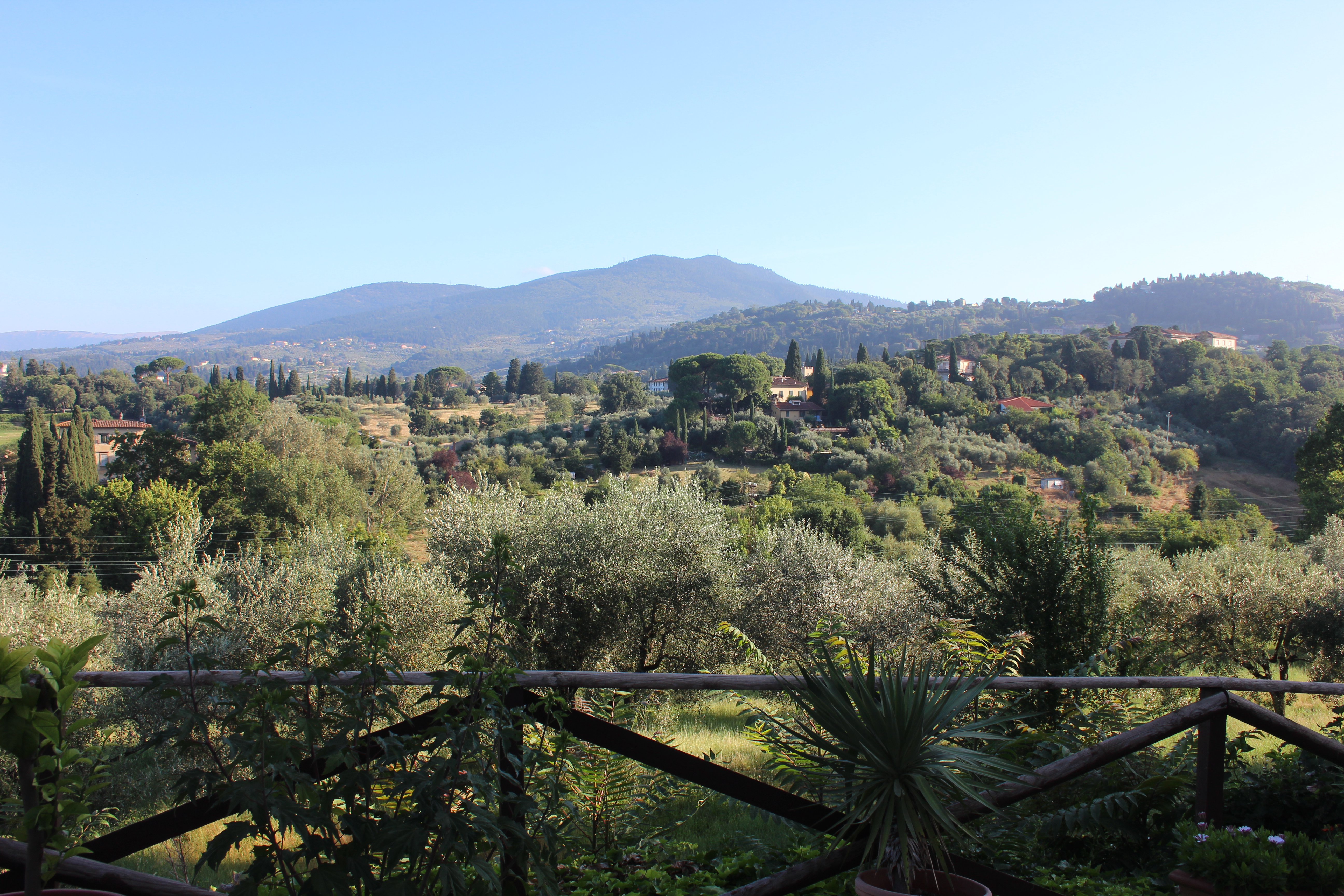
    After Spain, I came to Florence, for a brief course. I’m staying in a monastery of benedictine nuns that rents rooms, located right at the edge of town. Wonderful place with a wonderful view. The only thing ruining it so far is a small group of young, loud, obnoxious American tourists staying here as well.

    If I had my way, I would impose a moratorium of ten years for American tourists anywhere in Europe. Maybe a hundred years just in case, although it’s pretty unlikely that America as such will still exist in a hundred years.

    I may sound prejudiced, but if it wasn’t for America, Europe would be not an Uncle Sam colony, the Middle East would not be constantly being bombed with its refugees ending up in Europe, and extreme liberal ideas would not kept being pushed everywhere.

    Twice in my life I saw American tourists breaking spaghetti in half to cook it, under the horrified look of an Italian. I also saw once an American cooking spaghetti in a frying pan together with the vegetables and the sauce.

    But it’s not that they commit such culinary heresies. It’s their attitude. Ignorance is forgivable, but Americans believe that they are right even when they are wrong. When an Italian points out their mistake, they don’t really accept that it is a mistake, or perhaps they don’t even understand it. They laugh and think that the Italians are oversensitive foodies.

    They just cannot understand that things in other countries are done for a reason.

    Americans will not drink tap water in Italy, or anywhere outside of the U.S. It’s unsafe, they say. But, outside of India and Pakistan, it’s probably in the U.S. where tap water is the most dangerous.

    It’s not that it’s unclean. It’s not what they take away — it’s all that they put in. From fluoride to lithium to who knows what else, American tap water has more chemicals than the periodic table.

    While in the U.S. water fluoridation has been ongoing since the 1960s, polluting our precious bodily fluids (under the excuse of fighting tooth decay), in Italy, tap water has never been fluoridated. Nevertheless, according to a recent report, Italian children have less cavities than their American counterparts.

    What was the true motive for water fluoridation, then?

    Who knows, but don’t ask an American. He still believes in the official stories of 9/11, JFK, Covid, the moon landing, and, of course, water fluoridation.

    The Africans

    There’s a park in Florence where African migrants hang around, loitering, listening to loud rap, selling drugs and counterfeit bags. There’s probably a similar park in most European cities nowadays.

    In Barcelona, Latin Americans and Moroccans comprised most of the non-native population, but in Florence, after the American tourists, Africans seem to be the most visible foreign presence in the city. But, alas, unlike the former, the latter won’t go back to their countries as summer ends. Italy is stuck with them.

    Of course, there are also other Africans who integrate into the formal economy and work as waiters, bus drivers, nurses, lifesavers, and so on, but still, each day a new boat arrives and there’s no room for all, so some overflow into the parks.

    I mean, they are not dangerous, at least not so far, but they don’t seem to contribute much to the local economy, unless selling cheap counterfeit bags made by the Chinese counts as a contribution.

    The Chinese

    Which brings me to the Chinese. They are also numerous, but, being less loud than the Africans, they are not so noticed. They also concentrate in particular regions. It seems that Prato is almost half Chinese now. I wouldn’t know, I haven’t been there yet, but I can believe it.

    The Chinese at least are industrious and don’t tend to idly hang around in parks. They are good at doing business, and they do it from morning to night. The Jews of Asia, they say, although that might be an unfair characterization for both sides.

    It seems that a lot of “Italian” trinkets sold in souvenir shops, even if they say “made in Italy”, are made by the Chinese. In this case, Chinese migrants in Prato.

    But I like the Chinese. Once, and I told the story here before, a Chinese migrant gave me a ride to my hotel when there were no longer taxis or other form of transportation in town, and wouldn’t even accept money for it. I don’t think an American tourist would have done that.

    Also, I was confident enough to take a ride with a random Chinese migrant, but I don’t think I would if he was from any other nationality. Chinese and other Asians are trustworthy in that sense. I mean, I suppose that there are Chinese robbers, rapists, murderers or serial killers, but it’s not the first thing that comes to your mind.

    The Italians

    Now, first of all, let’s admit it, there is no such things as an “Italian people”. They don’t really exist. There’s Tuscans — subdivided in Florentines, Senese, Pisans, etc. — and Lombards, and Neapolitans, and Sicilians, and Sardinians, and so on.

    Don’t tell me that all of those groups form a single, unified people, regardless of what Garibaldi said.

    The Tuscans, and, in particular, the Florentines, are considered snobbish or arrogant, a bit like, say, the Parisians in France. “Hanno la puzza sotto il naso“, they say here. —they have their nose always turned up.

    There might be something to it, even though I haven’t noticed it. Curzio Malaparte, himself a Tuscan from Prato, wrote in “Maledetti Toscani” that Tuscans are the smartest people in Italy and that they do not suffer fools gladly, and that makes them hated by all the other Italians.

    That has not been my experience at all. If anything, the Tuscans I’ve met have been pretty kind, generous and even humble, very far from such stereotype.

    (I do think that might be true of the people of Milan, though.).

    The Liberal (Dis)Order

    Like in Spain, the Italian birth rate is also collapsing. Feminist propaganda is also very present, almost as much as in Spain. Wherever there’s feminism and liberalism, there’s birth rate collapse. Of course, there are many other reasons for it, as the phenomenon is present today in most countries, not all liberal democracies, but feminism, late marriages (or no marriage), abortion and birth control certainly play a role. After all, it’s women the ones who have (or do not have) babies.

    But the real problem of modern liberalism is simply that it doesn’t have an end or a goal — it just evolves to and further further radicalism, at the same time that it describes its critics as “radicals”.

    For instance, “Pope” Francis recently excommunicated his critic Archbishop Carlo Maria Viganò, whom the media characterizes as “ultra-conservative”. But Viganò’s position is simply the same of any regular Catholic priest in 1962, prior to Vatican II. There’s nothing “radical” or “extreme” about it. It’s society, and the Church with it, which became more extreme, and continues to do so.

    And remember when Meloni was characterized as “far-right”? That didn’t age well.

    The other strange thing about the liberal order (some may call it the “new world order”) is how omnipresent it is. There is little room for variation. From increasing censorship in the name of “misinformation” to strange and possibly fake election results, it follows the same pattern of tricks everywhere.

    And yet, also here in Florence as in Barcelona, collapse does not seem to be coming any time soon. The city, despite the heat in these infernal summer months — certainly an inspiration for Dante — is bustling with activity and tourists. Not just loud, obnoxious Americans, but also obnoxious Germans, obnoxious Australians, obnoxious French.

    Dante wrote ironically that Florence’s fame grows even in Hell — in fact his Inferno is basically a list of famous florentines — and predicted that a great calamity sooner or later would strike the city as punishment for its many sins.

    Well, I suppose we’re more or less in the same situation in the West as a whole. Punishment will come, that much is certain. But who knows exactly when?

  • Articles

    Notes from the end of the liberal order: Spain

    Random thoughts on the collapse of the West or lack thereof

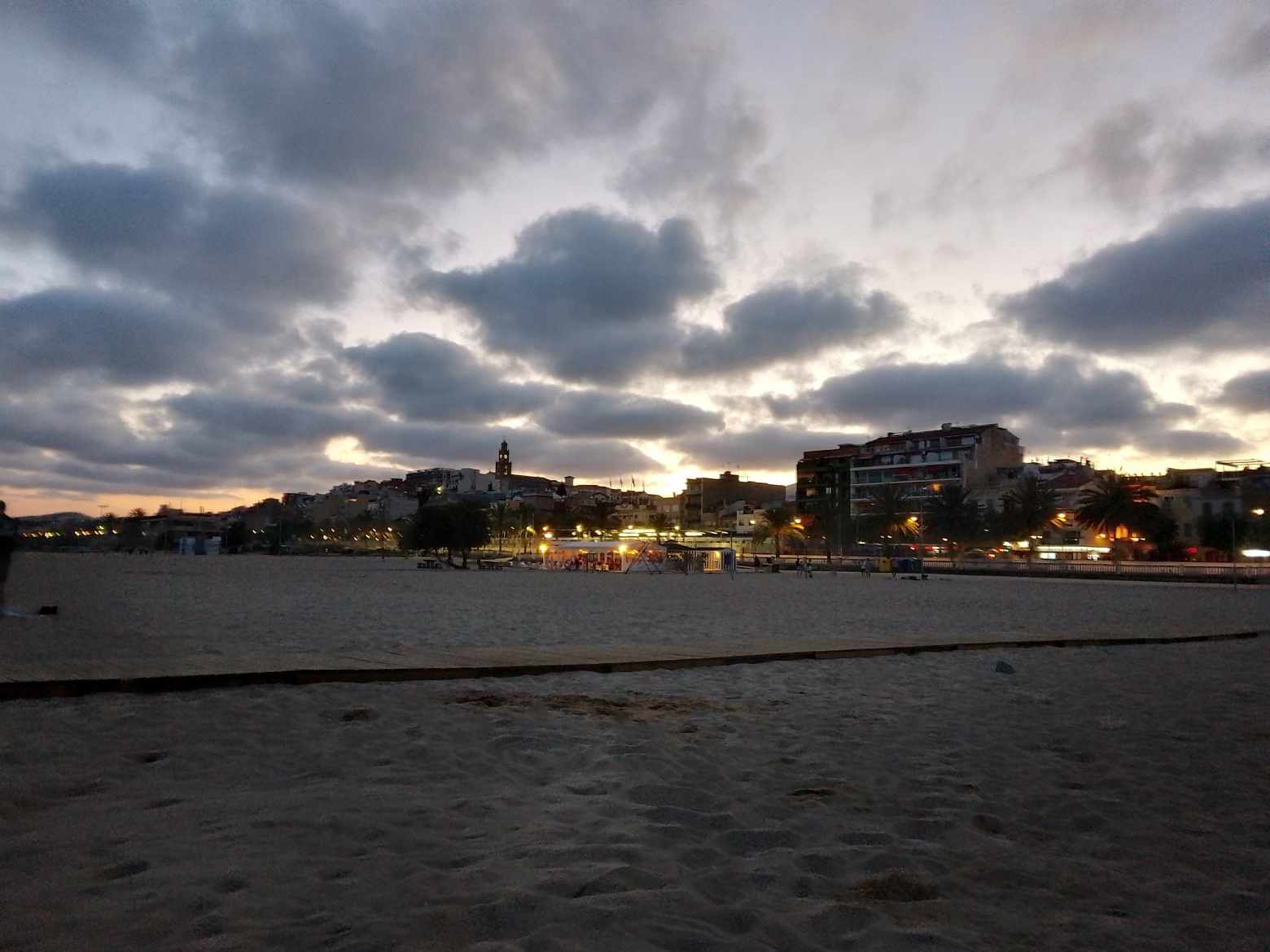
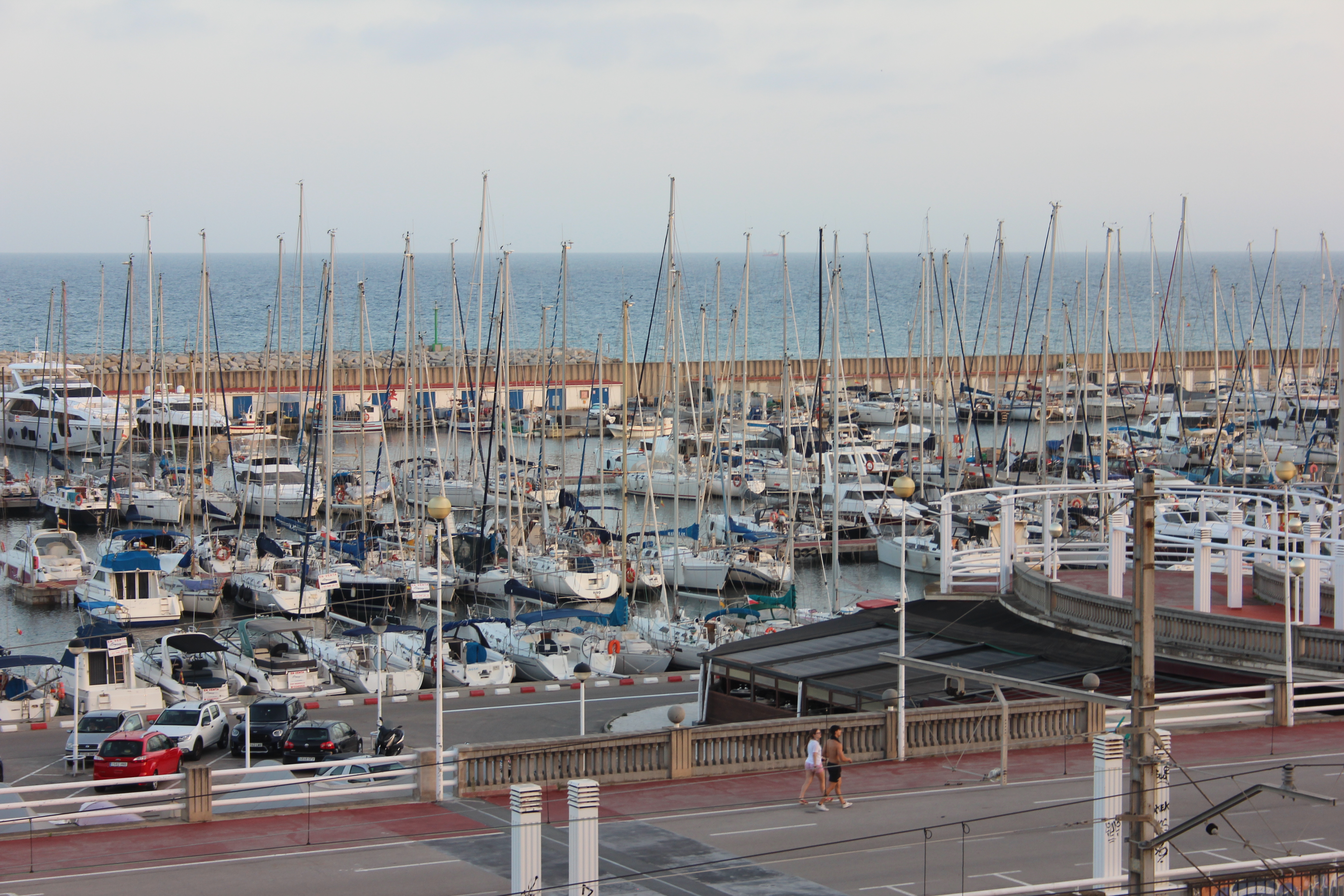
    I don’t know if anyone noticed, but I haven’t written much here. I spent the past couple of weeks visiting family in Spain, reading Brothers Karamazov1 on the beach and trying to forget about the state of the world. I was staying on a smaller location, about 20 minutes by train from downtown Barcelona, in a coastal region called El Maresme.

    And yet, how can you completely escape from the world? Even if you escape from it, it follows you. The local newspaper that I picked up at the nearby cafe, La Vanguardia, informed me that the Spanish birthrate has collapsed and that it is not going to come up again any time soon. Spanish people are just not having children or even marrying and, according to a recent study, in a decade or so a third of the households in Spain will be single-person.

    Meanwhile, migrants keep coming and while right now 21% of the residents of Catalonia are foreign-born — and that’s not counting those of migrant background but already born in Spain. This is likely to grow. More migrants will be coming, mostly from Morocco and Subsaharan Africa, but there are many coming from Latin America too. In fact, I was surprised at how many Latin Americans are there in Barcelona compared to 20 or even just 10 years ago.

    And yet, in a building just across from one of Gaudi’s masterpieces, I watched a conference by a famous Spanish journalist. At one point he said that “in the next decades, migrants from Africa and North Africa will comprise most of our population”, or something to that effect, but in a matter-of-factly tone. No one blinked. Everyone seemed to accept it as a given.

    And yet, when I looked at the audience, it was all white Spanish people — and mostly older folks too.

    Isn’t there a contradiction here?

    People expect that Spain will have a completely different population in fifty years, and things will work exactly the same way, but the audience seemed to show otherwise. Migrants don’t tend to go to Spanish journalists’ conferences. In the future, Spain — and large parts of Europe — will resemble more and more Latin America or perhaps North Africa in its dysfunction.

    And yet… Many right-wingers talk about such things as if society was on the verge of collapse, but I think that’s just exaggeration, or perhaps wishful thinking. Most countries in Latin America or North Africa haven’t collapsed yet. European countries seem still pretty chill, regardless of the occasional random “terrorist” attack (and some of those are probably staged by CIA/Mossad).

    It’s true that the current world order is mostly based on strange lies or utopian ideas — that all people are equal and replaceable, that sex differences don’t exist, that we need to wear masks to avoid viruses and suck carbon from the atmosphere and cut trees to “solve climate change” etc etc — and, as such, it cannot really go on forever. Nevertheless, it can still last for quite a while. After all, it took hundreds of years for the Roman Empire to fall. The Fall of the American Global Empire may take an even longer time.

    I don’t even think migration is the main problem in Spain. That would probably be feminism, which is the main reason of the current birth rate collapse in the country, as well as liberalism in general. In recent years, Spain has become very left-wing on social issues, and in particular in what is today called “gender” stuff. They really are one of the most radical countries in Europe in that aspect. And what hope can there be for a country that doesn’t understand the basic things about Nature and doesn’t even care to propagate itself, outsourcing its own reproduction to foreigners?

    On the other hand, life is still good. The beach is not going anywhere, never mind the screams of the apocalyptical climate cultists. You can eat well for very reasonable prices. Economically, people complain about jobs but they don’t seem to be struggling. Catalonia appears to be doing pretty well compared to other regions of Spain. There’s little sign of social unrest, most migrants are slowly integrating or rather merging, and even the Catalan separatists quieted down a bit.

    There is no sign of a visible collapse anytime soon.

    Of course, sooner or later something is bound to happen. Liberalism is like a castle made of cards, it is just not sustainable in the long run.

    But we may all be dead before it happens.

    Paraphrasing T. S. Eliot, this is how the West will end, not with a bang, but with a whimper.

    1

    *I am trying to read or re-read a few classic books I missed in my youth, and this seemed an obvious choice. The insufferably pompous Nabokov once said something to the effect that he wouldn’t include a page of Dostoevsky in a compilation of Russian literature, but I could never finish any of his books except “Lolita”, and while certainly well-written, what is it but a story of pretty disgusting Epstein-style characters? Dostoevsky has many more memorable novels.

  • Articles

    There is no freedom in the West

    Freedom is just another word for nothing left to lose

    For several weeks, protests against Israel’s campaign in Gaza have been ongoing at several American universities and a few European ones. It’s basically the same crowd of leftist students that protested for Black Lives Matters, for abortion or for other popular causes (but not against Covid lockdowns).

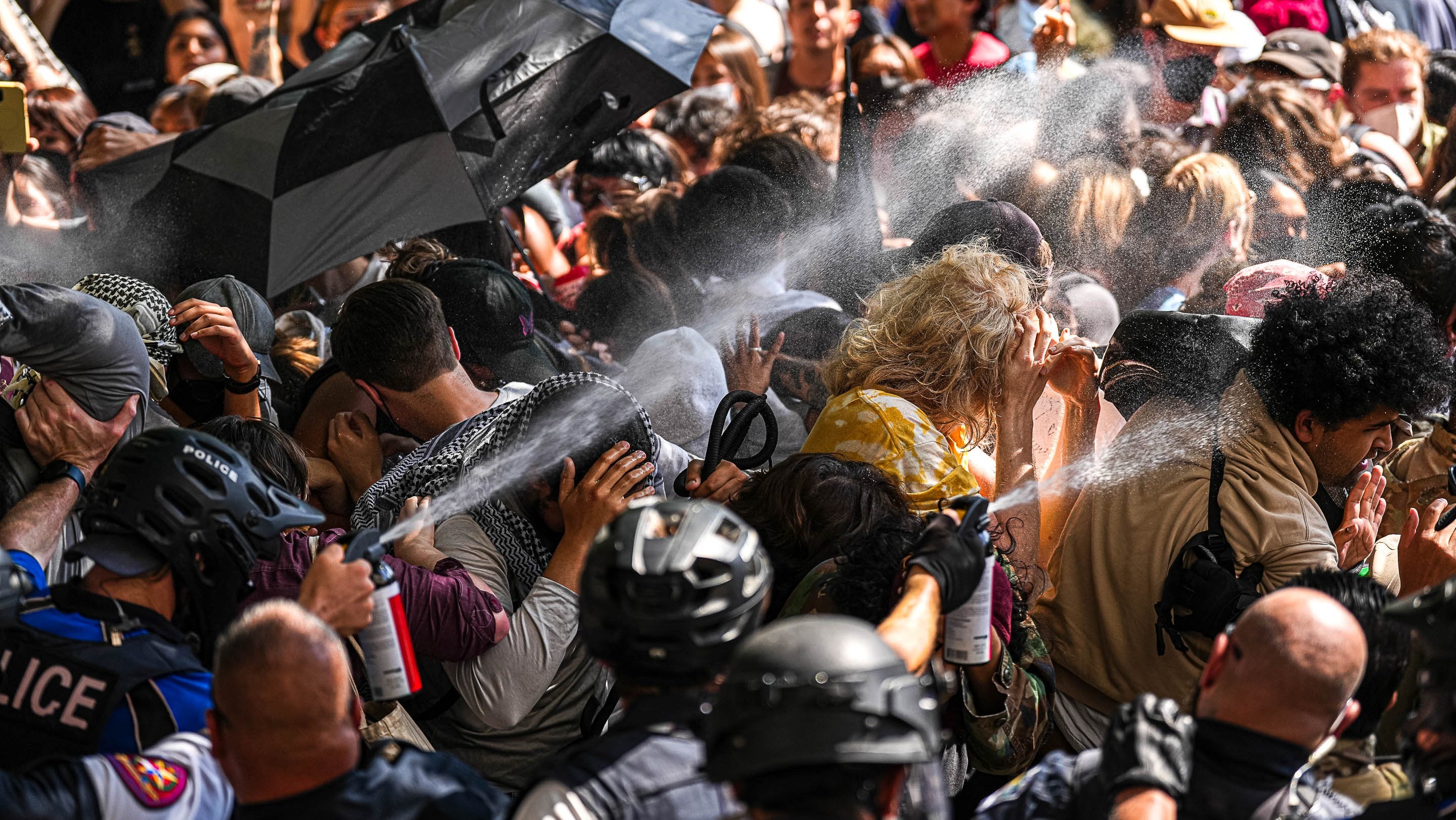
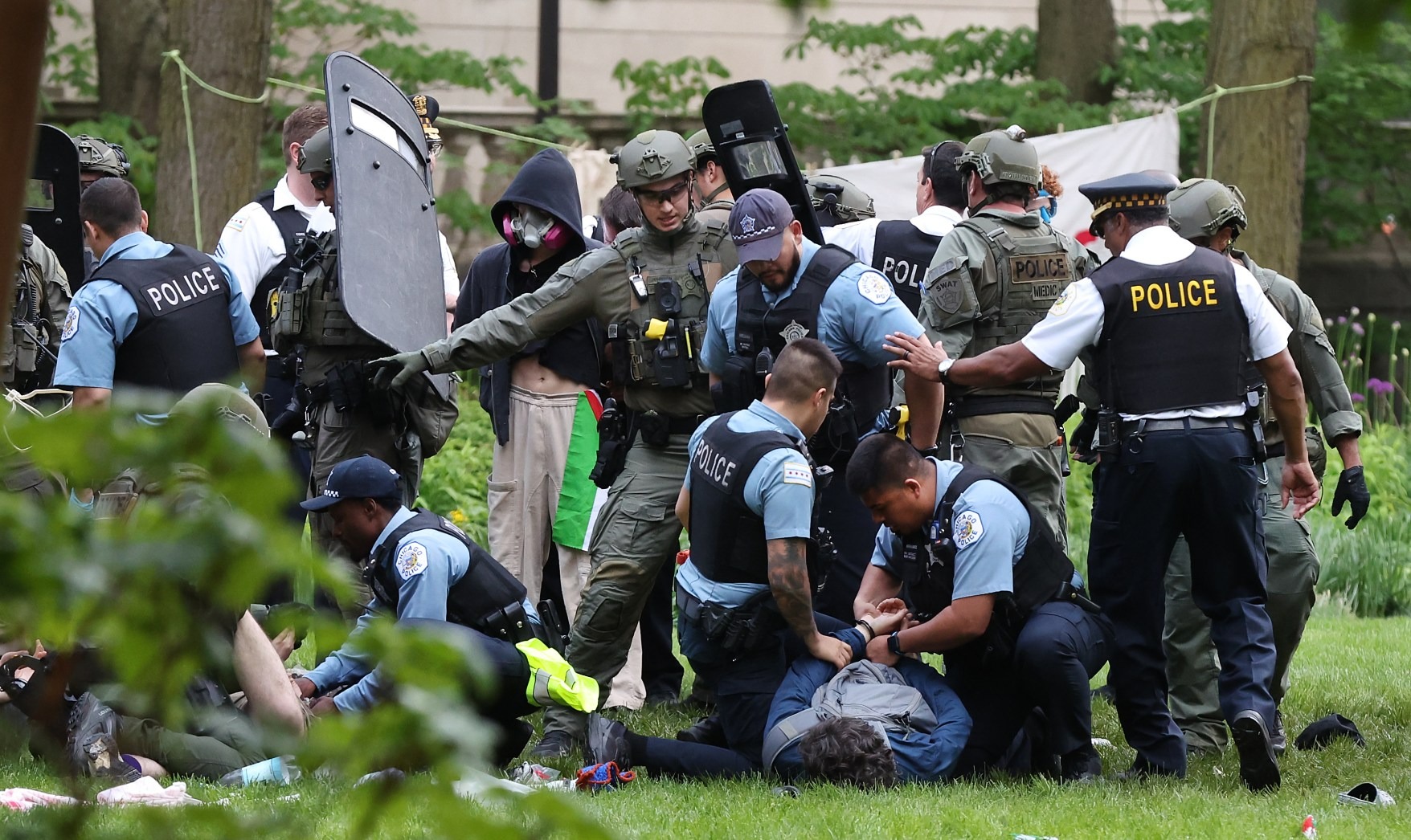
    But while those protests were accepted and even cheered by the establishment, and hardly anyone was arrested, now the police is coming in full force against the students. Some are being expelled from the university. Other have lost their jobs. A few were gassed or beaten up.

    It must have been quite a rude awakening.

    These are people who were brainwashed from childhood that the world is divided between “oppressors” and “oppressed”, so when they see unarmed women and children being bombed by a superior army, they naturally respond with indignation.

    But now they find out that, in this case, things are not so simple anymore.

    It is clear right now that are things you’re allowed to protest against — “white supremacy”, “patriarchy”, the Church — and things that you are not — vaccines, immigration, Israel.

    The protesters are being accused of being “anti-semitic”, but I doubt that they really are. Most of them support most Jewish causes and I am sure there are a few Jewish students among the protesters too (although a large part is likely of Arab origin).

    Politicians keep telling us that we have “freedom” in the West. In a way, it’s true.

    For instance, a man in Canada recently was free to ask a doctor to amputate two of his healthy fingers because of “body dysphoria”. He thought he was an amputee, so, using modern language, this was an “amputee-affirming” event.

    Another man was also free to declare himself as “non-binary” and to create an artificial “vagina”, but he also wanted to keep his penis just in case, because he wasn’t sure which “gender” he belonged to. So he obtained that right. And he even got the government, I mean, the Canadian taxpayers, to pay for the surgery.

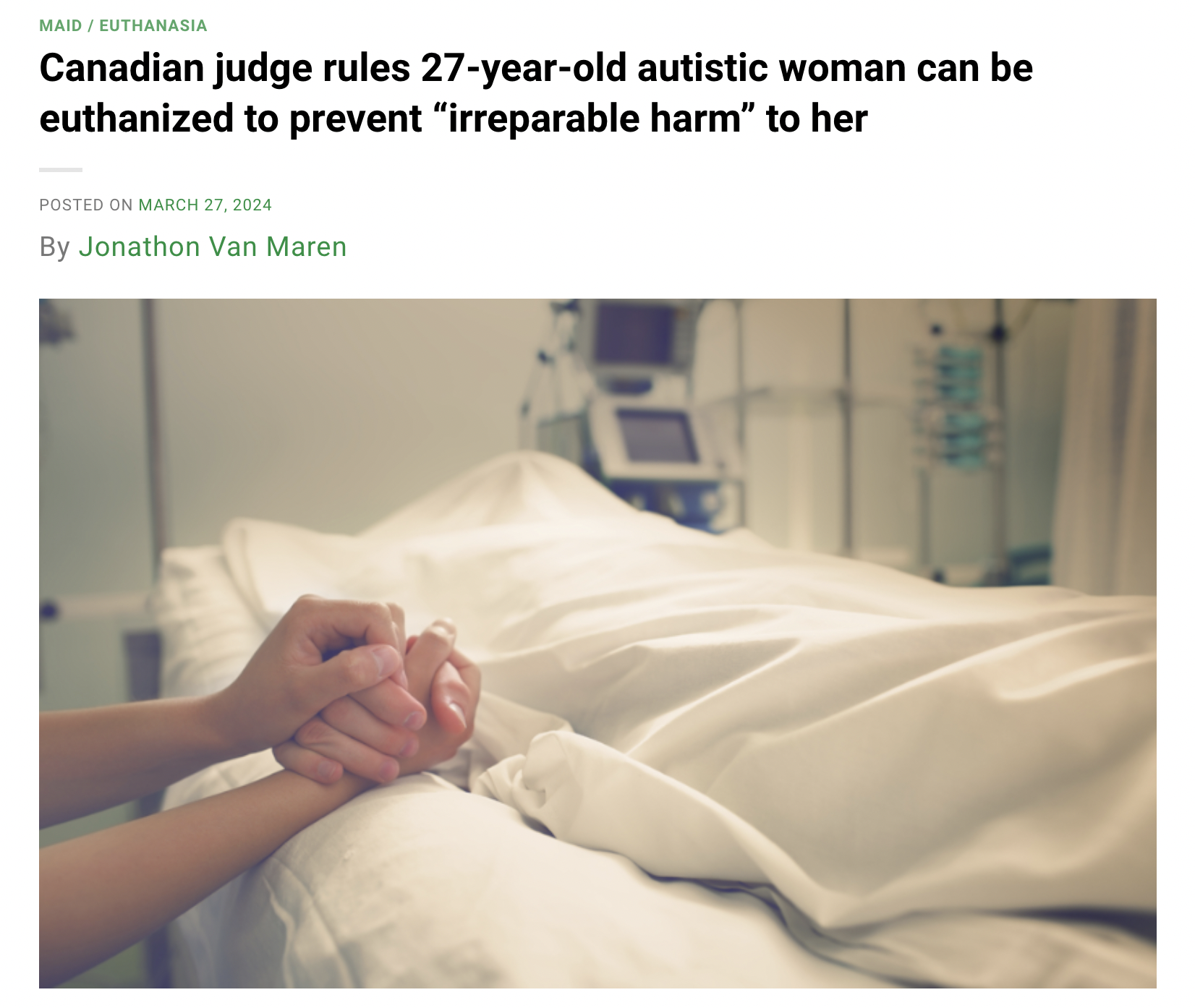
    Meanwhile, also in Canada — one of the countries closest to being a modern liberal utopia — a physically healthy 27-year old autistic woman was also free to take part in the government’s “MAID” program — a cute acronym for “Medical Assistance in Dying” — against the wishes of her own parents, because, otherwise, according to the authorities, she would suffer “irreparable harm.”

    So you’re “free” to do any of those things in the modern Western world. Also to abort, smoke marihuana, and get married to your pet.

    But try to protest or even post something against verboten topics, and see where that takes you.

    Digital Slaves

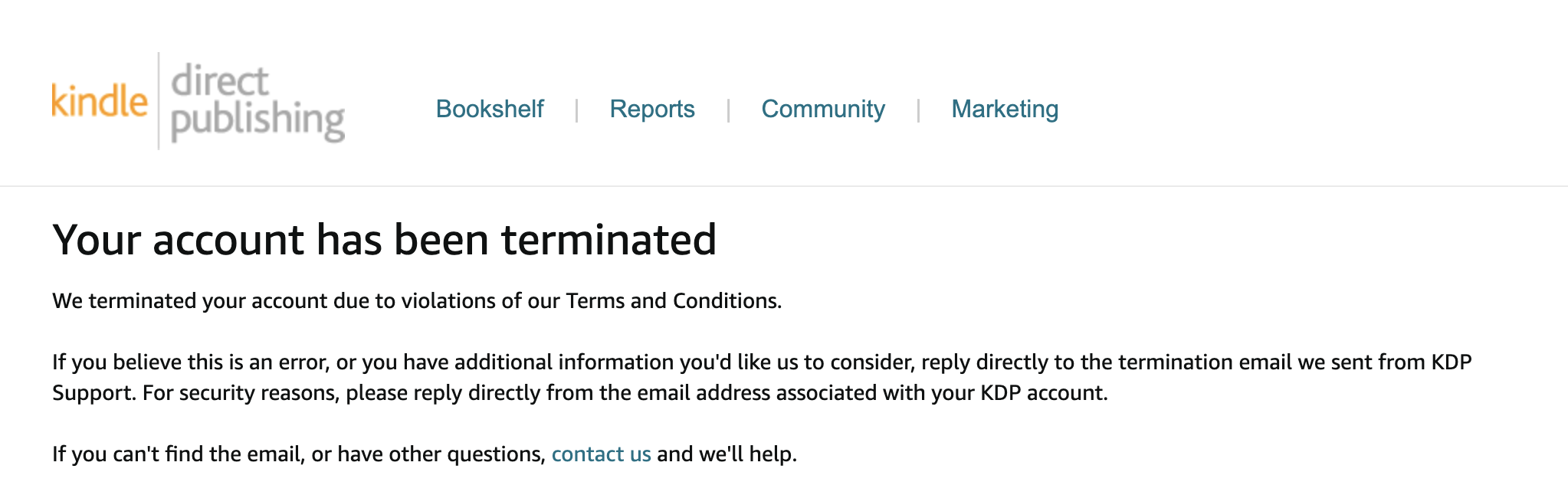
    A few days ago, Amazon terminated my Kindle Direct Publishing account, where I self-published a few books, with no reason or warning. They just sent me an email informing that they believe I violated their “Terms of Service”, although they did not specify in which way. They cancelled my account, deleted all my titles from Amazon, forbade me to ever opening a new Kindle account, and are not even going to pay for the unpaid royalties that they owe me. I can’t even access my previous sales reports.

    I wrote several emails asking for more information as to why I was “canceled”, but got no answer. There is no way to contact them by phone either.

    Since I didn’t publish anything particularly divisive, and all titles were either under my own copyright or works in the public domain, it is unclear what I did wrong.

    I never made more than 30-50 dollars a month from those books, so it’s not a big deal. But it sobering to find out that they can just delete all your work in a matter of seconds, under any excuse.

    I never liked Amazon very much for the way they destroyed first local bookstores and now all kinds of local shops, but when you see how little they care for publishers who use their platform, it’s quite a shock.

    For the moment, I will be moving the books to Barnes & Noble and Apple Books.

    However, the same is true of any other digital platform. YouTube, Facebook, Twitter, Google, Apple. They can just close your account at any time for any reason. In the digital world, nothing belongs to you.

    And that’s just the start.

    You might remember that during the anti-lockdown protests in Canada, Justin Trudeau froze the bank accounts of several protesters. So they already can do that. But as the world moves to a digital currency, things are going to get worse. They will be able to just take away all your money with the push of a button, for any reason, just like Amazon did with my KDP account.

    The European Union is already moving into the direction of banning cash. There’s already a law being considered that would ban all individual cash transactions over 3,000 euros. The excuse is “terrorism”, but we all know the score.

    But hey, at least you are free to amputate any body part you want.

  • Articles

    Traveling with Vigée Le Brun

    Brief notes on an artist’s travel diary

    As the world moves closer to WWIII for reasons no sane man can understand, I prefer for the moment to write about travel.

    I am still reading Vigée Le Brun’s memories about her travels in Italy, and finding them pretty interesting. But then again, I usually like to read diaries or travel journals, even by relatively unknown or obscure people, and especially if they are from a different period. They provide a window into a different time.

    You can find here a version in English translated by Lionel Strachey, who was the brother of the more famous Lytton Strachey from the Bloomsbury circle. (I tried to find more info about Lionel, but all I could find was that he was tragically killed by a train). Be aware however that this translation seems to be a reduced version as it does not contain all the chapters that the one in French does.

    This being the 18th century, all the traveling was done in coaches pulled by horses, when not by mules or simply walking, but we don’t hear any lamentations from Mme Le Brun. At least she didn’t have to worry about TSA patting or faulty Boeing planes.

    In fact, what is particularly nice about Le Brun’s souvenirs is that she is usually very cheerful. She can’t stop raving about Italian landscapes and Italian music and Italian artists, and she meets and talks to lots of interesting people on the way. She can be a bit snobbish but not as much as you’d expect. Her major complaint is about how hard it is to find an apartment in Rome that is not noisy.

    I guess some people like traveling, and some don’t. I remember reading years ago a book by V. S. Naipaul about Argentina. The guy was always complaining, and couldn’t find a single nice thing to say about the country. Not even dulce de leche! Next time, buddy, maybe stay home?

    It’s like that classic cartoon of two people riding the same bus, but the one on one side sees a gloomy rock wall, and the one on the other side sees a beautiful sunny landscape.

    In fact, Vigée Le Brun has exactly this experience as she rides in a coach from Rome to Napoli. She sees a beautiful pastoral landscape filled with sheep and exclaims that it would make a wonderful painting. His traveling companion (a Frenchman married to Voltaire’s niece) replies: “They’re all dirty with dung. The English sheep, those are the ones you should see”.

    Then she points to a group low clouds in the horizon coloured by the setting sun and leaning against the Appenines, exclaiming how beautiful it all is. Her companion replies: “The only thing those clouds tell us is that it’s going to rain tomorrow”. From then on, she just ignores her companion, whom she nicknames “éteignoir” (killjoy).

    Of course, one advantage that Le Brun has is that she is very sociable and extremely well-connected. Wherever she goes, she meets all the local ambassadors, counts and duchesses, as well as several French emigré (understandably, there were many abroad at that time, as heads were rolling in France).

    Sometimes I wish people more would read my travel articles, but being an introvert and not particularly well-connected with the upper classes, I rarely meet other people except tourists, proles or local bums at cafes. But, instead of someone like, say, Linh Dinh, who manages to extract from them wonderful or bizarre stories, I usually prefer to leave them on their own.

    And yet, descriptions of places or events only take us so far. It is meeting and talking to people who provides most of the interest in travel writing.

    Lady Hamilton

    One of the interesting people Le Brun meets in Napoli is Lady Hamilton. There are different versions of her life, some of them contradicting others, but let us follow Vigée Le Brun’s account.

    Born to a hairdresser and a sailor, she started to work as a maid but soon lost her job and would soon have become some sort of lower class prostitute if she had not discovered a very particular talent: she was neither actress nor painter, but she could be a very expressive model. After being discovered by the celebrated painter George Romney, she became a sort of celebrity herself.

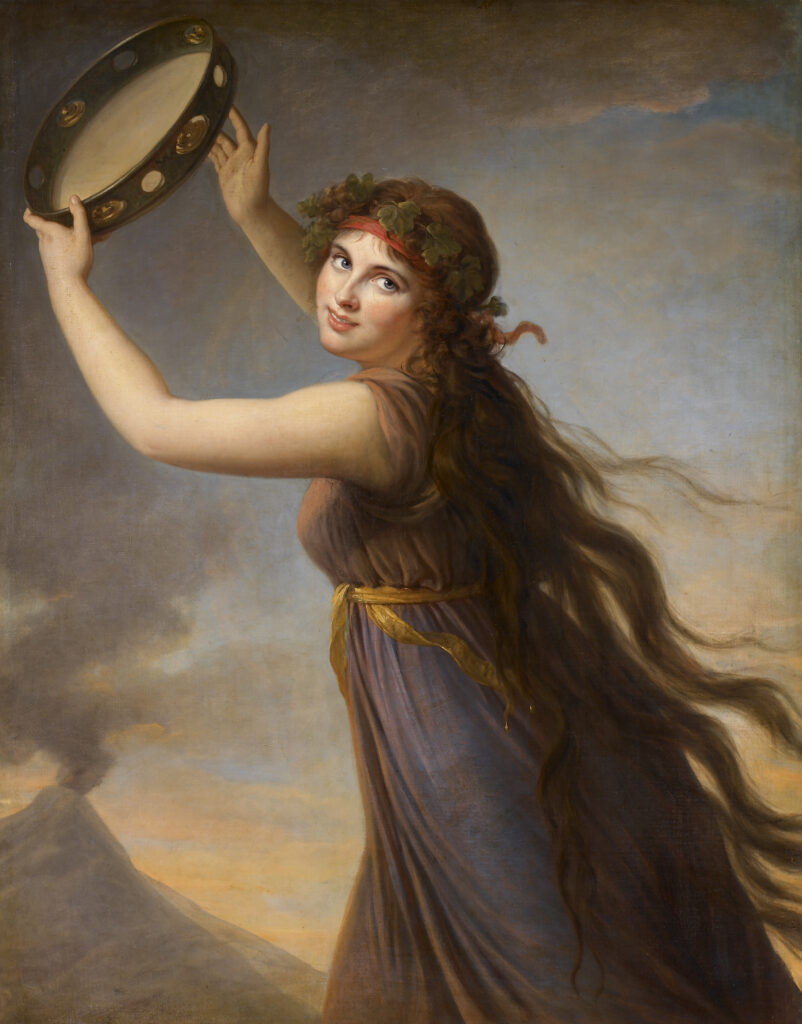
    Apt as well at social climbing, soon she became the lover of a succession of rich men who, however, didn’t keep her for long. She was supposed to marry Charles Greville, a rich antiquarian, but ended up marrying her older uncle instead, Lord William Hamilton, who was even richer and lived in Napoli as an ambassador. This is where Le Brun meets her and paints several portraits of her.

    Lady Hamilton remained nominally married to Lord Hamilton until he died, but the real love of her life was Lord Nelson, the famous English admiral who defeated Napoleon in the Battle of Trafalgar. Everyone, even Lord Hamilton, knew that Nelson was her lover. (Vigée Le Brun’s meets her again later in London and doesn’t buy her sadness at having recently becoming a widow).

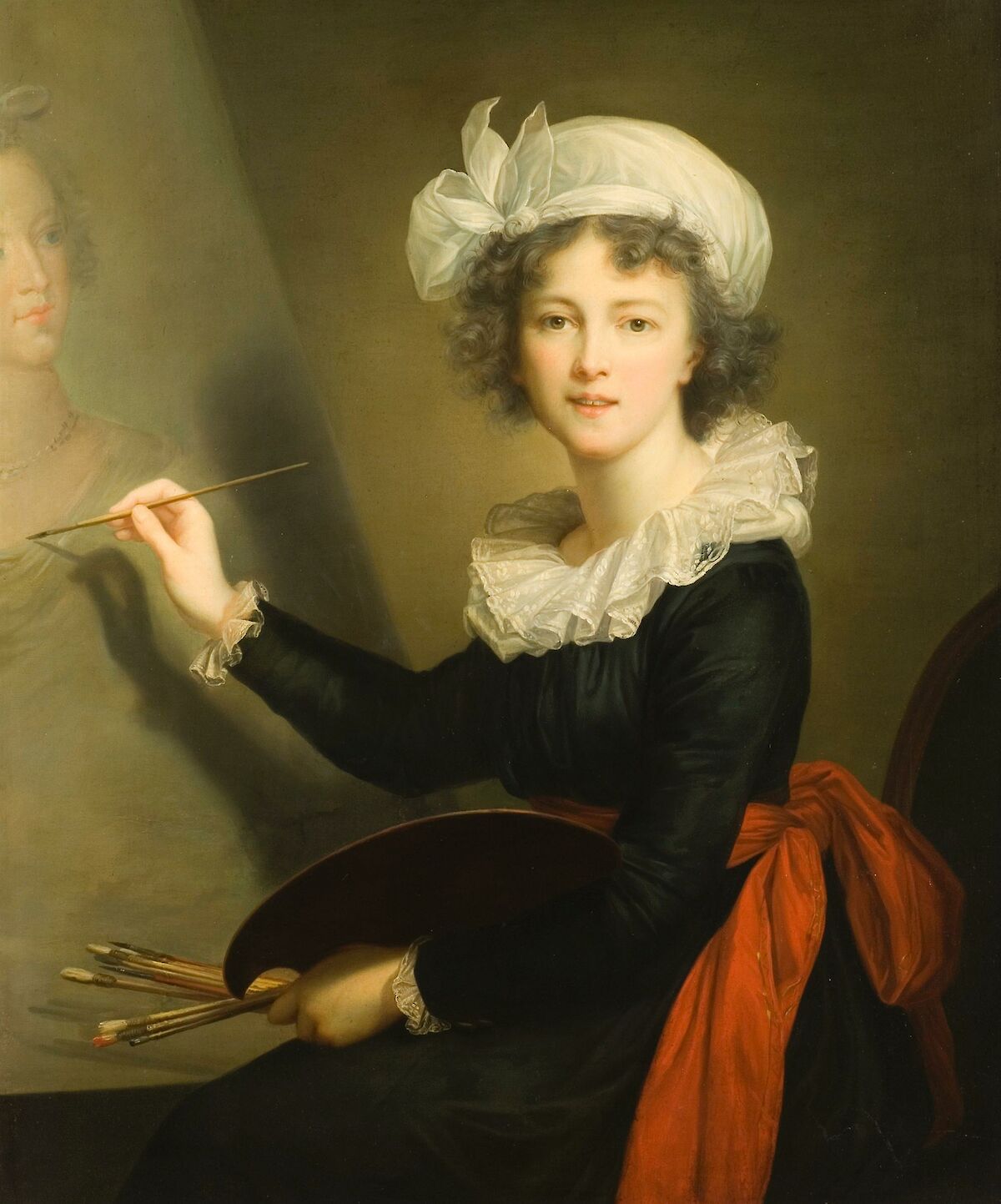
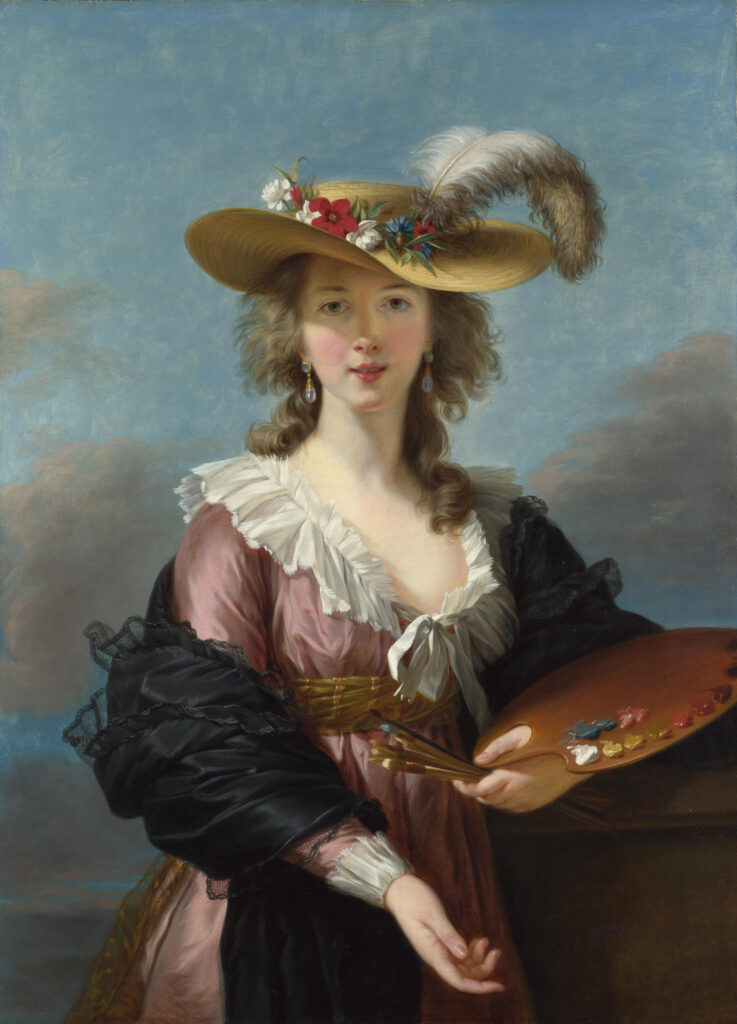
    I haven’t seen Le Brun’s several portraits of Lady Hamilton, but I managed to see Vigée Le Brun self-portrait which is still hanging on the Ufizzi Gallery in Florence. It is very nice. While not reaching the heights of her beloved Raphael and Correggio (bur who has?) she was a talented painter alright.

    Russia

    Interestingly, after leaving Italy Vigée Le Brun ended up in Russia, where she lived for several years, mostly in Saint Petersburg. She has a surprisingly positive view of Russia and the Russian people. (I say surprisingly because it doesn’t seem the usual Western European view, either back then or now.)

    She even says at one point that Russians rarely drink and that she never saw a drunk Russian, which makes me doubt of her powers of observation. Then again, I suppose she lived mostly among the upper classes and exiles in Czarist Russia, so who knows.

    She leaves Russia shortly after her daughter marries Gaëtan Bertrand Nigris, a Frenchman who works in Saint Petersburg, a marriage she doesn’t approve. She might have been right: the couple divorce just a few years later after and the daughter returns to France, but she never fully reconciles with her mother. She dies in poverty at only 39 years of age.

    After further periods of exile in England, Switzerland and the Netherlands, Vigée Le Brun returned to France definitely in 1809. She died in 1842 at 86 years of age. Her Souvenirs were written and published in 1835. Besides her self-portrait hanging in the Uffizzi Gallery in Florence, she has many works in the Metropolitan Museum of Art in New York and in the Louvre. During her life, she painted more than 600 paintings, mostly portraits.

  • Articles - Featured

    Freedom is just another word for nothing left to lose

    For several weeks, protests against Israel’s campaign in Gaza have been ongoing at several American universities and a few European ones. It’s basically the same crowd of leftist students that protested for Black Lives Matters, for abortion or for other popular causes (but not against Covid lockdowns).

    But while those protests were accepted and even cheered by the establishment, and hardly anyone was arrested, now the police is coming in full force against the students. Some are being expelled from the university. Other have lost their jobs. A few were gassed or beaten up.

    It must have been quite a rude awakening.

    These are people who were brainwashed from childhood that the world is divided between “oppressors” and “oppressed”, so when they see unarmed women and children being bombed by a superior army, they naturally respond with indignation.

    But now they find out that, in this case, things are not so simple anymore.

    It is clear right now that are things you’re allowed to protest against — “white supremacy”, “patriarchy”, the Church — and things that you are not — vaccines, immigration, Israel.

    The protesters are being accused of being “anti-semitic”, but I doubt that they really are. Most of them support most Jewish causes and I am sure there are a few Jewish students among the protesters too (although a large part is likely of Arab origin).

    Politicians keep telling us that we have “freedom” in the West. In a way, it’s true.

    For instance, a man in Canada recently was free to ask a doctor to amputate two of his healthy fingers because of “body dysphoria”. He thought he was an amputee, so, using modern language, this was an “amputee-affirming” event.

    Amputation is now a “highly satisfying curative treatment”, according to doctors.

    Another man was also free to declare himself as “non-binary” and to create an artificial “vagina”, but he also wanted to keep his penis just in case, because he wasn’t sure which “gender” he belonged to. So he obtained that right. And he even got the government, I mean, the Canadian taxpayers, to pay for the surgery.

    Meanwhile, also in Canada — one of the countries closest to being a modern liberal utopia — a physically healthy 27-year old autistic woman was also free to take part in the government’s “MAID” program — a cute acronym for “Medical Assistance in Dying” — against the wishes of her own parents, because, otherwise, according to the authorities, she would suffer “irreparable harm.”

    And death can prevent “irreparable harm”.

    So you’re “free” to do any of those things in the modern Western world. Also to abort, smoke marihuana, and get married to your pet.

    But try to protest or even post something against verboten topics, and see where that takes you.

    Digital Slaves

    A few days ago, Amazon terminated my Kindle Direct Publishing account, where I self-published a few books, with no reason or warning. They just sent me an email informing that they believe I violated their “Terms of Service”, although they did not specify in which way. They cancelled my account, deleted all my titles from Amazon, forbade me to ever opening a new Kindle account, and are not even going to pay for the unpaid royalties that they owe me. I can’t even access my previous sales reports.

    I wrote several emails asking for more information as to why I was “canceled”, but got no answer. There is no way to contact them by phone either.

    Since I didn’t publish anything particularly divisive, and all titles were either under my own copyright or works in the public domain, it is unclear what I did wrong.

    I never made more than 30-50 dollars a month from those books, so it’s not a big deal. But it sobering to find out that they can just delete all your work in a matter of seconds, under any excuse.

    I never liked Amazon very much for the way they destroyed first local bookstores and now all kinds of local shops, but when you see how little they care for publishers who use their platform, it’s quite a shock.

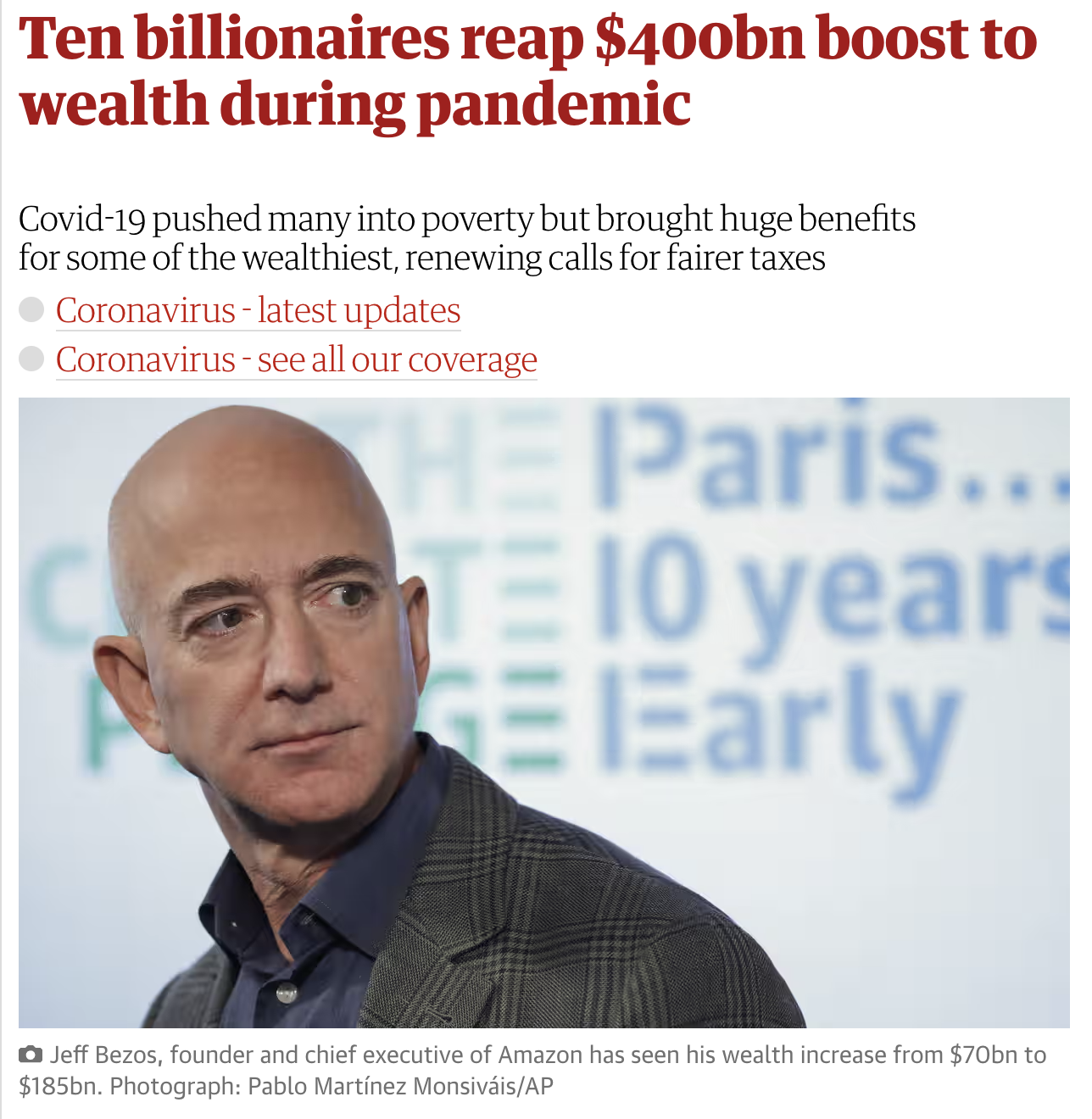
    The poor get poorer…

    …and the rich get richer.

    For the moment, I will be moving the books to Barnes & Noble and Apple Books.

    However, the same is true of any other digital platform. YouTube, Facebook, Twitter, Google, Apple. They can just close your account at any time for any reason. In the digital world, nothing belongs to you.

    And that’s just the start.

    You might remember that during the anti-lockdown protests in Canada, Justin Trudeau froze the bank accounts of several protesters. So they already can do that. But as the world moves to a digital currency, things are going to get worse. They will be able to just take away all your money with the push of a button, for any reason, just like Amazon did with my KDP account.

    The European Union is already moving into the direction of banning cash. There’s already a law being considered that would ban all individual cash transactions over 3,000 euros. The excuse is “terrorism”, but we all know the score.

    But hey, at least you are free to amputate any body part you want.

  • Art - Articles - Featured - Travel

    Traveling with Vigée Le Brun

    As the world moves closer to WWIII for reasons no sane man can understand, I prefer for the moment to write about travel.

    I am still reading Vigée Le Brun’s memories about her travels in Italy, and finding them pretty interesting. But then again, I usually like to read diaries or travel journals, even by relatively unknown or obscure people, and especially if they are from a different period. They provide a window into a different time.

    You can find here a version in English translated by Lionel Strachey, who was the brother of the more famous Lytton Strachey from the Bloomsbury circle. (I tried to find more info about Lionel, but all I could find was that he was tragically killed by a train). Be aware however that this translation seems to be a reduced version as it does not contain all the chapters that the one in French does.

    This being the 18th century, all the traveling was done in coaches pulled by horses, when not by mules or simply walking, but we don’t hear any lamentations from Mme Le Brun. At least she didn’t have to worry about TSA patting or faulty Boeing planes.

    In fact, what is particularly nice about Le Brun’s souvenirs is that she is usually very cheerful. She can’t stop raving about Italian landscapes and Italian music and Italian artists, and she meets and talks to lots of interesting people on the way. She can be a bit snobbish but not as much as you’d expect. Her major complaint is about how hard it is to find an apartment in Rome that is not noisy.

    I guess some people like traveling, and some don’t. I remember reading years ago a book by V. S. Naipaul about Argentina. The guy was always complaining, and couldn’t find a single nice thing to say about the country. Not even dulce de leche! Next time, buddy, maybe stay home?

    It’s like that classic cartoon of two people riding the same bus, but the one on one side sees a gloomy rock wall, and the one on the other side sees a beautiful sunny landscape.

    In fact, Vigée Le Brun has exactly this experience as she rides in a coach from Rome to Napoli. She sees a beautiful pastoral landscape filled with sheep and exclaims that it would make a wonderful painting. His traveling companion (a Frenchman married to Voltaire’s niece) replies: “They’re all dirty with dung. The English sheep, those are the ones you should see”.

    Then she points to a group low clouds in the horizon coloured by the setting sun and leaning against the Appenines, exclaiming how beautiful it all is. Her companion replies: “The only thing those clouds tell us is that it’s going to rain tomorrow”. From then on, she just ignores her companion, whom she nicknames “éteignoir” (killjoy).

    Of course, one advantage that Le Brun has is that she is very sociable and extremely well-connected. Wherever she goes, she meets all the local ambassadors, counts and duchesses, as well as several French emigré (understandably, there were many abroad at that time, as heads were rolling in France).

    Sometimes I wish people more would read my travel articles, but being an introvert and not particularly well-connected with the upper classes, I rarely meet other people except tourists, proles or local bums at cafes. But, instead of someone like, say, Linh Dinh, who manages to extract from them wonderful or bizarre stories, I usually prefer to leave them on their own.

    And yet, descriptions of places or events only take us so far. It is meeting and talking to people who provides most of the interest in travel writing.

    Lady Hamilton

    One of the interesting people Le Brun meets in Napoli is Lady Hamilton. There are different versions of her life, some of them contradicting others, but let us follow Vigée Le Brun’s account.

    Born to a hairdresser and a sailor, she started to work as a maid but soon lost her job and would soon have become some sort of lower class prostitute if she had not discovered a very particular talent: she was neither actress nor painter, but she could be a very expressive model. After being discovered by the celebrated painter George Romney, she became a sort of celebrity herself.

    Apt as well at social climbing, soon she became the lover of a succession of rich men who, however, didn’t keep her for long. She was supposed to marry Charles Greville, a rich antiquarian, but ended up marrying her older uncle instead, Lord William Hamilton, who was even richer and lived in Napoli as an ambassador. This is where Le Brun meets her and paints several portraits of her.

    Lady Hamilton remained nominally married to Lord Hamilton until he died, but the real love of her life was Lord Nelson, the famous English admiral who defeated Napoleon in the Battle of Trafalgar. Everyone, even Lord Hamilton, knew that Nelson was her lover. (Vigée Le Brun’s meets her again later in London and doesn’t buy her sadness at having recently becoming a widow).

    I haven’t seen Le Brun’s several portraits of Lady Hamilton, but I managed to see Vigée Le Brun self-portrait which is still hanging on the Ufizzi Gallery in Florence. It is very nice. While not reaching the heights of her beloved Raphael and Correggio (bur who has?) she was a talented painter alright.

    Russia

    Interestingly, after leaving Italy Vigée Le Brun ended up in Russia, where she lived for several years, mostly in Saint Petersburg. She has a surprisingly positive view of Russia and the Russian people. (I say surprisingly because it doesn’t seem the usual Western European view, either back then or now.)

    She even says at one point that Russians rarely drink and that she never saw a drunk Russian, which makes me doubt of her powers of observation. Then again, I suppose she lived mostly among the upper classes and exiles in Czarist Russia, so who knows.

    She leaves Russia shortly after her daughter marries Gaëtan Bertrand Nigris, a Frenchman who works in Saint Petersburg, a marriage she doesn’t approve. She might have been right: the couple divorce just a few years later after and the daughter returns to France, but she never fully reconciles with her mother. She dies in poverty at only 39 years of age.

    After further periods of exile in England, Switzerland and the Netherlands, Vigée Le Brun returned to France definitely in 1809. She died in 1842 at 86 years of age. Her Souvenirs were written and published in 1835. Besides her self-portrait hanging in the Uffizzi Gallery in Florence, she has many works in the Metropolitan Museum of Art in New York and in the Louvre. During her life, she painted more than 600 paintings, mostly portraits.

    “Self-portrait with a straw hat” (1782)

    “Lady Hamilton as a Bacchante” (Elisabeth Vigée Le Brun, 1792)