• Articles

    Northern Europe, Southern Europe

    A tale of contrasting stereotypes

    There are at least two Europes: Northern Europe, and Southern Europe. (Maybe three, counting Eastern Europe, which is also a different universe altogether, but not one that I am very familiar with.) So, here, I will talk only about the North and the South.

    I’m fascinated by the Northern European countries, in particular the Scandinavian ones, but the fascination is closely associated with a slight feeling of strangeness or alienness. I just don’t fully understand the people or the society (not to mention most of the languages), and I know that, even if I live there 30 or 40 years, I will never fully belong.

    Southern Europe has many problems and perhaps many strange things too — but it is home. Whenever I am in Spain, Portugal or Italy, I can instantly recognize many places, things and people, even if I have not seen them before. Even France, which is perhaps somewhere between the Southern and Northern ethos, is not a foreign country.

    Of course, there is also a mutual fascination between Northern and Southern Europeans, as two different tribes that share the same continent and history, but, partly because of the climate and partly because of, I suppose, genetic and cultural reasons, have somewhat drifted apart.

    The fascination is not just mine, of course, and it goes the opposite way too. Germans and Brits have always been fascinated by Spain and Italy, and I do not mean just the tourists that every summer come down in droves. Historically, Southern Europe was a theme and setting for many northern artists and writers, starting with Shakespeare, who wrote a third of his plays set in Italy (and a few in France, and one in Spain).

    “O for a beaker full of the warm South”, wrote Keats, “That I might drink, and leave the world unseen.” He fled from England to Rome, seeking relief for his tuberculosis, but found only an early death.

    After that, what can I say that has not been said before, by better writers?

    Northern Europe is Protestant and austere. Southern Europe is Catholic and baroque.

    (Is the austerity of the Protestant churches really related to their dislike of images, in particular of Saints and the Virgin Mary, or is it just just a reflection of the austerity of the people? Just as the florid style of Catholic churches might be a reflection of the more florid people down south?)

    Northern Europe is pragmatic and hard-working. Southern Europe is romantic and laidback. (Most business close from 1 to 4 — people do work, but they have time to eat and rest, too).

    Northern Europe eats fast food. (Hamburgers and Frankfurters, or hot dogs, are of course German inventions). Southern Europe eats slow food.

    Northern Europe drinks beer and spirits. Southern Europe drinks wine. (Although beer is now popular too. But the wine is better in the South).

    Wherever the Catholic sun doth shine,
    There’s always laughter and good red wine.
    At least I’ve always found it so.
    Benedicamus Domino!
    (Hilaire Belloc)

    In Northern Europe people are cold but efficient. In Southern Europe they are warm but disorganized.

    Northern Europe saves. Southern Europe gets indebted. (Northern Europe is the ant in the fable, Southern Europe the grasshopper).

    Northern Europeans love (and sometimes envy) the laidback style of the South, but distrust Southern Europeans. Southern Europeans admire (and sometimes envy) the organization of Northern Europeans, but feel inadequate among them.

    From the 1600 until the early 1800s, it was traditional for writers and artists and educated (and rich) people in general to do the “Grand Tour” — a trip across Europe from North to South, usually starting in England or Germany then going to France, then Italy, all the way down to Naples, and, sometimes, Sicily (Goethe went all the way to Sicily, and wrote about it). Part of the interest of the travel was finding the many contrasts between the North and the South.

    I will be doing the opposite, going upwards, South to North. (But in a plane, so, no intermediary stops, and much more quickly).

    From a place like home, to a place unknown.

    Do we travel to see differences, or to find similarities?

    Let me conclude with an excerpt of the poem “Questions of Travel“, by Elizabeth Bishop:

    “Is it lack of imagination that makes us come
    to imagined places, not just stay at home?
    Or could Pascal have been not entirely right
    about just sitting quietly in one’s room?

    Continent, city, country, society:
    the choice is never wide and never free.
    And here, or there . . . No. Should we have stayed at home,
    wherever that may be?”

  • Articles

    The rain in Spain stays mainly in the plain

    And now for something completely different

    I don’t like so much to write about politics. It feels a bit dirty, and it gets old very fast. In the long run, it is not so important as it seems at first. In general, I prefer to discuss deeper cultural, historical and social issues, or really, just to write about traveling. I would jot down and publish only travel observations if I could, even if no one read them. However, I do not always have the chance to travel.

    Right now, however, I am in Spain, and will remain here for two weeks, and later I will go on to Finland, so it might be a good time to take some photographs and make some observations that might or might not be of interest to my five or six readers.

    Spain is an interesting country, and, in many ways, closer to me than Northern European countries, which always feel a bit alien to me. My family origins are mainly Spanish (Catalan) and Italian, so I feel at home here. We talk about “Spain”, but really were I am is Catalonia, which, even if it is not (yet?) a separate country, has its own culture and language making it pretty different from other regions such as, say, Andalusia. No flamenco here, they prefer the sardana.

    Rain? In the plain? Not really. Weather is always sunny, with a temperature between 16 and 18 degrees Celsius, and will continue to remain good or better for the rest of the week.

    Adéu, ja ens veurem.

  • Articles

    Reverse Finlandization?

    Finland joins the new Cold War

    The good news is that prime minister Sanna Marin was voted out. The bad news is that it doesn’t matter, because, after decades of neutrality even during the Cold War, Finland has joined NATO. 

    I don’t even know who’s the new Finnish prime minister, but I’m glad that Sanna is out. I have to say I found her really annoying. Now, I am not necessarily against women rulers, but I am certainly against women like her. All the news about her were that she was the youngest prime minister ever, that she was a woman, that she was pretty, that she went to parties, etc. I’m sorry, you can’t run a country just based on sex appeal. It doesn’t make your nation look very serious. 

    But Finland is now in NATO. And this annoys me for several reasons, the main one is that I should be going there soon. When I accepted, more than a year ago, to take part in an arts residency in a remote place in Finland for a month, my idea was to get away from all the worries of the world. I would not watch any news for a month, especially not war news, and would just have a quiet place to write. Well, that’s now gone, as Finland has become a focal point in this new Cold War that we seem to have created. 

    They say that the reason is the invasion of the Ukraine by Russia, and that they were afraid Finland could be next. But this is just an emotional explanation, used to convince people. Whatever the reasons for the war in the Ukraine, they are mostly regional reasons that do not really necessarily apply to Finland. Why leave neutrality to become a target? Now they’re going to have a militarized border, more American soldiers stationed there, nuclear missiles, and hostile relations with their next-door neighbour, which were mostly peaceful before. Now, who knows.

    The term “finlandization” meant pressure by a bigger country to make a smaller country basically obey their foreign policy rules, while allowing it to keep its nominal independence and its own political system. It applied to the Soviet Union in their earlier relations with Finland, but I suppose now it applies, reversely, to the United States and the pressure it applies on its allies.

    Now, what is NATO? Simplifying things, belonging to NATO just means that you are a colony of the United States. That’s basically what it means. Now, they cannot use the American flag, because that would be too obvious, so they use the Rainbow flag instead. I don’t know why they chose this particular flag and this particular topic, but that’s how it is.  

    Of course, you don’t need to be a member of NATO to be a U.S. colony, that’s just for the VIPs.

    Here is a map of U.S. military bases around the world. 

    Here is a map of countries that sanctioned Russia. 

    And here is a map of countries that have “gay marriage”. 

    Here is a map of countries with large numbers of recent immigrants. 

    Except for some differences here and there, all maps more or less match, don’t they?  

    Remember, when these people talk about “freedom” or “democracy” — and they talk a lot about it — what they mostly mean is gay marriage and population replacement. The rest is negotiable.

    And the countries that are occupied by the U.S., but do not yet accept gay marriage or population replacement, such as Japan, are being constantly pressured to accept them too. Multiculturalism and gay marriage seem to be a proxy for American colonization. 

    So that’s where Finland is now. I am not extremely happy about it, because it sort of breaks my romantic idea of isolation from the rest of the world’s problems, but that’s how it is, and we’ll see how it goes from here.

  • Articles

    Transhuman Day of Visibility

    Trying to understand what is going on

    It seems that just the other day it was the “Transgender Day of Visibility”. Honestly, I wish there was a “Transgender Day of Invisibility” instead, because it seems it’s the only thing we hear about these days. It has become a weird obsession, and something that I must admit I do not fully understand.

    Now, I lived for many years of my youth in Brazil, which was once famous all over the world for its transvestites, which were more or less common — well, I guess mostly during the Carnival season, but also in the world of prostitution and nightlife. Every now and then there was some case of a famous football player involved with “travestis”…

    Then, at some point in the 1980s or early 1990s, a transvestite called Roberta Close started to appear in television and became famous. I am not sure if this curious character had had some kind of surgery or not, I suppose so, as those type of surgeries existed already back then, even if they were not as common or advanced as today. (I say “transvestite” because that was the normal term used back then, and because most of them did not have any kind of surgery, being simply crossdressers.)

    Anyway, that is to say that I never thought about it all that much, the whole thing back then was more exotic than harmful, and of course no one was thinking about teaching that stuff in schools, nor was it all the time on the media, nor were there such things as “puberty blockers” being pushed to pre-teens.

    But, at some point, things changed. I don’t know exactly when. The first sign were maybe those early Almodovar movies, and perhaps similar alternative directors in the U.S.. Then there was also that Australian movie, “Priscilla, Queen of the Desert”. And then it moved from the alternative to the mainstream and became common to see it in television too. Now we see it everywhere, from kindergartens to sport halls to public libraries.

    Was it spontaneous? Not really. No one asked for it, not even the transgenders. This is clearly something that is pushed from above. Just think about the “Drag Queen Story Hour”, which started as a small local event in San Francisco (where it might, perhaps, have made some sense), but today is repeated in thousands of public libraries and schools all over the U.S., and even at places such as the Ramstein U.S. Army base in Germany. There is clearly some huge funding and promotion behind this.

    It used to annoy me, especially the promotion of such clearly adult and sexual stuff to children, but then I realized that this is the exact objective intended: to annoy people, to try to hit their sensibilities, in particular by targeting children, which we all have some innate tendency to want to protect. It is not about actual people with gender dysphoria, which might reach perhaps 0.1% of the population, it is more a psychological operation, mostly intended to distract, annoy and divide people. They want to make people angry at transgenders, perhaps because this way they do not get angry about other things.

    Transgenderism is also connected to the other “trans” that they want to push, which is transhumanism, and which is the real ideology guiding much of the modern world. If genders don’t exist, and you can switch from one to another, then of course no other characteristic that makes us human exists too. If someone wants to have a third breast or a third eye, or antennas, or a microchip in their head, well, why not?

    The endgame is to create “trans-human” beings by merging them with machines or by changing their genetic code. It will be sold (it is being sold) as giving freedom or superpowers beyond the natural ones (“you’ll become like a Marvel superhero”!), but it will actually result in something more akin to slavery, as your every move and thought will be watched and controlled. “Every move you make, every step you take, I’ll be watching you”, as a band ominously called “The Police” used to sing.

  • Articles

    Western Samizdat

    Censorship in the age of media unreality

    Last week, former U.S. president Donald Trump was indicted and may be arrested for a crime, but the curious thing is that it is a crime that no one seems to be able to understand or explain. The media keeps saying it is related to “hush money” paid to some prostitute or porn actress (same difference), but paying someone to shut up is not a crime in itself. It appears to be really just a minor accounting issue, where the payment should have come from one account instead of another.

    On the same day, a Trump supporter was supposedly arrested for posting a comedy meme, four years ago. He is accused of trying to “interfere with the elections.”

    Since neither of the events make much sense, I think that they are fake. That is, these are fake charges created in order to scare people and generate even more social and political division, but they are not real, or will have no real consequences.

    However, it is also possible that the U.S. is really sliding into some kind of New Soviet state, where they first find someone they don’t like, and then find a crime to charge him with. “Show me the man and I will show you the crime,” as Stalin or his lieutenant Beria is supposed to have said.

    It’s not just the U.S.: that twisted form of justice may apply now to the whole Western world, as a woman in France was also arrested the other day for having insulted Macron, and will have to pay a fine of 12,000 euros. Apparently, she called him “ordure” (trash) in a Facebook post, which doesn’t really seem like much. I think most of us will agree that Macron is trash? But it seems saying that is a crime now.

    Is that case fake, too? Who knows. Whether such events are manufactured to scare people, or people are being really arrested for things they posted on social media, the result is the same — a stifling of any kind of speech undesired by the status quo.

    Yesterday at a line in Schipol Airport in Amsterdam, I saw that someone scribbled with a pen “Macron’s wife” on an ad showing an old woman sunbathing and smiling. The same artist wrote “Covid” in a picture of a man with a smiley mask. Harmless fun, but I guess the artistic vandal could be arrested these days?

    The more politicians talk about “democracy”, the less we seem to have it.

    Since we are talking about France, there have been huge protests against Macron’s pension reform, which was pushed through by decree without even passing through a vote on their chamber of deputies. I don’t know if such law is needed or not, but it sure is unpopular. Thousands of people went to the streets, burned cars and fought with the police. You’d think “democracy” means the “rule of the people” and therefore a leader should take their wishes into account, but it doesn’t really work this way. (Perhaps they should call it “bankocracy”?).

    Regardless, most of our information about what is going on in the world comes from the media. At a certain level, we have to trust that what they are saying is at least partly real or, as they say in movies, “based on a true story”. Even the most deranged conspiracy theorist has to accept that at least part of what is shown is true, otherwise, how can he even construct his conspiracy theories?

    The problem is that, with technology and social changes, we reached a point at which it is very difficult to even know what is real and what isn’t. There are many strange aspects, for instance, in many of the recent school shootings, which makes one suspect of some kind of fake or manipulated event. Even the fact that there are so many of them should render us suspicious. I am sure at least a few of those are not real, or at least did not happen exactly the way they are portrayed. For instance, one very unusual thing that we see in some of those shootings is the presence of survivors of previous shootings in the new event. I remember one specific case in which one of the victims interviewed had already survived three different shootings (Las Vegas, Uvalde, and somewhere else). What are the odds?

    Ok, then, I guess we can accept that at least a few some of those supposed shootings are fake. But where do we stop? JKF’s murder? 9/11? The moon landings? The existence of nuclear bombs? I think there are good arguments to disbelieve any of those “established facts”. On the other hand, do we have enough information to construct an alternative theory to the official narrative? Who really killed JFK? Where the planes in 9/11 real or clever video editing? As usual, there are always lots of questions, but few answers.

    But right now even questioning the official media narrative (or just affirming that a certain event did not really happen) appears to be a crime in itself, so I guess it’s time to start passing around samizdat?

  • Articles

    Travelling by train

    As I start writing this, I am in a high-speed train crossing Europe at 238 km/h. I love trains. Why? I don’t really know. Going up the clouds is nice too, but in general planes are too cramped and give me a sense of claustrophobia, plus there’s the whole security at the airport thing and just thinking about it removes any possible fun. I like the independence of cars, but driving is tiresome. Ships are nice too, but the constant movement of the waves can get you seasick. Buses are boring and also cramped, and I had very bad experiences on the American Greyhound, probably the worst bus service on Earth.

    In trains, at least you can walk around through different wagons. Sometimes there’s even a restaurant. There is no turbulence or seasickness. There’s more than enough legroom. There are more chances for people watching, sometimes even to strike conversations if that’s your thing. It goes fast. There’s no traffic. Windows are large. Views are generally nice.

    But I think it is really something about the tracks. Trains travel through tracks and this brings one a sense of security of comfort. Even the sound of the wheels on tracks — not to mention the nostalgic romanticism of the train horn — are somehow soothing. I even prefer city trams to buses for the same reason. They go on tracks.

    Sure, I know that trains can derail and crash, and recent tragedies in Greece and Ohio have reminded us of that, but what of it? I don’t really mean a sense of personal, bodily safety, but a more subjective feeling. Perhaps tracks, as opposed to the uncertainty of roads, gives us the idea that our paths are already predetermined, and that we are always going somewhere, even if we don’t always know where.

    When I was a boy scout, we used to sing a song:

    Andar de trem (andar de trem)
    É bem melhor (é bem melhor)
    Mas se você puxar o cordão (puxar o cordão)
    Você pára o trem, (você pára o trem)
    E o inspetor (e o inspetor)
    Se aborrecerá (se aborrecerá)
    E mandará (e mandará)
    Descer do trem (descer do trem).

    Roughly translating, “Going by train is much better, but if you pull the cord, you’ll stop the train, and the inspector will get annoyed and make you get off the train.”

    What does it mean? Why did we sing such a song if, when travelling as a boy scout, we went mostly by car or by bus (and once by ship)? No idea. But I’m on a train now.

    I used to have a small model train complete with tracks when I was a child. I don’t think many children play with model trains these days. But perhaps adults do. One of the curious things of life in the modern West is that, although children grow faster and start using technology earlier and earlier, leaving physical toys soon behind, adults become more and more like children, for longer and longer. They collect model trains or superhero action figures, sometimes worth thousands of dollars. They dress up for cos-play parties. Women pretend to be men and men pretend to be women. In general, they have childish ideas about society and the government treats them like children too. But I digress.

    I was saying that I was on a train, but later I will be on a plane, and perhaps on a bus too. I am going to Spain (Barcelona) to visit my sister, and from there directly to Finland, for an arts residency. I will stay there for a month in a small village. Some place in the middle of nowhere. Forest and lakes, as far as I can see. At least it will be Spring. I may post about it when I’m there.

    “I’m tired of travelling, I want to be somewhere”, sang the Talking Heads in an old song. I enjoy traveling, but sometimes I feel this way too. And yet, isn’t life also a journey? We seem to be in constant movement, and nothing is permanent. Even if we stop moving, things still move. This train won’t stop, even if we pull the cord. We see things as if through a glass, darkly. Like from the blurry window of a train. But do we get somewhere in the end? Where are the tracks of life leading us?

  • Articles

    Murdering Literature

    Another chapter in a depressing saga

    Murder, she wrote — and they rewrote it. “Sensitivity readers” strike again. This time the victim was Agatha Christie. It appears that they removed all mentions to skin colour, race and other physical characteristics from her novels, published by Harper Collins, one of the “Big Five” who, as I mentioned before, control all book publishing in the world.

    In the new versions of the famous crime stories, a “Nubian boatman” became just a “boatman”, and Poirot’s comment that someone is “a Jew, of course” was completely removed, along with all mentions of non-English people having “lovely white teeth” or “beautiful teeth”. (Is that offensive? I would think that stereotyped descriptions of English people having “bad teeth” would be worse?)

    Please note that none of the descriptions that were removed are in themselves offensive, they are merely… Well, descriptive. Which is what they are supposed to be. But I guess you can’t have even that in this susceptible day and age.

    Despite the growth of AI, which is supposedly “stealing all our jobs”, there is a growing number of absurd, unnecessary professions, such as “DEI consultant” or “sensitivity reader”. And yet, I would think that this is one of the rare cases in which AI could probably do a better job — how hard can it be to write a program to filter out “offensive” words and replace them with something else? Even I could do that with a “Find and Replace” command in Word.

    Of course, the concept of “sensitivity readers” itself is complete nonsense, because anyone who is offended by words has no business reading books. (And probably doesn’t really read anything longer than social media posts.) I’ve read a lot, including some of the most offensive works in the history of literature, such as H. P. Lovecraft’s early short stories, some of Sade’s works, Céline’s “L’École des Cadavres”, and even part of Hitler’s “Mein Kampf”. Did it turn me into a crazy, unhinged, mentally ill conspiracy theorist? Er… well, maybe, but that is not the point. The point is that if you like to read, you’re not going to be offended by words on a page, especially if they are part of a work of fiction. No serious reader likes editors who think they are smarter than the authors. If you’re a reader at all, you want to read the original work, not a bowdlerized or abridged version. It completely removes the authenticity of the work, and even its historical context, not to mention the author’s original voice, which is the reason we read in the first place. It doesn’t mean that you agree with the author, it just means that you want to read whatever it is that he wrote, not what someone thinks he should have written. We don’t need no stinking sensitivity readers.

    This hits home because Agatha Christie was one of my main readings during my pre-teen years, from, say, 11 to 15 (I think at 16 I started reading more “serious” stuff, such as Dostoevsky etc.). I read all kinds of science fiction and detective stories, but Doyle’s Sherlock Holmes, Chesterton’s Father Brown stories, and Agatha Christie were among my favourites. 

    Now, from Agatha, I liked mostly the Hercule Poirot’s novels. I think I read all of them. I didn’t enjoy her non-Poirot stuff as much, except for a few classics, such as “And then there were none.” 

    Actually (if I’m allowed a little parenthesis here — see what I did there?) this is a very early case of sensitivity editing. Originally, the British novel was called “Ten Little Niggers”, which even back then was considered somewhat offensive, so this was soon changed to “Ten Little Indians”. But that was eventually also deemed offensive, and so it became “And then there were none”, which doesn’t offend anyone but unfortunately is a bit of as spoiler as far as titles go…

    Now,  I’ve read the novel decades ago in a Portuguese translation, and until just a few years ago it was still called “Os Dez Negrinhos”. The word “negrinhos” in Portuguese doesn’t have the negative connotations that the English word has acquired. It really just means “little black boys”. However, I’ve heard that recently even the Brazilian publishers had to change the name of the book, because of contractual reasons — basically, the company who owns the rights was afraid of being sued by NGOs, and therefore the name had to be changed in the translations too. Oh well.  

    Besides the more general attempt to change the past (“who controls the past controls the present”, as per Orwell), I think what is really going on here, under the excuse of “not offending anyone”, is simply an attack on readers, and on reading in general. Not too many people read books these days, and if all books are just going to be rewritten into the same inane, boring, nondescript, corporate propagandistic jargon that is the norm everywhere else in the media, well, then what will be the point of reading, anyway?

    You might as well have all books written by AI bots — and read by bots, too, as such books won’t interest anyone else. Which I suspect is the idea. Murdering literature, and getting away with it.

  • Articles

    The mystery of China

    How would a world ruled by China be?

    Winston Churchill once famously said that the intentions of (then Soviet) Russia were “a riddle, wrapped in a mystery, inside an enigma”. Nowadays their intentions are not so mysterious. You may agree or disagree with them, and I suspect most people in the West today will disagree, but they seem more or less clear — but China? What is China’s role in all this?

    The Chinese leader Xi Jinping visited Russia recently, and although China and Russia have a growing cooperation in economic matters, China stopped short of giving direct military support. But the same day that Xi was in Moscow, the Japanese PM visited the Ukraine. Meanwhile, Americans grow increasingly pushy on the Taiwan front, and freak out about Chinese weather balloons, so if World War III should break out, you know more or less who will be on each side.

    Would a Chinese-ruled world be better than an American-ruled one? I am not a great fan of the Chinese style of government, much less of the heavy-handed way they handled Covid, but, on the other hand, they seem less pushy on the cultural and political front than Americans. The United States tend to consider themselves the arbiters of global morality and use war or sanctions or propaganda to promote whatever they want abroad — be it “democracy” or “gay rights” or “critical racial theory”, they always seem to be pushing something or other. The Chinese, on the other hand, have been present in Africa and Latin America for decades now, and I don’t think they’ve been pushing Confucianism or CCP Communism or anything else to the local population. They seem mostly interested in doing business, so far.

    Even Chinese immigrants tend to integrate better than other nationalities. For years “supermercados chinos” or Chinese-owned mini-markets (although, to be fair, many could also be Korean) have been a feature of Argentina and other Latin American countries, not to mention the 99 cent stores (now with inflation, updated to 1.99 or 2.99). The Chinese do their business, keep to themselves and rarely cause trouble.

    On the other hand, the U.S. are more successful in the cultural and propaganda war. I’ve been saying for a while that Hollywood is in decline, but a lot of people seem to disagree with me. American cinema is still popular all over the world. Chinese cinema? Not so much. They had a good run in the early 2000s with Zang Yhamou, Wong Kar-wai (from Hong Kong) and other directors winning prizes and accolades, but right now Korean cinema seems to be more ascendant. Japanese anime continues being popular too. Chinese productions, on the other hand, seem to translate less well to Western audiences.

    Japanese cinema, which I admire — in particular the work of classic directors such as Kurosawa and Ozu — did not exactly take over the world, but was pretty successful for decades and influenced many other directors. Even more recent directors such as Hirokazu Kore-Eda or Takeshi Kitano have been rightly celebrated in the West. Not to mention the extraordinary worldwide success of Japanese novelist Haruki Murakami, many times transposed to cinema, most recently in the award-winning “Drive my Car” (Ryusuke Hamaguchi, 2021). Does China have anything similar? If they do, I am unaware of it.

    The Chinese have been doing well in the tech world, however. Lenovo and other computer brands have been very successful worldwide. Of course their greatest recent tech success story is TikTok. The Americans accuse TikTok of spying on its users and sending the information to the Chinese government, which is kind of ironic, considering that all social media apps in the U.S. do exactly the same. In fact, there is a fair amount of evidence suggesting that companies such as Google, Apple and Facebook have long-standing partnerships with agencies such as the CIA, NSA and the FBI. The U.S. worry seems to be really more about economic competition — and in fact, Youtube and Facebook have recently launched their own short video services similar to TikTok.

    Perhaps the biggest loser in a Chinese-ruled world (besides the U.S., of course) would be Japan. There’s bad blood between the two countries on account of World War II and Japanese occupation. On the other hand, while the U.S. and Japan are now allies, they weren’t until recently, and one could argue that the Americanization of Japan hasn’t been completely beneficial for the country, which now has one of the lowest birth rates in the world among other social problems. But would China leave Japan alone?

    In the West, China is a place traditionally associated with mystery. In “Gremlins” (Joe Dante, 1984), the creature that gives birth to the little demonic trolls is purchased from an old Chinese man in a Chinatown shop, and, of course, comes from ancient China. In Spanish, the term “tortura china” or Chinese torture is still used to signify a particularly gruesome ordeal. Probably inspired by Lingchi, or “death by a thousand cuts”.

    “May you live in interesting times” is reportedly an ancient Chinese curse too. Well, we certainly do now.

  • Articles

    Shooting Stars

    The tough life behind the screen, from directors to child actors

    The other time I wrote about indie film director Hal Hartley, who was a rising star in the 1990s. So I did a research on his current thereabouts. His apogee seems to have been winning the Best Screenplay Award at Cannes with “Henry Fool” in 1997. You’d think that the prestigious award would assure a long and successful career, with money guaranteed for every project, right?

    Wrong. He followed that up with the more experimental “The Book of Life” which was disliked by both public and critics, and never really got into the limelight again. His last movie was a self-financed low-budget production back in 2014. Since then he has dedicated his efforts more towards writing and publishing (like me – ha!). Last year he published his first novel. It’s not exactly a best-seller, but it has good reviews.

    Now, this is actually more common than rare in show business, and in particular in the fickle enterprise of movie-making. Even worldwide celebrated directors such as Federico Fellini or Billy Wilder had trouble finding someone to finance their movies in their old age. Then we have the curious case of Francis Ford Coppola, who after an extremely successful career in the 1970s and 1980s, in the 1990s did a cash-grabbing Godfather III which should never have been made, and then a few experimental movies that nobody liked, and thereafter decided to concentrate on making wine and letting the film-making to his daughter. (However, it seems he has a new movie coming up this year, so who knows).

    Michael Cimino is famous for making the film that “crashed the Western genre”, Heaven’s Gate (1980). It is actually not a bad movie at all, if a bit long, and incidentally also starring Isabelle Huppert. But the film cost a lot and was a box-office failure, the only unforgivable sin in Hollywood. Despite his previous five Oscars, Cimino’s career never recovered.

    For actors and actresses, things are even tougher. People like Isabelle Huppert, still acting in her 70s, are a rare exception. Most crash and burn very early on.

    A particular sad case is that of child actors. It’s just a few, like Jodie Foster or Drew Barrymore, who manage to remain successful even as adults. Most do not. Haley Joel Osment and Macaulay Culkin are famous cases of cute child actors who turned out to be not so cute as grown ups, and therefore had no chance in Hollywood, which in the end values more beauty than talent. And of course many of those child and teen actors also had a very troubled youth filled with drugs, alcohol and exploitative parents. Then there is the problem of sexual abuse, which is rampant in Hollywood since at least the times of Shirley Temple. It’s symptomatic that many child actors end up leading pretty screwed up lives.

    Other cases have unexpected tragic endings, but through no fault of their own. Adrienne Shelly, who starred in Hartley’s “The Unbelievable Truth” (1989) and “Trust” (1990) and then went on to become a director herself, with films such as the award-winning “Waitress” (2006), had a somewhat random death: she was murdered by an illegal immigrant from Ecuador that was working in the renovation of the building where she had her office. The reasons for the murder are not completely clear, but probably an attempt to rob or rape the actress-director. When “Waitress” premièred in Sundance to glowing reviews, she was no longer alive.

    Of course, one could argue that cinema itself is dying a slow death. Back in the 1990s, movies, even independent, low-budget movies, could cause a stir or influence culture. When “Pulp Fiction” came out in 1994, people hardly talked about anything else — and I am far from being a Tarantino fan, but I remember that. Even European directors, while far from their glorious period in the 1960s and 1970s, every now and then managed to cause discussion or surprise. But now? Who even talks about any of that? I and, I suspect, most people, can hardly name the latest Oscar or Cannes winner, if we even hear about the Oscars or Cannes at all. Most productions these days seem to be remakes of other things with a more politically correct casting, or if not mere propaganda, and even the award ceremonies need to create some sort of parallel controversy, such as one actor slapping another, to be noticed.

    When was the last time a movie caused some sort of huge cultural impact? I really can’t think of any recent case, certainly not any recent American movie. Perhaps “Parasite” (Bong Joon-ho, 2019), or the pop phenomenon “Squid Game” (Hwang Dong-hyuk, 2021) came close, but those are Korean productions. Sure, you can also say that streaming has somewhat diluted the general impact of movies, and social media diluted the discussion — everyone watches something different in the comfort of their home, and in fact series such as “Breaking Bad” (2008-2013) or the aforementioned “Squid Game” seem to have had more success on the cultural front than movies — but I do think that there is also a more general creative crisis.

    Or maybe it’s just me — while you could say I was a movie fanatic in my youth, and went to the movies at least two or three times a week, I don’t really watch all that many things these days.

    So, I don’t know. Are there really many new things worth watching?

  • Articles

    Analog Nostalgia

    Feeling blue in the post-digital world

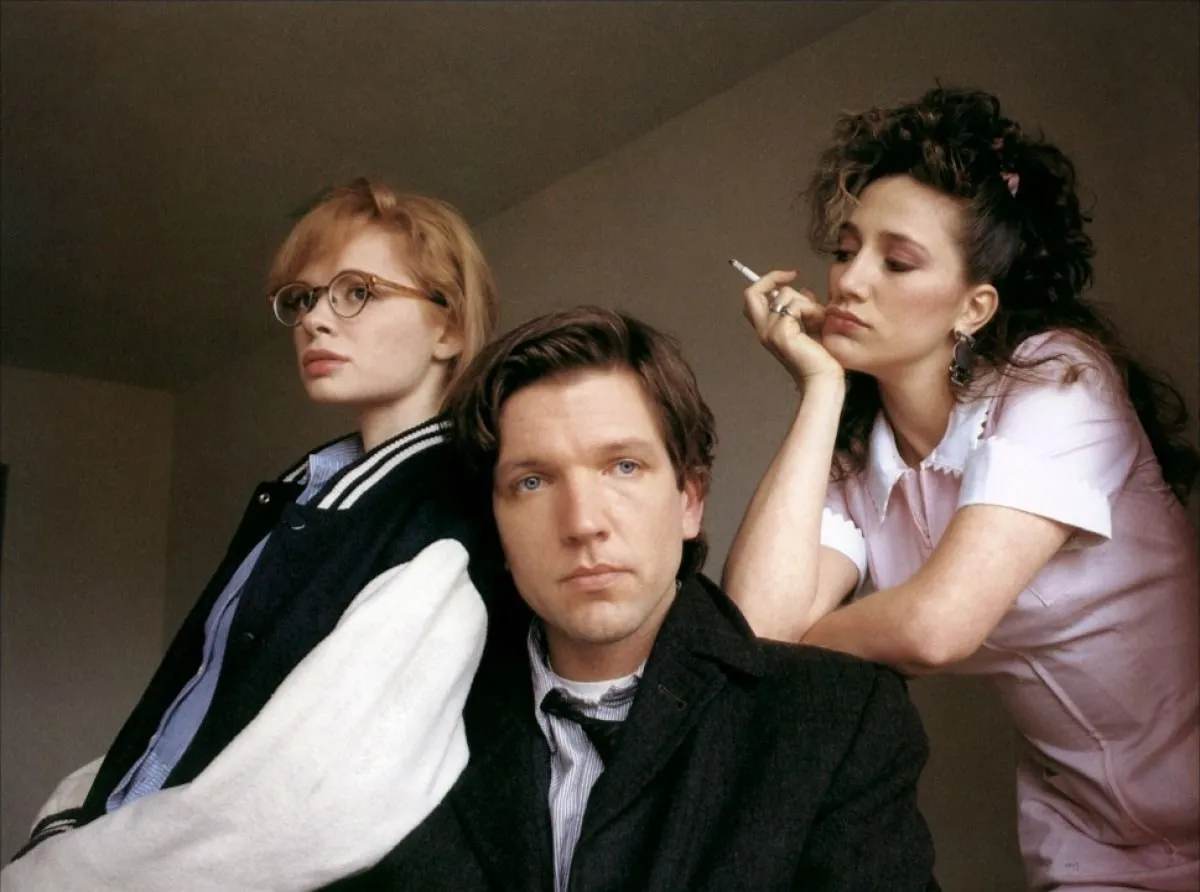
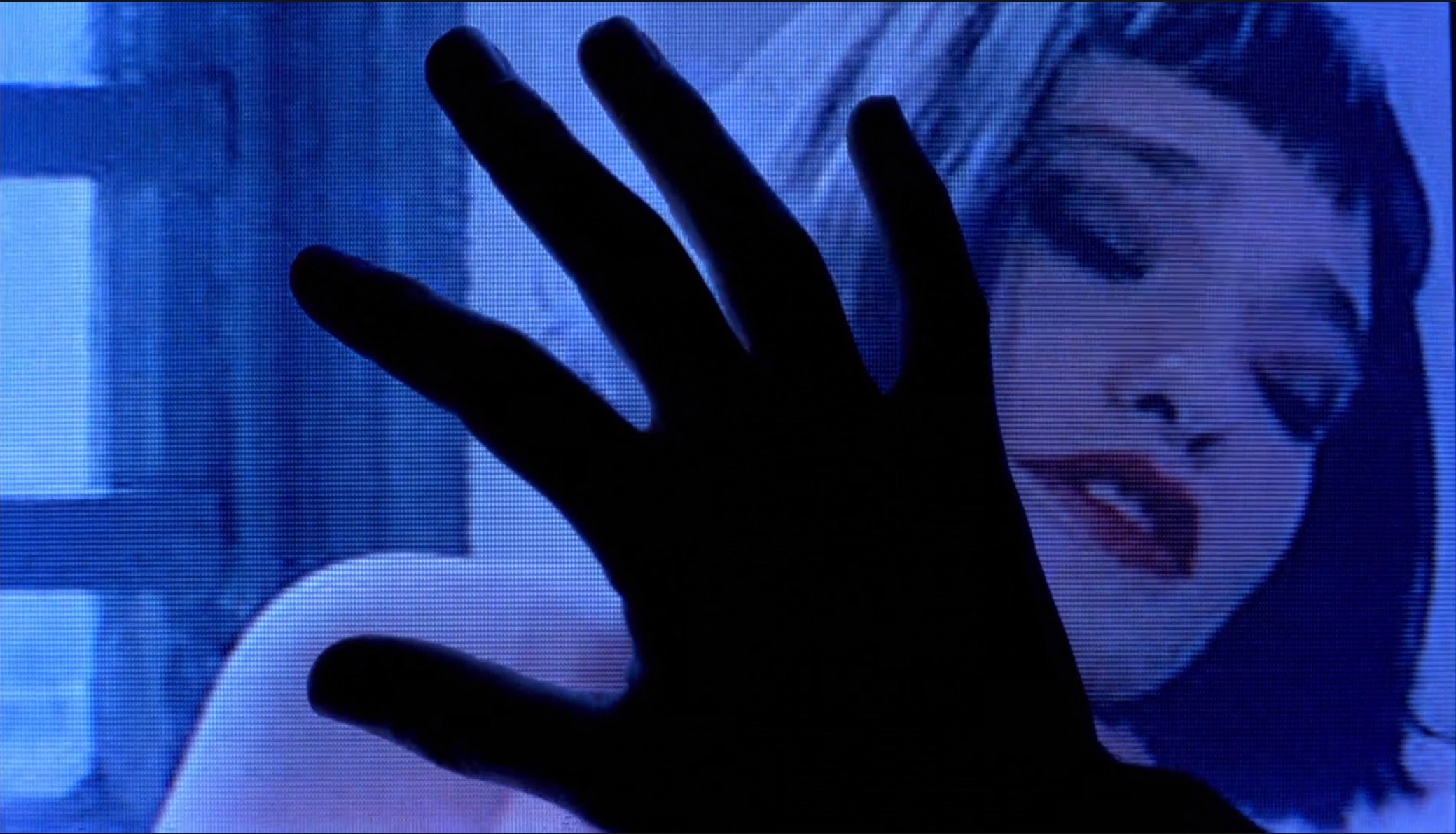
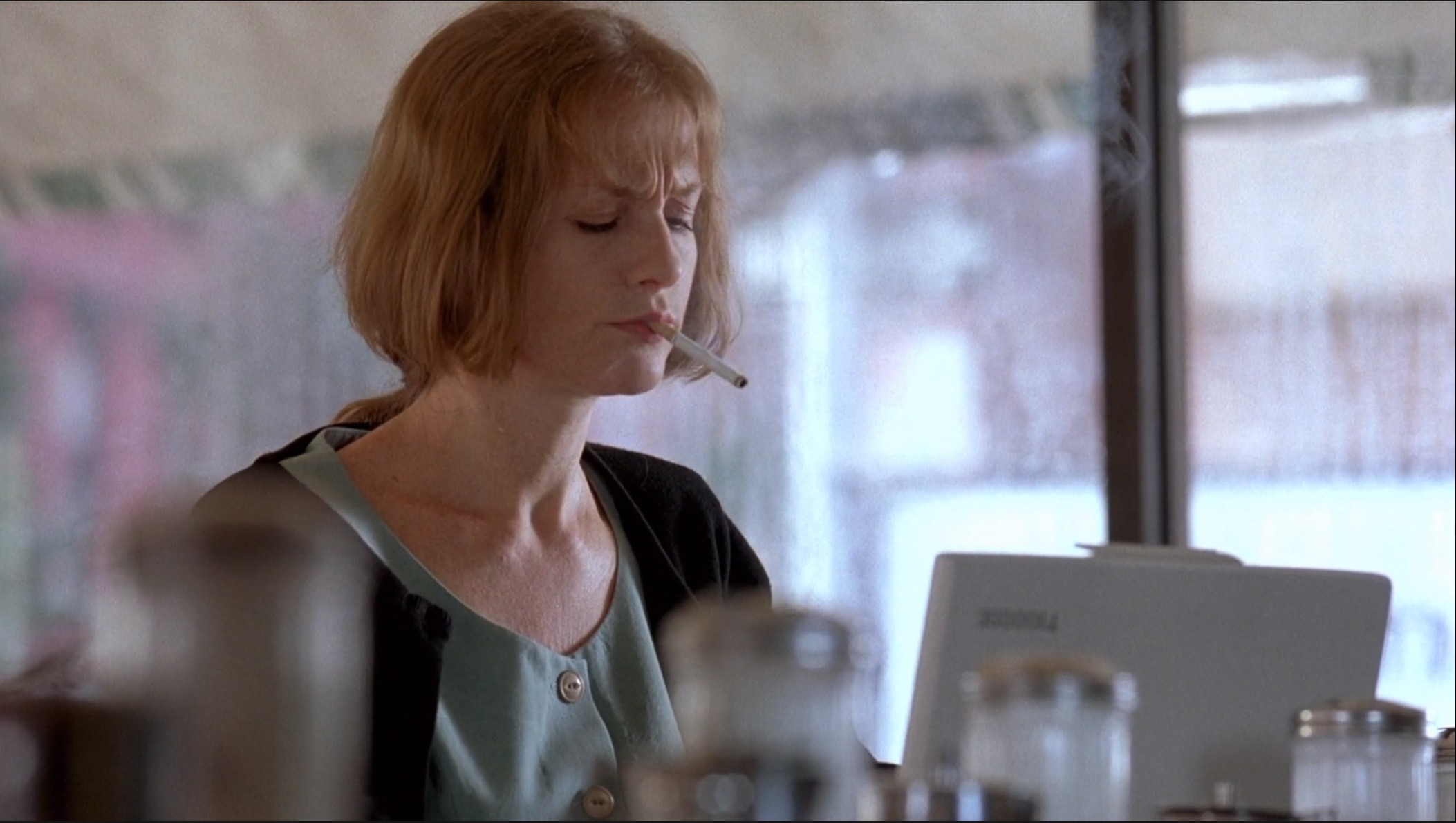
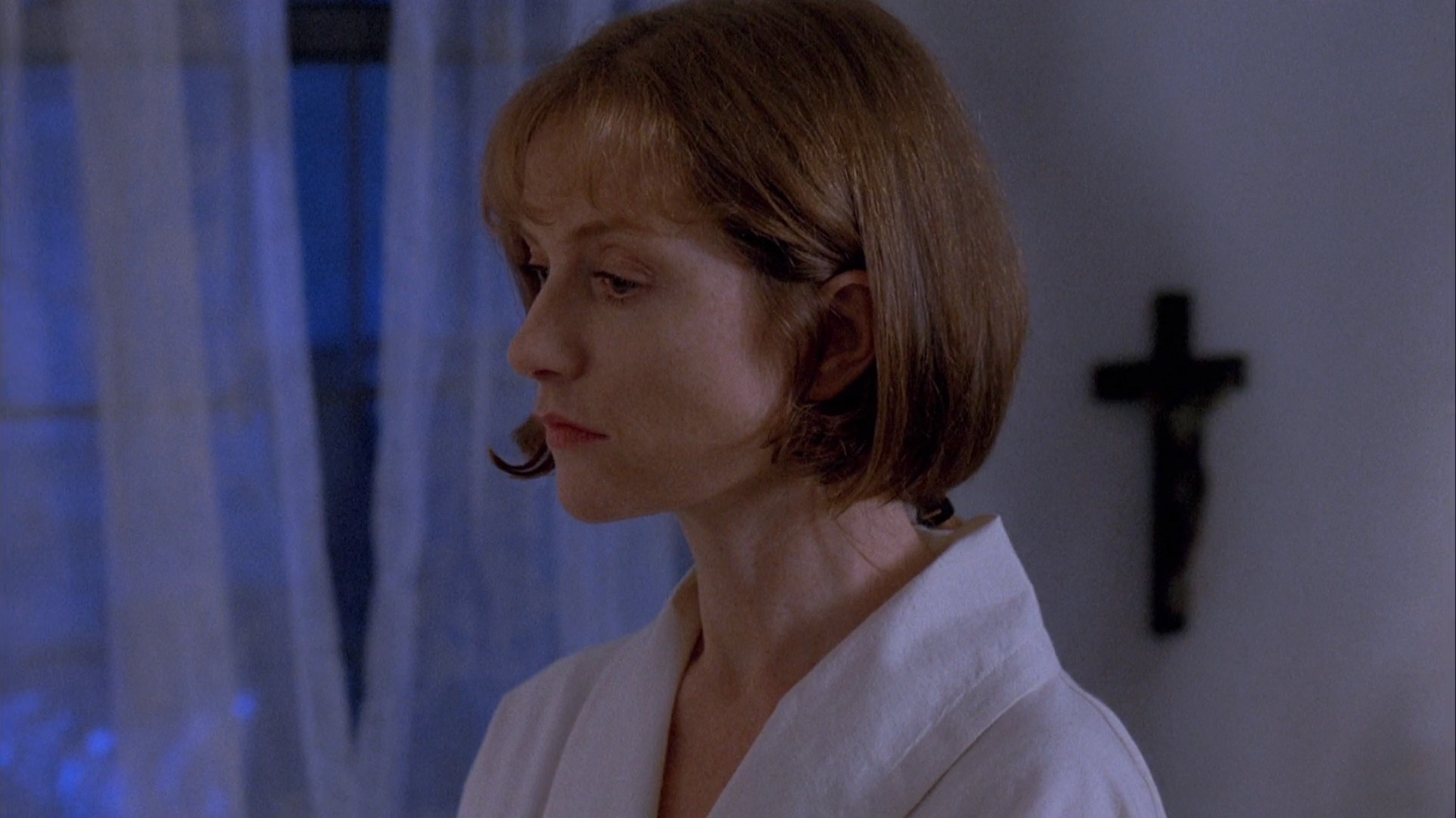
    The Criterion Channel, a streaming service of art movies, is doing a retrospective of Isabelle Huppert. So last night I watched again “Amateur” (1994), which is the movie that made me fall in love with the charming French actress who since yesterday has become, hélas, a 70 year-old. Happy birthday, Isabelle.

    Despite the name and the actress, “Amateur” is not a French but an American production, directed by Hal Hartley, an indie film director from New York who was in vogue in the 1990s, a bit in the line of Jim Jarmusch — I believe that Jarmusch is still around, but Hartley seems to have disappeared.

    Anyway, there is a scene in which two characters makes some corny joke about “floppy disks”, and another one in which they discuss the lease of cellphones — back then they were huge, and hugely expensive. And it made me think of how much communication technology has changed in the last years, and how it affected us.

    I am old enough to remember floppy disks of the 5 1/4 variety, which were actually floppy, both inside and outside. No, scratch that. I am older than floppy disks. I actually remember when video games had to be loaded into my ZX Spectrum by means of a cassette tape that played noise for 5 minutes. Only later the floppies came. Then we had the 3 1/2 disks, which had a stiff case protecting the inner disk and thus were not floppy, but which are the most remembered variety, so much so that they have become icons for “saving” even for people who’ve never seen a real one. Then we had CDs, DVDs, pen drives… All those things went the way of the dodo, of course, and now all forms of storage, including the movies we watch, are mostly in the Cloud.

    By the way, the first time I watched “Amateur”, almost thirty years ago (!), was in a small local art movie theatre, another thing that seems to have gone almost extinct.

    In some ways, the digital age made things easier or more comfortable, but in other ways, it made things less relevant. Sitting in the dark as the première of an important movie was about to start was akin to some form of ritualistic experience that streaming cannot really reproduce. Many of the authors and artists that collaborated with my small magazine, Geist, are happy that it is published in print. Anyone can publish in a blog or social media, and you may even reach more people that way, but a paper magazine or book has a real, concrete, in-your-hands existence that a digital version does not.

    Even the comfort and easiness of the digital world — is it really irreplaceable? Sure, things like Google Maps help us to find our way around. And yet, when I was a film student in London, 25 years ago, and there were no smartphones, everyone could find their way using the London A-Z, a portable booklet mapping all of London streets.

    Kids these days grow up watching Tik Tok and YouTube videos. In fact they seem to do little else. They rarely go out to play. If anything, they invite their friends in to watch videos together, and I suppose the parents prefer it that way. It’s dangerous to be outside, right? And they don’t really even watch cartoons anymore. They watch people doing stupid things in 30-second videos. Sure, they still do other things occasionally, but the video watching takes a lot of their time. But I suppose that the memories that they will cherish when they grow up, will not be of the time spent watching those videos, but of a trip somewhere, or the occasional fun with their friends in a park, or learning to ride a bicycle, or memorable family situations. The digital experience is as easy as it is forgettable.

    Think about photographs. I have but a few images of my childhood, taken with an old film camera, that you had to take to the lab to develop and wait to see if they came out alright. But the few ones I have, I cherish, and in some cases I can even remember the feelings of the moment associated with the image. Nowadays, we have tons of photographs stored in a SIM card for every single day of our lives, but we hardly look at them, once taken. They are easily forgettable. The more pictures we have, the less relevant they become.

    Now, I don’t want to sound like an old curmudgeon complaining about “kids these days”. We grow up in the environment that we do, and that’s it. There’s little anyone can doo about it. Unless we go to live with the Amish, it is impossible to escape. And in some ways, it’s fine. We grow out of it. But sometimes I wonder if all this technology is not affecting us in deeper ways.

    For instance, the other day, some Irish politician announced that he and her wife had had a “genderless” baby. That is, they said that they would not tell anyone its sex. They would raise the poor creature “genderless”, and wait until the child was 3 or 4, when supposedly the child him/her/itself would tell them: “I am a boy”. Or: “I am a girl”. Or: “I am a gender-fluid trans-male-lesbian”.

    Now, this is probably just some kind of bizarre virtue-signalling that they might not even follow through with, but I can tell you that, regardless of your beliefs about the transgender issue, if 30 years ago someone said that he would raise a “genderless baby” and wait for the child to be 3 years old to “assume his gender”, this person would be considered insane and not fit por political office, perhaps not even for cleaning the streets.

    And so I am thinking if digital technology is not playing a huge part in all this, further disconnecting us from the realities of the natural world, and thrusting us into a “matrix” where “reality” is just another form of chosen fantasy. After all, we can no longer even recognize what is a “deep fake” and what isn’t. It is unclear if lots of things that are shown in the media as “real” were even shot with a camera, or just made from pixels out of scratch.

    With AI, CGI and the increasing blurring between the limits between our “real” and our “mediated” experience, and even the merging of technology with our own bodies, as people like Yuval Harare and Klaus Schwab seem so keen to force, things will certainly get worse. Some company in Sweden already got thousands of people to install a chip under their skin, so that they can open the doors of their office without the need of a key or card. Think about it. People agreed to be tagged like cattle because “I don’t need to carry keys around anymore.” If they agree to that, they will agree to anything, really.

    Now, I am not necessarily anti-technology, as I am here writing in a portable computer to later post this text online, and I have just watched the movie I’m writing about on a streaming service instead of on an old VHS tape.

    But, sometimes, I do feel nostalgic for a time when none of this existed, and we seemed to know with more clarity what was real and what was not.