• Articles

    Walpurgisnacht

    Or just Vappu in Finland

    German might not sound as musical or romantic as French or Italian, but it is a great language for solemn, intriguing, seemingly fateful words. Take Walpurgisnacht, for instance. It may sound like a curse or an omen, but it just means Night of (Saint) Walpurga (or more exactly, if less literally, The Eve of Saint Walpurga’s feast).

    However, the current holiday, called more simply Vappu in Finland, is actually a mix of three different celebrations, one Christian, one Pagan and one political, all converging on May 1st and the night before.

    Saint Walpurga or Walburga (710 – 777) was an Anglo-Saxon woman from a prominent family who became a Christian missionary in Germany (Bavaria), and lived as an abbess in a monastery in the Bavarian village of Heidenheim. She was canonized and her remains were transferred to the town of Eichstätt on May 1st, 870. Since then, May 1st became her traditional celebration, and the night before, Walpurgisnacht.

    During Medieval times, people prayed to Saint Walpurga to protect themselves against the effects of witchcraft. A tradition holds that during Walpurgisnacht, the night before her feast, witches hold their Sabbaths and the evil powers are at their highest. According to German historian Johannes Praetorius (1630-1680), it was believed that on that night witches rode to the top of the Brocken, Germany’s highest mountain, where they danced and fornicated with the Devil.

    Meanwhile at night in Walpurgis Eve
    In large numbers as I report
    The Witches with her offspring
    Generally hold a meeting
    The young as well as the old
    Which all the devil leads there
    On which they dance and jump
    Spending time drinking too
    Fornicating with evil spirits

    Goethe probably used this as a reference for a scene in his Faust play, called Walpurgisnacht, where witches ride to the top of the Brocken with “stinking old goats” (devils).

    As you can see, the association of Walpurgisnacht with witches and devils is probably quite old. In medieval Germany, during that night, people would hold bonfires on hills, as a form of protection from evil. The tradition still remains in some parts of the country even today.

    It was common in the early development of Christianity for a few Pagan feasts or symbols to be incorporated into Christian traditions, but this is a slightly more complicated case. While the date of the canonization and transfer or the remains of the Saint might have been a coincidence and not chosen for any specific reason, many associate May Day/Walpurgisnacht with the Scandinavian and Germanic early pagan celebrations of Spring, which took place around the same period in late April or early May, and included lighting bonfires, among other things. So it is possible that both celebrations became, with time, mixed together. Or, perhaps more accurately, the new religious feast allowed for a continuation of traditional folk eastern rites. According to the Encyclopedia Britannica, “Although it is likely that the date of her canonization is purely coincidental to the date of the pagan celebrations of spring, people were able to celebrate both events under church law without fear of reprisal.”

    Some even say that the word Walpurgis (Valborg in Swedish and Norwegian) has another meaning unrelated to the name of the Saint. In the Old Norse language, Val means dead or slain (think Valhalla, which means Hall of the Slain, or Valkyrie: “chooser of the slain”). “Borg” means mountain or mount. So Valborg could mean something like “mountain of the slain”. But it seems a convoluted explanation, and the relation with the feast is unclear, except perhaps for its association with mountains (and witches gathering on top of mountains).

    There are other etymological theories for Walpurgis/Valborg/Vappu, but none of them are completely convincing. Since Valborg (Walburg in German) is still a common female name in Scandinavian countries, it is more likely that the feast’s name comes from the Saint’s name indeed. “Walburg” comes from High German waltan (to rule) with burg (fortress). Perhaps a possible translation could be “mighty fortress”.

    May 1st may still have some religious tones in Bavaria, where there are still processions to Saint Walburga’s tomb in Eichstatt. But, in Finland, the celebration became mixed with the Labour Day holiday on May 1st, which was important for political reasons, and has become almost completely secularized. Few people even seem to remember its origins, either Pagan or Christian — it’s more an excuse for students to party, if anything, as it coincides with the beginning of their Spring break. I quote the Encyclopedia Britannica again:

    “Initially, Walpurgis Night was celebrated by the Finnish upper class. Then, in the late 19th century, students (most notably engineering students) took up its celebration. Today merrymaking begins on the evening of April 30, often augmented with the drinking of alcoholic beverages, particularly sparkling wine. The carnival-like festivities carry over to the next day, frequently taking on a family dimension, as friends and relatives picnic in parks among balloons and consume sima, a homemade low-alcohol mead.”

    Sima is a fermented beverage traditionally made with lemon, honey and yeast, but today it is sold ready-made in supermarkets as a soft drink. Its alcoholic content is less than 1%. I tried it. It tastes more or less like a lemonade.

    So — Vappu in Finland is neither witches’ day nor pagan ceremony nor religious festival, but just a night for partying and a day for picnic. Another tradition, exclusive to Finland and connected to its appropriation by university students, is to put graduation caps on statues. In Helsinki, it means the statue of Havis Amanda.

    So, basically, even if it is considered the fourth most important holiday in Finland, it seems to be, today, mostly just an excuse to party. So much so that, in an introductory book that I’ve read about Finland, they talk about the holiday but do not explain its name or origins. They just mention, very vaguely, Labour Day.

  • Articles

    Waiting for global warming

    And warming up to Finnish sauna

    So today I went to a Finnish sauna at the Museum. Sauna at the Museum? Well, this is Sparta! I mean, Finland. There’s sauna everywhere. Who would think that sitting in a steamy room at 75 degrees Celsius then submerging into a lake at 5 degrees Celsius would be fun? But it was better than I expected. Then I went out for a walk in the forest as the sun came out later on.

    Last year I was in Sweden for a month, exactly in the worst of winter (January), and I wrote a lot about it (you can find it in the archives starting here). It was mostly a very nice experience. And of course I lived in Canada for years. So I am used to VERY LONG AND VERY COLD WINTERS. I generally dislike them — I much prefer the Mediterranean climate — but well, at least I am used to them.

    But it turns out that Spring can be sometimes more depressing, because it doesn’t look like Spring at all, at least as I understand it. It is more like a very slow de-icing with lots of clouds and rain and occasional sunny days, until suddenly one day, Summer comes.

    Yet, for weird some reason, Sweden and Finland (together with Germany, and perhaps also Canada), seem to be among the countries most obsessed with global warming. I find it very odd. If there are countries which would benefit immensely from a global increase of a few degrees in temperature, wouldn’t they be the Scandinavian countries? African countries might boil, and people in Sardinia and Sicily might fry, but what are Swedes and Finns worried about? Fewer ice hockey fields? Ruining the sauna experience?

    My theory is that global warming is a kind of pagan religion, and the Scandinavians haven’t completely forgotten their old pagan traditions. They did worship trees or forest nymphs, after all, and Nature is still pretty much sacred in all of Scandinavia.

    But does global warming really exist? I am no scientist, so I can’t say anything from a scientific perspective. But speaking from personal experience, I can’t really say that it has affected my life, or anyone’s life, very much. Say what you want about Covid, at least it caused a visible impact, even if most of it was because of the bad policies.

    As far as I can remember, the fear of global warming, later called also more generically climate change, started being promoted already in the 1980s. By the 1990s they were already promising the end of the world in 20 or 30 years. Yet 30 years have passed and things look pretty much the same. Sure, there are minor variations in the climate every year, but I can’t really say that I have seen anything catastrophic in my lifetime.

    In the 1980s, they used to talk a lot about the “hole in the ozone layer”, and supposedly they closed it, or at least, no one talked about that hypothetical problem anymore after they banned CFCs. Could it have been yet another fake, and they banned CFCs for some other, probably commercial, reason? Who knows. But that’s the only real change I remember.

    Maybe winters have become less rigorous in some parts of the world (but not in Canada), maybe it is a bit warmer everywhere on average, but the world didn’t end, the polar ice caps didn’t melt, the oceans didn’t rise, even the polar bears are still around. So I find it hard to worry too much about the new apocalyptic theories.

    Even if climate change or global warming were real, none of the proposed solutions make any sense, except as a form of tax to make people poorer or breed less. That’s not to say that there are not a lot of very serious environmental problems, from forest burning to the pollution of the oceans to the extinction of species to micro-plastics all over even in our food. But climate change or global warming doesn’t seem to be one of them.

    Greenland used to be green — that’s why it’s called “Greenland” and not “Iceland” — so the Earth has been warmer before. It has also been much, much colder. So big global variations in temperature are not something new, and they are probably caused by the sun. If there is some anthropogenic influence, it can’t be more powerful than the sun.

    The sun — that’s something that you occasionally miss up here in the North. I for one could do with a bit more of it.

  • Articles

    Finland: The Land of the End

    The Happiest Country in the World? Well, happiness is subjective

    It was quite a shock teleporting from the sunny beaches of Catalonia to the still half-frozen lakes of Finland, and I wondered for a while if I had not made a terrible mistake. To be honest, I still have not recovered. Today it’s not cold, 16 degrees, which I was told is quite warm for this period. In fact, the lady at the Museum told me that today was “the warmest day on record in all the history of Spring in Finland”. I think, or hope, that she was joking or exaggerating. But perhaps not.

    So far, I am having a bit of a trouble understanding if Finns are joking or being serious. Yesterday I went to a local pub and I asked if there was any “typical Finnish shot” that I should try. The waitress wasn’t sure if there was a typical Finnish drink, but she said that I could try the house’s special shot.

    “What’s it made of?”, I inquired.

    “Liquids”, she replied.

    If this was in Spain, I would have moved to another pub, but this is Finland so I took it as a joke. Also, I think it was the only pub in town. The next one was probably 5 or 6 kilometres away. Toto, I’ve a feeling we’re not in Catalonia anymore.

    The shot wasn’t bad, but I still don’t know what it was made of.

    The next morning, someone else told me that the ice was “almost all melted” and that she had gone to take a swim in the lake. Again, I am not sure if it was a joke or not. I assumed this time that the person was serious and that swimming in ice-cold waters is what Finns do for fun.

    I am fascinated by Scandinavian countries and people, but it is a fascination filled with some kind of dread. It is like visiting an alien super-civilization. A super-civilization, where everything mostly works, and where there’s lots to admire, sure, but alien all the same. I confess that I feel more at home in my disorganized, noisy, dirty, confusing and less civilized Southern Europe. What can I do.

    Still, people here have been very nice and polite, and the landscapes are awesome. Pristine forests and lakes all around. Not a single sign of littering, as I would probably see in Spain or Italy (and, to be honest, even Germany). Not a single plastic bottle or even a piece of paper, for miles.

    Recently there was a poll saying that Finland is “the happiest country in the world“. I don’t know what are the metrics exactly, but I always take such polls with a grain of salt, especially when they are promoted by some spooky organization. I think it is really about how well a society functions — road construction, public transportation, trash collection, education, etc. In that sense, Finns are probably more satisfied than people in Spain, where construction work takes years, metro trains are crowded and someone can steal your wallet, and education is so-so.

    But happiness? How can you measure that? I, for one, would probably be happier sitting in an average cafe in Barcelona than in the best sauna in Finland. To each his own.

    And yet, the reason I accepted the invitation for a residency and teaching a workshop and came and will — if I survive — still stay here for a couple more weeks, is that for me Finland always had an aura of magic. Perhaps it was the name: Finland, which to me (in Spanish: Finlandia) translated as “Tierra del Fin”. Final Land, Land of the End. The last possible destination on Earth. A country unlike any other.

    In a way, that may be true. And yet, it is not completely dissimilar from Argentina. I heard that tango is very popular here. They even have their own variation, Finnish tango. It is the same rhythm as in Argentina, the only difference is that the lyrics are in Finnish. Oh, and that they dance it out in the snow.

    As I said, an alien super-civilization. May God help us all.

  • Articles

    Where are we going?

    Some final thoughts on the “Reset” stuff — mine and de Tocqueville’s

    There is a short animation that came out recently about the “Great Reset” aka Covid operation and how it could evolve into some kind of permanent totalitarian dystopia. The film has some moments, but I think that, in the end, they get it wrong. The future is more Brave New World than 1984, although perhaps a mix of the two, with Mad Max, Blade Runner and a few other dystopias thrown in would be a more accurate prediction. 

    Also, the film feels now slightly anachronistic, because since 2022 it seems we have moved on from pandemics to war, school shootings and transgender overdrive, and a bit of global warming alarmism too. People can’t keep too many worries in their mind at the same time, so I guess the pandemic stuff had to take a little break.

    That said, the global reaction to Covid was indeed a wake-up call to many people, because they saw how quickly our society could turn authoritarian with the flip of a switch, with the flimsiest of excuses, and basically everywhere, with nowhere to run to. And if we don’t have even basic freedoms in the West, then what good is it for? Isn’t “freedom” the whole selling point of the West?

    But even if there was a form of totalitarianism during those two years (and which in some cases continues albeit in milder forms), it was a soft totalitarianism. You didn’t get shot or sent to the Gulag if you didn’t take your medicines. You just lost your job, or couldn’t have dinner, or had to stay in your room: the global government more as a loving mommy who sometimes has to be strict. The point was not so much about forcing you to do things, but about convincing you that this was the right approach. Alexis de Tocqueville got it right, almost 200 years ago:

    I seek to trace the novel features under which despotism may appear in the world. The first thing that strikes the observation is an innumerable multitude of men, all equal and alike, incessantly endeavoring to procure the petty and paltry pleasures with which they glut their lives. Each of them, living apart, is as a stranger to the fate of all the rest; his children and his private friends constitute to him the whole of mankind. As for the rest of his fellow citizens, he is close to them, but he does not see them; he touches them, but he does not feel them; he exists only in himself and for himself alone; and if his kindred still remain to him, he may be said at any rate to have lost his country.

    Modern man lives in isolation from his countrymen. In fact, it fair to say that he has no countrymen at all. When his “countrymen” can actually be from any country, from Eritrea to Nepal, when being Spanish or Italian or German or even Eritrean is just a matter of geography and paperwork, what real country does he have? But it’s not just that, of course. The extreme individualism of the West has reached a point at which man is also aloof from his community, his neighbours, and in many cases, even his own family. Tocqueville goes on:

    Above this race of men stands an immense and tutelary power, which takes upon itself alone to secure their gratifications and to watch over their fate. That power is absolute, minute, regular, provident, and mild. It would be like the authority of a parent if, like that authority, its object was to prepare men for manhood; but it seeks, on the contrary, to keep them in perpetual childhood: it is well content that the people should rejoice, provided they think of nothing but rejoicing. For their happiness such a government willingly labors, but it chooses to be the sole agent and the only arbiter of that happiness; it provides for their security, foresees and supplies their necessities, facilitates their pleasures, manages their principal concerns, directs their industry, regulates the descent of property, and subdivides their inheritances: what remains, but to spare them all the care of thinking and all the trouble of living?

    Indeed, what remains? As I said, the authority of a parent, but as Tocqueville beautifully adds, with the intention not of making the child grow up, but to remain in perpetual childhood. And what is not modern man if not a child that never grows up?

    The will of man is not shattered, but softened, bent, and guided; men are seldom forced by it to act, but they are constantly restrained from acting. Such a power does not destroy, but it prevents existence; it does not tyrannize, but it compresses, enervates, extinguishes, and stupefies a people, till each nation is reduced to nothing better than a flock of timid and industrious animals, of which the government is the shepherd.

    So there. I think we are at that point now. The Great Reset was not exactly a plan to create a global Gulag. Nor was it a plan to reduce the world population by half, or whatever is the number desired (they can get that through other means, and in fact, birth rates keep going down). But it was created to make you accept the new products they are bringing out — one, the mRNA vaccines, which are really just a gateway drug for the mainstreaming of genetic manipulation of humans, and two, a new form of digital identity — digital cash, the “metaverse”, AI, digital passports, implants and other technologies are just many aspects of this same general idea.

    The other day a friend showed me one of these new AI toys. You type in some words and the bot creates a silly story for you. The first attempt wasn’t very memorable, so to make the story a bit more exciting, in his second attempt, my friend typed in a few new random words, one of which was “killer”. Instead of coming up with a story, the bot replied some excuse that it is programmed for peace, understanding and tolerance and could not create a story that promotes or shows violence. (There goes the idea of using it to create the next best-selling mystery thriller.) Meanwhile, on the sidebar, the same search engine was showing all kinds of news about school shootings, war, and random criminal attacks.

    I thought it was very representative of the world we live in.

  • Articles

    Daily Routines

    Taking life as it comes day by day

    Cats and dogs love routine. They must eat at every day roughly at the same hour, take a walk or play at roughly the same hours, sleep at the same hour, etc. They find it strange if people or places around them change too much. Cats in particular are very fussy about any object that is not in its usual place inside the house. (For those interested, I wrote a brief book about the history of our interactions with pets).

    Humans love routine too, even though sometimes we think we don’t. The proof is how quickly we adapt to a new place and create a new daily routine, almost instantly.

    I’ve been in Catalonia for less than two weeks and, since I am only working remotely these days, I already have my daily routine of walks and cafes, with only a few variations. In the mornings I usually go to the fancy cafe up the hill, which has the best croissants but is a bit expensive for anything more substantial; in the evenings, I go to the “bar del chino” near the beach which has the cheapest bocadillos and the coldest beer.

    Today, however, I inverted things and I am in the evening in the cafe up the hill. (I am a bit more flexible than cats and dogs, plus, I will — alas! — leave Barcelona soon and my routine will change, again.) The waiter here is a sympathetic young man with black-painted fingernails. I don’t think he’s gender-fluid or anything, it’s just that it’s that kind of fancy, alternative, modern place. If it was a girl, she would have lots of tattoos, blue hair and a nose ring.

    He seems to be an exception. Young people here in Spain, or at least in this lazy suburban place, seem to dress more conventionally than in other places. In Germany, at least in the big cities, most young women you come across have hair painted in unnatural colours, several nose rings, weird clothes, tattoos. Here tattoos are — unfortunately — common too, but young people in general look a little bit less conspicuous.

    Drinking a cappuccino instead of a beer, I am more alert and attentive to my surroundings. I overhear the conversations around me. A woman is talking to a man about her recent experiences as a failed migrant in Australia.

    “Because in Australia, they don’t like the Spanish so much. They think Spanish people are… Well, they discriminate against us,” she says.

    “Ah. Like us with the Argentines,” replies the man.

    “Exactly!”

    (I am an Argentine by birth, but I have never felt any discrimination here. To be fair, neither my accent nor my looks give me away.)

    On another table, someone is saying that you have to choose well your profession. “If you are, for instance, a translator, you won’t find many jobs.”

    (I am, among other things, a translator. And he’s right, there’s no much work lately, and what there is, is not well paid. AI is taking it all.)

    The only consolation is that it is taking everybody else’s jobs too. In Germany, I’ve noticed that many shops and supermarkets started transitioning to automatic cashiers. Some places do not even accept cash anymore, in a transition to digital money. Yet people still cheer and hype about AI, even as it steals our jobs and makes us redundant. The newspaper I’m reading at the cafe — a real news-paper, those still exist here — has several articles about AI. It will probably make many journalists redundant too. Yet, the only complaint they can find is that it “consumes a lot of energy and therefore contributes to climate change”. (Modern life is all about stressing yourself with imaginary problems, while ignoring real ones.)

    Me? Well, you know, I’m basically a Luddite. I still listen to vinyl records and read paper books and old style newspapers (if I can get them for free, as I don’t like to pay for propaganda, thank you).

    Here in this suburban town in Catalonia, time seems to have stood still — at least, a little bit. There are no self-checkout cashiers around, and all places accept cash.

    I wish I could stay longer, but, like a stray dog without a home, my routine has to adapt to the circumstances. Here today, gone tomorrow.

    In the end, isn’t this how we all live?

  • Articles

    Barcelona

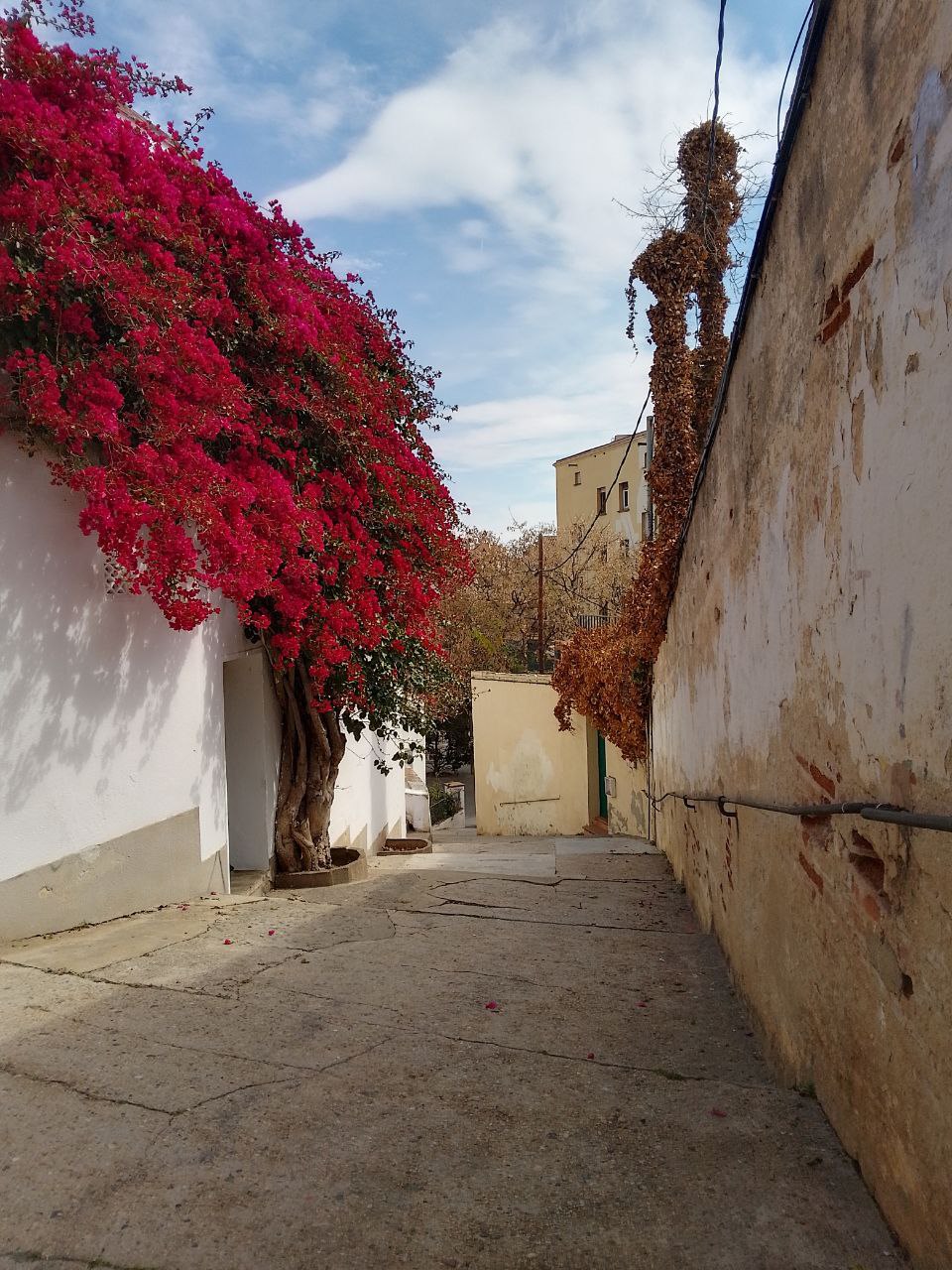
    I’ve written about movies, books, politics but I haven’t written as much about Barcelona as I would have liked. But I’ve been here several times already and I’m not really doing tourism, plus I’m not exactly in Barcelona, but in a suburb coastal town thirty minutes away.

    People in this suburban town don’t tend to wake up early, much less on a Sunday. The streets are almost empty at 7:30 in the morning — the sun has risen maybe just half an hour ago — and even the unnamed bar of the Chinese man (“bar del chino”) which is usually the first to open is still closed. There is another bar a few meters away that is open, though, and three or four drunk old men are sitting at the tables outside, singing some songs in Catalan. I suspect that, rather than opening early, the bar simply did not close yet, and these are the last drunks that still remain from the previous night. I sit at the table behind them and ask the waiter — a Moroccan, or perhaps a Pakistani — for a cup of coffee and a croissant. The drunkards keep on singing.

    “Transphobia is gender violence”, says one sign posted nearby, written just like this, in English. “Feminism should be inter-sectional“, says another. “Abortist sluts are my favourite people”, says yet another one, right next to it. I wonder who put them up, probably some local NGO. While people seem to be mostly socially conservative around here, there are lots of international NGOs in Spain pushing for feminist, transgender and all kinds of causes, and the current government seems to be extremely left-wing. Just a few months ago, they put up a new law that allows anyone over the age of 14 to “change their gender”. In Spain, people can vote and drive only after completing the age of 18 years, and the so-called “age of consent” for sex is 16. But people can already “change their gender” at 14. Go figure.

    In the meantime, the drunkards appear to be now complaining about the politically correct. One of them says he was accused of being racist for some reason or other. “Yes, I’m racist”, says another one. “So what?” But they are laughing as if it was all some funny joke and soon start singing again. Just harmless drunks having a good time. The Pakistani waiter brings them another beer. Does this bar ever close? The Chinese man meanwhile is setting up his tables. The neighbourhood starts to wake up, and some people are now out with their dogs.

    In the afternoon, I go to Barcelona proper. I walk around Passeig de Gràcia, where there are two famous buildings designed by Gaudí — La Pedrera and Casa Millà. Crowds of tourists parade in front of the famous houses taking selfies. I’d like to enter, but the line is too long. I keep walking on.

    I arrive to the same church where I went last Easter Sunday for the Latin Mass. They have mass today too, and I go in, even if I am 30 minutes late and mass is half-way. No matter. There’s another priest today, but the mass is again in Latin. It’s always in Latin and there’s always Latin songs. Benedicamus Domino. Afterwards, I talk to one of the women, a brunette in her 30s, who explains to me a bit about the congregation. She introduces me to some of the others. They are going to a restaurant, and they invite me to go eat with them. Why not? I accept. It’s now 2:30 PM, which seems late for me, but, in Spain, or at any rate in Barcelona, people tend to have lunch at 2:00 or 3:00 or even 4:00 PM, and dinner can be as late at 10:00 PM. (You can see now why not many people are awake at 7:00 in the morning.)

    Lunch is good — I choose tortilla, croquetas and salad, but they also have pizzas and crepes and all kinds of stuff — and the people in the group are very nice. There is even a man from Argentina, from the same city I was born in, so at least we have something in common to talk about. As wine and beer start to flow, the discussion becomes more lively, but hard to follow. I remain mostly silent, catching a few words left and right. To my left, mostly men, having an intellectual discussion: Monsignor Lefebvre, infiltrated freemasons, anti-semitism, Franco, Latin, Old Slavonic, Saint Athanasius, Novus Ordo, Padre Pio. To my right, mostly women, talking about mystical experiences. Lourdes, the words of Jesus, spiritual strength, Padre Pio again, Garanbadal (some place in the Basque country where the Virgin Mary supposedly appeared in the 1960s to a group of children). I start to feel a bit dizzy. Maybe it’s just the wine. Lunch is now over, so I thank them all for the invitation and say goodbye.

    It is still sunny and warm as I get back to the suburban town. I don’t want to go home yet, so I go to the beach. The water is cold but the sand is warm. Now it’s 7:30 PM and there’s still people on the beach, walking or playing volleyball, and there’s even some children swimming. Dinner won’t start for most people until much later on.

    It’s always sunny in Catalonia. It still hasn’t rained at all, all the time since I’ve been here, and even months before, except perhaps for a just a few drops for about 5 minutes one day. I don’t mind, but the situation seems to be desperate for local farmers. Even the priest today asked people to pray for rain. I am now looking at the weather report, and they are predicting rain next Tuesday. Benedicamus Domino. But it’s just a light rain which won’t probably solve the farmers’ problem. I don’t mind. It can rain every day after I’m gone.

    “April is the cruelest month”, wrote T. S. Eliot. Well, maybe in England, not here. Here, April is almost summer.

    Tomorrow it will be sunny once more and I’ll probably be up again at 7:00 AM and walk around the empty streets, or maybe even on the beach. I like it best when it’s empty.

    It’s a nice town, Barcelona. People are friendly and invite you to lunch even without knowing you, it’s always sunny and warm, there’s a beach, there’s lots of bars and cafes, and drunks sing instead of fighting and breaking things.

    It’s a good place to be.

  • Articles

    Are movies getting better or worse?

    Maybe both – an analysis of two versions of “Dune”

    I re-watched the other day “Dune” — not the recent version, but the 1984 version by David Lynch. Then I watched only the first 20 or 30 minutes of the new “Dune” (2021) and could not go on. I had disliked the previous movies that I watched by the over-hyped Dennis Villeneuve, including his “Blade Runner” sequel, and saw no much point in continuing.

    Lynch’s version of “Dune” has a lot of defects, and in fact it seems he has disowned his film and doesn’t even like to talk about it. He had a lot of trouble making it, it was a bomb at the box office and critics panned it. Frank Herbert readers in particular hated it.

    Me? Well, I had seen it in cinemas back when it came out and even then I thought it was enjoyable. A few scenes even remained in my mind, which is more than I can say from most movies I watched in the 1980s. And I did read the book, at least the first one of the series (I don’t remember if before or just after seeing the movie). To be honest, I don’t think it made that much of an impression on me. I remembered more the movie than the book.

    Watching Lynch’s film now for a second time, I thought it was a lot of fun, even if very irregular and, as a whole, disappointing.

    The main problem of the film is that it tries to fit way too much content in too little time, in particular during the second half of the film. The first half is not too bad in terms of rhythm, but the second one is almost ridiculously telegraphed, with important scenes and plot points taking place in just a few seconds or in an expository line of narration. It feels like a whole of buildup to very little climax.

    It is hard to adapt novels to the screen, in particular long and multilayered novels. In fact, Lynch’s movie starts with a character talking directly to the audience and explaining the main situation. It’s a bit clunky, but it works. Another interesting trick Lynch uses is to have the characters’ thoughts or inner voice as audio over a character’s close-up. Not a voice-over narration, but really what each character is thinking at that exact time, as we would have in a novel. It does work, but it can be a bit disorienting at times.

    The cast is exceptional, including Max Von Sidow as a Fremen, José Ferrer as the Emperor, Silvana Mangano in a small role as Mother Superior, and Kyle McLahlan in one of his first roles (he would become one of Lynch’s most iconic actors). But the Reverend Mother played Sian Philips is probably the most memorable one, together with the grotesque Baron Harkkonnen played by Kenneth McMillan.

    Today, the adaptation of a similar long, complicated novel would probably be done as a 10-episode series, or at least as a movie trilogy (as it seems Villeneuve is doing), which would be more adequate, but I guess that wasn’t the norm at the time. Today, even mediocre movies get a trilogy or several sequels and prequels.

    I think the main problem was that the producers seem to have imagined some kind of “Star Wars” with lasers and funny aliens and robots, when “Dune” is more a thinking-man’s science fiction, like, say “Blade Runner”. But “Blade Runner”, which, by the way, was also done during the same period (1982), also didn’t do well. While it is considered a classic today, it was a big flop at the time, too.

    In retrospect, it is weird that they hired David Lynch for this movie, based solely on “Eraserhead” and “The Elephant Man”, and expecting him to deliver a blockbuster. Perhaps the idea was that he would create interesting alien monsters, which he did, but it is a type of big budget sci-fi film that is very different to the movies that would later define Lynch’s style, from Blue Velvet to Twin Peaks to his masterpiece Mullholland Drive (which I am currently watching again and might later write about).

    I haven’t seen all of Villeneuve’s “Dune”, so I cannot give a full appraisal, but, as mentioned, I saw the trailer and the first 20 or 30 minutes, and was not impressed. While technically it might be a “better” film than Lynch’s “Dune” — it has a tighter script, better editing, etc — it seems to showcase all the main problems of modern movies. Such as:

    Casting: Timothée Chalamet is a good actor, but he hardly seems adequate as someone who becomes a warrior and military leader. It used to be that movie actors mostly specialized in certain types — John Wayne played tough guys, Humphrey Bogart played, well, the Humphrey Bogart type. But now the choice of cast seems to be only about who is more in vogue at a certain time. Adam Driver, for instance, is an actor I don’t like very much, but who has been cast in all kinds of roles, from Star Wars villain to sensitive poet to action hero. Of course, the other problem of modern casting, and very much visible in “Dune”, is the forced diversity even in cases when it makes no sense. I guess this is unavoidable in today’s multicultural planet, but it is still a bit annoying. I suppose even alien civilizations are multicultural.

    Cinematography: For some reason, most modern movies tend to have a very monochrome photography, usually reduced to a small palette of colours, in this case, mostly towards brown and grey. Compare today’s movies to the Technicolour films of the 1960s (Hitchcock’s “Vertigo”, Fellini’s “Juliet of the Spirits”, Powell and Pressburger’s “Black Narcissus”, etc.) and it’s a different universe. I am not sure if this is related just to technique or to aesthetic concerns, or to the fact that the past really was more colourful. Someone observed a while ago that the modern age tends more towards the monochrome — people use mostly black or gray clothes, for instance, or tend to like black and grey cars, and mostly white interior decoration.

    CGI: Modern movies use and abuse too much CGI. Part of the fascination of Lynch’s 1984 version is the use of traditional effects — the sand worms, for instance, are created as miniature puppets, they even used miniature sand for some scenes. To my mind, it works better, or at least gives you an idea of something “real”. CGI always tends to look as CGI. Just compare Lynch’s organic sand worms with Villeneuve’s computer sand worms which are ugly and unappealing and unreal.

    Art Direction: Lynch’s version has a lot of defects, but all in all it’s a very “Lynchian” movie, in particular in the artistic design, with grotesque creatures and visually inventive clothes and characters. Villeneuve’s version seem much more generic, just as his “Blade Runner” sequel was generic and boring. For instance, Villeneuve’s Fremen are clearly more inspired by the traditional garb of Arab and Berber warriors (this comes from Herbert’s novel, clearly inspired by the early Islamic invasions — it even mentions “jihad”). While Lynch doesn’t discount such influence, he creates more original designs. In particular, the Bene Gesserit nuns, which in Lynch’s “Dune” are very striking, with their shaved head and the weird tunics which make them something between burkas and something out of Ancient Egypt. In Villeneuve’s version, they just basically seem women dressed in black hoodies.

    Villeneuve’s “Dune” has a rating of 8.3 in IMDB, even though for me it was well-produced crap, while Lynch’s “Dune” has a 6.3 rating, even if it is a more imaginative failure.

  • Articles

    Revisiting the 1960s

    The decade when everything changed

    I am a child of the 1980s and 1990s, so the sixties were already a distant memory when I was growing up. Perhaps a stronger memory than it is now, as it was closer in time, but still only a memory. A few things, such as certain rock bands, or the musical Hair, still lingered on, but mostly the cultural landscape had completely changed.

    And yet, the fruits or, if you will, the side-effects of the 1960s are still very much with us, even today. It is hard to find any other decade in history in which things changed so much, and whose effects lasted for so long. So much so, that we still talk about the “sixties”, but other, more recent decades (“the 2000s”, “the 2010s”) did not seem to leave a lasting impression and are hardly differentiated from the general blur of time.

    Just a few things that come to mind:

    Political murder as media event: JFK’s murder was not the first assassination of an American president, and murders of important political leaders have been happening since before Julius Caesar. But this one, captured on film, caused a shock rarely seen before, and birthed a thousand conspiracy theories. In fact, the concept of “conspiracy theory” itself started at that time. Yet, even today, we are no closer to a full resolution than we were back in 1963. It is a murder mystery than never ends. Together with JFK, a more innocent America died that day, never to be reborn.

    Sex: They promised “free love”, and perhaps it was “free” for a few, for a while. But the future generations paid a heavy price. Today, the most incredible consequence of the so-called sexual revolution is that young people are having less sex than ever. According to recent polls, teen virginity is on the rise, as well as depression among teenage girls (some of whom decide they are “boys”), and of course the “incel” phenomenon, which is the reverse side of feminism and occasionally turns violent. The sexes seem further apart than ever before, two thirds of marriages end in divorce, and many people never even marry. Birth rates have crumbled all over the modern world. In some countries, the fertility rate is below 1.0, that is, more than half of the women are choosing not to have babies, ever.

    Drugs: Although they didn’t invent it, the hippies were the one that turned drug use into a lifestyle — with a little help of Timothy Leary and the CIA. Let us not forget that CIA at the time was very much promoting modern art, LSD and a few other cultural disruptions. Today, many American states have decriminalized drugs, and marihuana is now legal in quite a few countries, but the results are far from satisfactory. Portland and Seattle, once calm cities were nothing much happened, now have a downtown full of drug-addicts, in some cases using drugs even on public transportation, and crime is on the rise. But I think the direction is towards more legalization. A drugged population is an obedient population.

    But it’s not just (formerly) illegal drugs. Big Pharma legal drugs for all kinds of mental issues also started to be pushed in this period. While SSRIs came a bit later, with fluoxetine (Prozac) starting being marketed in 1987, the initial studies are already from the 1960s. SSRIs and opioids have had a huge social impact, and while they have been helpful in some individual cases, the general balance appears negative. Almost all recent mass shooters were on SSRIs.

    Rock’n’Roll: Popular music also existed before the Beatles, but they gave a whole other meaning to it, with massive concerts and euphoric fans screaming or even committing suicide. The “music industry”, as we know it, was born then. Today, the industrialization of pop music is complete. I don’t follow pop music at all, but it all seems completely taken over corporations that manufacture the whole thing from scratch. I am pretty sure that soon all lyrics (and probably voices as well) will be created by AI, with a good-looking actor or actress just playing the part of fake “pop star” for the masses and the gossip magazines (perhaps it is already this way, I wouldn’t know).

    Population Replacement: Some call it “immigration”, but I think “population replacement” is a more clear term, because with the extremely low birth rates mentioned above, together with the massive immigration of all kinds of people to North America, Oceania and Europe, that is the intended effect. Well, all this also started in the 1960s. In the U.S., with the Hart-Celler Act, written into law in 1965, but also Europe started bringing in its first “temporary workers” and the inhabitants of their former colonies during this period. It hasn’t stopped, and it will likely go on. It is a depressing subject, as immigration numbers keep increasing with governments doing nothing about it, and native birth rates falling even more. Populations will change, countries will change or even cease to exist. Who knows what will remain?

    Youth Political Movements: The student protests of May 1968 in France gave rise to a different kind of organized protest, were young students would be at the forefront; if not as the main ideologues, at least as their face. It was a revolt against traditional society, and in general against old people, if you will, with no other authority than their own youth. Being young became a moral value in itself. (A famous Brazilian writer, Nelson Rodrigues, criticized this at the time, but few heard him) This type of protest set the tone for much later movements such as the “climate change” protests, BLM, or the pro-abortion movement.

    Secularization. I don’t know if the Second Vatican Council, also known as Vatican II, was considered a big deal at the time (1962), or just some kind of internal dispute that wasn’t much on the news. But its repercussions were enormous. In retrospect, the damage it did to Catholicism and to religion in general was huge. Some even say that Catholicism doesn’t even exist anymore, but a new “Vatican II” religion took its place.

    In any case, secularization was quick. Just think that in Quebec, in the 1950s, the vast majority of the population identified as Catholic. Monthly mass attendance was 90%, and it was common for Catholic families to have 5 or 6 children — and some, many more: the singer Céline Dion, born in 1968, was the youngest of 14 siblings! Now? Fertility rate is just 1.5, and “between 1986 and 2011, the proportion of Quebec’s population attending church monthly fell from 48 to 17 percent, and the weekly attendance rate today (2021) is around 4 percent.” (source here). Many old churches were repurposed for secular uses, such as pubs or gyms. (A personal note: I think I’d prefer if they had been demolished or turned into museums. There is something uncanny about church buildings being used for other means, in particular if they are old, beautiful gothic churches — I don’t care about the new ones with modern architecture).

    Sure, perhaps Vatican II wasn’t the only source of all those troubles, many other things happened in the intervening decades, but it sure didn’t help. Fact is, people don’t go to church to hear the same things that they can already hear on television or to see the same things they can see in a concert hall. To give you an idea, the last time I went to mass, before the Easter Latin Mass this year, was a few years ago in a church where during communion they played a recording of Leonard Cohen singing his “Hallelujah”. I mean, I love Leonard Cohen as much as anyone, but there’s a time and a place for everything. And that was at a traditional Catholic church — I don’t know what they do today in Protestant churches, but I can imagine.

    Moon landings: The decade closed with the landing of man on the moon and the planting an American flag on Mare Tranquillitatis, in an indisputable win in the Cold War. Or was it? What if it was all shot in a studio, perhaps by Stanley Kubrick? I never really questioned the official narrative, but watching certain videos makes you wonder. “We lost the technology to go back to the moon” and “we erased the original tapes”. Anyway, this one wasn’t as influential as it seemed at the time. Sure, it generated lots of movies and books about space travel in the following decades, but it didn’t have that much impact on real life, as the future ended up being more about computer networks and genetically engineered food than about interplanetary colonies. Now NASA is saying they will go back to the moon in 2030, with the first black and the first lesbian astronaut, but I think it’s just propaganda. The U.S. has other major problems now.

    In conclusion: the 1960s were hugely influential, and they basically created our modern world. Now, it is true that there were many other changes in the decades after, and that it was a slow process that took time, not just a decade. We didn’t even realize that the world had changed or was still changing. In fact, comparing to today, the 1980s and 1990s of my youth seemed relatively normal. Even if big changes were happening — i.e. the AIDS scare, SSRIs, etc — it didn’t seem as bad as today.

    Looking beyond the 1960s, I think two other important changes that happened more recently were: one, the creation of the smartphone and social media, in the 2000s. More than the personal computer and the Internet, this had and is still having enormous social implications, many of which we will know only much later on. And the second big change came, I think, with the Covid response in 2020, which showed that social changes and even authoritarianism could now be implemented immediately, on a global scale, and it also paved the way for the new bio-technological society that is coming. (But perhaps this discussion deserves another, separate text, which I may or may not write.)

  • Articles

    Memories of Public Libraries

    A time of discoveries, from Tintin to MAD Magazine

    The recent death of Al Jaffee at 102 years of age (who retired at 100, after a record-breaking 73-year long career) brought back to my mind the time I read old and new numbers of Mad magazine at the Library of the ICBNA, or Brazilian-North American Cultural Institute.

    I’m a great fan of public libraries and have been frequenting them since as long as I can remember. The first one that comes to my mind is the Biblioteca Lucília Minssen, in Brazil, which I visited every day during middle school. My mom worked at the office of the Argentine Consulate one floor above, so after I left school I went there and waited a couple of hours for her work to finish. It was there that I discovered and read (and then reread multiple times) the Adventures of Tintin, by Hergé, as well as Asterix and Obelix by Uderzo and Goscinny, Mortadelo y Filemón, by F. Ibañez, and several books of fairy tales — they had a nice illustrated collection of international fairy tales: Russian Fairy Tales, Chinese Fairy Tales, European Fairy Tales, etc.

    The ICBNA Library came into my life a bit later, perhaps when I was already in high school, or in the last years of middle school. I studied English in the same institute, so whenever I arrived too early or I was just downtown and had time to kill, I went there. It was there that I discovered Mad magazine: they had both the original American magazine in English and a Brazilian edition that was published in translation, with a few local authors added. Al Jaffee, with his Fold-ins and Snappy Answers to Stupid Questions, was one of my favourites, but also Don Martin, Sergio Aragonés, Dave Berg, and Antonio Prohías (Spy vs Spy). Since it was a magazine from New York, most of the creators and editors were of course Jewish, although Aragonés was Spanish, and Prhohías, Cuban. It was a fine magazine in its heyday.

    It was also at the ICBNA that I borrowed books by Agatha Christie, Conan Doyle, Carl Sagan, Isaac Asimov and everything else that I enjoyed reading at that time (as you can see, mostly detective stories and science fiction, but also a few scientific books).

    I’ve been a frequent customer of public libraries in Brazil, Argentina, Canada, U.S., Germany, Sweden and any other place where I lived, even if for a short time. The only country where I used public libraries a bit less was during my time in the United States, and that’s because, unfortunately, public libraries in the U.S. have for years doubled down as homeless shelters as well. Homeless vagrants hang around both inside and outside all of American public libraries. Few of those occasionally dirty and smelly citizens read or borrow books, but many of them use the libraries’ bathrooms to relieve themselves, or to inject or smoke drugs, and the public computers to watch pornography, which ends up being a bit of a nuisance now and then. Even if you think that homeless people should be assisted, as I do, public libraries are hardly the best place for that.

    It seems to be a uniquely American phenomenon. Montreal has a fine public library, and has also its fair share of drug-addict homeless people panhandling on the streets, but they remain politely outside (or maybe the Canadians have a more strict security). I’ve never seen this happening in any European town. It might be related to the First Amendment — I remember that once (this was at a university library) a student complained at the front desk about a homeless man that was watching pornography next to young women, but the librarian told her that there was nothing she could do. According to the law, everyone should have free access to information — or, in that case, “information” of a very specific sort.

    Public libraries have changed a bit in the last decades, in some ways for the better, in others, for the worse. The main change is that, in keeping with the times, they have become not just book depositaries but full multimedia centres, offering not just books but also music, videos, video games, board games, Internet, a playground for children, a cafe, etc. They have huge screens all over the place and also their architecture has changed to reflect this different role. This is not too bad, I suppose, but you lost a bit of the silence and tranquility that you seemed to have before. It used to be that in libraries you had to keep quiet and reverent, like in churches or hospitals. Now noise and constant chatter are more common (and I am not sure about hospitals and churches either).

    But their main problem appears to be their active participation in the current culture wars. From Black Live Matters to Refugees Welcome to Drag Queen Story Hour, there is not a single modern movement that has not found its way to public libraries, sometimes in a very in-your-face way. (But, then again, this seems to be more an American phenomenon than a general one, although it’s being exported.)

    You may ask: well, wasn’t Mad magazine also part of the same culture war, criticizing traditions and trying to bring down institutions? Well, I suppose so, but in a much milder way, and they were not beyond satirizing counter-culture movements either. Bear in mind that the magazine, which folded in 2018, was created back in 1952, during a much different zeitgeist. But, in general, it wasn’t an overtly political magazine, and, considering all that came after, it was pretty harmless.

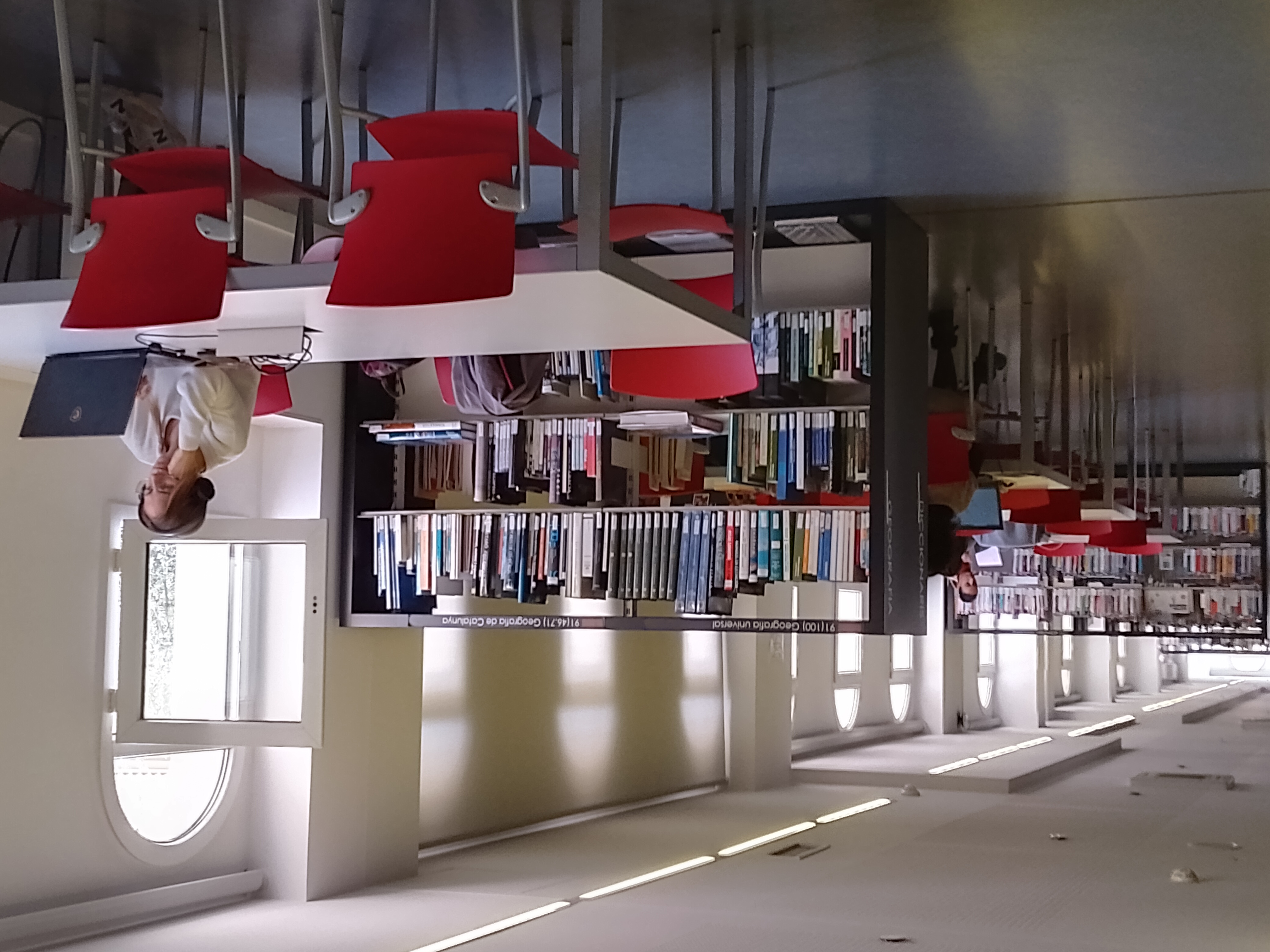
    Anyway, now I have added to my collection of library cards one of Biblioteques de Barcelona, even though I won’t be here for very long.

  • Articles

    Happy Easter

    A reflection, a Latin Mass, and a dream

    A reflection

    Today is Easter. I am here in Barcelona, or rather in a smaller place in the coast near Barcelona. It is sunny and warm enough, around 20 degrees Celsius. In fact, too sunny. It seems it hasn’t rained in Catalonia for several weeks or perhaps months, in one of the worst draughts in years. The media is blaming “global warming”. But I’ve seen them blaming it for snowstorms and even earthquakes and volcanos, so who knows.

    The “climate change” apocalyptic cult is one of the several semi-religious groups that have mushroomed in recent years. Well, they’ve been around at least since the 1990s, but only recently they started doing crazy stunts such as gluing themselves to roads or throwing soup at famous paintings.

    The transgender stuff seem to be approaching similar levels of over-the-top madness. I wonder sometimes if the intended effect of those who promote it — and note that this is the government and big corporations, not the transgenders themselves — is exactly to shock and disturb people. After all, no one minded very much the presence of gay people or drag queens in occasional movies or TV shows. But when they started promoting it to children in schools, and giving “Woman of the Year” prizes to transgenders, and making them win in lots of female sport events, even “normies” started to question what is going on.

    Covid also seems to have been promoted as some kind of para-religious phenomenon, with all those ritual social-distancing rules, the “penance” of lockdowns and masks, and the “salvation” of vaccines.

    G. K. Chesterton once famously said that “whoever doesn’t believe in God, starts to believe in anything”, or something to that effect. The idea being that religion seems to be some kind of inner necessity, and if you don’t find it in one way, you will find it in another. With the decay of Christianity as the main religion in the West, other forms of belief seem to be coming to the fore.

    A Latin Mass

    With that in mind, I went to Mass today. Now, I don’t go to Mass often. I like to visit churches, in particular old churches with beautiful artworks, but I rarely go to mass. I am not a very religious person, although not completely irreligious — reflecting, in some ways, my mixed heritage: my father is agnostic, my mother is I very religious. But I grew up Catholic, and I took First Communion. After that, I became more agnostic, perhaps because of my readings of Carl Sagan starting at age 13.

    And yet today, Easter Sunday, I went to Mass. And not any regular Mass, mind you: a Latin Mass, also called Vetus Ordo or Tridentine Mass, which is how masses were performed before the 1960s. There are only two places where they still do it in Barcelona; this was in a small 18th century chapel in the centre of town.

    Now, I had read about this type of old-style mass, and how the new pope is trying to forbid priests to perform it, and how it has become some sort of ideological battle between traditionalists and modernists. But I had never gone to one — all my experience of mass was the Novus Ordo or post-Vatican II mass.

    As I entered the church (really, just a small chapel with one single line of benches that could fit, at most, 30 or 40 people), it felt more like a secret, forbidden ceremony, because the place was really very small. But it was full, and I was surprised by the diversity of the public present. Not just decrepit old people as I would have thought (and as is common in most masses today). Sure, most were middle aged or older, but there were also two young married couples, two women in their thirties who appeared to be alone, and one family with three teenage daughters and one teenage son. Interestingly, the father was Spanish and the mother, Asian. The children were all mixed-race, even though they, of course, looked more Asian.

    The choir singing (at the back, in the balcony) were all young women. Also young were the priest assistants, and even the priest, who looked Spanish but seemed to have a foreign accent (Portuguese or Brazilian, maybe? I didn’t ask).

    As mass started, many women, but not all, covered their head with a veil. In some it was white, in others, black. I assume the white one was for the unmarried women and the black one for married ones or widows, but I am not sure. Some women didn’t have a veil at all: were those the divorced ones? Except for a few of the older men, dress was casual. The teenager boy was wearing a skateboard-themed hoodie.

    Now, this particular mass was not just spoken in Latin — it was completely sung in Latin. Even the prayers were all done in the form of a song. Think Gregorian chants, to have an idea of what it sounds like. The only exception was a short sermon by the priest, which was in Spanish. The rest, all sung in Latin. During Mass, the priest and his assistants all faced mostly towards the altar, that is, with their back to the faithful — again, the only exception was during this short sermon in Spanish.

    Communion was also slightly different — you had to kneel next to the altar (three people at a time), to receive it. You can see here a description of what it’s like. For some reason, it felt more both more intimate and more solemn.

    It ended with the priest and assistants leaving the altar in a row, singing and carrying a lit candle. It lasted just over one hour, not much more than a regular mass. As I left, some people remained in front of the church, talking — I suppose this was a close-knit group of people who always come to this mass. It had a familiar, informal atmosphere, and seemed to be frequented by more or less normal people, and not the stuck-up reactionary group of people I would have expected.

    As it ended, I thought — wow, that’s a very beautiful idea, a mass all sung in Latin, almost like a Gregorian chant concert, why aren’t all masses like that? Then I remembered that that’s how most masses used to be, until they were changed by Vatican II to modernize mass and bring it “more in tune with the times”. Strangely enough (or not), such modernization did not bring in more people to mass, on the contrary. Church attendance has decayed and is still decaying all over the Western world. So I have to wonder what are the real intentions behind the attempt to forbid the more beautiful and solemn Latin Mass…

    A Dream

    Just yesterday night, I had a symbolic dream (all my dreams lately seem to be symbolic), which seem a propos to tell now. It is actually a dream in two seemingly unrelated parts.

    First part: I was in Putin’s house. I had been sent there as a reporter, to interview him. He seemed a bit disappointed because his war wasn’t going well, but he was very polite. His new strategy was to stage a football match between a Russian team and a famous team from England. Whoever won the match, would win the war. 

    As I took my leave, he picked up a postcard that was on the table: there was a photograph on it that he didn’t appear to like. He smiled bemusedly, and wrote something in Cyrillic on the back of it. (I could not understand what he wrote, because I can’t read Cyrillic.)  

    The next day, as I walked through the street, I heard loud cheering behind me. Someone was screaming happily. I turned around, and it was some famous Black player from England, celebrating. “We won 1 x 0”, he shouted. The war was over.

    Second part: I was reading a catalogue of an exhibition of recent up-and-coming artists. The catalogue was a few years old. One of the artists listed was a pretty young woman who at the time was 28 years old. Turns out that, just a few years after the exhibition, she had died of cancer. It seems my brother (who is an artist) had known her, several years ago. She had died in 2018. Since the catalogue had her birth date listed, I calculated her age at her death, and came up with the number 32.

    But, as the dream continued, she was still alive. Maybe this sequence had happened years earlier, when I was younger too, only I had foreknowledge of the future, because I knew that she would die. Or maybe we were in an alternate timeline. Or maybe, that’s just how dreams are. Fact is, now she was alive.

    We were standing by the shore of a river that was also a road. This was not surprising (nothing is really surprising in dreams). And, by “we”, I mean an indeterminate group of people, who seemed to be rebels or outcasts. This included she and I and about ten other people. We were waiting for the end of the West, because we all knew it was coming. The economy, society, everything seemed to be going to the dogs. So we would be going somewhere else, perhaps to rebuild a new civilization, or perhaps just to escape the apocalypse. The main idea was to leave.

    “We lost what we had. They took from us all that we had built”, said one of the young men of the group, dejected. He was referring to the US, to Europe, to the West, or perhaps to the whole world. 

    “It was never ours, we just rented it. Now we have to build it again”, replied another man, a good-looking, confident young man who seemed to be the leader of the group. He was smiling. The girl, the artist, standing next to him, smiled too. I looked at her. 

    “I guess it’s the end, baby”, I said. 

    “Don’t call me baby”, she said. But she was still smiling. 

    Two white buses came along the road and parked nearby. They had no drivers, and were empty. Together with them, a small white boat also came and stopped. Also empty, with no one inside. (The river, as I said, was at the same time a river and a road).

    “Let’s take the boat”, I suggested. (It seemed more romantic for such an end-of-the-world trip.) 

    But the others were more keen on taking the buses, which would be faster or more comfortable. Even though it was not clear where we were going. Perhaps to the countryside or to a forest, to create a new settlement, somewhere? All the others climbed into the buses. Only I walked towards the boat. The girl (what was her name? Cindy?) remained outside too. I knew then that she was coming with me on the boat. Just the two of us. She was pretty, with straight, long auburn hair. And she was 28. But I knew she would die of cancer at 32. (Did she know it too? Should I tell her?). If we would be together — and that wasn’t exactly clear in the dream — it would be a doomed relationship, that would last just for a very short time.

    I jumped into the boat. It was a simple small wooden fisherman’s boat. No motor, no sails. We would have to row. 

    “Let’s go, ba— 

    “Baby”, she said, talking over me. We both laughed.

    It was the end of the West, but I felt fine.