• Articles

    Murdering Literature

    Another chapter in a depressing saga

    Murder, she wrote — and they rewrote it. “Sensitivity readers” strike again. This time the victim was Agatha Christie. It appears that they removed all mentions to skin colour, race and other physical characteristics from her novels, published by Harper Collins, one of the “Big Five” who, as I mentioned before, control all book publishing in the world.

    In the new versions of the famous crime stories, a “Nubian boatman” became just a “boatman”, and Poirot’s comment that someone is “a Jew, of course” was completely removed, along with all mentions of non-English people having “lovely white teeth” or “beautiful teeth”. (Is that offensive? I would think that stereotyped descriptions of English people having “bad teeth” would be worse?)

    Please note that none of the descriptions that were removed are in themselves offensive, they are merely… Well, descriptive. Which is what they are supposed to be. But I guess you can’t have even that in this susceptible day and age.

    Despite the growth of AI, which is supposedly “stealing all our jobs”, there is a growing number of absurd, unnecessary professions, such as “DEI consultant” or “sensitivity reader”. And yet, I would think that this is one of the rare cases in which AI could probably do a better job — how hard can it be to write a program to filter out “offensive” words and replace them with something else? Even I could do that with a “Find and Replace” command in Word.

    Of course, the concept of “sensitivity readers” itself is complete nonsense, because anyone who is offended by words has no business reading books. (And probably doesn’t really read anything longer than social media posts.) I’ve read a lot, including some of the most offensive works in the history of literature, such as H. P. Lovecraft’s early short stories, some of Sade’s works, Céline’s “L’École des Cadavres”, and even part of Hitler’s “Mein Kampf”. Did it turn me into a crazy, unhinged, mentally ill conspiracy theorist? Er… well, maybe, but that is not the point. The point is that if you like to read, you’re not going to be offended by words on a page, especially if they are part of a work of fiction. No serious reader likes editors who think they are smarter than the authors. If you’re a reader at all, you want to read the original work, not a bowdlerized or abridged version. It completely removes the authenticity of the work, and even its historical context, not to mention the author’s original voice, which is the reason we read in the first place. It doesn’t mean that you agree with the author, it just means that you want to read whatever it is that he wrote, not what someone thinks he should have written. We don’t need no stinking sensitivity readers.

    This hits home because Agatha Christie was one of my main readings during my pre-teen years, from, say, 11 to 15 (I think at 16 I started reading more “serious” stuff, such as Dostoevsky etc.). I read all kinds of science fiction and detective stories, but Doyle’s Sherlock Holmes, Chesterton’s Father Brown stories, and Agatha Christie were among my favourites. 

    Now, from Agatha, I liked mostly the Hercule Poirot’s novels. I think I read all of them. I didn’t enjoy her non-Poirot stuff as much, except for a few classics, such as “And then there were none.” 

    Actually (if I’m allowed a little parenthesis here — see what I did there?) this is a very early case of sensitivity editing. Originally, the British novel was called “Ten Little Niggers”, which even back then was considered somewhat offensive, so this was soon changed to “Ten Little Indians”. But that was eventually also deemed offensive, and so it became “And then there were none”, which doesn’t offend anyone but unfortunately is a bit of as spoiler as far as titles go…

    Now,  I’ve read the novel decades ago in a Portuguese translation, and until just a few years ago it was still called “Os Dez Negrinhos”. The word “negrinhos” in Portuguese doesn’t have the negative connotations that the English word has acquired. It really just means “little black boys”. However, I’ve heard that recently even the Brazilian publishers had to change the name of the book, because of contractual reasons — basically, the company who owns the rights was afraid of being sued by NGOs, and therefore the name had to be changed in the translations too. Oh well.  

    Besides the more general attempt to change the past (“who controls the past controls the present”, as per Orwell), I think what is really going on here, under the excuse of “not offending anyone”, is simply an attack on readers, and on reading in general. Not too many people read books these days, and if all books are just going to be rewritten into the same inane, boring, nondescript, corporate propagandistic jargon that is the norm everywhere else in the media, well, then what will be the point of reading, anyway?

    You might as well have all books written by AI bots — and read by bots, too, as such books won’t interest anyone else. Which I suspect is the idea. Murdering literature, and getting away with it.

  • Articles

    The mystery of China

    How would a world ruled by China be?

    Winston Churchill once famously said that the intentions of (then Soviet) Russia were “a riddle, wrapped in a mystery, inside an enigma”. Nowadays their intentions are not so mysterious. You may agree or disagree with them, and I suspect most people in the West today will disagree, but they seem more or less clear — but China? What is China’s role in all this?

    The Chinese leader Xi Jinping visited Russia recently, and although China and Russia have a growing cooperation in economic matters, China stopped short of giving direct military support. But the same day that Xi was in Moscow, the Japanese PM visited the Ukraine. Meanwhile, Americans grow increasingly pushy on the Taiwan front, and freak out about Chinese weather balloons, so if World War III should break out, you know more or less who will be on each side.

    Would a Chinese-ruled world be better than an American-ruled one? I am not a great fan of the Chinese style of government, much less of the heavy-handed way they handled Covid, but, on the other hand, they seem less pushy on the cultural and political front than Americans. The United States tend to consider themselves the arbiters of global morality and use war or sanctions or propaganda to promote whatever they want abroad — be it “democracy” or “gay rights” or “critical racial theory”, they always seem to be pushing something or other. The Chinese, on the other hand, have been present in Africa and Latin America for decades now, and I don’t think they’ve been pushing Confucianism or CCP Communism or anything else to the local population. They seem mostly interested in doing business, so far.

    Even Chinese immigrants tend to integrate better than other nationalities. For years “supermercados chinos” or Chinese-owned mini-markets (although, to be fair, many could also be Korean) have been a feature of Argentina and other Latin American countries, not to mention the 99 cent stores (now with inflation, updated to 1.99 or 2.99). The Chinese do their business, keep to themselves and rarely cause trouble.

    On the other hand, the U.S. are more successful in the cultural and propaganda war. I’ve been saying for a while that Hollywood is in decline, but a lot of people seem to disagree with me. American cinema is still popular all over the world. Chinese cinema? Not so much. They had a good run in the early 2000s with Zang Yhamou, Wong Kar-wai (from Hong Kong) and other directors winning prizes and accolades, but right now Korean cinema seems to be more ascendant. Japanese anime continues being popular too. Chinese productions, on the other hand, seem to translate less well to Western audiences.

    Japanese cinema, which I admire — in particular the work of classic directors such as Kurosawa and Ozu — did not exactly take over the world, but was pretty successful for decades and influenced many other directors. Even more recent directors such as Hirokazu Kore-Eda or Takeshi Kitano have been rightly celebrated in the West. Not to mention the extraordinary worldwide success of Japanese novelist Haruki Murakami, many times transposed to cinema, most recently in the award-winning “Drive my Car” (Ryusuke Hamaguchi, 2021). Does China have anything similar? If they do, I am unaware of it.

    The Chinese have been doing well in the tech world, however. Lenovo and other computer brands have been very successful worldwide. Of course their greatest recent tech success story is TikTok. The Americans accuse TikTok of spying on its users and sending the information to the Chinese government, which is kind of ironic, considering that all social media apps in the U.S. do exactly the same. In fact, there is a fair amount of evidence suggesting that companies such as Google, Apple and Facebook have long-standing partnerships with agencies such as the CIA, NSA and the FBI. The U.S. worry seems to be really more about economic competition — and in fact, Youtube and Facebook have recently launched their own short video services similar to TikTok.

    Perhaps the biggest loser in a Chinese-ruled world (besides the U.S., of course) would be Japan. There’s bad blood between the two countries on account of World War II and Japanese occupation. On the other hand, while the U.S. and Japan are now allies, they weren’t until recently, and one could argue that the Americanization of Japan hasn’t been completely beneficial for the country, which now has one of the lowest birth rates in the world among other social problems. But would China leave Japan alone?

    In the West, China is a place traditionally associated with mystery. In “Gremlins” (Joe Dante, 1984), the creature that gives birth to the little demonic trolls is purchased from an old Chinese man in a Chinatown shop, and, of course, comes from ancient China. In Spanish, the term “tortura china” or Chinese torture is still used to signify a particularly gruesome ordeal. Probably inspired by Lingchi, or “death by a thousand cuts”.

    “May you live in interesting times” is reportedly an ancient Chinese curse too. Well, we certainly do now.

  • Articles

    Shooting Stars

    The tough life behind the screen, from directors to child actors

    The other time I wrote about indie film director Hal Hartley, who was a rising star in the 1990s. So I did a research on his current thereabouts. His apogee seems to have been winning the Best Screenplay Award at Cannes with “Henry Fool” in 1997. You’d think that the prestigious award would assure a long and successful career, with money guaranteed for every project, right?

    Wrong. He followed that up with the more experimental “The Book of Life” which was disliked by both public and critics, and never really got into the limelight again. His last movie was a self-financed low-budget production back in 2014. Since then he has dedicated his efforts more towards writing and publishing (like me – ha!). Last year he published his first novel. It’s not exactly a best-seller, but it has good reviews.

    Now, this is actually more common than rare in show business, and in particular in the fickle enterprise of movie-making. Even worldwide celebrated directors such as Federico Fellini or Billy Wilder had trouble finding someone to finance their movies in their old age. Then we have the curious case of Francis Ford Coppola, who after an extremely successful career in the 1970s and 1980s, in the 1990s did a cash-grabbing Godfather III which should never have been made, and then a few experimental movies that nobody liked, and thereafter decided to concentrate on making wine and letting the film-making to his daughter. (However, it seems he has a new movie coming up this year, so who knows).

    Michael Cimino is famous for making the film that “crashed the Western genre”, Heaven’s Gate (1980). It is actually not a bad movie at all, if a bit long, and incidentally also starring Isabelle Huppert. But the film cost a lot and was a box-office failure, the only unforgivable sin in Hollywood. Despite his previous five Oscars, Cimino’s career never recovered.

    For actors and actresses, things are even tougher. People like Isabelle Huppert, still acting in her 70s, are a rare exception. Most crash and burn very early on.

    A particular sad case is that of child actors. It’s just a few, like Jodie Foster or Drew Barrymore, who manage to remain successful even as adults. Most do not. Haley Joel Osment and Macaulay Culkin are famous cases of cute child actors who turned out to be not so cute as grown ups, and therefore had no chance in Hollywood, which in the end values more beauty than talent. And of course many of those child and teen actors also had a very troubled youth filled with drugs, alcohol and exploitative parents. Then there is the problem of sexual abuse, which is rampant in Hollywood since at least the times of Shirley Temple. It’s symptomatic that many child actors end up leading pretty screwed up lives.

    Other cases have unexpected tragic endings, but through no fault of their own. Adrienne Shelly, who starred in Hartley’s “The Unbelievable Truth” (1989) and “Trust” (1990) and then went on to become a director herself, with films such as the award-winning “Waitress” (2006), had a somewhat random death: she was murdered by an illegal immigrant from Ecuador that was working in the renovation of the building where she had her office. The reasons for the murder are not completely clear, but probably an attempt to rob or rape the actress-director. When “Waitress” premièred in Sundance to glowing reviews, she was no longer alive.

    Of course, one could argue that cinema itself is dying a slow death. Back in the 1990s, movies, even independent, low-budget movies, could cause a stir or influence culture. When “Pulp Fiction” came out in 1994, people hardly talked about anything else — and I am far from being a Tarantino fan, but I remember that. Even European directors, while far from their glorious period in the 1960s and 1970s, every now and then managed to cause discussion or surprise. But now? Who even talks about any of that? I and, I suspect, most people, can hardly name the latest Oscar or Cannes winner, if we even hear about the Oscars or Cannes at all. Most productions these days seem to be remakes of other things with a more politically correct casting, or if not mere propaganda, and even the award ceremonies need to create some sort of parallel controversy, such as one actor slapping another, to be noticed.

    When was the last time a movie caused some sort of huge cultural impact? I really can’t think of any recent case, certainly not any recent American movie. Perhaps “Parasite” (Bong Joon-ho, 2019), or the pop phenomenon “Squid Game” (Hwang Dong-hyuk, 2021) came close, but those are Korean productions. Sure, you can also say that streaming has somewhat diluted the general impact of movies, and social media diluted the discussion — everyone watches something different in the comfort of their home, and in fact series such as “Breaking Bad” (2008-2013) or the aforementioned “Squid Game” seem to have had more success on the cultural front than movies — but I do think that there is also a more general creative crisis.

    Or maybe it’s just me — while you could say I was a movie fanatic in my youth, and went to the movies at least two or three times a week, I don’t really watch all that many things these days.

    So, I don’t know. Are there really many new things worth watching?

  • Articles

    Analog Nostalgia

    Feeling blue in the post-digital world

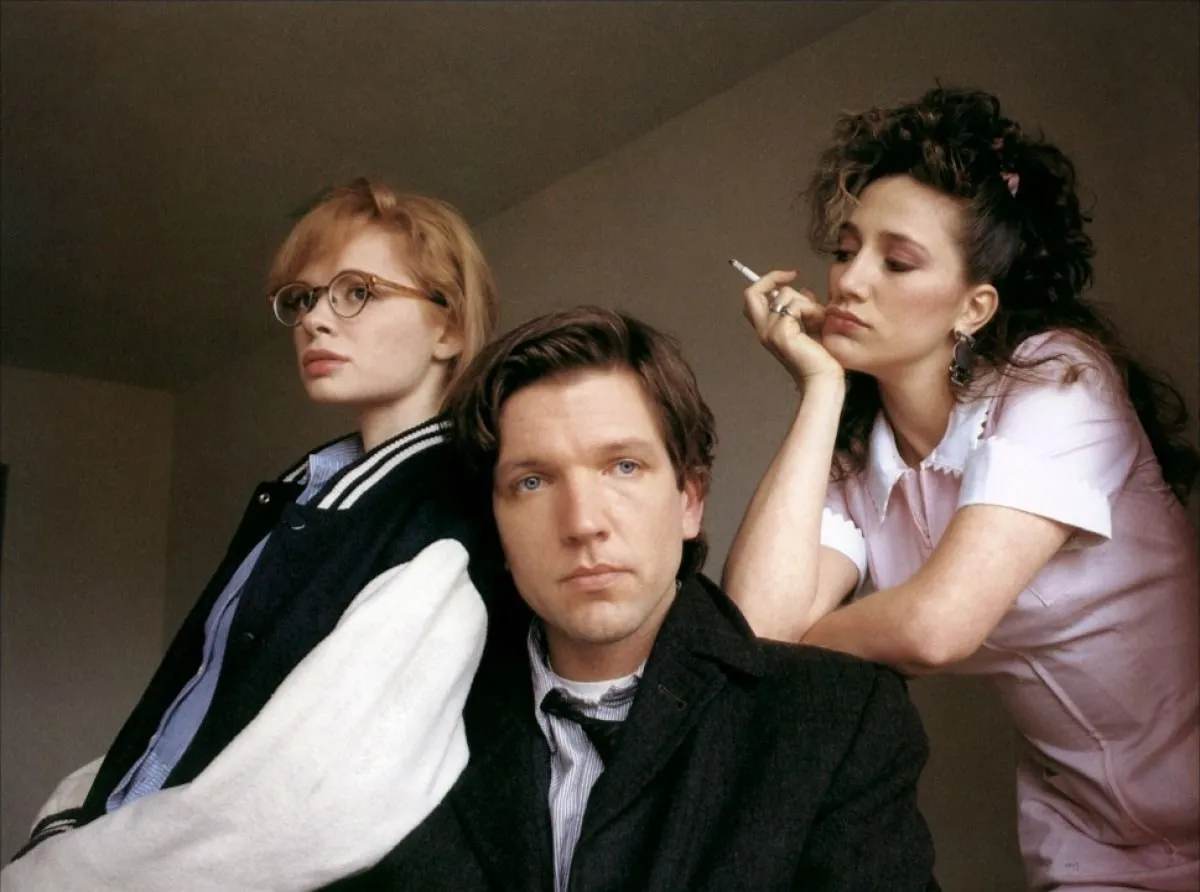
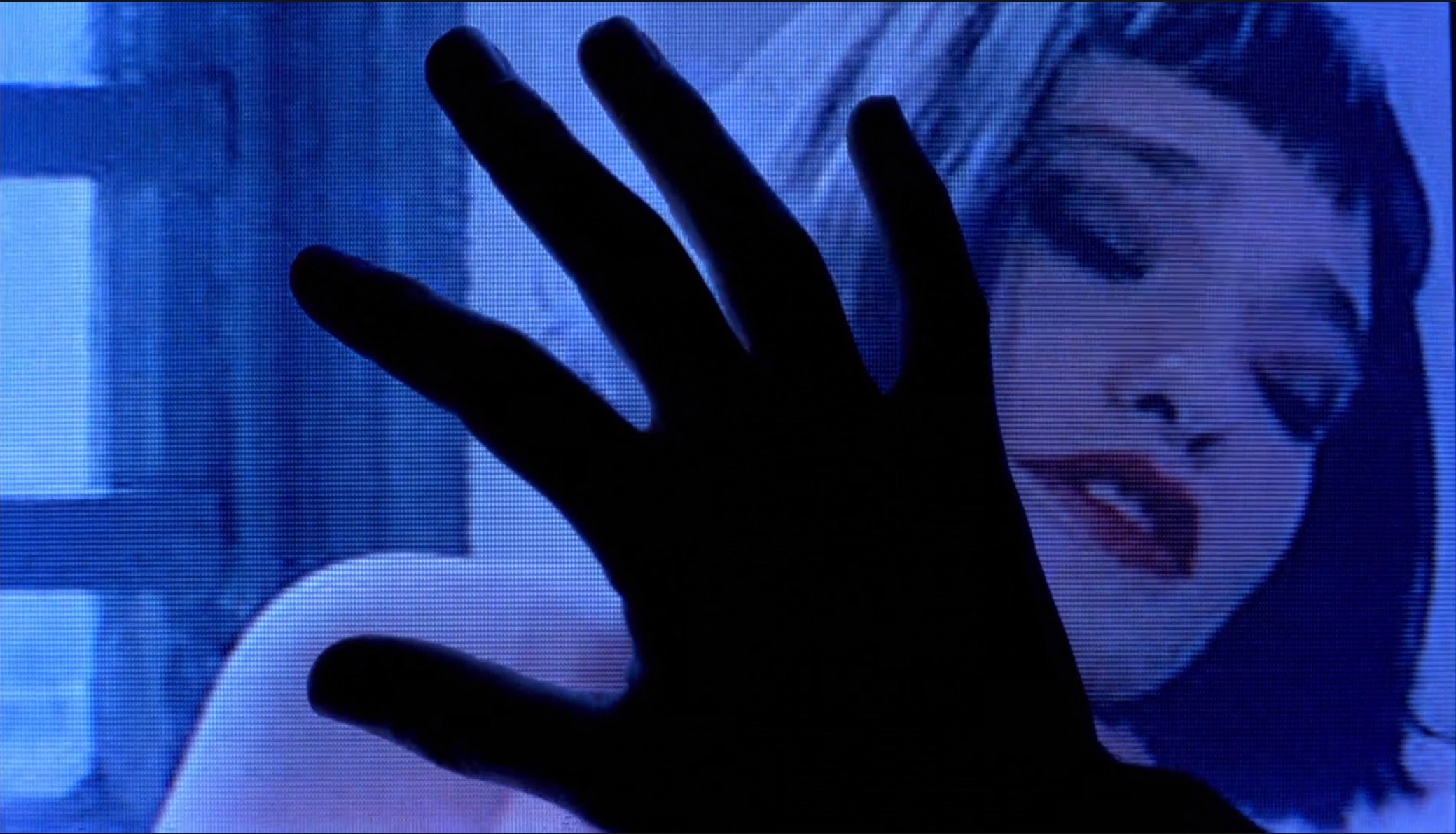
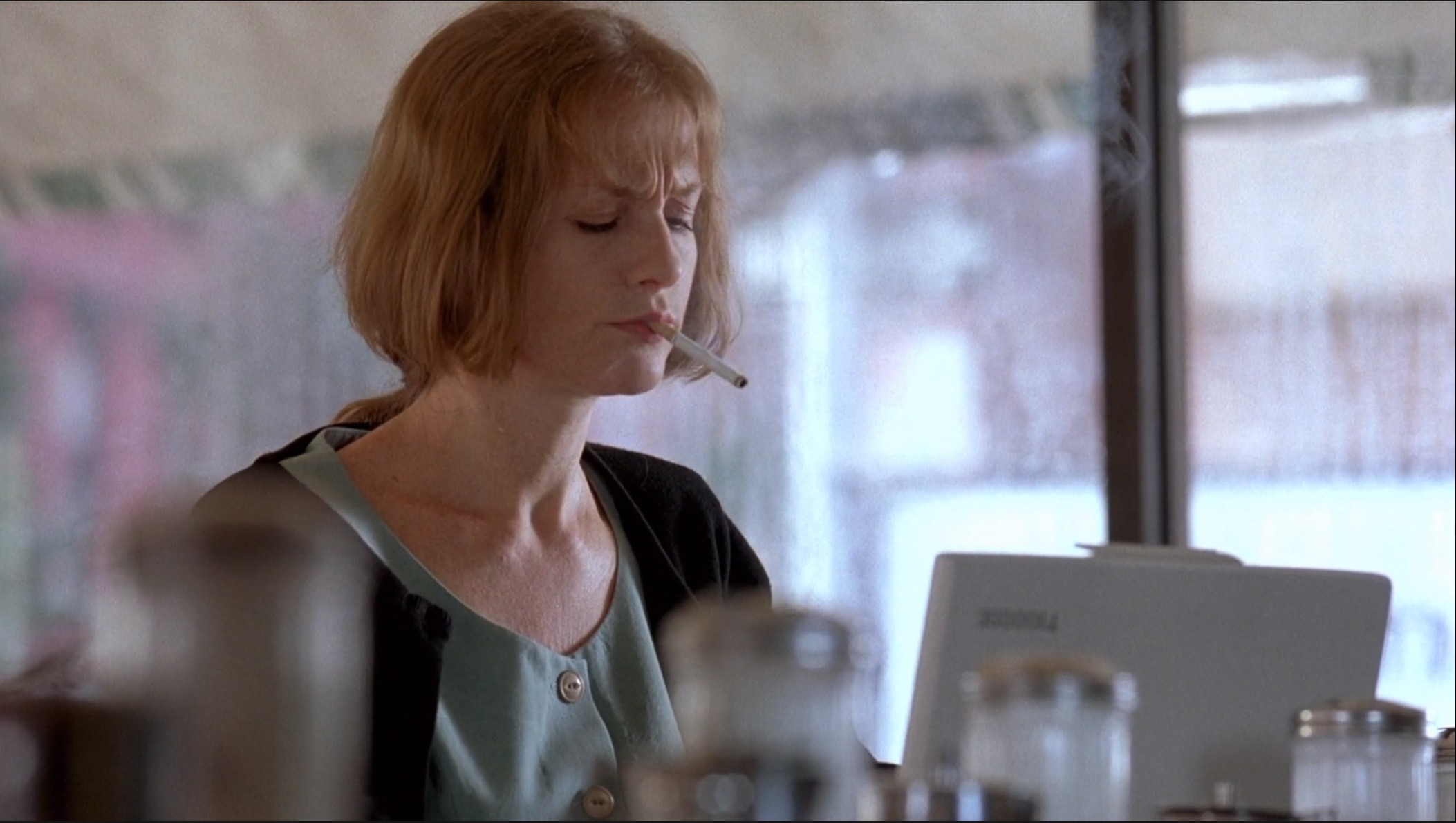
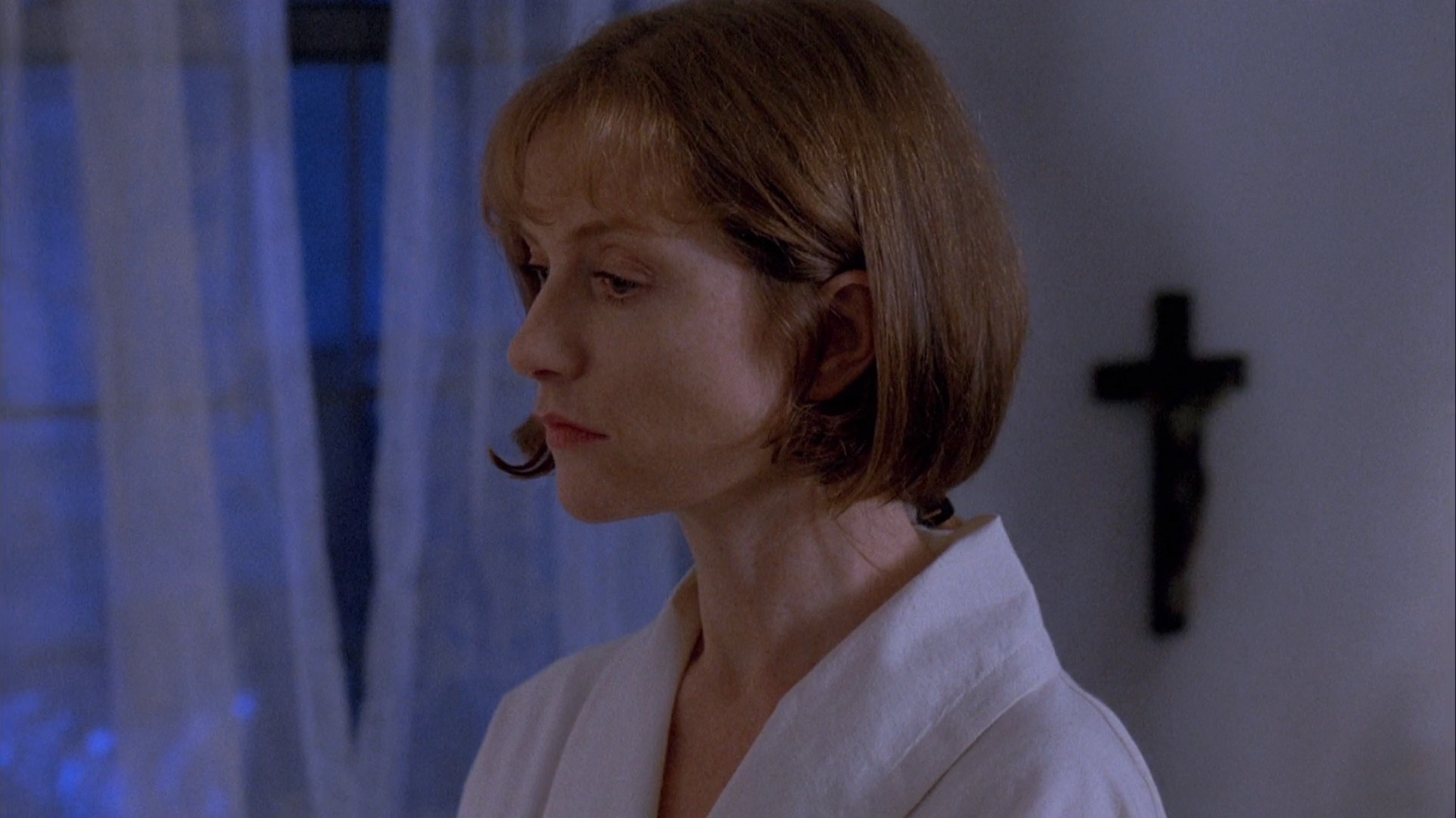
    The Criterion Channel, a streaming service of art movies, is doing a retrospective of Isabelle Huppert. So last night I watched again “Amateur” (1994), which is the movie that made me fall in love with the charming French actress who since yesterday has become, hélas, a 70 year-old. Happy birthday, Isabelle.

    Despite the name and the actress, “Amateur” is not a French but an American production, directed by Hal Hartley, an indie film director from New York who was in vogue in the 1990s, a bit in the line of Jim Jarmusch — I believe that Jarmusch is still around, but Hartley seems to have disappeared.

    Anyway, there is a scene in which two characters makes some corny joke about “floppy disks”, and another one in which they discuss the lease of cellphones — back then they were huge, and hugely expensive. And it made me think of how much communication technology has changed in the last years, and how it affected us.

    I am old enough to remember floppy disks of the 5 1/4 variety, which were actually floppy, both inside and outside. No, scratch that. I am older than floppy disks. I actually remember when video games had to be loaded into my ZX Spectrum by means of a cassette tape that played noise for 5 minutes. Only later the floppies came. Then we had the 3 1/2 disks, which had a stiff case protecting the inner disk and thus were not floppy, but which are the most remembered variety, so much so that they have become icons for “saving” even for people who’ve never seen a real one. Then we had CDs, DVDs, pen drives… All those things went the way of the dodo, of course, and now all forms of storage, including the movies we watch, are mostly in the Cloud.

    By the way, the first time I watched “Amateur”, almost thirty years ago (!), was in a small local art movie theatre, another thing that seems to have gone almost extinct.

    In some ways, the digital age made things easier or more comfortable, but in other ways, it made things less relevant. Sitting in the dark as the première of an important movie was about to start was akin to some form of ritualistic experience that streaming cannot really reproduce. Many of the authors and artists that collaborated with my small magazine, Geist, are happy that it is published in print. Anyone can publish in a blog or social media, and you may even reach more people that way, but a paper magazine or book has a real, concrete, in-your-hands existence that a digital version does not.

    Even the comfort and easiness of the digital world — is it really irreplaceable? Sure, things like Google Maps help us to find our way around. And yet, when I was a film student in London, 25 years ago, and there were no smartphones, everyone could find their way using the London A-Z, a portable booklet mapping all of London streets.

    Kids these days grow up watching Tik Tok and YouTube videos. In fact they seem to do little else. They rarely go out to play. If anything, they invite their friends in to watch videos together, and I suppose the parents prefer it that way. It’s dangerous to be outside, right? And they don’t really even watch cartoons anymore. They watch people doing stupid things in 30-second videos. Sure, they still do other things occasionally, but the video watching takes a lot of their time. But I suppose that the memories that they will cherish when they grow up, will not be of the time spent watching those videos, but of a trip somewhere, or the occasional fun with their friends in a park, or learning to ride a bicycle, or memorable family situations. The digital experience is as easy as it is forgettable.

    Think about photographs. I have but a few images of my childhood, taken with an old film camera, that you had to take to the lab to develop and wait to see if they came out alright. But the few ones I have, I cherish, and in some cases I can even remember the feelings of the moment associated with the image. Nowadays, we have tons of photographs stored in a SIM card for every single day of our lives, but we hardly look at them, once taken. They are easily forgettable. The more pictures we have, the less relevant they become.

    Now, I don’t want to sound like an old curmudgeon complaining about “kids these days”. We grow up in the environment that we do, and that’s it. There’s little anyone can doo about it. Unless we go to live with the Amish, it is impossible to escape. And in some ways, it’s fine. We grow out of it. But sometimes I wonder if all this technology is not affecting us in deeper ways.

    For instance, the other day, some Irish politician announced that he and her wife had had a “genderless” baby. That is, they said that they would not tell anyone its sex. They would raise the poor creature “genderless”, and wait until the child was 3 or 4, when supposedly the child him/her/itself would tell them: “I am a boy”. Or: “I am a girl”. Or: “I am a gender-fluid trans-male-lesbian”.

    Now, this is probably just some kind of bizarre virtue-signalling that they might not even follow through with, but I can tell you that, regardless of your beliefs about the transgender issue, if 30 years ago someone said that he would raise a “genderless baby” and wait for the child to be 3 years old to “assume his gender”, this person would be considered insane and not fit por political office, perhaps not even for cleaning the streets.

    And so I am thinking if digital technology is not playing a huge part in all this, further disconnecting us from the realities of the natural world, and thrusting us into a “matrix” where “reality” is just another form of chosen fantasy. After all, we can no longer even recognize what is a “deep fake” and what isn’t. It is unclear if lots of things that are shown in the media as “real” were even shot with a camera, or just made from pixels out of scratch.

    With AI, CGI and the increasing blurring between the limits between our “real” and our “mediated” experience, and even the merging of technology with our own bodies, as people like Yuval Harare and Klaus Schwab seem so keen to force, things will certainly get worse. Some company in Sweden already got thousands of people to install a chip under their skin, so that they can open the doors of their office without the need of a key or card. Think about it. People agreed to be tagged like cattle because “I don’t need to carry keys around anymore.” If they agree to that, they will agree to anything, really.

    Now, I am not necessarily anti-technology, as I am here writing in a portable computer to later post this text online, and I have just watched the movie I’m writing about on a streaming service instead of on an old VHS tape.

    But, sometimes, I do feel nostalgic for a time when none of this existed, and we seemed to know with more clarity what was real and what was not.

  • Articles

    For the love of books

    The curse of being a bibliophile

    I grew up surrounded by the books of my father’s library. It wasn’t as big as Umberto Eco’s library, but it was enough for me. I never managed to have a very large one myself. Not for lack of books or interest, mind you. I simply moved too much around the world and, regrettably, had to donate several of my books when I left. Others, even more regrettably, were lost when changing residence. So many books, all gone!

    Sure, today I could fit all the books I want in my computer or my phone. But one of the reasons I don’t like ebooks very much is exactly that they won’t do for a real library. You know, one with physical shelves and all. Another reason is that reading in paper is just more comfortable and relaxing. We already spend too much time in front of screens as it is.

    I also love bookstores, and in particular small bookstores. The big chain ones won’t do for me. There used to be quite a lot of dusty, smelly used book stores in my home town when I was growing up, but I heard most of them closed because of Amazon or big chain bookstores. Those that had barely survived for decades received the coup-de-grace with Covid.

    In Leipzig, there is a small old-style bookshop called “Polylogue”, in the upcoming neighborhood of Lindenau. It sells books not just in German, but also in English, Spanish, Italian and French. The owner is a charming French lady who moved to Germany 14 years ago. While the bookshop has been there for seven years, she said that they are struggling now because of inflation. People just don’t have that extra money to buy books. Covid, she says, was not so bad in the end: people were locked inside and had nothing to do, so they still bought books. But the current economic problems in Germany, in particular the huge increase in the utility bills, worries her.

    While I am worried about the economy too, I did buy some books on my last visit, including a used book called “Traditional Aspects of Hell (Ancient and Modern)”, by a certain James Mew. It is actually a facsimile edition of a work published originally in 1907, although this particular edition was from 1972. It includes illustrations from ancient sources, and it deals with a very interesting, if a bit macabre subject.

    I liked in particular the description of the Buddhist Hell, which, you might be surprised to learn, has the most terrible torments, rivalling the worst of Dante’s Inferno. Will I ever read the whole book? Probably not, but some books are nice to have just for reference or to look at the illustrations.

    Some people say we shouldn’t judge books by their covers, and that illustrations are unimportant. I am more in Alice’s camp: “And what is the use of a book… without pictures or conversations?” Once I bought an Italian version of Coleridge’s “The Rime of the Ancient Mariner” simply because it was a very nice edition with wonderful illustrations by Gustave Doré.

    When I was young, I wanted to be an editor or to have my own bookstore. I never did, in part because I was always very bad at business and marketing. But I actually do have a small publishing house, Contrarium, although perhaps calling it a “publishing house” is way more than it deserves. Still, I do publish a magazine of literature and art, Geist, now in its fifth number, and I also edit and publish small editions of new or public domain books. The last one is an annotated version of “Cautionary Tales for Children”, the humorous classic book of caustic poems for children by Hilaire Belloc. (I wonder what current “sensitivity readers” would think of that one).

    Yes, “sensitivity readers”. Nowadays, almost all book publishing in the world is controlled by only 5 large international conglomerates, the so-called “Big Five”. Two are planning to merge, so perhaps soon they will be the “Big Four”. They have so much power that they can do whatever they want, and one of the things they have been doing lately is hiring “sensitivity readers”. These are people who are paid to review books in order to find instances or “racism”, “sexism”, “trans-phobia”, “fat-phobia” and other modern sins, and rewrite them to accommodate for the modern politically correct urges.

    Recently there was some backlash when people discovered that the work of children’s author Roald Dahl — who is published by one of the “Big Five”, Penguin Random House, and whose copyright is now totally owned by Netflix — had been rewritten to remove language deemed offensive. Even complete lines of dialog were changed. Women were no longer called “fat”, and, in fact, in some cases they were not even called “women”, as these days, defining “a woman” as — well, a woman — is a very dangerous affair.

    But Dahl’s case is far from being the only one. Ian Fleming’s James Bond series, as well as several other books, are being surreptitiously changed. In some cases, even the original illustrations are revamped to make them more multicultural or politically correct. And, in the case of ebooks, Amazon or other companies can change the content even after you already bought them. Which means, you don’t really own your ebooks, Amazon or Google or Apple do — another reason to prefer books in paper.

    As for me, I will continue going to small bookshops and buying old books, and one day I hope to manage to have my own huge library at home, a veritable labyrinth of books, old and new. Hopefully, none of them proofread by “sensitivity readers”.

  • Articles

    The real problem of AI writing

    It will exponentially increase spam

    I’ve recently wrote about AI, but perhaps a few more observations are in order. Recently a popular science fiction magazine had to stop accepting submissions due to the huge number of stories written via ChatGPT and similar AI services. I can only imagine what school teachers have to deal with today. When I was teaching literature at college, years ago, it was common for students to get “inspiration” from Wikipedia and similar sources, just changing a bit the wording. Although, once, a less savvy student delivered a paper which was completely copied from Wikipedia, as in Ctrl C + Ctrl V. He didn’t even took the trouble of removing the links or footnotes.

    Tools like ChatGPT are harder to detect, and in fact, it is not clear if they can be considered plagiarism or not. At least the prompts are written by the students, and they can edit the final result into a more coherent form.

    “I used to spend hours writing creative copy, but now all I do is tell the bot what I need and it writes everything for me. It’s the ultimate AI content writer, and a must-have tool for bloggers, marketers, & entrepreneurs”, says a satisfied customer of a new AI writing service, in a comment which may itself have been written by a bot.

    It seems to me that the greatest beneficiaries of the new AI writing programs are going to be spammers. “I used to spend hours writing e-mail scams about Nigerian princes, but now I only need to give the bot a few prompts and it writes it for me, and without spelling errors!”

    Now, a bot may not be capable of writing insightful prose or inspiring poetry, but it is, today, perfectly capable of writing a high school paper or journalistic articles. In fact, I assume that a lot of journalism these days, including opinion columns, is written by some form of AI. At least, they read like that. So much of modern journalism is fake, I don’t see why a robot couldn’t do it.

    For instance, an article at the left-leaning site Vox assures us that there is something called “robot racism”, and that “people treat white robots better than black robots”. I kid you not. Lots of “woke” news articles read like robot prose these days.

    A lot of corporate-speak also feels as if it was created by robots, even when it isn’t.

    Could this article I’m writing be written by AI? Probably. But what would be the point?

    Another problem of AI is that it doesn’t really save work, money or even energy, but simply transfers it somewhere else. A recent case is a pilot project for self-driving cars in San Francisco. The car can can move automatically without a driver, but it cannot automatically open or close its own doors. If a client leaves the door ajar, some worker will have to come and manually close it. Sure, I suppose new models of cars can fix this issue, but there will always be something that a human will need to do, such as fixing a flat tire or even cleaning the backseats. Besides, while the company may save on drivers, it has to hire more people to monitor the cars route, to assist customers, to do technical service and programming etc. None of those companies so far are making any money.

    Perhaps AI systems for self-driving may be better used for the transport of goods than of passengers? Recently a couple of freight train derailments in Ohio, as well as a train crash in Greece, appear to have been caused by human error or bad maintenance. However, it is not clear if a totally automated system would have avoided such disasters. Machines can have bugs too, and they require constant supervision. The maintenance is done by humans too.

    Then there is the question of how the growing automation of society and the reliance on AI systems will further increase social atomization in an already very socially awkward age. Most people today prefer to send messages instead of talking on the phone, or talking in person; also many people now work remotely without the need to interact with others. As AI and automation grow to occupy more and more areas of life, our contact with other humans will be further reduced. Wether that’s good or bad, I let you decide, but it is clear that human social contact will probably not increase the coming years.

    One day, perhaps, we will only meet other people safely behind a screen or VR headset. And love letters will be written by ChatGPT.

    Thanks for reading Contrarium! Subscribe for free to receive new posts and support my work.

  • Articles

    Staggering recent numbers about immigration

    23% of people in Germany and 21% in Sweden are of “migrant background”

    According to a recent publication by Germany’s Federal Statistics Office (Statistisches Bundesamt) picked up by the Associated Press, 23% of the people in Germany are immigrants or children of immigrants. 17.3% or 14.1 million are themselves immigrants who have been coming since the 1950s, and another 4.7 million people (or 5.7%) are direct descendants of immigrants. That is, people who were born in Germany but both of their parents had immigrated to Germany. Then you have a further 3.7 million people (4.5%) who were born in Germany and have one parent who is an immigrant and another who is German. Therefore, only 72.5% of the people are “fully native German”. And this is not counting the recent wave of Ukrainian refugees, which may account for another 2 million people.

    The numbers, if true, are really bewildering, considering that the country was 90% or more ethnic German until not long ago. (I say “if true” because they are based on a “microcensus” which is basically a survey of 1% of the population, and not a full census).

    What is the source of such foreign migrants?

    Well, initially most of them were Turks, who started coming in the 1960s as “guest workers” and never left. They still account for the largest number of “people with migrant background”. Then you have the Poles and Romanians who started coming after the fall of the Iron Curtain in 1990.

    Truth be told, there is also a large contingent of ethnic Germans who were living in the Soviet Union, Poland or other Eastern European countries and came back after 1990, the so-called Aussiedler. But it is not clear to me if such people are considered “migrants” in those statistics or not, as they had a “right of return”. Yet, despite being ethnic Germans, many of them did not speak German and had problems integrating.

    In 2015 and 2016 there was that well-known stampede of refugees from Syria, and Merkel opened the doors for them, so that Syrians jumped to third place, behind Turks and Poles. But now perhaps they have been surpassed by the Ukrainians, who will soon account for 1% or 2% of the total population in the country.

    It’s not just Germany, of course. Sweden has 21.9% of migrants, and its case is perhaps worse, as it is a small country with a small population — meaning that their permanent replacement can happen quicker. The same is true of Ireland, with 18.7%.

    Such numbers, together with the extremely low birth rates in most of the West, are very worrying for the future prospects of Europe.

    Now, being myself an immigrant and descendant of immigrants, I am not a radical immigration restrictionist nor a foaming-at-the-mouth nationalist, but I do believe that people are important. What forms a nation and gives it unity? Not ideas or a constitution, as many believe now, but essentially, people. People, ideally of the same blood, language, culture and religion. Sure, some foreign migrants can be integrated, and in some ways always were — but the massive numbers that we have seen now, and continue seeing, is something unprecedented and probably unsustainable. At least, for Europe — the American continent is a slightly different story.

    Besides, to me, at least, what was interesting about Europe was its diversity — a true diversity, with each country with its different food, language and talents: Germans in philosophy, Italians in art, French in literature, etc. But now, in the name of a fake “diversity”, all countries are starting to look more or less the same: full of big cities with ugly modern buildings, a multicultural population, an Americanized (or globalized) culture and a MacDonald’s and a Starbucks in every corner.

    How will Europe look in a 100 years? (If there is still a European continent, or a planet Earth, by then). Well, I’m probably not going to be here to find out, but I hope and wish that most of its countries may still exist in some form or another. However, the borders of the European nations changed quite a lot in the last 1000 years, so I won’t be surprised if they further change in the next 100 too.

  • Articles

    Why I'm not worried about AI

    Artificial Intelligence is just an “intelligence simulator”

    ChatGPT from Microsoft and now a similar chat bot from Google are all over the news. We also saw recent hype about “AI Art” and “AI writing”. Some people worry that soon robots and computers will take over most jobs, even creative ones. They panic that machines will one day reach “singularity”, rebel against their creators and completely dominate society.

    I don’t. In fact, I don’t really believe “artificial intelligence” exists or can exist, as real intelligence is derived from consciousness, which cannot be created. With consciousness comes conscience, which allows us to distinguish right from wrong. This process cannot be generated artificially, except as a crude simulacrum — and indeed, we have now bots programmed with all kinds of politically correct filters which are, I suppose, the morality of the age. But they don’t really “think” for themselves.

    All these “AI bots” can do therefore is to provide a clever simulation of intelligence, creating an appearance of something that is not really there.

    That’s not to say that AI doesn’t have some uses. Unfortunately, most of such uses are negative — mas surveillance, for instance. Facial recognition, movement detection and other forms of AI based on pattern recognition can — and will — be used for pretty nefarious ends, in order to create a totalitarian state — we already felt its first birth pangs during Covid.

    Then you have the planned merging of people with machines, sci-fi things like artificial organs or chips in the brain. Ted Kaczynski, aka the Unabomber, warned about this in his manifesto. They sell this as turning people into super-human cyborgs, but the real purpose is to turn people into slaves, with no control over their own body or mind.

    Other uses of AI are more benign. Machine-translation, for instance, has greatly improved in the last years, providing very readable texts. However, for good, literary-quality translation, you still need a human brain.

    AI automation, as in self-driving cars, planes or trains, can be useful but has some drawbacks, such as hacking, maintenance costs, and the risk of serious hardware or software malfunction at critical points. I am not sure totally autonomous self-driving cars are a good idea.

    Chatbots as customer service are awful. They are really no better than pre-recorded messages on a phone. Sometimes, you really need to talk to a human, and preferably not someone from Pakistan with an incomprehensible accent.

    I am not impressed by AI poems or AI art. Almost everything I saw is pretty bad or bland, with no there there. Even if AI manages one day to create something of aesthetic value, it will be in the same manner of the proverbial hundreds of monkeys typing a Shakespeare play.

    That said, I am sure we will soon see humanoid robots (androids) walking around and being used as servants, companions or even sexual partners. Why? Because even if machines are incapable of real intelligence, conscience and feelings, a simulacrum is enough for most of us. Didn’t people in the 1980s get attached to “tamagotchis”, which were basically very primitive digital pets? Don’t children get attached to dolls that play just one or two pre-recorded messages? A robot or a chat bot that simulates feelings and intelligence is almost as good as the real thing. We don’t mind being fooled. Aren’t most human relationships also based on deception or self-deception anyway? We pretend all the time to be what we are not. Machines can do the same, only better.

    There are many films and novels about robots becoming sentient. The last one I read was “Machines like me”, by Ian McEwan. It was pretty lame. McEwan has written some good novels over the years — unfortunately, this was not one of them. I think the problem is the chosen subject. AI is not real, and robots cannot develop self-consciousness or real intelligence. Still, in a fictional context, it could work. But McEwan is not really a science fiction writer. I think the problem is that he tries too hard to be serious about a fundamentally unserious problem, and ends up creating a novel where all characters are bad caricatures that feel very artificial. And I don’t mean just the androids.

    Even Asimov cheap robot novels felt better and more realistic. At least, in my teen years, I enjoyed reading “The Caves of Steel”, “The Naked Sun” and “The Robots of Dawn”, the trilogy about a detective and a robot in a weird planet where people feel afraid of diseases and all human contact and live isolated from each other (sort of like the Earth during Covid).

    AI will certainly play a pivotal role in the near future and, sure enough, it will take over many jobs. Lots of people will become unemployed, or will receive a UBI or some other type of welfare in exchange of getting a chip in the brain or a genetically-modifying injection, or both. Our society will become increasingly automated, and mass surveillance will be a constant feature.

    But sentient robots will not rebel against humans and become our new overlords.

  • Articles

    Cocktail party old geezers

    And loneliness in the “connected” modern world

    Years ago, when I lived in a remote town in the south of South America, there used to be an old man who, for years, maybe decades, appeared in all vernissages, openings, receptions, cocktail parties — and basically any artistic or social event in town that offered free drinks. In some cases, even in private events (no one knows how he found out about them). But, mostly, he liked vernissages in art galleries. It is not clear if this was because of his greater interest in the visual arts than other arts, or because in those events there was usually more free booze, or, more likely, perhaps it was a healthy mixture of both. Eventually, he became so well known in such circles, that if he didn’t appear at a particular opening, it was said to bring bad luck. It meant: “This exhibition, show, book etc will fail.”

    Now, living in another town in the middle of nowhere in Europe, I realize that there is an old lady that is also always present at all or most local cultural events. I don’t know if the same superstition applies to her.

    Perhaps she, like that old man years ago, doesn’t have a family and feels lonely, and going to these events is a way to have some sort of social life. I don’t really know. But it got me thinking about loneliness in general.

    There are studies showing that feelings of loneliness and isolation have increased immensely in the last years, and in particular since the appearance of social media and smartphones. It is as if, the more connected we are through our apps, the less connection we feel to those around us.

    I was watching a movie from the early 1990s the other day, and there was a scene in which a small group of people, who clearly didn’t know each other well, were awkwardly sitting together at a table during a party. They remained silent for a while, looking at each other or at the walls, and then, almost simultaneously, they all reached for their pockets — I was expecting them to take out their smartphones, but this was an early 1990s film, so each just took out a pack of cigarettes and started smoking. Yes, you could do that indoors in the early 1990s too.

    Today, of course, our smartphones make it easier for us to get lost in our own private universe and avoid the unpleasantness or awkwardness of meeting and talking with strange people “in the flesh”. Even office work has become remote in many cases, with “Zoom meetings” and similar stuff.

    “Bowling alone” was a seminal essay written in 1995 by Robert Putnam, later expanded into a book. There he argued that, at least in the United States, traditional forms of social interaction such as clubs, churches, bowling leagues, etc were slowly disappearing, and people increasingly spent more time alone.

    That discovery may have been a novelty in 1995, but today, and especially after Covid, it is undeniable that we live times of complete social atomization. Even inside families, sometimes there is little connection and family members spend more time looking at their phones than at each other.

    Extended families living in the same household are a thing of the past. In the United States, the percentage of people living alone has increased from 6% in the 1960s to 15% in 2022. In Northern European countries such as Sweden, the number of people living alone correspond to 17.8% of the people, or 39.2% percent of all households.

    The numbers keep growing every year.

    Sometimes, some of these people die and it can takes days, weeks or months until they are found. In one particularly sad case, a dead man was found in his flat in Stockholm only three years after his passing — and during all this time he was still receiving welfare deposits on his bank account, every month.

    It’s not just old people without families who feel lonely — apparently most teenagers and young people do, too. Depression and suicide are on the rise in most of the western world — and not only. Asia is lonely too.

    The problem got so bad that the UK instituted a “Ministry of Loneliness.” And yet, knowing how government works — seeing the examples of the Ministry of Education or the Ministry of Health — it is very likely that they will make the problem even worse.

    But there is a solution at hand: the Canadian government’s euthanasia program already allows for anyone older than 18 years of age to receive “Medical Assistance in Dying” (MAID), and there’s no need to have an incurable disease, but just “psychological suffering”. Perhaps the MAID program can merge with the Ministry of Loneliness, and governments worldwide will get rid of the problem of lonely people, once and for all.

  • Articles

    Who is Klaus Schwab? (Part II)

    Continuing the genealogical investigation

    As promised, we continue now investigating the family origins of Mr. Klaus Schwab, the famous founder of the World Economic Forum. The genealogy site Geni confirms that Emma Gisella Schwab (née Kilian), the first wife of Eugen Schwab, is the actual mother of Klaus Schwab, solving our doubts about that issue. The first wife Emma Gisela is the biological mother, and the second wife Erika Epprecht, just the step mother.

    The records of the Kilian (sometimes spelled Killian) family go way back to at least 1780, with the last known ancestor named Franz Killian (that is how far Geni goes).

    Thanks for reading Contrarium! Subscribe for free to receive new posts and support my work.

    Ancestry.com informs us something interesting about the Kilian surname:

    German Dutch Polish and Sorbian; Slovak (also Kilián); Czech (Kilián): from German Dutch Polish Upper Sorbian Slovak and Czech adaptations of the Irish personal name Cillín (see Killeen ). Saint Kilian was a 7th-century Irish missionary to Franconia and Thuringia martyred c. 698 at Würzburg (he is the patron saint of this German city) hence the popularity of this personal name in medieval central Europe.

    All the ancestors at Geni seem to come from this region (Franconia, currently Baden-Württemberg), so that confirms it.

    Therefore, Kilian is an old German name at least since medieval times, and not Irish.

    Emma Gisela’s father was a Rimmler, sometimes spelled Rimler. This is also an old German name, going back at least to the 1700 as well, with Johann Heinrich Rimmler the last ancestor found in Geni. In fact, this surname could be a variation of Riemer, which is an “occupational name for a maker of leather reins and similar articles” and also common among Ashkenazi Jews in Germany (Yiddish: Rimer). The more common Reimer is another possible variation of the same name.

    Then going back in the Eugen Schwab line, the last name we find in Geni is Johann Jacob Schwab, born around 1708. We have already explained the Schwab surname as that of someone from the old Swabia region, which in fact neighbours the Franconia region.

    What to make of all that?

    Well, mostly that Mr. Schwab is not a “nobody”, but someone with long ancestry lines from rich, traditional German families, possibly ancient nobility.

    As for the constant visits of the family to Brazil, mainly in the 1960s and 1970s, this could be very likely related to the construction of the Angra dos Reis nuclear power plant in Brazil, as it started to be built in 1971, and planned before that, all with German technology. It is known that the Schwab family (through Escher-Wyss/Sulzer) was involved in the development of nuclear energy in South Africa, so it would make sense a collaboration with Brazil too.

    It’s interesting that today the WEF is pushing for the construction of more nuclear reactors as a way for countries to “decarbonize” in their “battle against climate change”. Make of that what you will.

    However, I stand by my previous observation that Mr. Schwab, despite his recent fame in conspiracy circles, is not really one of the main power players in the global chessboard, but basically just an “actor” or an “employee” of much more powerful people. In fact, the constant repetition of his name in the media could be just more misdirection, putting him up as some sort of scapegoat. He might not be that important, and the WEF, just another globalist institution among many.

    Thanks for reading Contrarium! Subscribe for free to receive new posts and support my work.