• Articles

    Sweden. Day 6. Walking over thin ice.

    So today the idea was to skate over a frozen lake. I went with Håkan, who is a documentary film-maker from Stockholm that is visiting up here, and a very experienced skater. He’s been making movies all over the world, from the Himalayas to Hawaii. He’s also a former Navy Seal, or the equivalent of it in the Swedish Navy.

    He told me that in the 1970s he was in a Swedish submarine pursuing a Russian nuclear submarine that hat entered Swedish waters, but he became afraid of being ordered to attack it and start Thord World War. So he decided to quit the Army, and became a film-maker.

    Håkan told me the basics of skating in frozen lakes. “Today the temperature is a bit above zero,” he explained, “but yesterday it was -10 and thick ice takes a long time to melt, so we are PROBABLY SAFE”. He also said, “In case the ice breaks and you fall onto the water, do not PANIC, or it is WORSE.” He also explained, “You should tie your floating backpack with straps to your body, or you will DROWN.” And he added, “You should always have your isdubbs (handheld spikes used in emergencies to stab the ice and claw your way out of the water) in an easily accessible place, or you will DIE.”

    After such tranquilizing words, he told me to follow him as we walked across a frozen lake.

    Unfortunately it had snowed too much during the night, so the frozen lake was all covered with three centimetres of snow, and ice skating was not possible under such conditions. Then we walked across another lake, but the situation was the same.

    At that point we met on the other side of the lake a nice Swedish family who was cooking a barbecue in their backyard. They invited us over. They offered us a cold beer and hot dogs to be cooked over a small fire outside. They were perfect strangers, but Swedish people appear to be very kind and spontaneous. The name of the couple was Peter and Katarina, which sounded like very Swedish names to me — weren’t those the names of one of the couples in Bergman’s “Scenes from a Marriage“?

    So we ended up having a barbecue instead of ice skating. Håkan seemed a bit disappointed, but I, not so much — sitting by a fire with a hot dog and a cold beer is a much safer entertainment than skating on thin ice, and just as rewarding.

  • Articles

    Sweden. Day 5. Meeting some locals.

    Yesterday I walked all the way down to Skeppsmyra, 5 km away, which is an actual beach with sand. I tried to go by bicycle, even though the roads were covered with snow and ice, and therefore not ideal for riding, so I did most of the way on foot anyway. But it was the day that I saw more people around, including two women in a car who stopped to ask me if I was alright (because of course only a crazy person would try to ride a bicycle in those roads).

    In Skeppsmyra I stopped by a nudist camping, although the temperature was -10 degrees Celsius and I didn’t see anyone naked around (to be fair, it probably operates only in the summer, like most things here).

    As I was taking pictures of the Harnäset lake, also in the nearby region, a man in his 70s approached me. He’s one of the few people who live here year-round, apparently all by himself. I told him I was just visiting, then we started to talk a bit about travelling, then he started to rant about “vaccine certificates” (only old people like us care about that issue), and about the higher costs of electricity these days.

    He said it’s good to be outside doing things instead of just sitting home watching TV. As I was leaving, I asked his name. He said: Tomas. What?? I told him my name was Tomas too. Was he actually myself in the future?

  • Articles

    How to Survive the Winter in Sweden

    A handy guide

    It is difficult, but not impossible. Sure, it is cold. Days are short. It can get lonely, especially if you are, like me, in a faraway region where there are no pubs, no bars, nor any kind of social life, or if you don’t practice any winter activity and don’t like much to be outside in the cold.

    So here are a few rules that I made for myself during this period and that may be helpful for you too:

    1. Seize the day

    Profit from the short days by going outside every day, or at least staying next to a large window and using daylight. Days are very short, sun rises late in the morning and goes very soon in the afternoon, so you have about 5 hours of daytime, it is important to be outside or seeing light at least a little bit every day. Too much darkness generates depression and lack of Vitamin D. I made a rule to try to stay away from the computer when there is sun outside (but I don’t always obey this rule, it’s true).

    2. Dress for the cold

    Get a good hat that covers your ears, impermeable gloves that won’t get wet in the snow, sturdy but comfortable shoes, and a warm coat. Those are the most important. Then use several layers of clothing below the coat, and too pairs of socks if you need, too. After a while, you’ll get more used to the cold, your body adapts.

    3. Do not fear “Omicron” (or whatever is the latest variant)

    Look, I know there’s a disease, but people are paranoid thanks to the media and the governments terrorizing their own population. Be careful, but there is no need to live in constant fear. Diseases have always existed and always will exist, but most cases are not fatal. Not even cancer is 100% fatal. Omicron is a million times less fatal than cancer. Here where I am, it is far more likely that I can die by slipping on the ice and hitting my head than from “Omicron”. In fact just yesterday I slipped and fell and my knee is still hurting. It’s not very serious, but it’s more than “Omicron”, so far, ever did to me.

    4. Exercise

    Walk, bike, skate. Lift weights. I don’t know. Any kind of activity, indoors or outdoors, is good for you. Try new things: in the next days, I will try ice skating with nordic ice skates, over a frozen lake, which I have never tried before, and hopefully I will survive.

    5. Eat Swedish food

    Again, the rule here is not to be afraid of trying new things. Smörgåstårta? Raggmunk? Köttbullar? Toast Skagen? Surströmming? Gubbröra? Ärtsoppa? Kaka? Some of the names may sound funny, but the food is nothing to laugh at. Swedes are good at preparing delicious comfort food that is especially tasty in winter. Enjoy!

  • Articles

    No one cares about freedom

    Just going back to that boring issue for a little moment

    I’ve been ranting like a crazy old man for almost two years against “lockdowns” and “vaccine passports”, and for the right to freedom of movement and to make your own health choices, in other words, to a life such as we had back in 2019, but I realize now that most people don’t really care. Either they really believe that “vaccine passports” are helpful “against Omicron”, or they just accept that “life is like that now, no big deal.”

    I don’t really understand that mentality; I personally don’t want to live forever in a bad science-fiction movie. But many people seem to enjoy this permanent pandemic state with masks and vaccines and boosters and so on — I guess it makes them feel like they are part of something. Most people care more about their safety (even a false sense of safety) than about “freedom”. I guess they forgot what Benjamin Franklin said: “Those who would give up essential Liberty to purchase a little temporary Safety, deserve neither Liberty nor safety.”

    Now, I do understand that there is a disease out there, and many people I know have been ill, even in my family (most, luckily, with mild or not too bad cases). I don’t really have a problem with people taking the vaccine, I understand it. It may be really helpful against symptoms, who knows. Most people I know took it and are fine. Two of them had “Covid” anyway, but again, a mild case — whether it was because the vaccine helped, or not, I don’t know.

    My problem is really only with “vaccine passports”, and with all this new bureaucracy of control, and with people being forced to take a medication they don’t want.

    The other day, a Brazilian news presenter collapsed live on TV; he was 36 years old and pretty fit. He had other 5 heart attacks on the way to the hospital. He’s still at the hospital and can barely move his hand and feet. He had taken the third shot of a Pfizer vaccine a month or so ago.

    We cannot say if there is any relation between the vaccine and the heart attack; it might really be just a coincidence. But it is undeniable that there are many cases in which there is a clear link to the vaccine. In Slovenia, a 20-year old woman, Katja, died after taking the J & J shot. In that case, the link was proven, and that particular vaccine was suspended in the country. There was a case of a woman in Brazil who had her leg amputated because of a blood clot due to the Pfizer vaccine; also in that case, it was proven through a lab test that the thrombosis was caused by the vaccine.

    Those cases are rare. Most people will not experience bad side-effects. Most people will have no problems, and it may help them against Covid. Fair enough. But the issue is that, since the vaccine may cause serious side-effects, and does not even stop the spread of the disease, much less “ends the pandemic” as promised, then it should NOT be mandated. It should be strictly optional, and with people knowing the risks, as it happens in Japan.

    This is compounded by the fact that “Omicron”, if it exists at all, appears to be pretty mild compared to previous variants, so it doesn’t seem to require all this panic and hysteria. Children in general are basically immune to the disease, so their vaccination also seems incomprehensible, with a bad risk-benefit ratio.

    Kit Knightly from the Off-Guardian wrote a good article about the irrationality of current rules and mandates. But it won’t matter. I don’t think most people care, and I myself am tired of ranting about an issue about which no one cares. So it’s back to travel articles from me. Thank you, and good bye.

  • Articles

    Sweden. Day 4. Fifty Shades of Ice.

    The Inuit supposedly have 50 different ways to describe snow. Do Swedes have 50 different ways of describing ice?

    The nearby lake is now completely frozen. It’s actually brackish water, as it partly mixes with water from the sea and so has some salinity content. I thought of going ice-skating one of these days, but I’ve been warned that it can be dangerous. Ice is not equal all around. It gets thinner near rocks (which receive more warmth from the sun during the day) and near plants. Also, brackish water is less safe than pure freshwater, which freezes faster.

    Apparently, experienced skaters can determine the thickness of the ice just by the sound the skates make when sliding on it. But I’m very, very far from being an experienced skater. And even experienced skaters are known to have fallen into the deep, cold ice, as the ice cracks. Getting out is not so easy: somebody has to pull you with ropes, and they have to be strong, and you can have hypothermia in the meantime. So perhaps I’ll have to rethink that idea…

    I didn’t do much yesterday as I had other work to do, but perhaps today’s post can be used for a little geographical description of the place.

    I am staying here in the Björkö-Vaddo island, which is part of the Stockholm archipelago and is located 110 km to the northeast of Stockholm. Björkö is the southern part of the island, Vaddo the northern part. The island is separated from the mainland by a narrow canal, which is now artificial but was once natural. Arholma is another smaller island next to Björkö. “Björkö” means simply “birch tree” in Swedish, and there are many of those around here, along with pines.

    Fans of the Stockholm archipelago include the novelist, playwright, painter, photographer and really multitalented artist August Strindberg, who lived for a while in the island of Kymmendö and wrote a novel based on that — although that island is much further to the south, and not easy to get to from here. Fårö, where Ingmar Bergman lived and made some films, is even farther south and is no longer part of the Stockholm archipelago, but part of the province of Gotland. It’s also not easy to reach from here.

    Sweden is much larger than I imagined. Initially I thought I could travel to the northern part of the country, where the Sami people live — tough chance. That’s way up north near the Arctic and it takes a 20 hour journey covering more than 1,000 km to get there. So it will have to be some other time. As in Canada, most people in Sweden live in the southern part; the North is mostly reserved for a few Sami and reindeers.

    Another interesting thing about Sweden is the “Right of Public Access” law, or Allemansrätten, which allows people to roam almost anywhere outdoors, even if it is private land, as long as they don’t break anything or get too close to people’s homes (about 70 m away it’s safe). Around here in Björkö, since the houses are mostly holiday homes and hardly anyone is around this time of the year, it doesn’t make much difference, but it’s good to know.

  • Articles

    Sweden. Day 3. Ghost Stories.

    There are many Scandinavian folktales about ghosts and witches. Mare, for instance, from where the word “nightmare” originates, is a type of evil witch or spirit who sits on people’s chests during the night and gives them bad dreams.

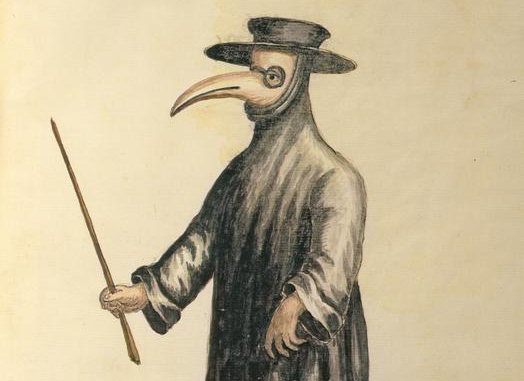
    Another interesting character is Pesta, a personification of death and pestilence in the shape of an old woman. It is said that, during the period of the Black Plague, she would come to visit your home: if she brought a rake, only some people would get sick and die; but if she brought a broom, all in the household were doomed.

    I was reminded of such stories because yesterday I went by bicycle to Simpnäs, about 3.5 km away from where I am staying. It is a location by the sea, with a few shops, a cafe and a restaurant, but everything was of course closed, and there was no one around. Everything was quiet and silent. Life here seems to be suspended in Winter, to resume only perhaps in Spring. The day was cloudy, and the desolate winter landscape seemed a bit eery, making you think of bad omens and ghosts.

    There was also a small Maritime Museum (Sjöfartsmuseum) nearby. The door was closed. I stopped and peered into the window, trying to see what were the contents of the exhibition, when I suddenly noticed an old woman with a pale face sitting inside, just next to the window, with a veil covering her head and her face turned away from me. I was taken aback for a moment, as I didn’t expect to see anyone, until I realized that she wasn’t moving at all. Turns out it was just a mannequin, representing a woman knitting a fishnet. But she did remind me a bit of Norman Bates’ mother in Psycho. I hope she doesn’t come back, like Mare, to haunt me in my dreams.

    In the afternoon I went by bicycle to the grocery store (7 km away), which was again another adventure, as it got quite dark very soon, and then, to make things worse, it started to snow, making the road slippery. My bike, of course, had no lights. I fixed the problem taping a torchlight to the handlebar, and riding slowly; luckily, no accidents took place.

    I don’t know how the region here is during summer; I expect it must be very different, bustling with people and with very long sunny days instead of dark grey ones. On the other hand, the empty winter landscape has its attractions too; and, in some ways, being here in the middle of winter seems more interesting.

    Sometimes I wake in the middle of the night hearing strange noises coming from the forest: perhaps a raven or some other bird? Last night, however, I thought I heard clear footsteps in the snow, but I couldn’t see anyone outside.

    Was it the old white-faced woman from the Museum coming to get me?

  • Fiction - News

    Der Impfpass, and an announcement

    My satirical short story “Der Impfpass”, based on Kafka and on current events, has been published at the New English Review, here. I’ve been collaborating with them since last year, mostly with fiction.

    Also, remember that my personal blog with longer non-fiction articles is now found at contrarium.substack.com. Here at the site I will be posting mostly updates about our books, magazines or other projects, and occasional shorter texts. Thanks for reading!

  • Articles

    Sweden. Day 2. The Sea.

    The Scandinavian sea coast, especially in winter, is quite different from the ones I’m used to. I was born in Argentina. I grew up in Brazil. I lived in California and Sicily. To me, a coast means a beach with sand, sun, high waves, and lots of people including annoying sellers of all kinds of merchandise. But here, there is no sand, nor pebbles, just big rocks. The water is almost still, without waves, like that of a lake. There are pines and birches all around. And, being winter, there is also snow covering the rocks near the sea, which makes a nice contrast.

    This area is supposedly crowded with people during the summer: they come to swim, have barbecues, and enjoy the local Midsommar, a pagan festival which includes the worship of trees and human sacrifice. Nah, just kidding, that was only a movie, sorry. It’s just a traditional summer festival, but it appears to be fun.

    There are quite a few holiday homes and cabins in the area. But right now, they seem to be all empty. You hardly ever see anyone walking around.

    The open sea is 3 km away from where I am staying — there is a lake nearby, but that’s freshwater, and a sea bay of actual saltwater not far away, but to get to the actual coast it takes a longer walk.

    We — that is, two fellow artists and myself — walked to it yesterday. But, except for a middle-aged couple passing by at one point, we didn’t see a single person around. Neither when going nor coming back. The whole region feels really empty. We also didn’t see any elk or lynx, but we saw their footprints (it appears that they are active mostly at dusk or at night).

    The day was cold and icy, although sunny. We tried to make a fire, but it refused to catch on to larger wood. The wood we found was too wet, even frozen. It started to feel colder. The sun remained always at the horizon level. At 15:46, as we walked back, it was already getting quite dark. By 4:30 it was deep night, and, being so far away from big cities, you could see a lot of stars in the sky.

    It is a bit paradoxical to be relatively free, in a place where there are no “health passes” nor restrictions to meet people as there are now in many European countries, and yet, not being able to see anyone, nor having anywhere to go. There are no bars or restaurants or shops here. There is a cafe about 4 km away, but it appears to be closed now. The closest grocery store is 7 km away. Not having a car, you have to walk or take a bus that is not very frequent. Still, it’s an interesting experience. And, in any case, Stockholm is not that far — I should go there one of these days, and tell you about it.

    For now, I am enjoying my stay in this faraway location, in the bleak midwinter, near the sea.

  • Articles

    Sweden: Day 1. The travel.

    Dear Reader,


    I am right now somewhere in the island of Björkö, in Sweden. It is located to the northeast of Stockholm, about 2h40 min by bus (actually, one metro and two buses).

    I came from Germany, where I was before, by train. 16 hours. Except for not sleeping very much, and feeling very tired at the end of the journey, it was not bad. I normally prefer travelling by train than by plane, especially these days.

    A PCR or antigen negative test was required for the travel. I took two, just in case, but no one checked them, at least mine and those of the passengers nearby. However, while I tried to sleep as we were travelling from Germany to Denmark, I’ve heard that a passenger was apparently booted out of the train by the controller for not having a valid test. I am not sure what happened exactly, but something along those lines. I think this was still on the German side, near the border.

    The train from Hamburg to Copenhagen was comfortable enough, even if not great for sleeping. Seats however are wide, and if no one is sitting by your side, you can lie down a bit and sleep a bit better. However, the bright lights were never turned off, and you were not supposed to take off your mask, so I didn’t sleep much.

    On the Denmark side, the police entered the train. A speaker voice informed that people should have a vaccine certificate or a PCR test, but the police asked only for passports (real passports, not vaccine ones). Afterwards we went through.

    I stayed for half an hour at the Copenhagen train station. Here, in the station and train, masks were still mandatory, although they didn’t need to be the FP2 type (these are the only ones accepted in OCD Germany now), and apparently there was some sort of “corona pass”, but I was not asked for one at the station’s cafe. Soon it was time to take the new train, from Copenhagen to Stockholm (about 5 hours).

    As we crossed into Sweden, things changed. The police did not come in, and the controller asked only for tickets. Many people were no longer using masks (they are not mandatory, just optional in Sweden). People seemed calm and relaxed. Apparently, Omicron, or at any rate Omicron panic, forgot to cross the border.

    Arriving in Stockholm, the station and the whole block around it was without electricity. I walked a bit outside. The day was grey, cloudy and rainy, but there was no snow. I entered into a Mongolian restaurant, which was also without electricity and was illuminated only by candles; they offered a sushi takeaway, but just as I was to accept the offer, electricity came back. So I just sat at a table to eat the Asian buffet, accompanied by a Swedish beer. A strange combination, perhaps, but not a bad one.

    Then, to get to my final destination, I still needed to take a metro and two more buses. In the first bus, a drunkard was loudly singing what I guess was an old Swedish song. He sang for about half an hour. But just as I decided that perhaps it would be a cool idea to record it, he suddenly stopped singing. The travel was silent from then on.

    Now I am here in a place isolated from almost everything. There’s only forest and a few houses around. Also a small church. Other than that, the closest grocery store is 7 km away. There are no bars or restaurants, nor anything really. I’ve heard that there are deer and even lynxes roaming around. I saw some pretty big animal footprints in the snow. Not sure if it was a lynx or just someone’s dog.

    I’ll be here from now on, and I’ll be posting daily updates and some pictures. See you around.

    Best regards,

  • Articles

    And now for something completely different

    Ending an obsession

    I am travelling in Sweden and I won’t be posting so much about the “corona” issue these days. Instead, you will find here mostly a travelogue.

    In the end, my opinion about the whole “corona” thing didn’t change much since February 2020: just stop with the idea of using a pandemic to remake society or to create a new technological bureaucracy. Just treat the sick, focus on the risk groups, be cautious, stay home or go to the doctor if you’re ill, use a vaccine but don’t make it mandatory, and stop with the insanity of “lockdowns”, “mask mandates”, “vaccine passports”, etc. After two years, it is pretty clear that none of this really works, so why complicate people’s lives even more, adding more trouble on top of the pandemic?

    Despite a few new restrictions, Sweden still appears to be pretty relaxed. Let’s be more like Sweden.

    And that was it about “corona”; now, we’ll focus (mostly) on other stuff.