
On coincidences, Swedish movies, and polar expeditions
1. Strindberg, August
At a small local bookstore here in Spain (Catalonia), I saw a brand new edition of August Strindberg’s Inferno with previously untranslated texts and a beautiful cover in black and red, so of course I had to have it. The few remaining readers of this blog may know that I’ve been fascinated by the crazy but brilliant Swede even before my first visit to Sweden in 2022, and that I even published a selection of texts from his Blue Book (it can be purchased on Amazon or Barnes and Noble).
A few days later, I watched “Raven’s End” (1963), by Bo Widerberg, a very interesting Swedish film from 1963 about a dysfunctional family living in housing projects in Mälmö, and here Strindberg’s ghost appeared again in the form of a statue, during a visit of the young protagonist to Stockholm.
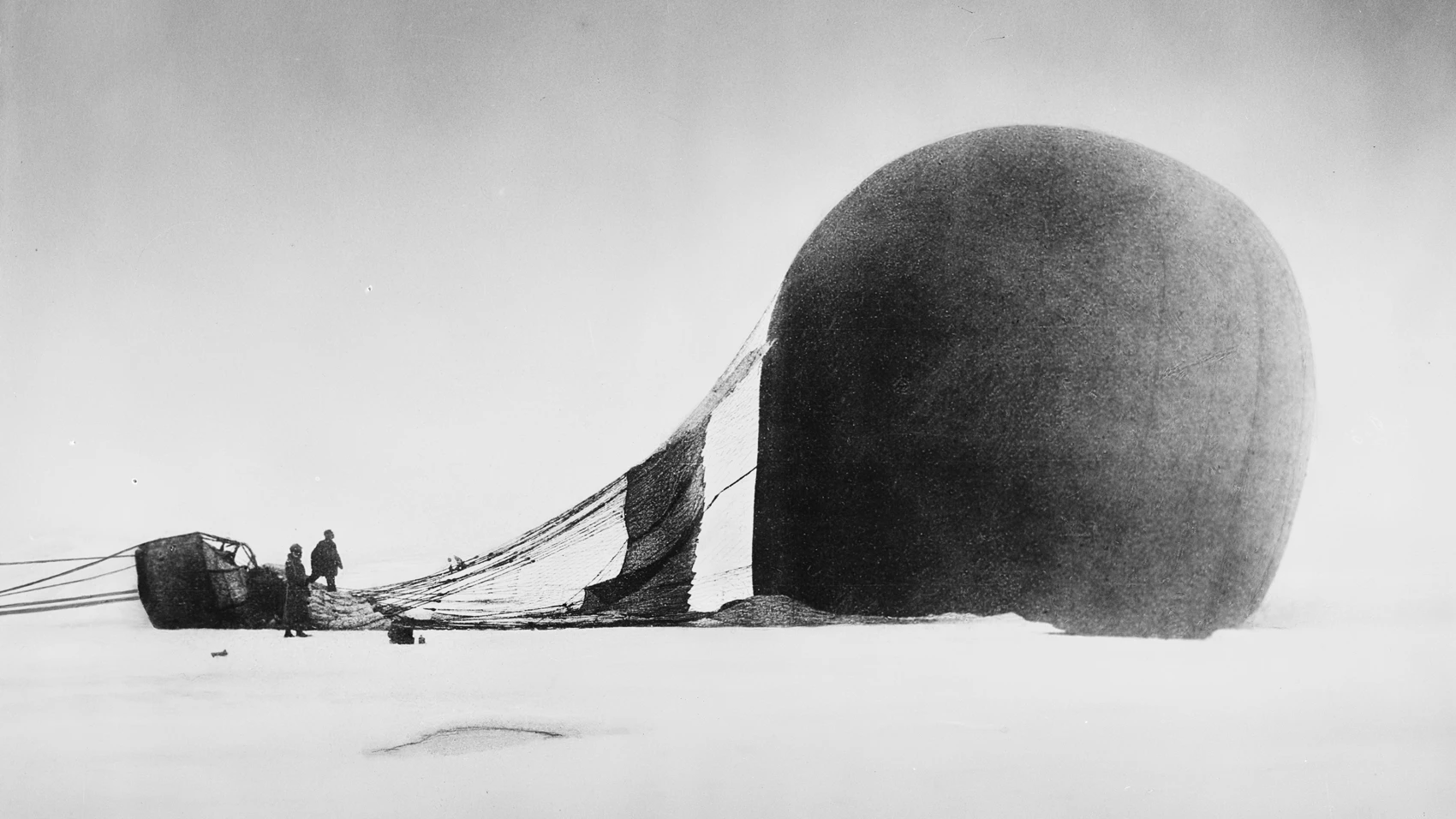
Then, thanks to the algorithm, I watched yet another Swedish film, “Engineer Andrée, Balloon traveler” (aka The Flight of the Eagle, 1982), with Max von Sydow, about an ill-fated Swedish balloon expedition to the North Pole. The film itself is not that great, just average, but the story is interesting. It was based on the real story of three Swedes who tried to reach the North Pole for the first time in 1897, using a balloon.
One of the three adventurers is called Nils Strindberg.
Now, in Strindberg’s Inferno — at the time he is in Paris doing strange chemical experiments while his wife and daughter are in Germany — August writes that he has just received a letter from his wife, who has read in the newspapers that a certain Mr. Strindberg plans to fly to the North Pole in a balloon. She admonishes him to give up on such a reckless adventure, equivalent to suicide.
He replies explaining that it is not him, but the son of a cousin who is doing it for the glory of science.
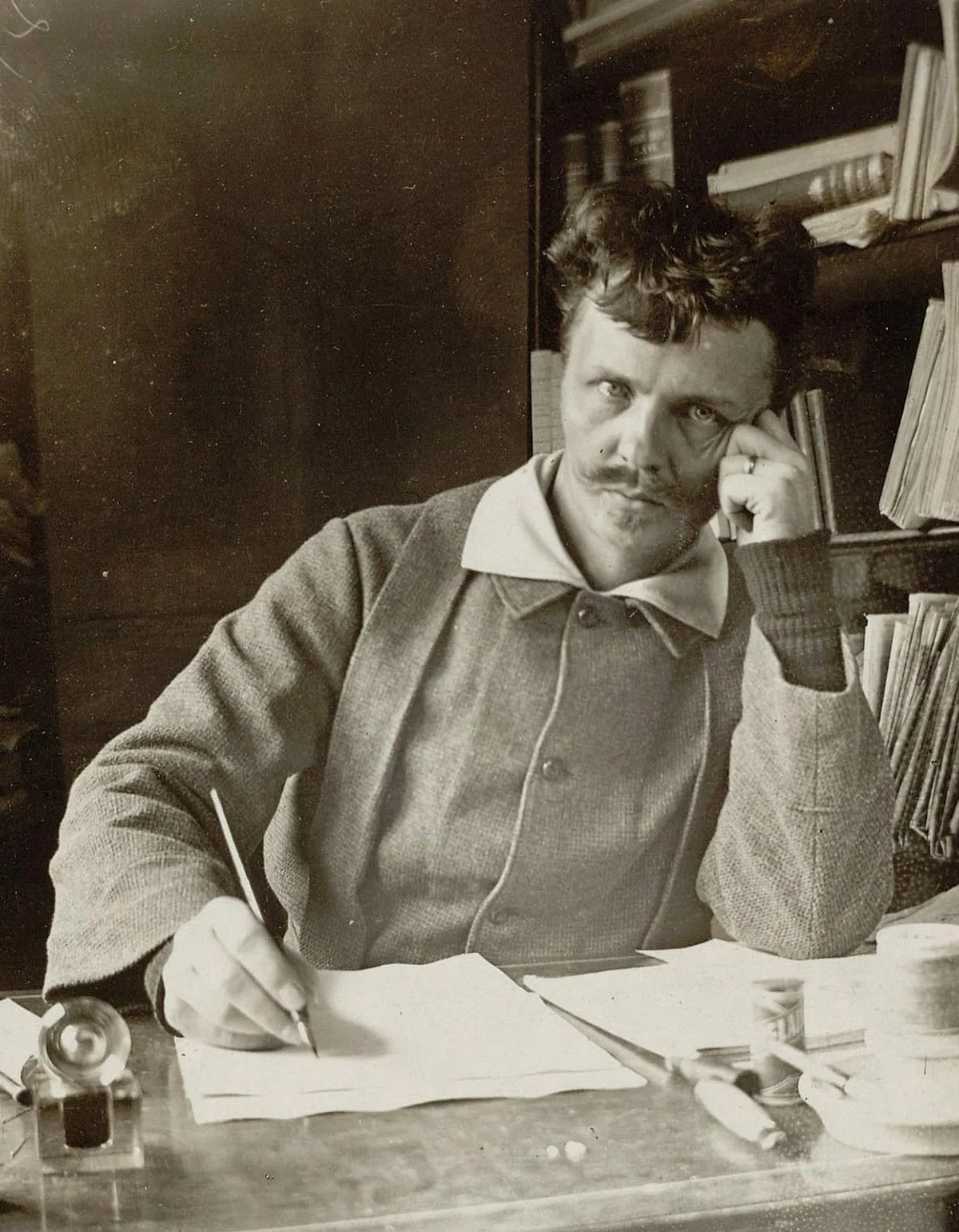
(Speaking of glory of science, not many people know that August Strindberg basically invented the “selfie” in 1886. Well, not really — the first self-portrait had already been made by Robert Cornelius back in 1839. But he invented one of the first working self-timing devices, with a tube connected to a camera, which allowed him to take hundreds of self-portraits of himself and his family before it became all the rage in 1899.)
2. Strindberg, Nils
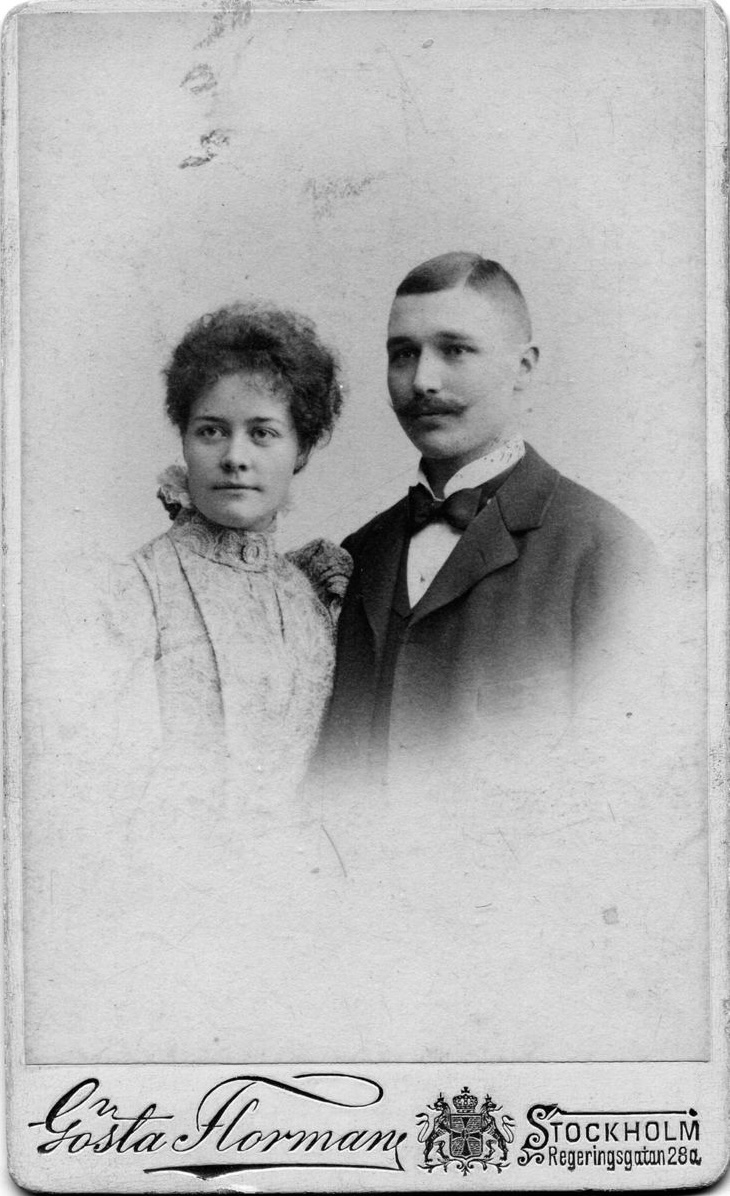
The story of August Strindberg’s cousin is interesting. He joined the expedition as a photographer and second in command, despite the protests of his fiancée, Anna Charlier (at those times, women were not very keen on their fiancées or husbands joining dangerous polar expeditions). During the travel, he writes to her several letters.
The first one through a homing pigeon, although it is not clear if she received it — apparently, the pigeons were not trained to find their way back, so many messages were lost.
The second one, in a tin can thrown from the balloon over the island of Vogelsand, in the Svalbard archipelago (Norway). This one, so far, has never been found.
Nils kept writing several other letters to his beloved fiancée, but since there was no way to post them in the Arctic, they remained with him.
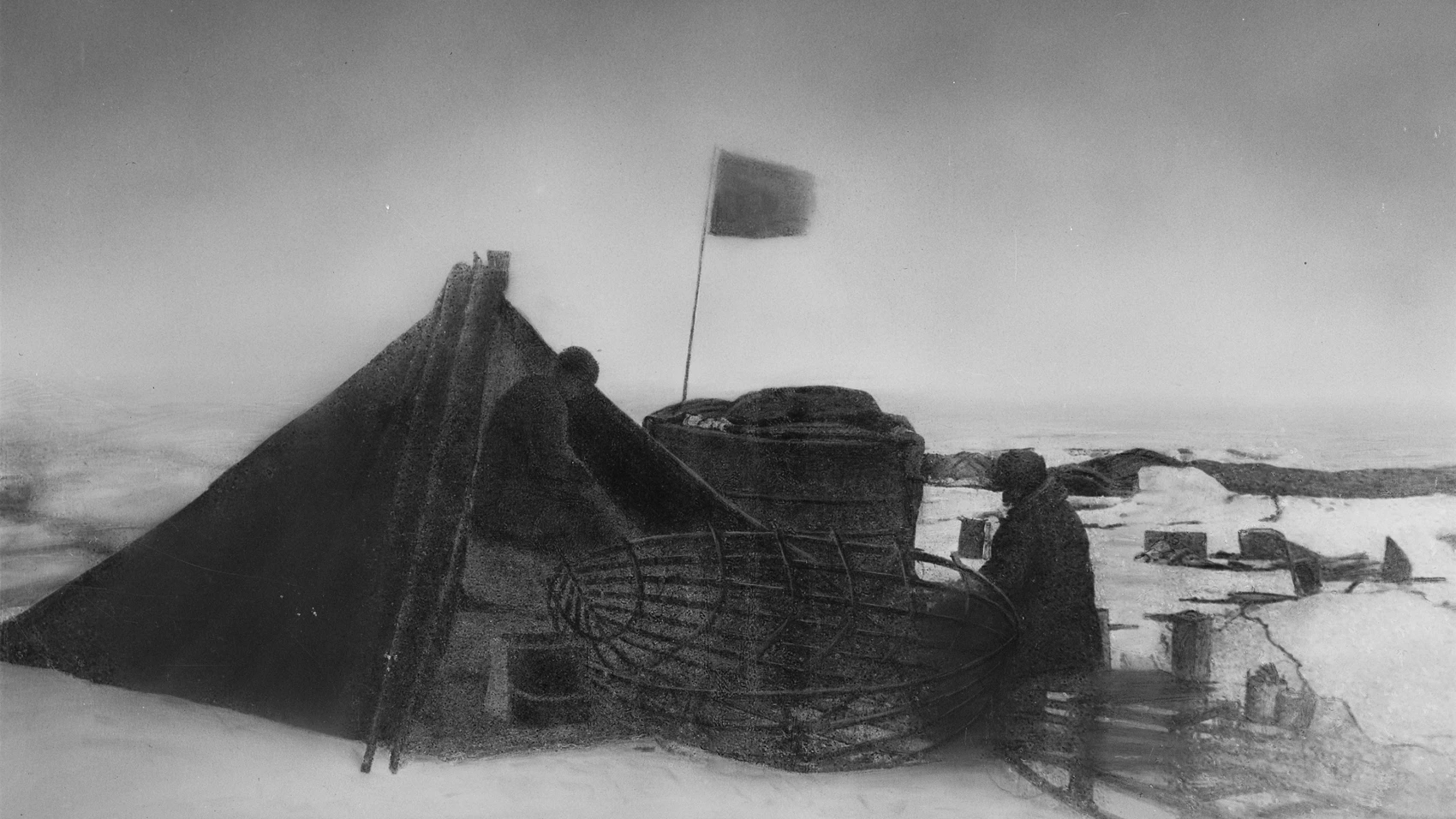
The balloon came down in the ice pack, still far from the North Pole. The three men were stranded on the ice for almost three months, hunting polar bears to survive, and trying to walk back home, all the while pulling their heavy sleds with provisions. They walked miles and miles, hoping to get back to civilization, but they never made it. And for years, no one knew what happened to them.
3. Anna’s heart
In the meantime, Anna, after waiting 13 years, married an Englishman and moved to the United States. They had no children together, and, it is said, she never forgot her first love.
In 1930 the remains of the three adventurers were finally found when a sealing vessel passed by chance near the island of Kvitøya. They found the remains of a tent, three skeletons, the journals of the three adventurers, the letters that Nils wrote to Anna, as well as several cans of undeveloped film, which later reveals all photographs taken by Nils documenting their incredible journey.
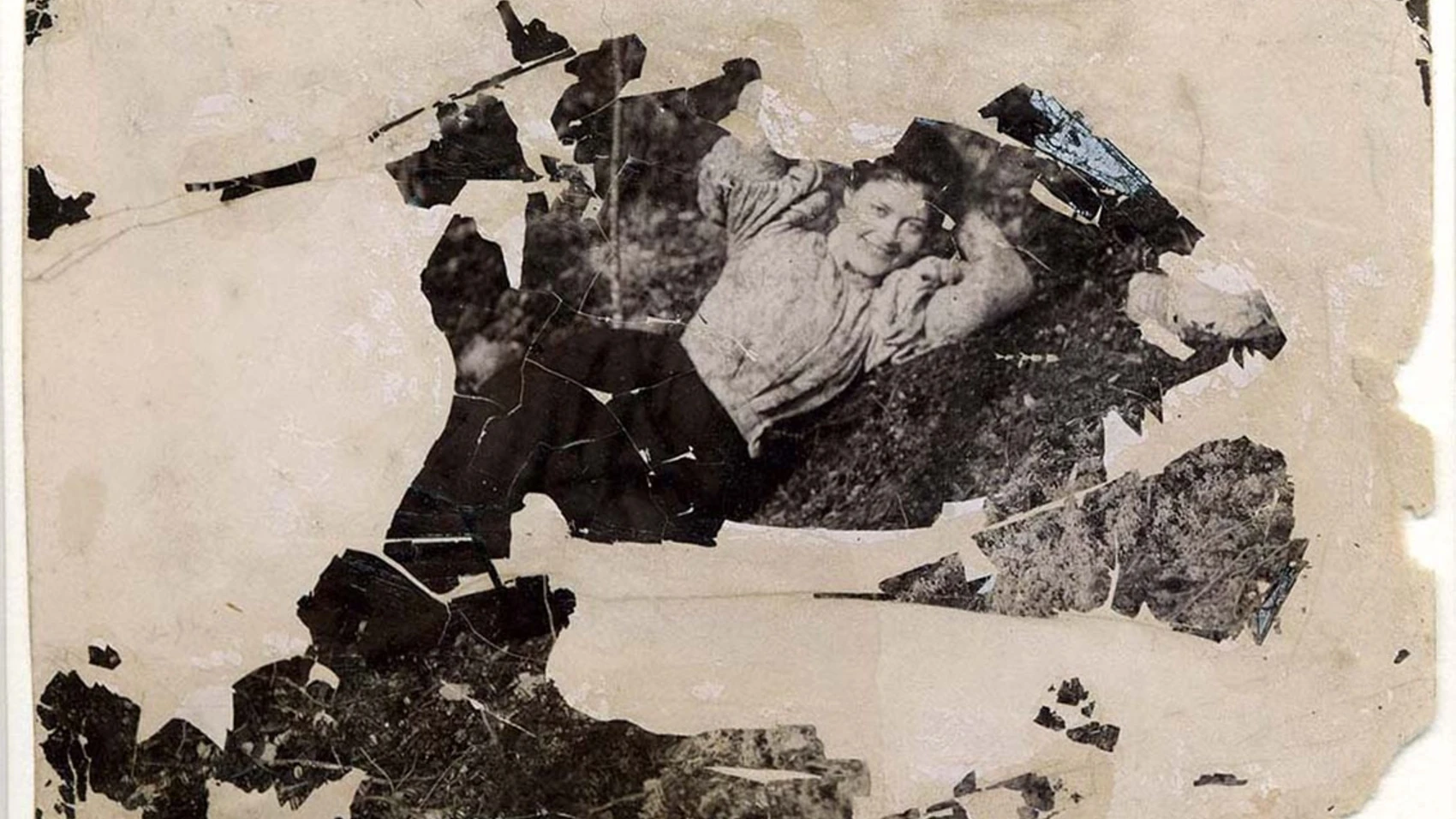
By coincidence — although one could say that there are no coincidences in such things — Anna is in Sweden at the time that the remains are found. A few weeks later, there is a huge funeral procession in Stockholm, with at least 100,000 people, to which Anna, now back in the US, sends a wreath: “to Nils, from Anna.” She also receives from a common friend a copy of the letters that Nils wrote but could never send. A picture of Anna and a locket of her hair are also found next to his cold dead body.
Anna dies in 1949 but she has one last wish, which is granted. While her body is buried in England, next to her husband’s, her heart is removed and cremated. The ashes are placed in a silver box, which is placed next to Nils Strindberg’s ashes, and both now rest together in a cemetery in Stockholm.
How’s that for a romantic ending?
4. Mountains of Madness
The finding of the explorers’ remains gave raise to several speculations, generating studies and novels about exactly what happened during that time, and it also served as inspiration for several other stories — including, for instance, H. P. Lovecraft’s “At the Mountains of Madness”, written in 1931, which starts with an ill-fated polar expedition, only that in this case it is to the South Pole.
Apparently, one of the reasons for the failure of the 1897 balloon expedition was that it may have been rushed and overlooked safety issues. However, the main organizer, the engineer Salomon August Andrée, obtained too much money and support and may have felt that he could not simply abandon or delay the quest without deluding his financiers and supporters, who included Alfred Nobel — a sort of Elon Musk of that time — and the King of Sweden.
In 1897, there were still new technologies and unexplored corners of the Earth, and brave adventurers eager to discover them for fame or fortune.
Today, by contrast, in the age of hype and AI, everything seems fake and there is little personal risk involved for the adventurers, except perhaps of being found in some kind of scam or deception, or the whole thing made with AI and CGI. But that’s a whole different story.


